Apple tree Gift of Autumn: characteristics of the variety and care
| Color | Greens |
|---|---|
| Ripening season | Summer |
| Size of apples | Average |
| Taste | Sweet |
| Crown type | Average tree height |
| Shelf life | Low shelf life |
| Application | For recycling , Fresh |
| Winter hardiness | High winter hardiness |
| Fruiting age | Up to 5 years |
 History of origin and regions of growth
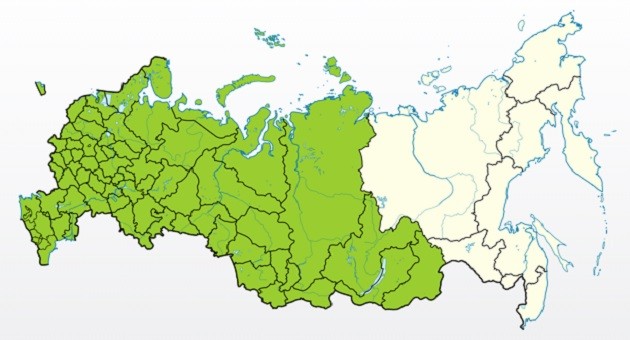
Growing regions
- Middle zone.
- Moscow region.
- Ural.
- Siberia.
- North Caucasus.
- Leningrad region.
- Crimea.
- Urals and Trans-Urals.
- Some northern regions.
- Far East.
Origin
This is one of the new apple trees currently undergoing variety testing and is not yet included in the State Register of Breeding Achievements. It hasn't even been officially zoned, although some farms already offer seedlings for purchase at your own risk. The hybrid was developed by the I.V. Michurin Federal Scientific Center, specifically its "Breeding and Genetic Center" division.
The parent variety used was the old Russian folk variety Borovinka, crossed with the American Zolotoe Graima. Regionalization and inclusion in the registry are expected to occur within the next five to seven years.
Content
Description of the Gift of Autumn variety
 This early-fruiting, low-temperature-tolerant apple tree was immediately recognized by many gardeners as promising. It's easy to maintain, environmentally friendly, and consistently produces fairly high yields. The tree withstands various weather conditions, is rarely affected by disease, and is immune to scab.
The apples are attractive, tasty, and aromatic. They are easy to transport, even over long distances, and store well, as a summer-ripening variety. This hybrid is recommended for intensive commercial orchards and for individual cultivation in home gardens.
Apples: What do they look like?
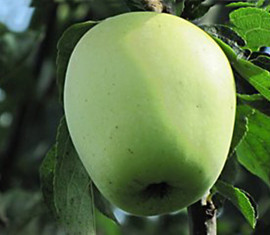
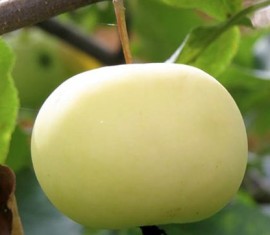
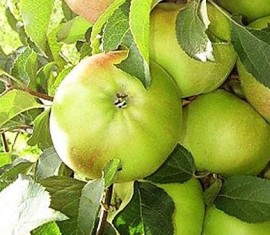
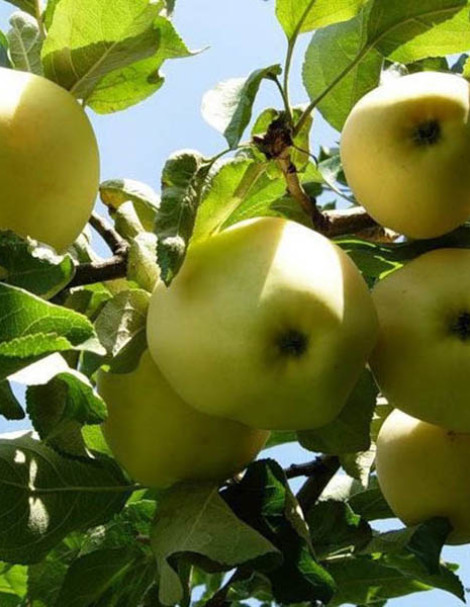
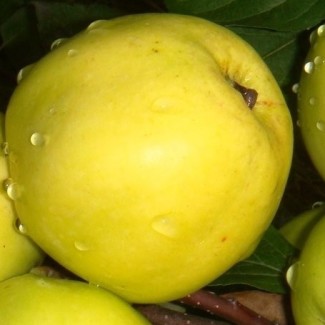
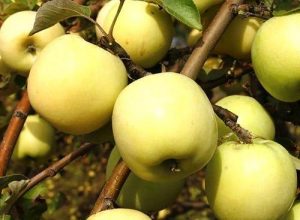 The fruits are usually medium or slightly larger in size. They reach a maximum weight of 130-150 grams, but occasionally, in favorable years, they can reach 170 grams. They are round, slightly flattened along the longitudinal axis, and smooth. Ribbing is well defined, the ribs are wide and smooth, and there is no lateral seam.
The skin is dense but thin, not hard, shiny, smooth, and a pleasant light green-yellow hue. When ripe, it can turn golden-yellow or whitish-yellow, very rarely becoming a full, translucent color. The blush is almost completely absent, but on the sunny side, it may appear as light, translucent, orange-carmine spots, barely visible. Subcutaneous spots are gray, small, and barely noticeable. Experts recommend familiarizing yourself with the chemical composition:
- P-active substances (catechins) – 342 milligrams.
- Ascorbic acid (vitamin C) – 16.4 milligrams.
- Fructose (total sugars) – 12.7%.
- Pectins – 11.2%.
- Titratable acids – 0.78%.
The flesh is dense, crisp, brittle, fine-grained, and very juicy. It has a white-yellow, yellow, or lemon hue, sometimes with a yellowish-cream tint. The aroma is strong, and the flavor is described as balanced, harmonious, and sweet and sour, leaning toward sweetness but with a distinct, pleasant tartness. The unofficial tasting score is 4.5 out of 5.
Apple tree Gift of Autumn: characteristics
Crown and root system
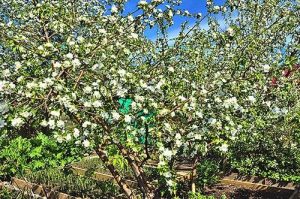 The tree is of medium height, barely reaching 4-4.5 metersThe crown is rounded, sometimes rounded-oval, and neat when young; with age, it can become slightly weeping, spreading, or drooping. The branches are thin, curved, and geniculate, slightly knotty, extending from the trunk mostly at an angle close to right angles, and covered with light, greenish-brown or greenish-brown bark. Fruiting occurs on shoots and cusps.
The leaves are medium to large, oval-elongated, lanceolate, short-pointed, emerald or dark green, with serrate-crenate, finely serrated margins. They are dense, leathery, slightly shiny, and may have a light, felty pubescence on the reverse side. The root system is fibrous, highly branched, and moderately deep, relatively adapted to seeking moisture in the soil.
Productivity and pollination
This autumn gift is capable of producing large harvests despite the small size of the tree itself, for which it is highly valued by gardeners.
During the growing season, a single mature tree of this variety can produce 140-160 kilograms of tasty and juicy fruit, reminiscent of Doneshta. With timely care and favorable conditions, as well as regular fertilizing and flowering regulation, yields can be increased by another 15-25%.
The variety is partially self-pollinating, but to significantly increase fertility, it requires external pollinators. Apple varieties with similar flowering times are planted within 40-80 meters of the garden. To ensure maximum effect, the trees are sprayed with honey or sugar syrup during bud break, and beehives are placed in the garden.
Winter hardiness and disease resistance
Apple trees are designed to withstand low temperatures by default, as winter hardiness was a priority during their development. As a result, the trees tolerate temperatures down to -38-42°C quite well, without the need for special measures or heavy shelter. If frosts persist for more than 21-30 consecutive days, it's best to ensure adequate winter preparation.
Autumn Gift is highly resistant to insect pests; gardeners say the apple tree doesn't attract them, which is a huge plus. The tree has strong genetic immunity to scab and is resistant to other diseases. Despite this, regular treatment of the trunks with insecticides and fungicides is necessary for prevention.
Rootstocks and subspecies
It's known that Podarok can be grown on a variety of rootstocks, from dwarf to tall. However, subvarieties of this variety don't yet exist, though they may appear in the future. There are no columnar or creeping varieties.
Growing Features of Autumn Gift
 Landing
 Landing
Basic conditions
- Apple trees prefer sunny, open areas where they grow healthy and produce fruit well. In the shade, trees often become ill and may even die.
- It's advisable to have good ventilation where Autumn Gift is growing. Stagnant air leads to the development of fungi and rot, which negatively impacts the overall health of the garden and overall yield.
- Groundwater depth only matters when it's above 2.5-2.6 meters. Tree roots can penetrate quite deep, but they can't reach that depth.
- Apple trees aren't picky about soil, growing well in almost any soil type, except those with excessive acidity and salinity. Sandy loam, black soil, clay loam, rocky soil, and podzolic soil are all suitable for the tree.
- Prepare the holes in advance, but no later than 2-4 weeks before planting, as the fertilizer needs to settle in them. Dig holes 70-90 centimeters deep and the same in diameter. Place a suitable fertilizer (organic and mineral) at the bottom, cover with a thin layer of soil or, if necessary, drainage. Water with 35-50 liters of water and leave for the designated period.
- The distance between rows should be 4.5-5 meters, and between trees it can be reduced to 3.5-4 meters. This will prevent the trees from clashing with their crowns and roots, even in maturity.
- It's a good idea to dig stakes into the holes right away, placing them on the north side, and then tie the seedlings to them. They will not only provide support but also provide protection from cold weather.
- The root collar of all apple trees remains above the surface when planted, and it is necessary to take into account 2-5 centimeters of soil subsidence, which will need to be added.
- Place the seedling upright, straighten the rhizome, fill it with soil, level it, and compact it. Create a 7-10 cm mound of soil around the perimeter, pour 20-35 liters of water inside, and apply mulch to the surface to retain moisture.
Landing dates
Apple trees prefer autumn planting, in late September or until mid-October. This way, they develop better in the spring, grow stronger, and are more resilient to various threats. However, in northern regions with harsher climates, frosts can damage buds and shoots, which can even kill the tree. Therefore, planting in March-April is recommended.
Tree care
 Tree care
Protection from frost and pests
Before the onset of cold weather, approximately from the middle August, you need to reduce active watering and reduce it to zero by early September. If you continue to add water, the tree may not "understand" when to stop sap flow and freeze during the winter. Wrap the trunks with available materials: agrofibre, burlap, old tights, or roofing felt. Young trees can be covered with a tent-like structure, and the roots can be covered with spruce branches, straw, hay, or well-dried leaves.
Whitewashing tree trunks with lime to a depth of 1-1.3 meters in spring and fall is necessary to prevent insect colonies from developing in bark cracks. Fuel oil, grease, or lard, applied liberally to the lower parts of tree trunks, will help repel rodent pests.
Loosening the soil, watering: proper agricultural technology
Dig around the trunk twice a year. This is best done in early spring and late fall, trying not to dig deeper than 7-8 centimeters. Going deeper can damage the surface roots. In between, during the growing season, you can carefully hoe the soil around the trunk, removing weeds, shoots, and root suckers.
Autumn Gift won't tolerate standing water near the rhizome or excessively wet soil. It will likely simply rot and die. water Trees require extreme care and attention, with good management of infrequent sprinklers or moderate drip irrigation. If this isn't possible, water should be applied within the crown's projection, not at the trunk. 20-30 liters per mature tree, 3-4 times per season during hot and dry weather, is sufficient. Watering should be timed to coincide with flowering, fruit set, and fruit ripening.
Pruning: simple crown shaping
The optimal growth pattern for this variety, as for many other apple trees, is a sparse, tiered form. The tree is not prone to dense growth, so maintaining it is relatively easy. Water sprouts (upward-growing shoots) and those growing inward are pruned.
During sanitary pruning in the fall, broken, diseased, damaged, and dead branches are removed. These provide no benefit and only hinder the tree's normal development. Around 12-15 years of age, 2-3 mature shoots can be pruned, thus rejuvenating the apple tree.
Pollinator varieties
- White filling.
- Pepinka.
- Haste.
- Borovinka.
- Arkad.
- Nastenka.
- Augusta.
- Terentyevka.
- Dreamer.
Reproduction
- Layers.
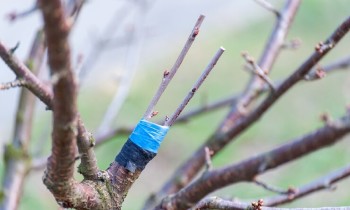
- Grafting cuttings.
- Clones.
- Growing from seeds.
Diseases and pests
- Cytosporosis.
- Rust.
- Powdery mildew.
- Pit bitterness.
- Green aphid.
- Flower beetle.
- Codling moth.
Ripening and fruiting of the Gift of Autumn
The beginning of fruiting
 The variety is considered early-bearing, as it begins bearing fruit as early as 4-5 years after planting. However, the first sterile flowers can be found on the tree as early as 2-3 years; it's best to pluck them off, as they won't be of much use anyway. At the beginning of fruiting, you can expect approximately 4-6 kilograms of apples. This isn't a full harvest, but it's a good start to get to know the variety.
Flowering time
The tree begins to bloom as early as early or mid-May. This is directly influenced by the growing region and its climate, as well as the weather conditions of the given year. Therefore, it is difficult to predict the exact timing.
The tree's flowers are large, sometimes pure white or slightly light green at the base. They have delicate petals and a saucer-shaped form, gathered in clusters of 5-9. They densely cover the branches, making the apple tree look attractive and possess a beautiful, strong scent. Flowering lasts 12-18 days, giving bees time to do their work and pollinate the Gift.
Fruiting and growth
The apple tree grows at an average rate, gaining its required 25-45 centimeters per season, and even more before the fruiting season begins. It also increases its fruit production at a similar rate. By the 8th to 10th year, the harvest will be fully fruitful, yielding 150 kilograms or more of fruit.
Ripening occurs in mid- or late August, but can sometimes be delayed until early September. The fruits ripen together, and when overripe, they fall to the ground, but not all at once, allowing time for harvesting. Consumer ripeness occurs 5-10 days after picking from the tree, but it's important to note that these fruits don't have a long shelf life. Stored in a special refrigerator or cellar, apples will last approximately 50-70 days, after which they wilt, lose flavor and juiciness, and become soft and sour.
Top dressing
- Compost.
- Manure.
- Superphosphate.
- Chicken manure.
- Wood ash.
- Ammonium nitrate.
- Dolomite flour.
- Peat.
What to do if it doesn't bloom or bear fruit
- Inspect for diseases or pests.
- Limit or increase watering.
- Feed or apply fertilizer.
- Transplant to a sunny place.
Why do apples fall?
- Natural weather conditions (wind, rain, hurricane, hail).
- Pest damage.
- Overripe.
- Diseases.
Share your own experience with the Autumn Gift apple variety so that any gardener can learn about it before planting and achieve maximum results.