Frost cracks on apple trees and other fruit trees: how to treat trunks and branches
Frost and sun certainly guarantee a wonderful day. But not for fruit trees. The combination of these natural phenomena can lead to the appearance of so-called frost cracks on tree trunks and shoots. If plants aren't protected in time or the defects that appear are ignored, the trees can die in their prime. Let's look at the causes of frost cracks on trees and how to deal with them if prevention fails.
Content
The mechanism of frost crack formation
 Clear, frosty days naturally go hand in hand with warm sunlight. This heats the bark of trees on the south side (which faces the sun). But the warmth of the sun during the day is only an illusion; at night, the air temperature drops sharply, leading to damage to plant tissue.
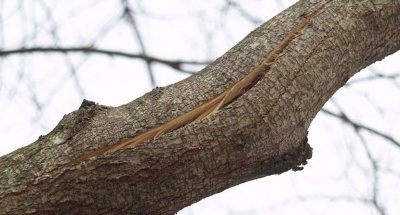
The bark of fruit trees will crack, and unsightly longitudinal fissures will appear along its entire length. These are called frost cracks.
Frost cracks themselves are not fatal to crops. Even with such damage, fruit trees will continue to bloom and produce fruit throughout the season. However, the plantings will significantly lose their decorative appeal and become easy prey for pathogenic microflora and insect pests.
Large cracks in tree bark are an ideal haven for harmful insects, fungal spores, and other pathogens. They'll nestle comfortably under the damaged bark, survive the cold, and then begin to actively reproduce. You won't even notice them at an early stage, as there are no signs of their activity beneath the thick plant tissue.
Causes of frost cracks
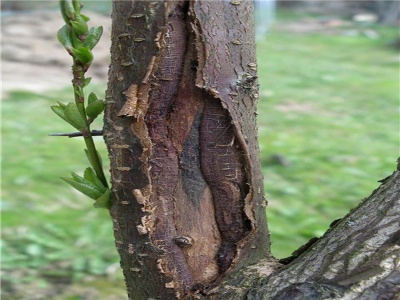 The main causes of these unsightly bark defects have already been identified: sudden temperature fluctuations. In winter, nighttime temperatures can drop below -30°C, while during the day, the bark warms up to +10°C or more under the sun's rays. This sudden change from warm to cold causes the overheated trunk to deform, and the bark tissue cracks, forming depressions, gouges, and cracks, exposing the underlying wood.
Frost cracks most often appear on the south-facing side of the trunk of apple, plum, and other fruit trees, where the sun's heat acts, melting the layer of ice. At night, the bark hardens again, making the tissue unable to withstand such a change. The most dangerous are longitudinal bark tears, which lead to the bark separating from the underlying wood.
Frost cracks often appear in the second half of winter. This is when temperature fluctuations are greatest. At this time, the internal defenses of fruit trees begin to weaken as they prepare for spring awakening. This makes plantings increasingly vulnerable to sudden frosts and bark damage.
Temperature fluctuations are most dangerous for young saplings (those less than two years old). On these trees, shoots grow extremely quickly, preventing them from developing sufficient strength. Their bark is significantly thinner than that of mature trees and is not always sufficiently mature, so they easily develop frost cracks even with minor temperature fluctuations.
What is the danger of cracks?
 The problem with frost cracks is that successfully treating the plant does not guarantee that the next temperature change will not cause new damage, and the entire treatment will have to be started over again.
Typically, repeated bark deformations appear in the same areas where the bark has previously cracked. This is because the tissue that forms over the damaged plant is much thinner than healthy bark. The process of complete tree recovery takes a long time, so self-treatment of damaged bark on, for example, an apple or pear tree is no guarantee that the tree will be able to withstand temperature fluctuations.
The formation of the so-called frost ridge, which rises above the smooth surface of the trunk, takes several years. Gradually, the tree will develop a growth of sufficient thickness to protect the plant from problems with temperature fluctuations.
Only after the tree is able to heal the wound and grow a ridge over the damaged area will the cracks stop appearing. Over time, the ridge itself will become smooth and invisible on the surface of the tree bark.
However, the scenario described is rather rare. More often, the prognosis for frost-damaged trees is less favorable:
- Usually, a fungal spore or a couple of harmful insects manage to get into the frost damage.
- When pathogens enter the damaged surface, the regenerative function of the cambium layer is suppressed. This is why the crack becomes a source of inflammation and a breeding ground for disease.
- Infection begins when the frost ridge has already formed. Through the wound, which doesn't heal, the rot begins to penetrate deep into the trunk.
- The infection reaches the very core of the base, and from there it spreads throughout all the plant tissues: to the shoots, leaf blades, roots, etc. Gradually, the tree becomes sick and then dies.
Preventive measures
Prevention is better than cure for any disease. Frost cracks in trees are no different. While you won't be able to completely protect your trees from the damaging effects of temperature fluctuations, following these recommendations will significantly reduce the risk of frost cracks developing on your plants:
- Plant fruit trees in areas of the garden where high humidity and frosty air will have the least effect on their bark.
- Choose only frost-resistant varieties for planting (especially if you live in a cold region).
- Be sure to whitewash the trunk and skeletal branches of trees with a lime compound in the autumn.
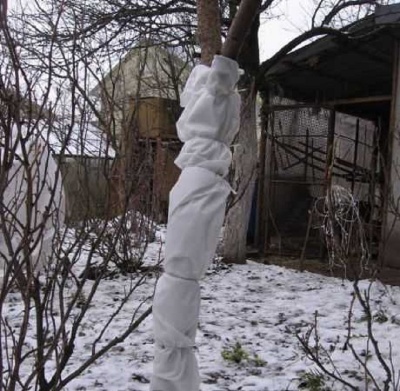
- Cover plant trunks with thick burlap, spruce branches, or newspaper (several layers will be needed). This is necessary to protect the plant tissue from excessive heat.
- Apply fertilizer only as needed. Overfeeding (especially with nitrogen-rich compounds) will prevent the wood of an actively growing tree from preparing for winter, severely damaging it, and causing early frost cracks.
- Plant young seedlings so that their root collars are above the soil. This is necessary for normal plant development and to strengthen their defenses before the onset of cold weather.
How to treat frost cracks on fruit trees
If you notice frost cracks appearing on your fruit trees in winter, don't rush to take any immediate measures. You'll have to wait until spring, as any treatment can only be carried out during the warmer months.
There are several ways to help combat the consequences of frost cracks:
- smearing;
- furrowing of the bark;
- sorrel compresses;
- wrapping the damage.
Covering up This involves pre-cleaning the damaged area. Next, the cleaned area should be wiped with a solution. copper sulfate (5% concentration is enough), a mixture of mullein and purified clay or garden pitchIf the cracks are too large, tie the plant's trunk with wire (first, place wooden spacers under the wire). Repeat this procedure until the wounds are completely healed (i.e., every spring).
 Under wrapping This refers to the use of dressings made of film or burlap. These dressings should be changed annually, while simultaneously cleaning the edges of the cracks with a disinfected instrument.
Sorrel compresses Help speed up the healing of the bark. Apply a tight bandage and place some young sorrel puree underneath. The compress should be changed several times throughout the summer season. After this, there will be no trace of damage.
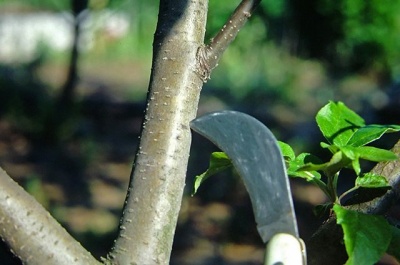
More severe frost cracks should be treated. furrowing of the barkThis is done in May using a sharp, antiseptic-treated garden knife. Make furrows from top to bottom around the entire circumference of the trunk. The lines should be intermittent, and their length should vary between 30–40 cm. Three to four furrows, drawn from the first knot to the base of the plant, are sufficient.
Combating frost cracks with grafting
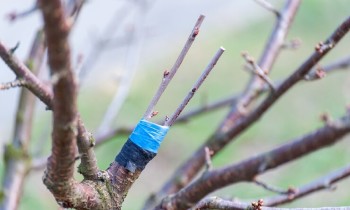
One of the most effective ways to treat frost cracks on fruit trees is bridge grafting. For this procedure, you'll need a cutting from a one-year-old shoot from the previous year:
 It's best to postpone the procedure until mid-May. At this time, the bark separates from the wood most easily, so you won't have to exert force or further damage the tree with outside intervention.
- The area around the crack needs to be cleaned and then disinfected using a method convenient for you (disinfection methods were already discussed in the previous section).
- Make cuts on both sides of the damage so that the bark seems to diverge in both directions and open up into “petals”.
- The ends of the grafted shoot need to be inserted under the "petals." To do this, carefully lift a piece of bark with a clean garden knife or cut a piece of appropriate size (if the fruit tree is already old).
- The grafting site must be tightly tied with twine and coated with a garden mixture.
- If you've followed the correct procedure, the cutting will take root in only 14–21 days. During this time, you'll need to gradually loosen the bandage as the shoot continues to thicken. You should also remove any new growth from the cutting.
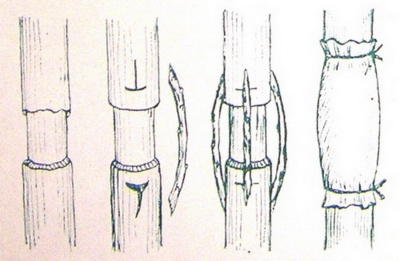 It's best to postpone the procedure until mid-May. At this time, the bark separates from the wood most easily, so you won't have to exert force or further damage the tree with outside intervention.
Bridge grafting will help restore normal sap flow in the tree's tissue. Nutrients will begin to flow uninterruptedly to the damaged area, healing it.
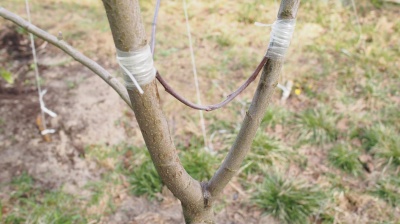
The number of grafts will depend directly on the age of the damaged tree. For example, for young saplings, one scion is sufficient, while older specimens with a trunk diameter exceeding 4 cm will require 2 to 4 grafts. When grafting multiple times, the scions should be placed from different sides of the tree.
Conclusion
Growing fruit trees in central Russia is a gamble. The weather here is always unstable. In winter, it can go from warm and slushy to severe frosts and snowstorms in a single day. So, problems in the garden are unavoidable. The most dangerous for fruit trees are frost cracks, which appear when there is a sharp change in day and night temperatures. Frost cracks themselves pose no threat to the trees, but they open the way for fungal spores and pests to penetrate deeper into the plant tissue, which can lead to infection and rapid death of the plant. Therefore, these defects must be treated as soon as possible to save the plantings.