
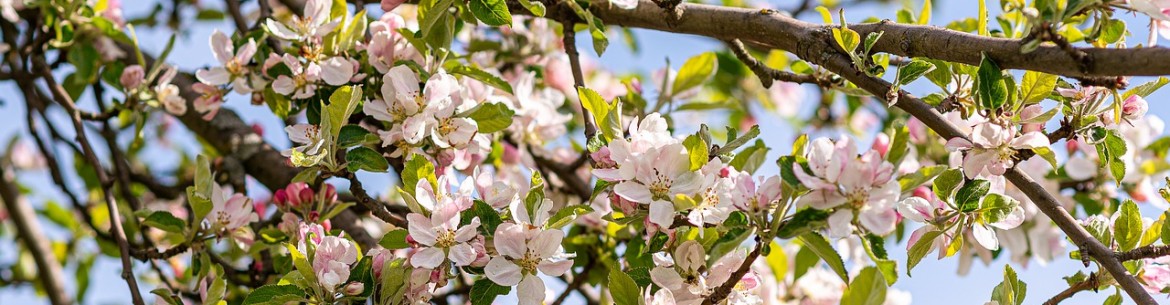
Treating apple trees with copper sulfate: an important point in preventing diseases and pests
A damp, mild winter promotes the active growth of various fungi and insect pests on fruit trees. To protect the orchard from diseases while maintaining high yields, a copper sulfate solution is used. This article describes the specifics of its application to apple trees at different times of the year.
Content
Brief description of the drug
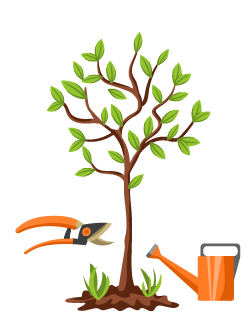 Copper sulfate – This is a contact antiseptic and fungicide. It is used to treat fruit trees to prevent mold and mildew. It does not accumulate in plant organs and does not cause long-term negative effects. It is non-addictive and inexpensive. It is used both in pure (diluted) form and as part of other ready-made preparations, such as Bordeaux mixture.
Why spray apple trees with copper sulfate?
Experienced gardeners know well how difficult it is to treat a fruit tree affected by a disease or insect pest. It's a long and arduous process that doesn't always result in the plant's recovery. Therefore, it's recommended to pay special attention to preventative measures aimed at preventing the spread of pathogenic fungal spores and pests. This includes spraying the orchard with a copper sulfate solution. Its active ingredient, copper sulfate, has an antiseptic effect and helps combat anthracnose. moniliosis, spotting and scab apple trees, and also drives codling moths and mites out of the bark.
Note: Spraying in early spring and late fall kills up to 70% of larvae and adults that have overwintered, as well as mycelium and spores. mushrooms.
When to carry out treatment
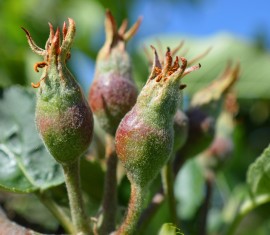
Preventative treatments with copper sulfate must be carried out twice during the growing season. The first spraying is scheduled for early spring, before buds begin to swell. Typically, this period falls in the first ten days of March. Spraying apple trees too late in the spring results in bud, flower, and foliage burn, resulting in reduced yield.
Spring treatment of apple trees with copper sulfate is carried out at an ambient temperature above +5 degrees.
It is best to spray in the morning or evening hours in calm weatherIt's best to postpone treatment if precipitation is forecast in the next few days. Rain quickly washes away the product, rendering its effectiveness null and void.
Sanitary work precedes plant treatment: Removing old bark and dried and diseased shoots. The solution is sprayed not only on the branches but also on the trunk, paying particular attention to cracks and depressions in the bark. The application rate is 2 to 5 liters per tree, depending on its age, height, and any problems discovered after winter.
Subsequent treatments of the orchard are carried out with other mixtures containing copper sulfate. After harvesting and leaf fall, the trees are sprayed with a solution of the same concentration as in the spring. Autumn spraying promotes successful wintering and the preservation of healthy tree bark..
Some gardeners recommend replacing copper sulfate with less toxic substances, such as iron sulfate, during subsequent sprayings.
Preparation of copper sulfate solution
To prepare a 1% copper sulfate solution at home, use copper sulfate powder, which can be purchased at a specialty store. Dissolve 100 g of the solution in 1 liter of warm water (45-50°C) and stir thoroughly until the powder is completely dissolved and the liquid turns a bright blue. Dilute the resulting solution to 10 liters with hot water, cool, stir again, filter, pour into a sprayer, and use immediately after preparation.
Copper sulfate crystals are dissolved in any container except a metal one.
Instructions for use
Copper sulfate is a blue crystalline powder. When dissolved in water, it produces working solutions of varying concentrations (from 0.5% to 5%). For spraying apple trees, a 1% solution is used: 100 g of the substance is dissolved in 10 liters of water. This concentration is used for spring and fall preventative treatments of orchards.
The first spraying is done before bud break, and the last after harvest and leaf fall. It is recommended to spray not only the trees but also the surrounding area around them.
It is better to carry out the procedure in dry, but not hot, windless weather.
During the rest of the season, pure copper sulfate solution is not used, as it is aggressive to the plant's green mass, causing leaf burns. During the growing season, copper sulfate is added to a Bordeaux mixture, where the copper's acidity is neutralized by the addition of lime.
In some cases, copper sulfate is used for foliar feeding on peat bog or some sandy soils. Such treatments prevent the development of chlorosis For plants. To prepare the fertilizer, dissolve 1-2 g of powder in a glass of warm water, then bring the solution volume to 10 liters. Plants are sprayed during warm morning (evening) hours or in cloudy weather.
The solution is prepared in strictly required quantities, since its remains cannot be poured under trees or into bodies of water.
Precautionary measures
Copper sulfate solution is highly toxic (hazard class II), so its use should be accompanied by certain precautions:
 The room in which the solution is prepared must be well ventilated.
- The treatment is carried out in a protective suit, mask and gloves.
- If the solution gets into your eyes, rinse them thoroughly with running water and a 2% solution of baking soda.
- If the drug gets on the skin, carefully remove it with a cotton swab or piece of cloth, then wash with soap and water.
- If the powder is inhaled, the victim is taken out into fresh air and allowed to rinse their mouth with water.
- It is prohibited to eat, drink or smoke while working.
- In case of accidental ingestion, the victim's stomach is washed with a weak solution of potassium permanganate, and several tablets of activated charcoal, a saline laxative, and a diuretic are given.
- Antihistamines are used to relieve the symptoms of an allergic reaction or skin rash.
- In cases of severe poisoning, seek medical attention, which involves the administration of an antidote - unithiol, which is administered intramuscularly.
- It is recommended to remove children and pets from the garden during spraying.
- Do not allow the chemical to come into contact with drainage and water supply systems.
 The room in which the solution is prepared must be well ventilated.
Note: The main symptoms of copper sulfate poisoning are a metallic taste in the mouth, a burning sensation in the chest and abdomen, vomiting, and increased sweating.
Copper sulfate is a reliable, time-tested antiseptic and fungicide. Treating plants with an optimally concentrated solution of this compound is simple, effective, and environmentally safe. Timely spraying of apple trees in the orchard will protect them from fungal diseases and pests, ensure a high yield, and keep the orchard healthy for many years.






Comments
100 grams of pure copper sulfate is a 3% solution, if added to it
Add 140 grams of lime, which will make a 1% solution. To get a 1% solution of pure copper sulfate, divide 100 by 3 and apply it gently to the leaves. I use pure copper sulfate in the vineyard, adding liquid soap, as pure copper sulfate doesn't create a light-protective film on the leaves and doesn't interfere with photosynthesis.