What to do if the leaves on an apple tree turn yellow
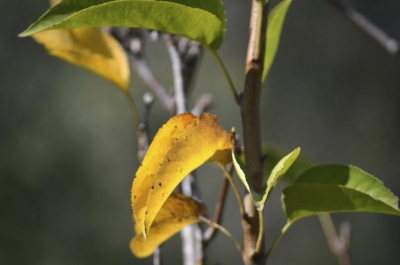
Destructive changes in apple orchards can occur even during the summer. Unseasonal yellowing usually occurs in June. This phenomenon may indicate the tree is unhappy with the care conditions or is infected with various diseases.
Content
Main reasons and solutions
In order to prevent the problem of yellowing of green mass, it is necessary:
- take a responsible approach to choosing a place to plant seedlings;
- don't forget to water and fertilize trees on time;
- carry out prevention of infection by various diseases and pest attacks;
- carry out seasonal autumn work to clean up the garden area and insulate wintering plants.
The cause of yellowing leaves can be determined based on the nuances of the process.
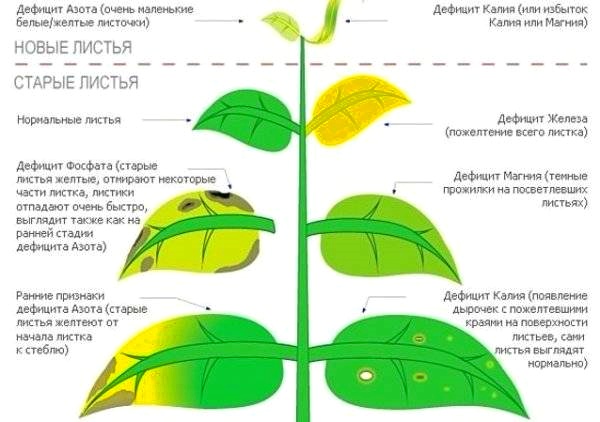
If foliage color begins to change from the bottom, this indicates a nutritional imbalance in the soil. This may be due to a deficiency of the following elements:
- Nitrogen The crown takes on a light green color, and then turns yellow. Young shoots also slow down in growth.
- Potassium A burgundy border appears along the edge of the leaf blade, which eventually dries out. Potassium deficiency prevents the plant from absorbing nitrogen from the soil, which, in turn, triggers yellowing.
- Phosphorus – the leaves turn purple or bronze, then turn black and dry out.
- Magnesium – red, yellow and brown spots appear on the green leaves, after which they begin to fall off along with the fruits.
The problem of nutritional deficiency can be corrected by timely application of appropriate fertilizers to the soil and proper care.
If the apple tree crown begins to turn yellow from the top, the gardener should pay attention to excessive soil moisture. This can occur as a result of excessive glaze, poor drainage or close groundwater levels.
Overwatering can lead to more serious problems, as constantly damp soil gradually accumulates anaerobic decay products, which causes root rot.
To correct the situation, it is recommended:
- organize ground drainage;
- choose the right site for planting an apple orchard;
- practice landing on shafts.
Yellowing of a young apple tree
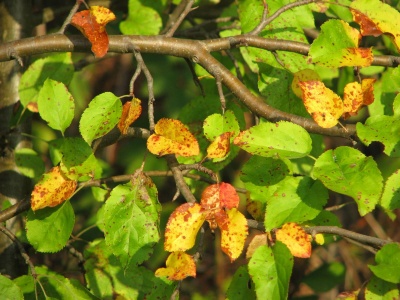
A young tree may also turn yellow due to improper growing conditions. These include:
- excessive deepening into the soil layer during planting;
- lack of sulfur or iron in the nutritional complex;
- infection;
- tick attack.
You can begin to solve the problem only after a thorough diagnosis of the uncharacteristic change.
In addition, the leaves on a young apple tree may turn yellow for the following reasons:
- High groundwater level.
- Nitrogen deficiency.
- Potassium deficiency.
- Dry summer.
- Insect pest attack.
- Occasionally – infectious diseases.
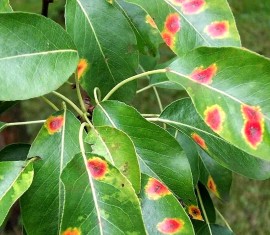
Typically, a young tree is infected with brown spot or scab It becomes noticeable already in the spring. Oily spots appear on the leaves, which over time turn into a velvety coating. Then the leaves turn brown and dry out.
A solution will do to save a young plant Bordeaux mixture, as well as the preparations "Fitosporin" and "Skor." You can strengthen the apple tree's immunity with nitroammophoska.
Yellowing of seedlings
Successful cultivation of a crop directly depends on the careful selection of planting material. A damaged seedling can pose a threat to the entire garden.
A healthy tree has a closed root system, elastic green shoots and is absolutely free of any mechanical damage.
But even a healthy seedling can develop yellowing leaves if proper agricultural practices are not followed. Young plants should be planted in pre-prepared holes at the designated time. It is also essential to conduct a thorough inspection. watering And mulching The tree's trunk circle. If you've followed all the planting instructions precisely, but the foliage still starts to turn yellow after a while, the cause may be an incorrect site selection or excessive planting depth. The tree simply won't get enough oxygen, or the soil composition may be unsuitable. The leaves will turn a pale yellow, appear thinner, and eventually fall off. This condition is called chlorosisIn addition to the obvious problems, the reasons for its development may be:
- deficiency of iron salts, which is required for the production of green pigment;
- freezing of the root system in winter;
- oxygen deficiency in the soil.
In the spring
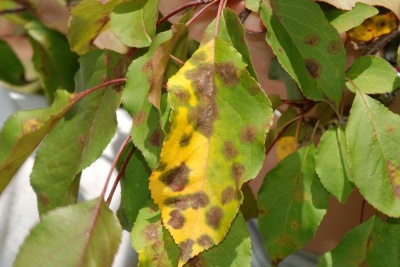 Yellowing leaves in spring are a sure sign to gardeners that their plot is affected by scab or brown spot. At the same time, the fresh green foliage not only begins to discolor but also becomes spotted. Fallen leaves in this case are subject to strict mandatory disposal – they are incinerated. The tree, meanwhile, is treated with Bordeaux mixture.
In some cases, spring yellowing signals a catastrophic deficiency or severe excess of micronutrients in the soil.
In summer
Summer yellowing of apple tree leaves is usually attributed to physiological abnormalities in the tree's life cycle. Again, improper (deep) planting or freezing of the trunk can play a role. Human intervention (cutting wire or rope into the bark) can also be the cause.
A common mistake that can cause a tree's crown to turn yellow is failing to loosen the grafting bandage in a timely manner. As the trunk grows wider, it becomes indented.
Another reason that can lead to an unusual change in foliage color in summer may be the incompatibility of the rootstock and scion as a result of improper fusion of the surfaces.
Some special cases
In addition to the well-known and widespread causes of yellowing foliage on apple trees, it is worth remembering some specific cases that also lead to the occurrence of this problem.
Young apple tree and sapling
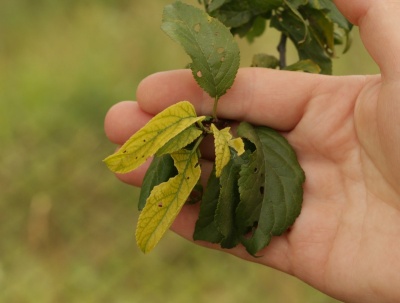
 A seedling or young tree may suddenly change color for the gardener for the following reasons:
- magnesium deficiency;
- boron deficiency;
- potassium deficiency;
- lack of phosphorus;
- problems with nitrogen.
An incorrect amount of these elements in the soil causes the edges of young shoots to die off, followed by yellowing of the foliage.
A gardener can tell if the soil lacks nitrogen by the abundance of dandelions in the garden. An excess of nitrogen will be indicated by the vigorous growth of nettles.
On one branch
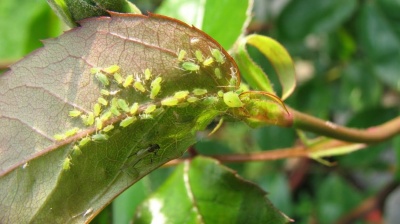 Yellowing of foliage on a particular branch may indicate that this part of the tree has been attacked. aphidIt could also be mechanical damage to the root system by moles or mice. The life of a young tree can be threatened by a bark disease called cytosporosisThe lesion is confined to just one branch, gradually spreading throughout the entire crown.
The leaves turn yellow, dry up and fall off.
The most common cause is infection by a pathogenic fungus or an attack by green aphidsThe problem is exacerbated if there is an anthill near the trees, whose inhabitants "patronize" the sap-sucking parasites. As a result of the aphids' feeding, the leaves begin to discolor, curl, and fall off.
This insect can also cause deformation of young shoots.
The leaves are turning pale
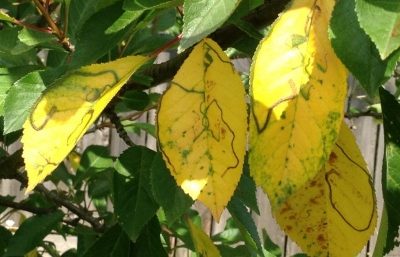 Usually chlorosis Apple leaf chlorosis occurs at the beginning of the summer season. It can cause the green foliage to take on an unusual milky-white color. If the disease is mild, treating the garden with a 2% solution of ferrous sulfate will help. If chlorosis develops due to excess lime in the soil, the entire plot may be unsuitable for growing this stone fruit.
Assess the condition of the weeds on the soil surface. If they have a characteristic pale color, planting green manure (alfalfa) and adding rotted organic matter or ammonium nitrate to normalize the soil and make it suitable for planting an apple orchard is recommended.
The columnar apple tree is turning yellow
Yellowing of young foliage on columnar apple trees indicates that the tree is not receiving the necessary root nutrition. This may be due to damage to underground shoots by rodents. In this case, hilling is recommended to stimulate the growth of new shoots.
This method works well only for dwarf tree varieties, since the low-growing plants of young specimens require less nutrition.
Conclusion
Never add lime or wood ash to your apple tree's nutrition in large quantities. High concentrations of these impurities cause iron and sulfur deficiencies, which in turn lead to unusual yellowing of the foliage. Follow the planting and cultivation guidelines, and you won't have any problems with leaf color changes.