What to plant next to an apple tree: compatibility with other trees and shrubs
Garden planning involves more than just listing the plants you plan to plant and calculating the space needed for each. It also involves ensuring the trees and shrubs you choose are planted next to each other. For example, apple trees are considered the least conflict-resistant of all fruit trees, but they also thrive best when planted in single-species groups.
Apple tree seedlings don't thrive in areas previously occupied by other crops, so they need to be planted several meters away from existing holes. Furthermore, some tree and shrub species can negatively impact the apple tree's growth and fruiting. So, "conflict-free" is a relative term, and you'll need to carefully consider the apple tree's proximity to other crops.
Content
Why Plants May Be Incompatible
Many gardeners (especially beginners) prefer not to think about a detailed planting plan. The most they can do is choose a zone with suitable soil and light conditions for a specific crop.
Taking neighboring plants into account is crucial. Unfavorable neighbors can have a negative impact on yield, growth, formation, and health plants.
Factors affecting plant incompatibility: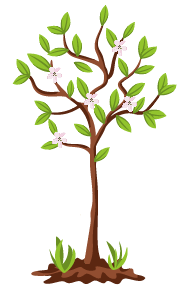
- too close location of the roots of neighboring plants, which leads to competition for nutrients and moisture;
- soil depletion due to increased consumption of nutrients by neighboring plants;
- allelopathy (the release of compounds into the air or substrate that suppress neighboring plants and disrupt their normal growth, fruiting and development);
- shading (occurs when low-growing plants are planted next to tall crops, the latter do not allow sunlight to properly illuminate the former, so the low-growing crops begin to wither and soon die);
- the presence of the same diseases or pests in neighboring plants.
Before you start planting your garden, take the time to make a list of all the plants you plan to plant in your garden. Once you have the list in front of you, it will be easier to understand which crops should be planted next to each other and which shouldn't be mixed.
Optimal compatibility can be achieved by planting crops of the same species next to each other. For example, to create a cherry, pear, and apple orchard. However, not all gardeners can afford this on a standard plot of land. Therefore, it's best to plant trees grown in similar conditions, as well as those that don't compete with each other, in the same group.
Factors Affecting Crop Compatibility
Incompatibility is more or less clear. But what factors can influence crop compatibility? Mutually beneficial plantings are much more important for gardeners, as they can help increase the yield of certain plants and enhance their ornamental qualities.
Want a bountiful harvest, for example, from an apple tree every season? Then don't neglect choosing compatible crops. Sometimes, planting suitable plants near fruit trees can have a far greater impact on yield than other care and cultivation factors.
Compatibility is affected by:
- species of neighboring plants;
- lighting (partial shade or open space);
- top dressing (the amount of nutrients introduced from outside and contained in the soil);
- soil quality and its type (chernozem, peat, loam, etc.).
A simple example of compatibility for an apple tree is its proximity to a pear tree (although this isn't particularly favorable for the latter). These fruit trees can coexist quite well, as they share similar flowering patterns and resistance to various diseases and pests. However, an apple tree and a cherry tree are unlikely to get along, as the apple tree can easily suppress the berry crop, preventing it from developing properly and beginning to bear fruit.
Is it possible to avoid competition?
In theory, yes. But it's important to remember that even single-species crops can easily become bitter enemies. They can easily compete for space, light, food, and moisture (if plantings are too dense). In such a struggle, weaker specimens will begin to wither and soon die.
To prevent this from happening, it is necessary to fully satisfy the requirements of each planted crop.
Competition can also arise in mono-plantings, so it can be avoided only by devoting sufficient attention and care to each plant. Don't forget to plan your planting pattern, too.
Until the seedlings have had time to grow, it may seem like the distance left between plants when planting is more than enough. Some novice gardeners even believe the recommended distance is too wide and therefore reduce it when planting.
Of course, the distance is calculated individually for each crop, but don't judge by the size of the seedlings. Remember that trees will grow and form extensive crowns, which may eventually interfere with the normal growth of their neighbors.
Standard planting distance:
- between compatible fruit crops – 3 m;
- between competitors – 6–7 m;
- between columnar species – 2.5 m.
If your garden is near a forest containing trees such as oak, birch, and ash, ensure that fruit trees are planted 7–10 meters from the forest line. Wild plants located too close can, with their powerful and long roots, intercept moisture and nutrients from the soil.
It is also worth taking care of spatial isolation for some types of garden shrubs: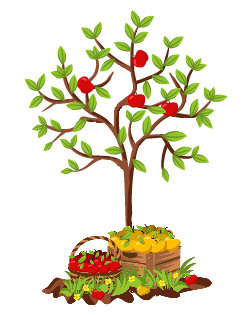
- jasmine;
- sea buckthorn;
- barberry;
- lilacs;
- rose hips;
- viburnum.
These plants grow quite aggressively, suppressing the growth of neighboring crops. They "crowd out" them, which can lead to reduced yields or even the death of the plants.
Plants compatible with apple trees
 It is best to plant it next to a tender and young apple tree. raspberry bushesThese plants are considered companion crops, having a beneficial effect on each other:
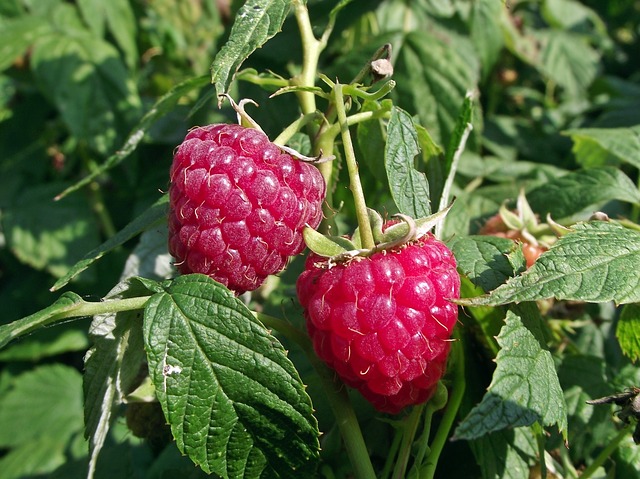 It is best to plant it next to a tender and young apple tree. raspberry bushesThese plants are considered companion crops, having a beneficial effect on each other:
- Raspberry roots loosen the soil, saturating it with oxygen and enriching it with nitrogen compounds.
- At the same time, closely spaced raspberry leaf blades protect apple plantings from scabies, and apple tree leaves protect raspberries from the appearance of gray rot.
- But as soon as the apple tree grows large enough, the raspberry, which loves light, will become uncomfortable under the dense crown of the tree, so you will have to replant it.
- The apple tree gets along well with box elderThe latter releases phytoncides into the air, which protect fruit trees from codling moths. Keep in mind that the maple tree's crown will need to be pruned annually, leaving an average height of 1 m.
- The apple tree gets along well with pear, since they have many similar features (flowering, fruiting, immunity resistance to various diseases and pests).
The apple tree is ready to become friends with the pear tree and become a great neighbor. However, the pear tree doesn't do particularly well next to apple trees and stone fruit crops. So the gardener will have to make a choice.
- A favorable neighborhood for an apple tree can also be obtained with plum, cherry and honeysuckleJust don't plant them too close together, so that each spreading crown has enough space as it grows and develops.
- Planting next to an apple tree is acceptable quince, wormwood and garlicThe shade of a mature fruit tree ensures normal growth and development for the hosta. You can plant mint bushes under the apple tree, which also prefer partial shade, or white clover, which provides nitrogenous soil and honey, so the apple tree will always have plenty of bees.
What is best not to plant next to an apple tree?
The choice of neighboring plants for an apple tree will directly affect not only its health, normal growth, and resistance to pests and diseases, but also its yield, as well as the condition of the selected neighbors.
Choose crops for planting next to each other that have as similar growing conditions as possible (lighting, fertilization, desired substrate composition, etc.). This will minimize the risk of competition between them.
We should also not forget about the ability of some plants, which is called allelopathy. In short, this is the ability of a crop to produce a substance that negatively affects the growth and development of neighboring cropsSometimes this influence reaches such a scale that it completely stops the growth of other plants.
- Taking into account all the nuances described above, we can say with confidence that it is best to plant next to an apple tree. cherries It's not worth it. The apple tree will stunt its growth, so you won't get any berries from it.
- It is also not worth organizing the neighborhood of an apple tree and peach treesPeach tree roots are quite branched and long, and they can penetrate into an apple orchard and rob it of nutrients and moisture. This is a surefire way to kill the apple trees.
- Avoid planting next to an apple tree bird cherryThe glassworm waits out the winter cold there, but when it moves to apple tree plantings, it can destroy the entire apple harvest for the new season.
- Avoid planting near an apple orchard. viburnumViburnum loves moisture, so it can brazenly steal it from apple trees, drying out the soil beneath. The same applies, incidentally, to moisture-loving birch trees.
- If you like sunflowers If you're looking for a bountiful apple harvest in your garden, you'll have to avoid planting sunny plants. This is because sunflowers produce substances that inhibit the absorption of nutrients by neighboring plants. A lack of nutrients in the soil leads to impaired growth, poor flowering, and fruiting of apple trees.
- Such a seemingly insignificant flower as lily of the valley It can cause serious damage to a strong and sturdy apple tree. Lily-of-the-valley roots are quite powerful and aggressive; they grow quickly, destroying everything in their path. It will be difficult to completely remove them from the soil around the tree trunk, so it's best not to plant them at all.
- Planted in close proximity to apple trees gooseberries and black currants will refuse to bear fruit (or will bear fruit at the expense of the apple tree harvest).
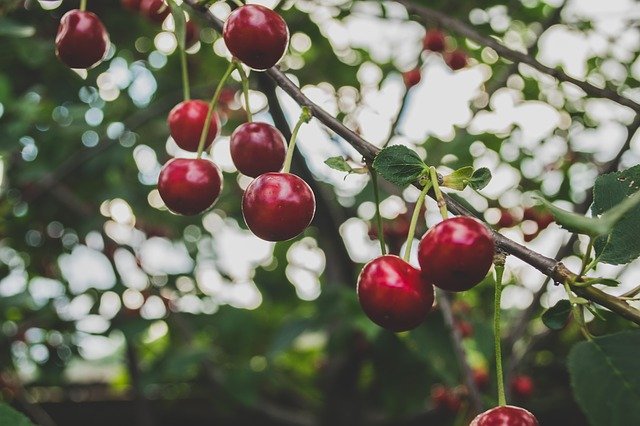 Taking into account all the nuances described above, we can say with confidence that it is best to plant next to an apple tree. cherries It's not worth it. The apple tree will stunt its growth, so you won't get any berries from it.
Avoid planting next to apple trees:
- conifers (juniper, fir, thuja) - apple trees prefer neutral soils, but conifers can significantly increase the acidity of the soil, so you should avoid planting these plants near the garden;
- poplars;
- chestnuts;
- roses;
- elderberry;
- rowan;
- lilac;
- apricot;
- cherry plum.
If you absolutely must plant certain crops incompatible with apple trees, plant them as far apart as possible. Maintain a distance of 10 meters or more. The only exception is hazelnuts. It's best not to plant them in the area at all, or plant them at the opposite end from the apple trees; otherwise, you won't get an apple harvest.
As the previous points demonstrate, the notion that apple trees are easy to grow alongside other plants is incorrect. So, choose your "friends" carefully to ensure a bountiful and delicious harvest.
Conclusion
Plant compatibility is crucial, as it determines the health of plants, their normal growth, development, and fruiting. However, experienced gardeners can sometimes manage to grow seemingly incompatible shrubs and trees in the same garden plot. So, remember that compatibility is important, but even more important is proper agricultural practices, regular planting care, and timely treatment. Then you'll be able to reap a bountiful harvest every season, regardless of the plantings you share.