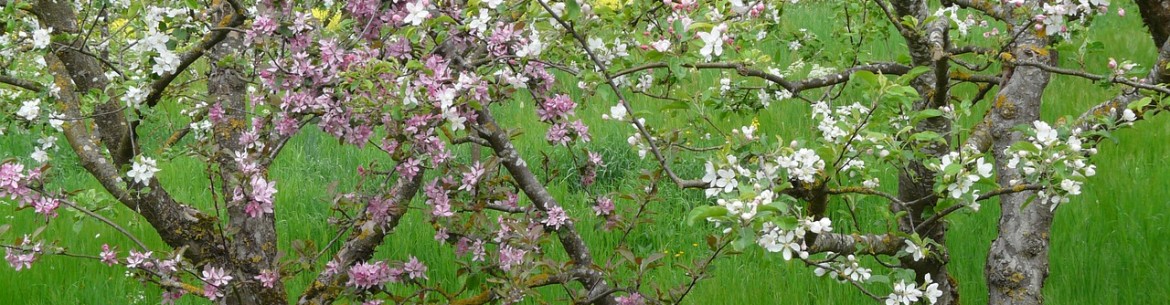
Dwarf Apple Tree: A Guide to Planting and Caring for a Good Harvest
Gardeners are increasingly planting low-growing and dwarf fruit tree varieties in their gardens. Dwarf apple trees are especially common. What are the advantages of these fruit trees, and are they worth planting in your garden?
Content
What are the advantages of low-growing species?
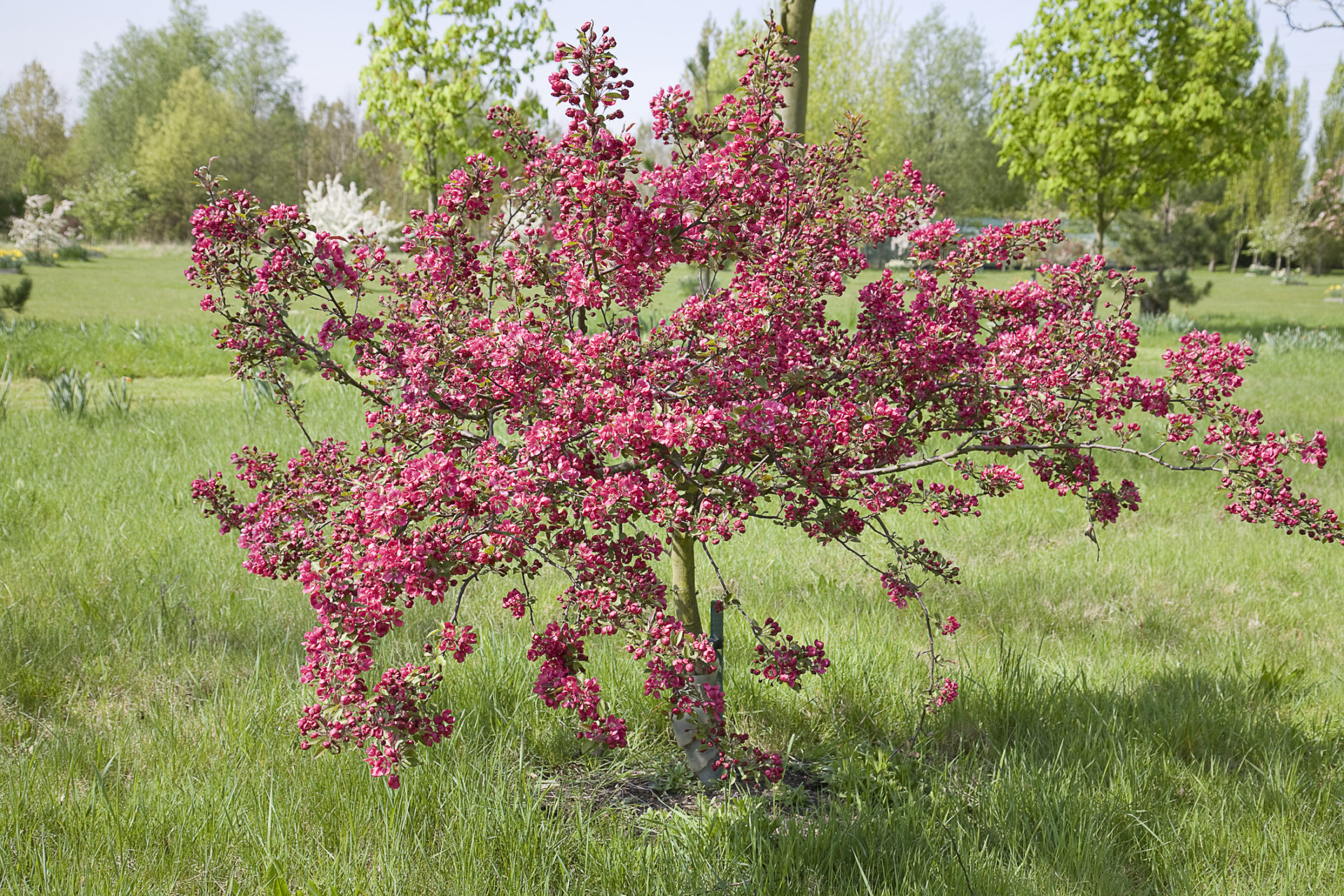
Dwarf apple trees are not a new plant variety. Essentially, they involve grafting classic apple trees onto a specially cultivated clonal dwarf rootstock.
The result of such grafting is an apple tree that grows only 2–2.5 meters in height. However, don't confuse the concepts of a dwarf and a columnar plant. Columnar apple trees are a distinct type of fruit tree that develop into a full-grown, tall plant. These trees lack a developed crown. Dwarf varieties, despite their short stature, are quite capable of developing a full crown, just of a smaller size.
Dwarf apple trees live somewhat shorter lives than classic varieties. On average, a classic tall apple tree lives 35–40 full years, while a dwarf apple tree lives only 25–30 years.
How to plant in open ground
Before planting a purchased seedling in open ground, wrap it in a damp cloth and cover it with plastic. Trim the branches before planting.
When is the best time to plant?
The optimal periods for planting cuttings in open ground are considered to be early spring or autumn.
Autumn planting
If you decide to plant a dwarf apple tree in the fall, then plan the work for the period from the second half of September to mid-October.
It is during this time that the plant is in a “dormant” state, so the likelihood that it will quickly take root in a new location increases significantly.
Before planting a tree in open ground, familiarize yourself with the planting nuances:
- Choose a well-lit or partially shaded area for your apple tree. Keep in mind that this area should be protected from drafts, and the groundwater level should be at least 150 cm below it.
- Plant in a moist and loosened substrate that has been well fertilized with nutrients.
- The optimal soil for a dwarf tree is medium or light loam.
- The planting hole should be approximately 0.7 m deep and 0.6 m in diameter. When digging, the top 25 cm of soil should be pushed aside and then mixed with 1–2 buckets of peat mixture or humusAdd 600 g of ash and the same amount of superphosphate to this mixture. Place a stake in the center of the hole, then fill the soil mixture around it to form a small mound. Top this mixture with a layer of regular potting soil, approximately 2–3 cm thick.
- Place the seedling on the prepared mound. Once the roots are carefully spread out, fill the hole with topsoil without fertilizer.
- If you are planting several identical seedlings at once, keep a distance of at least 3 m between them.
- Once the apple tree is fully planted, compact the substrate around it, then step back from the trunk about half a meter and make a ridge 15 cm high.
- Pour several buckets of water into the tree's trunk circle (you should get about 2-3 buckets for each seedling). Once the water has been absorbed into the soil mixture, cover the area around the tree's trunk circle with a 3 cm layer of mulch.humus or peat). Then tie the plant to a stake.
Spring planting
Dwarf apple trees should be planted in the spring when the snow has completely melted, the soil has become looser and softer (free of frozen clumps), and the buds on the plants have not yet begun to open. Prepare the planting hole in advance (in the fall) by adding soil and fertilizer. Over the winter, this soil will settle and become more compact, and the fertilizer will dissolve.
In the spring, a stake is inserted into the center of the planting hole, and a mound of topsoil is piled around it. The apple tree is placed on this mound, and then planting proceeds as in the fall.
How to care for low-growing crops
Caring for dwarf apple trees is somewhat easier than caring for tall ones. However, even this easier process has its own nuances.
 Spring care
Maintenance is quite simple:
- In the spring, it's necessary to trim tree branches slightly. If the apple tree has been growing on your property for several years, it will require formative and sanitary pruning.
- Before the sap begins to flow through the plant tissues, it's important to treat the crop with preventatives against various diseases and pests. Trapping belts are also attached to the trunks to catch harmful insects.
- Make sure the top layer of soil under the apple tree doesn't dry out. After watering, loosen the soil around and underneath the tree to a depth of 5–7 cm. It's best to cover this area with mulch to reduce the frequency of watering and slow water evaporation.
- On a clear April day, whitewash the tree trunk and base of skeletal shoots with lime. Finally, apply nitrogen or complex fertilizers.
Summer care
During the summer, it is especially important to monitor watering and soil moisture levels:
- The soil around the tree trunk should not dry out. So, water regularly.
- Apple trees are often attacked by various pests during the summer. To protect your trees, use specialized products and folk remedies.
- Feed your apple tree foliarly. Add micronutrients (such as iron) to the nutrient mixture that the plant especially needs during hot weather.
- When the tree begins to bear fruit, provide it with supports so that the branches with heavy apples do not break.
How to care for it in autumn
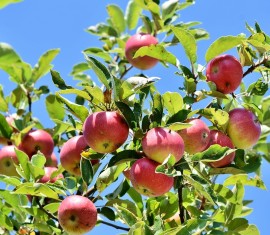
It is in the fall that most dwarf apple tree varieties begin to ripen, so caring for the plants will be associated with harvesting the fruit:
- Keep the tree trunk area clean during this time. It should always be kept clear, and any fallen leaves or fruit should be removed immediately.
- After harvesting the fruit, feed the tree with mineral mixtures and also carry out sanitary pruning.
- Once you've cleared the tree trunk area of debris, cut branches, and fallen fruit, loosen the soil. This will help break the insulation for harmful insects that decide to settle in the soil for the winter.
- In the second half of autumn, it is necessary to apply preventative preparations against infections and pests, and already in late autumn, prepare the apple tree for winter.
How to process
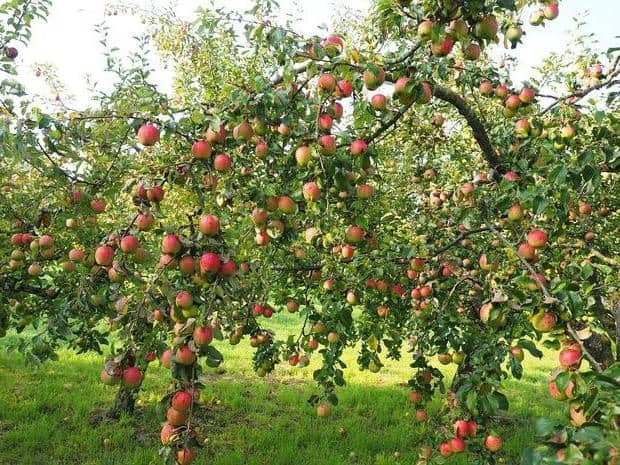 In the spring, dwarf apple trees should be treated after the buds swell. At this time, they are sprayed with a solution of Nitrafen or Bordeaux mixture (1%). This helps prevent fungus and repels harmful insects that overwinter in the bark or on the surface of the tree trunk. These same compounds are also used as a preventative measure in the fall, after all the leaves have fallen.
How to add water to the soil
Plants that haven't yet begun to form fruit require three applications of water (50 liters per tree). The final watering is done in early August.
Trees that have already begun bearing fruit require more frequent watering. They will require 3-5 waterings per season:
- before the plant blooms;
- during active flowering;
- in June, after the ovaries fall off;
- before the apples begin to ripen.
If the summer was too dry and there was little rain in the fall, the apple tree will require a moisture-replenishing winter watering. Try to apply the water so that the substrate is moistened to the depth of the root system (approximately 1 bucket of water per 1 square meter of garden).
Fertilizing
The fertilization system for dwarf apple trees is quite complex due to the peculiarities of the root system and the abundance of fruiting:
- Systematic application of fertilizers should be carried out once every two weeks.
- In the 2nd–3rd year of growth, a complex mixture should be added (30–40 g of mixture per 10 l of water).
- Organic matter should be added two or more times per season. A solution of chicken manure (1:20) or mullein (1:10).
- In summer, apply complex foliar mixtures. Mineral compounds are best. Spray the solution on both sides of the foliage.
- Dwarf apple trees require foliar feeding with a low concentration urea solution.
- The last one top dressing entered on a sheet no later than September.
- Autumn fertilizers must contain a minimum of nitrogen or no nitrogen compounds at all; phosphorus and potassium should predominate in them.
Preparing for winter
Since the root system of dwarf apple trees extends close to the soil surface, it can easily freeze in winters with little snow. So be sure to cover the area around the trunk with compost or humusThe layer should be thick. Spruce branches are added on top.
As soon as the snow falls, the spruce branches are removed and a thick layer of snow is poured onto the tree trunk circle in their place.
What pruning needs to be done?
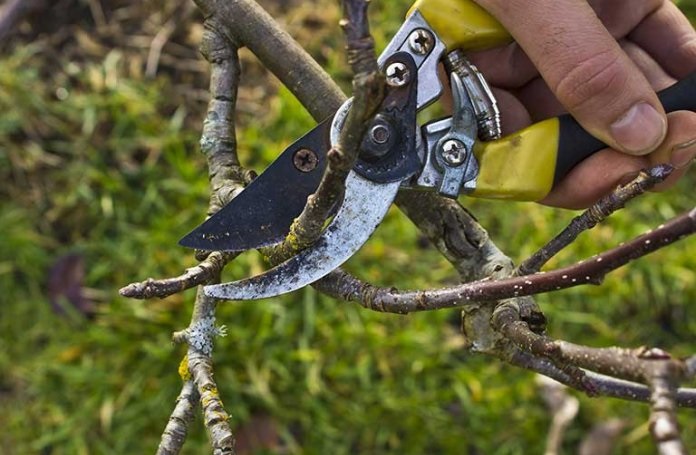 Dwarf apple trees require pruning to increase yield, remove dead or diseased shoots, and shape the tree's crown into a neat, even shape. Sometimes, pruning is also necessary for rejuvenation purposes.
The best time
Formative pruning should be performed in early or mid-spring. Sanitary and rejuvenating pruning should also be performed at this time. In the fall, only sanitary pruning is required, which will help remove damaged stems from the tree.
How to perform the procedure correctly
Crown-shaping pruning of dwarf apple trees follows the same rules as formative pruning of tall trees, but is done much faster and within a specific, short timeframe.
Particularly popular is the "dwarf pyramid" crown, which is formed in the form of a tree no more than 250 cm high and with an average shoot length of no more than a meter.
How to spend spring
Apple trees need to be pruned in the spring before the sap begins to flow in the plant tissues:
- First, sanitary pruning is carried out, during which all deformed, broken, diseased and damaged shoots are removed.
- Next comes formative pruning, which is performed in the first spring after planting.
- Once the apple tree reaches the desired height, all conductor growth will need to be pruned annually. After the skeletal shoots reach 0.45–0.5 m in length, their lateral growth is pruned.
- Don't forget to thin out overgrown shoots and shape the crown.
How to carry out in the autumn period
Harvesting must be completed with a sanitary pruning. All broken, diseased, dried, or deformed shoots must be removed and burned away from the main plantings. All cuts thicker than 7 mm must be sealed with garden pitch.
Rules of reproduction
There are several methods that will help you propagate a dwarf tree.
Vertical bends
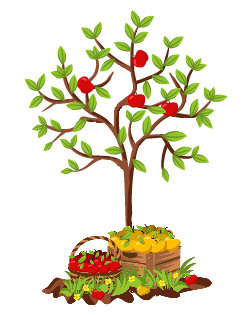 For this method, you need to take seedlings that are two years old:
- The dwarf rootstock is planted in open ground, and part of its trunk is deepened into the soil by 10–15 cm.
- In spring, the part of the bush that rises above the ground is shortened to 1.5–2 cm. 2–3 buds should remain on the stump.
- As soon as the length of the shoots growing from these buds is 13–15 cm, water the plant (or wait for rain) and hill the stump with peat, sawdust or nutritious soil mixture to a height of 6–10 cm.
- Once the shoots reach 22–25 cm in length, hill them up again to form a gentle, wide mound. Apply nitrogen fertilizer.
- Roots will appear on the vertical cuttings in 35–40 days. Maintain soil moisture at 75–80% during this stage. Regularly loosen and weed the area under the seedling.
- In the fall, remove the soil and use pruning shears to separate the shoots, leaving 1–2 cm of growth on the stump.
- Plant the cuttings in open ground and cover the mother bush with soil.
Horizontal bends
This method requires strong, low-growing stems of a dwarf rootstock:
- Place the stems in pre-prepared shallow holes (3–5 cm), then secure them with metal pins and cover with soil.
- In the spring, remove all the substrate from the cutting, and hill up the vertical shoots that have formed on it to a height of 13–15 cm (later repeat the procedure, but at 22–25 cm).
- Tie the bends at the base with flexible wire.
Intercalary insert
This method helps prevent the death of a dwarf tree from severe frosts during a winter with little snow. An intercalary graft is a kind of intermediate link between the rootstock of a vigorous tree and the actual cultivar shoot of the dwarf tree. In this layering system, the strong root system of a vigorous apple tree is first, then the dwarf variety shoot grafted onto it, and finally, the cultivar shoot is grafted onto it.
Keep in mind that the seedling is planted with the insert deepened into the soil, and after some time the insert will form a root system.
Green stem method
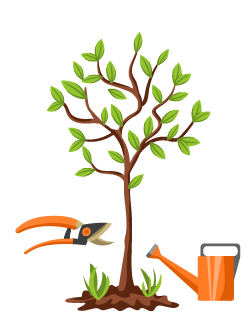 For this method you will need a greenhouse in which you need to create fog:
- Harvesting should be done in mid-June. To cut seedlings with three leaf blades, use only the green stems that have just formed.
- Upper cut do it above the third leaf, the bottom one - under the bud.
- Remove the bottom leaf and then tie the cuttings together. Soak the bottom sections in a solution of any rooting stimulant for 18–20 hours.
- Rinse the shoots under running water and plant them in the greenhouse.
- Keep in mind that the soil should consist of sand and peat. Be sure to loosen it before planting.
- After this, turn on a special installation that creates fog in the greenhouse.
- All rooted seedlings can be planted in open ground, where they will grow for another year. After this, they can be used as rootstocks for varietal cuttings.
Use of woody shoots
Cuttings for this method are prepared in the fall during the extraction of layers from the ground:
- The length of each cutting with the etiolated lower half should be approximately 20–30 cm.
- Before planting, seedlings should be placed in a basement, buried in damp peat or sand. They should be kept in the basement at a temperature of +2 to +5 degrees Celsius.
- In spring, seedlings are planted in an unheated greenhouse at a distance of 100 mm from each other.
Use of root suckers
Buy several root cuttings from a nursery, each of which will be 8–13 cm long (7–10 mm in diameter):
- In winter, place them in peat or sand and store at a temperature of +2…+5 degrees.
- 14–21 days before planting, move the seedlings to a warmer place (+15…+20 degrees).
- In spring, plant the seedlings in open ground, keeping a distance of 9–11 cm between each one.
- The cuttings should be placed vertically in the substrate so that the thickness of the soil layer above the top cut is maintained at 20 mm or more.
- Of the several shoots that will form later, only the branched one should be left.
Propagation by budding
Budding usually takes place somewhere in mid-July:
- Take a scion with a bud from a cultivar cutting. Insert the scion into the cut in the bark of the dwarf tree. The cut should be T-shaped and located just above the knee.
- Be sure to wrap the grafting site with tight tape. budding (or other material with a suitable texture). Do not cover the eye and petiole.
- Once the shield has taken hold, remove the tape.
Which insects are the most dangerous?
A wide variety of pests can harm crops. However, gardeners most often encounter the following:
- aphid;
- glass case;
- moth;
- copperhead;
- scale insect;
- currant leaf roller;
- silkworms;
- red apple mites;
- codling moth;
- apple blossom weevil;
- Western bark beetle;
- pear pipe roller and sawfly;
- hawthorn, etc.
What are the most common diseases?
Dwarf varieties are susceptible to the same diseases as classic tall apple trees:
- milky shine;
- various types of mosaics;
- powdery mildew;
- red rust;
- cytosporosis;
- scab;
- fungi of all kinds;
- fruit rot, etc.
Popular varieties
Almost all varieties of dwarf apple trees are conventionally divided into three large types: autumn, winter, and summer.
A similar division exists among tall varieties.
For the Moscow region
Most often in Moscow region Unpretentious varieties with high yields and increased resistance to temperature fluctuations, diseases and pests are grown:
- Melba (early variety);
- Grushovka Podmoskovya (winter variety with resistance to scab);
- Down to earth (autumn look);
- Autumn striped (autumn variety);
- Bogatyr (frost-resistant late variety, resistant to diseases and pests).
Ural varieties
Frost-resistant varieties are most often used for cultivation in the Ural regions:
- Wonderful (late summer species);
- Bratchud (winter frost-resistant variety);
- Sokolovskie (late frost-resistant variety);
- Snowdrop (late frost-resistant variety).
Siberian varieties
In the conditions that are common in the Siberian regions, only maximally resistant to severe frosts dwarf apple tree varieties:
- Ermakovskoe mountain (early variety);
- Antonovka dessert (mid-season variety);
- Arkadik (early variety);
- Gift Grafskom (late variety with resistance to fungi).
Which variety to choose?
If you're choosing the best dwarf apple tree varieties from all the available ones, you should choose those that are most resistant to cold, drought, pests, and diseases, as well as those with the best taste characteristics:
- Brotherchud;
- Carpet;
- Snowdrop;
- Early sweet;
- Sun;
- Wonderful.
Conclusion
Dwarf apple trees are increasingly being chosen by gardeners for planting in their summer cottages. These fruit trees are much more convenient in terms of growing and harvesting. However, they do require some planting and care considerations, so be sure to familiarize yourself with them after purchasing your seedlings.