Apple tree Health: characteristics of the variety and care
| Color | Reds |
|---|---|
| Ripening season | Autumn |
| Size of apples | Average |
| Taste | Sweet and sour |
| Crown type | Tall tree |
| Shelf life | Average shelf life |
| Application | For recycling , Fresh |
| Winter hardiness | Average winter hardiness |
| Fruiting age | Up to 5 years |
 History of origin and regions of growth
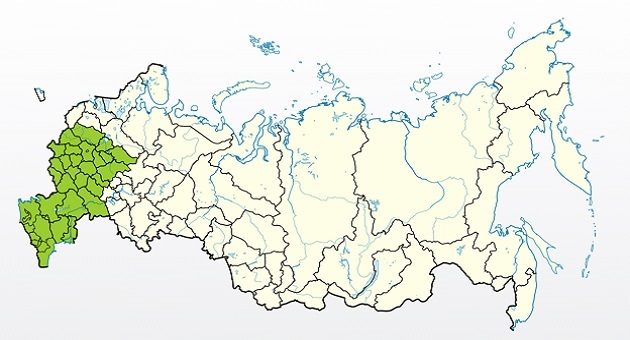
Growing regions
- Middle zone.
- Central Black Earth Region.
- Moscow region.
- Leningrad region.
- Crimea.
- North Caucasus.
Origin
This apple variety can be safely classified as an Orlov apple, meaning it was developed and tested in the village of Zhilina in the Oryol region at the All-Russian Research Institute of Fruit Crop Breeding. Work on this new variety began in the late 1970s. In 1977, hybridization of the OR48T47 seedling and the Antonovka Obyknovennaya variety resulted in the creation of apple trees named "Zdorovie" (Health) for their rich vitamin and mineral content.
The variety's creators are generally considered to be Zoya Mikhailovna Serova, Nina Glebovna Krasova, and Vladilen Vasilyevich Zhdanov, who worked under the supervision of Evgeny Nikolaevich Sedov. The new apple tree was immediately popular with the breeders, so it was immediately sent for testing. In 1999, an application for official registration was submitted. It was only approved in 2001, at which time the tree was added to the State Register of Breeding Achievements and zoned for the Central Black Earth Region.
Content
Description of the Health variety
 The new apple tree immediately attracted attention not only because of its good-tasting fruit and abundant fruit production, although these factors are also very important. It is a moderately healthy, neat tree that doesn't require any special attention, is hardy, winter-hardy, and regularly produces high yields year after year. It is undemanding in terms of soil, fertilizer, and watering, but at the same time, it responds very well to care, and has a special Vf gene in its genetic code that protects it from scabies.
The apples are beautiful and large, juicy, tasty, and aromatic. They are easy to transport and store in a cellar or a special refrigerator. The Zdorovie variety is recommended for both individual garden plots and large, intensive commercial orchards.
Apples: What do they look like?
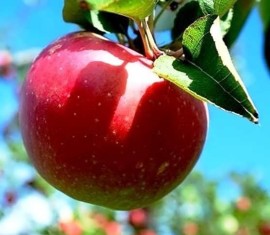
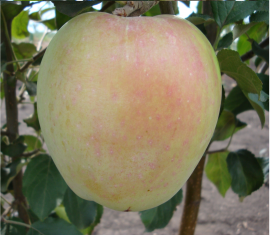
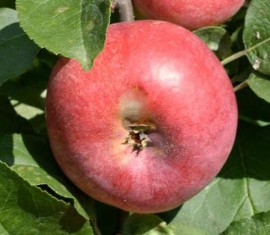
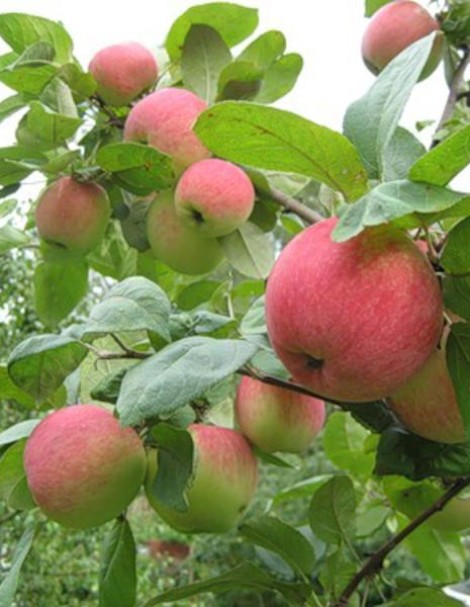
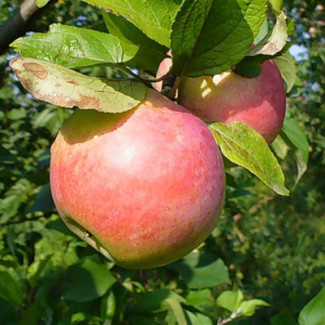
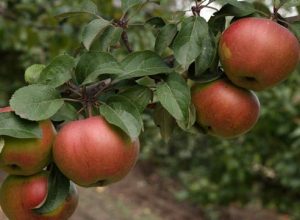
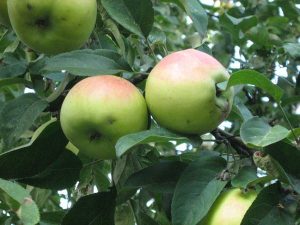 The fruits are medium to slightly larger than average in size. They reach approximately 140-170 grams, are round, slightly flattened along the central axis, and the tip can be slightly conical or elongated. They are generally uniform and symmetrical, but can also be slanted. Ribbing is subtle, and the lateral seam is completely invisible.
The skin is dense, smooth, not very shiny, but glossy, slightly dull, elastic, and provides good protection against mechanical damage. When dry, it may develop a dense grayish-silver waxy coating during ripening. The base color is green or slightly greenish-yellowish, with a complex blush. It consists of a red or red-carmine undertone, a blurred, mottled pattern covering 65-80% of the surface, and a speckled, striped, streaked, and spotted pattern of violet, burgundy, or beetroot color. Subcutaneous punctures are numerous but small; they are grayish-greenish and barely noticeable. It is recommended to evaluate the chemical composition of the apple based on the following data:
- P-active substances (catechins) – 294 milligrams.
- Ascorbic acid (vitamin C) – 9.3 milligrams.
- Fructose (total sugars) – 9.1%.
- Pectins – 6.1%.
- Titratable acids – 0.87%.
The flesh is medium-dense, fine-grained, very juicy, and tender. It's slightly prickly, refreshing, not cloying, with a pleasant texture and easy to peel. Its flavor is considered harmonious, refined, and balanced, with a classic sweet-and-sour balance. Professional tasters rate the fruit at approximately 4.3-4.4 points for its appearance and flavor.
Apple tree Health: characteristics
Crown and root system
 The tree is of medium size, growing to about 4-5 meters, no moreMost gardeners prefer to prune trees, not allowing them to grow taller than 3.5-4 cm. The crown is neat, oval or rounded, but over the years it can easily become spreading, drooping, and even weeping. It is dense, prone to overgrowth, with shoots growing at right angles to the central core and covered with gray or gray-brown bark.
The leaves are short-pointed, medium-sized, elongated, ovate, and slightly oval. They can curl, curve downward, or fold into a boat-like shape, creating the impression of a "curly" crown. The blades are dark green or even deep emerald, and may be pubescent on the reverse side. The edges are finely wavy, serrate-crenate, and serrated. The root system is extensive, medium-deep, partially superficial, and fibrous.
Productivity and pollination
The Zdorovie variety is considered high-yielding, as it can easily compete even with the notorious Antonovka.
One mature tree of the Zdorovie variety can yield approximately 200-240 kilograms of aromatic fruit in a single season. These figures may fluctuate slightly depending on care, fertilizing, climate, and even weather conditions.
Apple trees are considered self-fertile, but without nearby varieties for cross-pollination, they can yield only 25-35% of their potential yield. Therefore, it's recommended to interplant them with suitable varieties that bloom at the same time. It's also a good idea to place beehives in the garden during the blooming period and spray the plants with honey or sugar syrup.
Winter hardiness and disease resistance
The apple tree's frost resistance is impressive. During the entire testing period in the Oryol region, it never showed a frost damage level greater than 0.3-0.4. It tolerates temperatures down to -32-35°C, but proper preparation and winter shelter are essential.
The variety has strong genetic immunity to scab, so the tree is simply unable to contract it. It is also quite resistant to other diseases, but preventative treatments cannot be completely abandoned. Regular spraying and treatments will help reduce the risk to virtually zero.
Rootstocks and subspecies
The variety is completely new and hasn't even been fully tested, so it's too early to talk about its subvarieties. There are no columnar or creeping Zdorov'e varieties. The apple tree is grown on various rootstocks, the most popular of which are the semi-dwarf and dwarf M-9 and M-116.
Peculiarities of Growing Health
 Landing
 Landing
Basic conditions
- Apple trees prefer sunny, open spaces, well-lit by direct sunlight for most of the day. They can also grow in the shade and sometimes even bloom and bear fruit, but yields drop significantly.
- It's advisable to choose locations with good ventilation, as the dense canopy requires good air movement. At the same time, avoid drafts, which can easily destroy any plant.
- The groundwater level shouldn't exceed 2.2-2.4 meters, otherwise the Zdorovie will reach it with its root shoots and begin to rot. If there's little choice, you can plant standard trees on an artificial embankment or create a cutoff by digging a sheet of slate at a depth of at least 2 meters.
- It's best to prepare all the holes for apple trees 5-8 months before planting to allow them time to properly mature. To do this, dig 60-70 centimeters deep, then add a layer of soil mixed with fertilizer, then fill with drainage material and plenty of water.
- Trees are typically spaced 4-5 meters apart, and slightly less between rows. For dwarf and semi-dwarf varieties, a 3-4 meter gap is sufficient.
- Before planting, the seedling is inspected, dry shoots and root shoots are cut off, and the rhizome is immersed in water for 4-5 hours.
- The root collar always remains on top; this is a universal rule if you want to preserve the properties and qualities of the rootstock.
- A stake is immediately driven into the holes for tying. The tree trunk is attached to it with rope or twine in the shape of a figure eight or infinity sign. This will prevent the bark from being damaged by the wind.
- Place the tree in the hole on a mound of drainage material, spread the rhizome out by hand, and cover it with soil, shaking it and compacting it. Mound soil around the perimeter like a parapet, pour 25-30 liters of water inside, and mulch the surface.
Landing dates
This variety is so versatile that it easily tolerates both spring and fall planting. Zdorov' apple trees are planted in late March or early April, or late September or early October, during warm, dry weather. Make sure there are at least 4-6 weeks before frost. With a closed root system, this apple tree thrives when planted at any point during the growing season.
Tree care
 Tree care
Protection from frost and pests
To prevent the tree from freezing during frosts, you must first properly stop watering in the fall. It's best to do this gradually, reducing the amount and frequency of water applied mid-fall. AugustBy September, watering should be completely stopped, although a single control period can be carried out at the moment when all the leaves have just fallen.
To prevent insects from damaging leaves, fruit, and wood, the easiest way is to use commercially available insecticides and fungicides. Additionally, the trunks are whitewashed with lime to a depth of about a meter, gardening supplies, grease, fuel oil, or lard, and then smeared on the trunks.
Loosening the soil, watering: proper agricultural technology
You need to dig around the tree trunk regularly, twice a year, removing debris from under the apple tree, weeds, root suckers, and shoots of various plants. You can hoe the soil more often, about 6-8 times per season. It's best to do this the following season. glaze day, then the soil will not be compacted into a dense lump.
Water the Health tree as needed, especially generously when young. Each tree should receive at least 15-25 liters of water, twice every 7-10 days, when there's no natural rainfall. It's very convenient to dissolve fertilizers in water, as they're absorbed much more easily.
Pruning: simple crown shaping
The tree thrives in a broom-shaped or sparsely layered form. Both options result in branches spaced widely apart at varying heights. Trees are pruned in their first year and inspected twice a year to prevent the crown from becoming overly dense. No more than a third of the canopy should be removed at a time, otherwise the apple tree may die from stress.
Sanitary pruning of trees is carried out in the spring and fall. All dry, damaged, diseased, and broken shoots are cut off. The cut areas (wounds) are covered with water-based paint. garden pitch, swamp.
Pollinator varieties
Reproduction
- Layers.
- Grafting cuttings.
- Clones.
Diseases and pests
- Rust.
- Powdery mildew.
- Spider mite.
- Green aphid.
- Weevil.
- Flower beetle.
- Fleas.
- Codling moth.
Ripening and fruiting of Health
The beginning of fruiting
 The beginning of fruiting
Apple trees are considered early fruiting, but they begin bearing fruit for the first time approximately 5-6 years after planting in open ground. Around the 4th or 5th year, buds may appear, but these are usually empty flowers. Therefore, experienced gardeners advise pinching off the blossoms to prevent them from drawing excess sap from the tree. The first harvests will be small, only 4-7 kilograms of fruit, but this is enough for a sample.
Flowering time
Like most autumn apple trees, 'Zdorovie' begins to form buds in mid-April. By the end of the month or the beginning of the following month, they open into large, beautiful, fragrant flowers, gathered in clusters of 4-6. They are white and pink, very delicate in texture, saucer-shaped, with loosely closed petals and stigmas above the anthers. Blooming lasts 8-12 days, slightly longer in cool and rainy weather.
Fruiting and growth
Apple trees gain height and crown volume quite quickly. They gain approximately 25-40 centimeters per season, quickly reaching their peak. They also manage to increase their fruit production at a rapid pace. Each year, the fruit grows in quantity, and by the 10th to 12th year, the harvest is quite substantial. A single apple tree can provide for the needs of 1-2 people for an entire year.
The fruits ripen in early September; in poor weather, cold, and rain, they can be delayed until mid- or late September. Consumer maturity occurs a little later, approximately 14-18 days after storage. They cannot be stored for extended periods in either the refrigerator or cellar. However, they can retain all their properties and qualities until late winter or even early spring.
Top dressing
- Compost.
- Manure.
- Humus.
- Chicken manure.
- Wood ash.
- Peat.
- Ammonium nitrate.
- Superphosphate.
What to do if it doesn't bloom or bear fruit
- Inspect for diseases or pests.
- Limit or increase watering.
- Feed or apply fertilizer.
- Transplant to a sunny place.
Why do apples fall?
- Natural weather conditions (wind, rain, hurricane, hail).
- Pest damage.
- Diseases.
Share your own experience with the Zdorovie apple variety so that any gardener can learn about it before planting and achieve maximum results.