Apple scab: photos, description, and treatment
When growing apple trees, gardeners must deal with various diseases that pose a serious threat to the entire orchard. One such problem is scab, which can destroy virtually the entire harvest. To ensure reliable protection for your trees, it's important to know the signs of this disease and how to effectively eliminate it.
Content
Characteristics of the disease, description of symptoms of scab
Scab is a fungal disease caused by the ascomycete Venturia inaequalis. The disease affects leaves, petioles, inflorescences, fruit stalks, and the fruit itself. Scab does not kill the tree, but it significantly damages the future harvest: it impairs the taste and appearance of the fruit and reduces its shelf life. In central Russia, scab-related losses account for approximately 40% of the harvest, and in years with unfavorable climatic conditions, up to 80%.
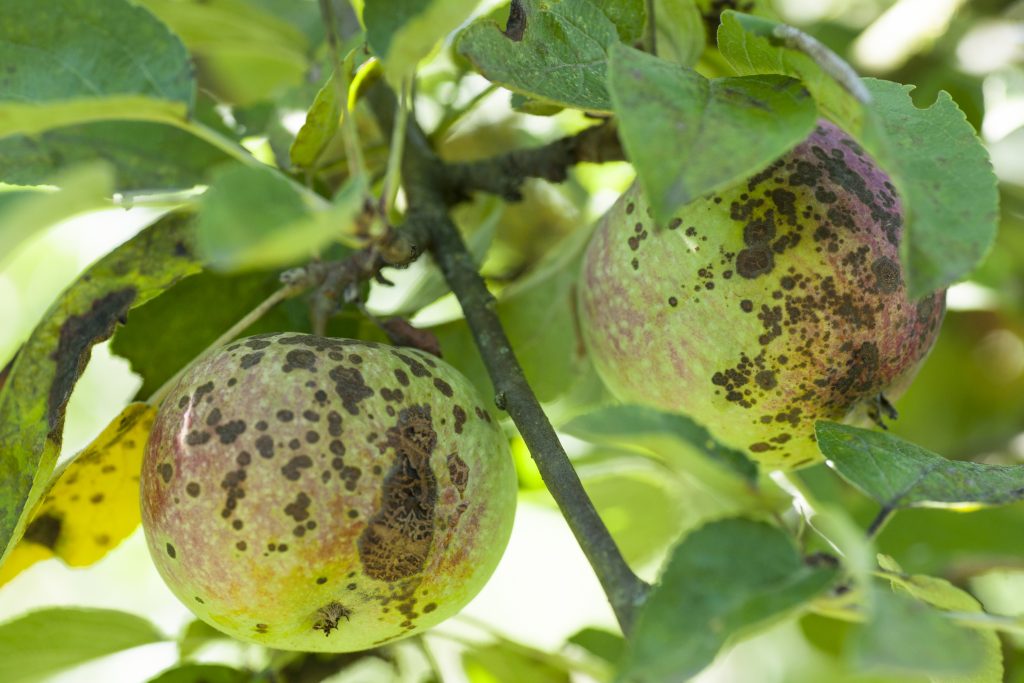
Fungus Overwinters in damaged tree bark and fallen leaves, and in the spring, during bud formation, begins to disperse spores throughout the orchard. The spread of spores is facilitated by rains, wind and insects flying from tree to tree.
Favorable conditions for the activation of the Venturia inaequalis fungus are created on rainy days with air temperatures from +18 to +20 °C and humidity up to 80%.
Scab is common in areas characterized by rainy summers. In regions with hot and arid climates, this disease is much less common.
Signs of defeat
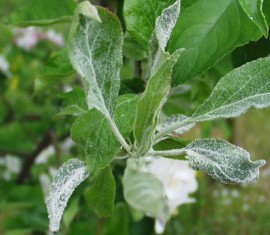
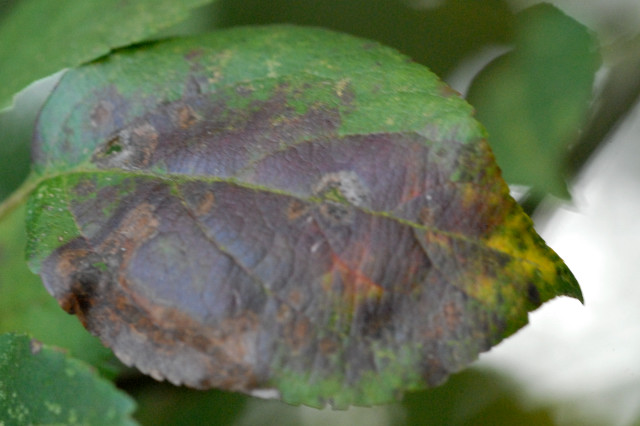 When the spores land on young foliage, they germinate. In early June, yellow spots appear on the outer surface of the leaf blades, gradually becoming covered with a velvety brown coating.
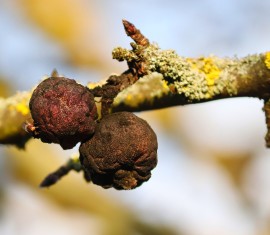
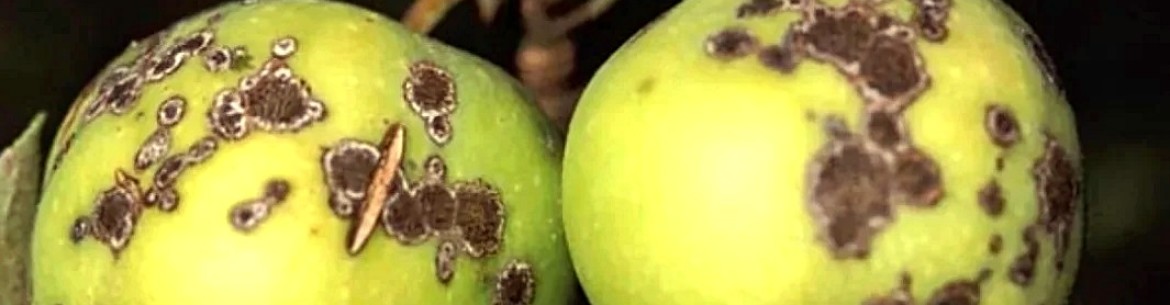
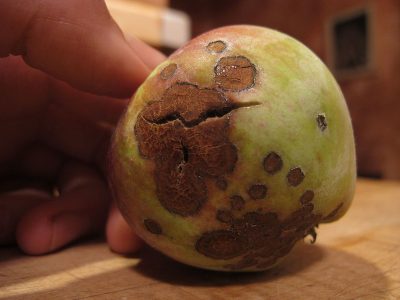
Severely affected leaves dry up and fall off, infecting the stems, ovaries, and already-grown fruits. Apples become covered with gray-black round spots, initially covered with a velvety coating. Gradually, these spots increase in size, and cracked growths form on their surface. As a result, the apples become deformed, stunted, and small.
Apples affected by scab are not suitable for consumption and are used only for processing.
Causes of occurrence
In addition to weather conditions, the active development of the disease is caused by several other factors:
- excess soil moisture as a result of over-watering;
- dense tree crowns due to failure to maintain the required spacing when planting seedlings;
- ignoring autumn cleaning of plant debris;
- susceptibility of a particular variety to a disease;
- lack of sanitary pruning or failure to comply with its standards;
- insufficient air circulation in the garden.
The recommended distance between seedlings, which prevents excessive crown density, is from 3 to 10 m, depending on the variety and size of the future tree.
Most often, scab affects old apple trees; young specimens are more resistant to this disease.
Methods of combating the disease
There are a number of measures that can not only eliminate this problem but also prevent it from occurring on fruit crops. These measures include both direct treatment and preventative measures. Specific procedures are performed at each time of year.
How to get rid of scab in spring
 Sanitary and preventative measures taken during this time are considered especially important to combat scab. They begin before bud swelling and sap flow. Just as in the fall, sanitary pruning is carried out in the spring, removing dry and diseased shoots. After this procedure, tools must be treated with antifungal agents, such as potassium permanganate solution or copper sulfate.
Before and after flowering, trees in the garden are sprayed Bordeaux mixture (1%), as well as one of the fungicides:
- Abiga Peak;
- Horus;
- "Skor".
Before the sap begins to flow, apple trees are treated with preparations diluted in 10 liters of water:
- "DNOC" 100 g;
- Nitrafen 200 g
In spring, don't forget about fertilizing, but don't overdo it. A deficiency of nutrients, as well as an overdose, can weaken the immune system, making trees more vulnerable to various diseases, including fungal infections.
When signs of scab are detected, a number of actions are taken to eliminate it:
- The above-ground portion of the apple tree is treated with a urea solution diluted with water at a ratio of 500 g per 10 l. This solution not only helps combat fungus but also saturates the tree with nitrogen, which is essential during the period of awakening and intensive growth.
- In the phase of pink, unblown buds, repeat spraying of the apple tree is carried out using one of the preparations diluted in 10 liters of water: “Skor” (2 ml), “Horus” (2 g), “Fitolavin” (20 ml), “Gamair” (10 tablets).
- The trees are treated for the third time after flowering has ended. During this period, it is recommended to use "HOM" or Bordeaux mixture (1%).
Folk methods
In spring, scab can be controlled not only with chemicals but also with traditional remedies. These options are not particularly effective, but they are safe for human health.
- Spraying with salt water (1 kg of salt per 10 liters of water). This solution is useful during spring frosts, as it slows the awakening of apple trees, thereby reducing the risk of scab. When spraying, keep in mind that salt reduces the absorption of micronutrients, thereby reducing the tree's immunity.
- Spraying with horsetail infusion.
- Treatment of apple tree crowns with a solution of mustard powder (100 g / 10 l of water).
After the snow melts, it is necessary to remove any leaves and mummified fruits remaining from autumn.
How to treat apple trees for scab in summer
If small olive spots are detected on leaves during the summer, treatment should begin immediately, using fungicides, biological products, and folk remedies. Fitosporin can be used at any stage of the growing season: it effectively prevents the fungus from spreading to other parts of the tree and does not accumulate in already formed fruits. The product poses no health risk to humans or pets and can be used at any temperature.
To prepare a working solution, it is recommended to add Zircon to Fitosporin, which stimulates plant growth.
To combat scab, copper-containing preparations are used to suppress the development of all fungal diseases. Throughout the summer, apple trees are sprayed with Bordeaux mixture, stopping use two weeks before harvest. To prevent burn leaves, treatment is carried out with a weak solution (1%) prepared from 200 g of lime, 100 g of copper sulfate and 10 liters of water.
For summer spraying, the product "HOM," which contains copper oxychloride and is virtually harmless to bees and non-phytotoxic, is well suited. "Strobi," applied up to three times every 10 days, is also effective. Throughout the summer, it's important to periodically remove weeds and other plant debris from the garden.
If the disease is difficult to treat and appears again, it is worth checking the soil acidity.
Scab especially often affects trees growing in acidic soils with low nitrogen levels. A deficiency of this nutrient causes stunted growth and weakened immunity in apple trees.
Features of the fight in July
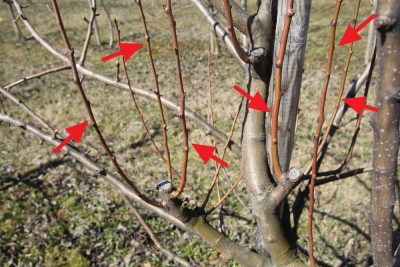 In July, due to active growth spinning tops The apple tree experiences a strong thickening of the crown, regardless of the autumn and summer pruning. At this time spinning tops They need to be pruned, as they no longer contribute to the further development of the crown and do not produce fruit. By increasing the foliage with their presence, water sprouts prevent adequate ventilation.
To treat scab on trees in July, chemicals classified as hazard class 3 or lower are used. If the fungus has infected early apple varieties at this time, chemicals are no longer used. Treatment is performed using folk remedies or biological preparations.
How to combat scab in autumn
Autumn prevention is especially important in the fight against fungal diseases. This includes the following measures:
- Collect weeds, leaves, mummified fruit, and other plant debris. Dispose of them outside the garden. The ash left after the fire can be reused.
- Sanitary pruning is performed after the sap flow has ended. Cut branches are also subject to burning.
- Cleaning the bark of various bulges and rough spots - ideal places for fungal spores to overwinter.
- Digging up the soil in tree trunk circles.
- Treatment of the crown and soil with a solution of copper sulfate (3%) or Bordeaux mixture.
- Whitewashing the trunk and main branches with a composition prepared from slaked lime, PVA glue and copper sulfate (1%).
Scab-resistant varieties
Domestic breeders have developed over 20 apple varieties resistant to this disease. The most popular of these are:
- Alexander Boyko;
- Health;
- Bolotovskoye;
- Ivanovskoye;
- Aphrodite;
- Oryol Polesie;
- Kandil Orlovsky;
- Apple Savior;
- Venyaminovskoe.
Growing immune varieties helps prevent scab and many other diseases. This allows gardeners to avoid the use of chemicals, which improves the eco-friendliness of future harvests.
The main drugs for treating the disease
Fungal diseases are controlled using fungicides. Before using them, it's important to understand a few things:
- With repeated use of the same drug, the fungus develops immunity to its components, which reduces its effectiveness to zero.
- When purchasing a chemical, it is important to pay attention to its main active ingredient, as the same components may be hidden under different names.
- Each product has a specific waiting period before the fruit can be consumed. Shorter waiting periods are recommended for use shortly before harvest.
Popular fungicides for scab control
There are several types of fungicidal preparations, differing from each other in certain characteristics and application features.
| Name of the drug | Active ingredient | Terms of use | Duration of therapeutic effect (in days) | Dosage | Frequency of treatments |
| Copper-containing preparations | |||||
| Bordeaux mixture | Lime, copper sulfate | Spring, autumn | 20 | 100 g / 10 l (1% solution) | 1 |
| Copper sulfate | Copper sulfate | Autumn, spring | 20 | 100 g / 10 l (1% solution) | 1 |
| Abiga Peak | Copper oxychloride | The entire growing season | 15 | 50 ml / 10 l of water | 4 |
| Oxychom | Oxadixil, copper oxychloride | Growing season | 15 | 20 g / 10 l | 3 |
| Systemic drugs | |||||
| Horus | Cyprodinil | Formation of a green cone before flowering begins | 7–10 | 3 g / 10 l | 2 |
| Switch | Ciprodil, fludioxonil | Growing season | 20 | 2 g / 10 l | 2 |
| "Skor" | Difenoconazole | Ovary formation phase | 5–7 | 2 ml / 10 l | 3 |
| Embrelia | Isopyrazam, difenoconazole | Flowering period and until harvest | 7–10 | N/A | 3 |
| Biofungicides | |||||
| Fitosporin-M | Soil bacteria Bacillus subtilis (hay bacillus) | Growing season | 7–14 | 5 ml / 10 l | Unlimited |
| Other drugs | |||||
| Ferrous sulfate | Ferrous sulfate | Late autumn | 20 | 50 g / 10 l | 1 |
The principle of using saltpeter
Experienced gardeners believe that spraying with potassium or ammonium nitrate is just as effective as treating with fungicides. Using nitrate helps eliminate fungal diseases while simultaneously feed apple tree with nitrogen.
For preventative purposes, this product (0.5–3%) is used in early spring and late fall. As the fungus progresses, the concentration is increased to 10%.
Following all the rules and recommendations for caring for your apple orchard will reduce the risk of fungal infection, including scab. Regular tree inspections will help identify the disease early and begin treating it in its early stages.