How to properly prepare the soil and planting hole for an apple tree
To ensure a healthy plant and a good harvest, care for the tree should begin as early as the planning stage of the planting hole. Ideally, preparation begins a year before the intended planting, as the original soil structure and composition are rarely suitable for apple trees. This facilitates the tree's establishment in its new location and subsequently increases the plant's resistance to weather conditions and diseases, positively impacting the yield.
Content
- Where to dig a hole: distances from other trees and objects
- How to prepare a hole for planting an apple tree
- Dimensions and depth of the pit
- Preparing a planting hole for different soils and applying fertilizers
- Preparing a hole for different types and varieties of apple trees
- Preparing a planting hole in Siberia and the Urals
 Where to dig a hole: distances from other trees and objects
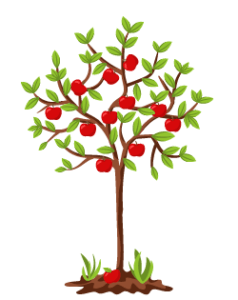 Where to dig a hole: distances from other trees and objects
A suitable location for the seedling is an important factor for successful cultivation. Apple trees prefer open, sunny areas. Furthermore, it's important to maintain proper spacing between trees and leave space between the seedling and any structures.
The optimal distance between seedlings is 5-6 meters. This distance is roughly the same for all types of apple trees, as the trees' root systems can grow up to 12 meters in diameter. Planting too close to buildings can damage their foundations.
Columnar apple trees can be planted at a distance of 1 m from each other and other low-growing crops.
Avoid digging a hole too close to buildings or fences. It's best to space tall varieties 7-8 meters apart, as are medium-sized varieties. Dwarf and columnar varieties can be planted a little closer—4-5 meters. The same applies to spacing between other crops, so that the future tree doesn't shade shorter shrubs and trees.
How to prepare a hole for planting an apple tree
When preparing a hole, great attention is paid not only to its size but also to the quality of the soil. Trees prefer neutral, fertile soil. Before digging the hole, all weeds are removed from the area, and when digging, weed roots are removed from the soil.
It's best to dig up damp soil - the day after rain, but the soil shouldn't be over-watered. In dry weather, the soil needs to be well-drained. water and allow the moisture to saturate the layers of soil.
The groundwater level is important. If it's less than 2 meters below the surface, it's best to build a mound on which to dig the hole. Otherwise, the roots will rot from excess moisture, and the tree will fail to thrive and die.
For tall apple trees, the water table should be below 3 m.
In the spring
In the spring, the hole is prepared at least 2-3 weeks before the expected planting of the seedling. Ideally, this is done 2.5 months beforehand, but it's best to plant the trees while they're still frozen. Digging frozen ground in February is quite difficult. The basic steps for preparing the hole are the same as in the fall.
If you plan to plant a tree in the fall, preparing a hole for it in the spring is the best option.
The layers of soil can be interspersed with each other - then the sediment will be less, and soil it will turn out more loose and nutritious.
In the fall
The hole is prepared six months before planting. Polyethylene or any other dense material is laid on either side of the hole—the topsoil on the right side, and the deeper soil on the left. The bottom of the hole is loosened with a crowbar. To fill the hole, prepare a nutrient mixture—mix the deep soil with 2-3 buckets of any organic matter, such as compost. manure Add 1 kg of nitroammophoska and 800 g of wood ash. Mix the soil mixture thoroughly. Place the soil on the right side of the film at the bottom of the hole, and then the prepared soil mixture on top. The fertile soil layer should be 15-20 cm high, as it will settle over time.
Dimensions and depth of the pit
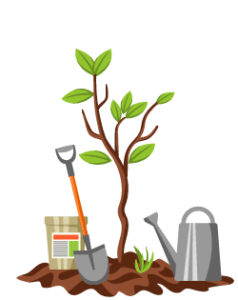 The hole size varies for different types of seedlings. For tall varieties, the hole should be at least 70 cm deep and 90 cm in diameter. Medium-sized trees will benefit from a hole measuring 70 x 80 cm, while dwarf trees will benefit from a hole measuring 60 x 70 cm. For clay soil, the hole diameter increases but the depth decreases, while for sandy soil, the opposite is true.
Preparing a planting hole for different soils and applying fertilizers
Different soils require different conditions preparing a pit. Fertile Black soils often do not require additional fertilizers, as there is a risk of overfertilizing the soil and burning the seedling's roots. Clay and sandy soils are poor in organic matter and therefore require enrichment. manure and compost.
On clay
Clay soils are heavy and poorly permeable to water and oxygen, so they require lightening and longer preparation. At least a year before planting an apple tree, the soil is fertilized at a rate of:
- 15 kg of dry sawdust;
- 500 g slaked lime;
- 15 kg of humus or compost;
- 50 kg of river sand.
Then, dig the soil to a depth of at least 50 cm. The mixture lightens the soil, making it lighter and looser. Additionally, 150 g of nitroammophoska can be added to the area where the hole will be dug.
Green manure is then sown on the soil; it enriches the soil with nitrogen and makes it more loose. Mustard, lupine, or phacelia are good choices for this. The latter also effectively repels harmful insects. Before flowering, the green manure is mowed and incorporated into the soil.
In the spring, additional nitrogen fertilizers should be added to the hole; for autumn planting, it is better to give preference to superphosphate.
On peat
Peat soil is light, but usually lacks essential nutrients and is highly acidic.
To alkalize the soil, add dolomite flour, slaked lime, or chalk. For peat layers thicker than 40 cm, add 0.4 cubic meters of sand per 10 square meters of soil during digging.
When preparing a hole in the fall, the following is poured onto the soil in the spring (per 1 sq. m):
- 2 kg of cow, horse or sheep manure;
- 0.2 kg of phosphate flour;
- 50 g potassium sulfate;
- 0.15 kg of superphosphate.
The area is dug to a depth of 30 cm and seeded with green manure. After the green manure is in place, the pit itself can be prepared.
For soil with excess moisture, or on previously unprocessed peat, drainage is carried out or drainage ditches are made.
On the sand
Sandy soil is very light but low in organic matter. Its preparation also begins a year before the expected planting of seedlings. The following amendments are added to the soil a year before planting:
- 15 kg of horse or cow manure, humus or compost;
- 50 kg of clay;
- 0.6 kg slaked lime;
- 150 g of potassium superphosphate.
The mixture is taken at a rate per 1 square meter. The soil is dug to a depth of 0.5 m. The top soil is sown with green manure for incorporation.
When preparing a hole on sandy soil, a drainage layer of clay or silt 10-15 cm deep is placed at the bottom.
On loam
Loamy soils are optimal in terms of density, but they lack sufficient organic matter and minerals, so they require enrichment. The soil is dug to a depth of 50 cm, after adding the following per square meter:
- 15 kg humus, humus or compost;
- 150 g of potassium superphosphate.
Preparing a hole for different types and varieties of apple trees
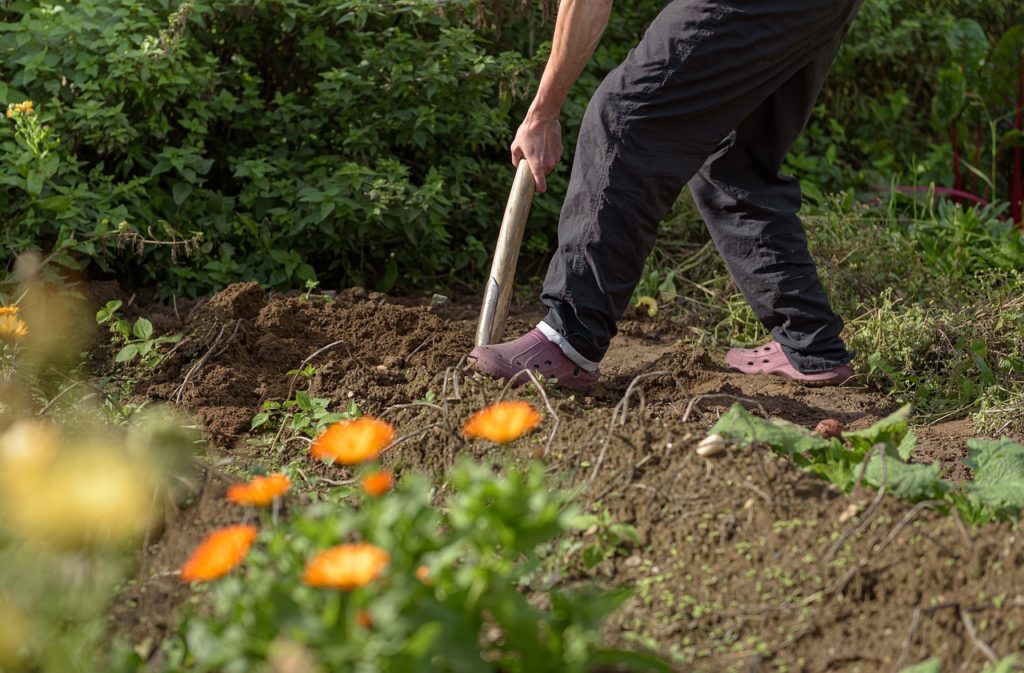
Different species and varieties have different requirements for the size of the hole. This depends on the tree's root system and growth stage. Taller varieties have extensive root systems and therefore require deeper and wider holes from the start. Columnar varieties don't develop extensive root networks and are generally compact, allowing for smaller holes.
For tall apple trees
 When planting an apple orchard with tall varieties, dig holes at least 7 meters from nearby buildings and fences, at least 5 meters from low-growing varieties, and 4-5 meters between trees. There should be at least 6 meters between rows. In prepared soil, dig holes 70-80 cm deep and at least 90 cm in diameter.
For columnar apple trees
For columnar varieties, maintain a distance of 0.6 m between trees and 1 m between rows and other crops. The hole should be 50 cm deep and 20-25 cm in diameter. Place a 20-25 cm layer of coarse crushed stone and river sand at the bottom. Add 5 kg of organic matter, 100 g of superphosphate, 80 g of potassium sulfate, and 200 g of wood ash to the soil.
For dwarf trees
Dwarf apple trees require a minimum distance of 2.5 meters between them and other low-growing crops, and at least 4 meters between rows. The hole should be at least 50-60 cm deep and 60-70 cm in diameter.
For semi-dwarf trees
Semi-dwarf varieties require a hole 60-70 cm deep and 70-80 cm in diameter. The optimal distance for planting an apple orchard is 3-4 meters between trees in a row and at least 4 meters between rows.
When planting dwarf apple trees in the spring, add 60 g to the hole urea.
Preparing a planting hole in Siberia and the Urals
 Siberia And Ural The climate is different, with long winters and cold springs. Furthermore, the soils are mostly rocky, clayey, and moist. Therefore, when planting apple trees, organic fertilizers and sand are added to loosen and enrich the soil. The hole is prepared at least a year before planting. – during this time the soil will have time to settle and be properly enriched with minerals.
Planting in spring for the Trans-Urals is often unprofitable due to high risks of spring frosts and death of seedlings, so gardeners resort to autumn planting. In addition to all the fertilizers and minerals, superphosphate is added to the prepared hole, which slows the seedling's growth and improves its survival rate.
It's best to begin preparing the hole for the apple tree at least a year before the intended planting. This will allow you to properly cultivate and fertilize the soil, making it denser or looser, and enriching it with minerals. Don't forget about green manure, which not only provides good organic matter, but also helps top dressing, but also, thanks to their extensive root system, they bring essential nutrients to the surface. The hole itself is prepared immediately six months before the intended planting of the apple tree. The amount of fertilizer required depends directly on the soil type, and the size of the hole depends on the apple tree species.