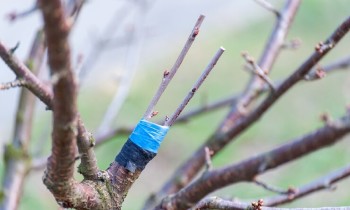

Apple tree cuttings: harvesting, rooting, or grafting
One of the most important tasks in apple tree cultivation is obtaining high-quality planting material. Cuttings are the most accessible and effective method of propagating this fruit tree. To achieve maximum results, it's important to understand a number of the intricacies of this method.
Content
The need for cuttings
 Apple trees typically produce intensive fruit for several years, after which the yield gradually declines. Eventually, the orchard needs to be replanted, replacing mature trees with young saplings. Propagation by cuttings is also used to increase the area of an apple orchard by planting young trees from proven specimens.
Gardeners have the opportunity to purchase recently bred, high-yielding hybrid varieties from nurseries. However, given the unique climate in most regions of Russia, there's no guarantee that these new varieties will produce the expected results. To avoid such risks, most gardeners prefer to use planting material from their own plots, as their own apple trees have already adapted to the climate, survived many winters, and demonstrated fruitfulness.
Cuttings are the optimal method of rejuvenating a mother tree and can be carried out at almost any time of the year.
The best time to take apple tree cuttings is summer.
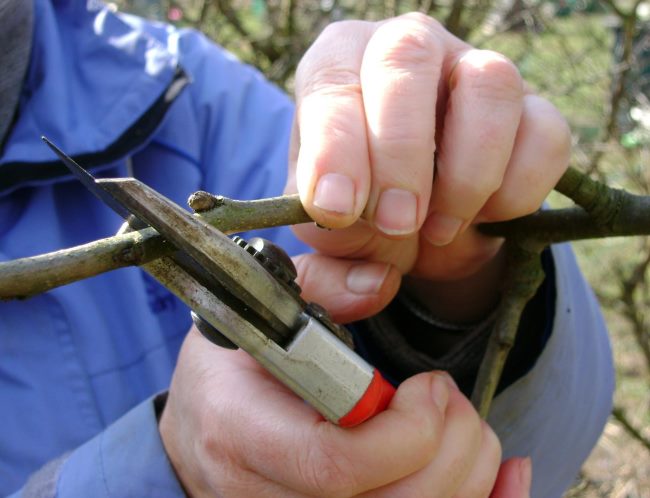
The ideal time for cuttings is considered to be summer: the period from the end of June to the beginning of July, since at this time the leaves of the planting material should already be fully developed.
The harvesting procedure can also be carried out in the fall, in this case cuttings They are then used for grafting. For storage, a dark basement with damp sand and regular ventilation is necessary.
The recommended time for cutting is dawn, since this is when a large amount of moisture accumulates in the shoots.
cuttings, filled with sufficient moisture, is most suitable for propagation.
It is not recommended to make preparations in the spring due to the high risk of damage to the mother tree.
Rules for preparing cuttings
Preparation of planting material It's important to start in winter, as summer cuttings don't develop root systems well. This process should be carried out as follows:
 At the end of December, select a branch from the apple tree that is 1 to 2 years old and has no damage to the bark.
- Break the shoot at the base and fix it in a curved position using electrical tape or a plaster.
- When spring arrives, trim the branch at the break and place it in an opaque container filled with warm, settled water. It's recommended to use melted water for this purpose, if possible.
- For disinfection purposes, it is advisable to dissolve 2 tablets of activated carbon in water.
- During the entire time the branch is in the vessel (usually this takes 20 days), it is necessary to periodically add fresh water.
 At the end of December, select a branch from the apple tree that is 1 to 2 years old and has no damage to the bark.
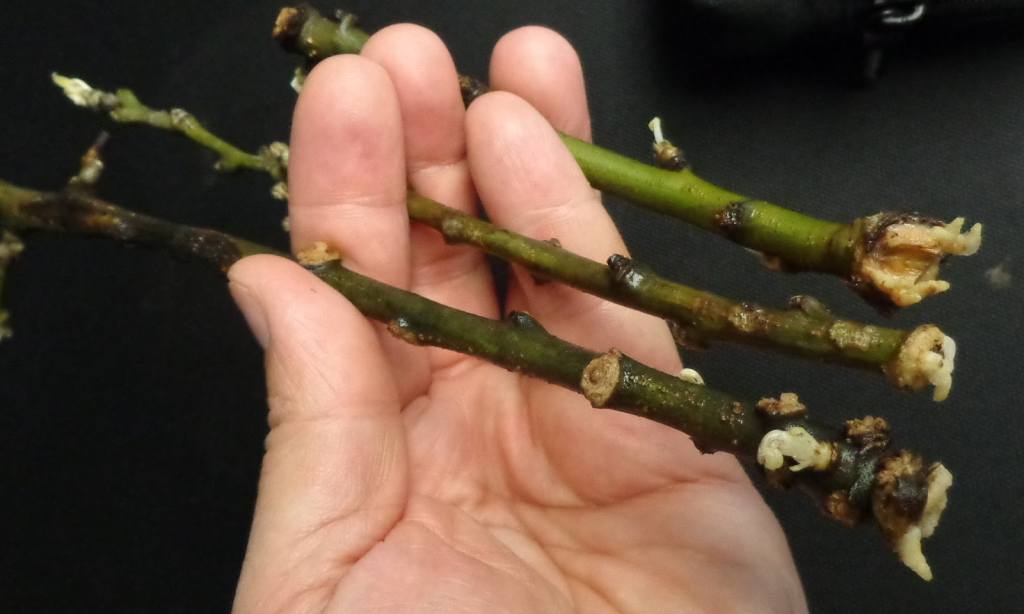
At the end of the specified period on site cut You can see the appearance of a thickening, where roots will eventually begin to form. Once the first shoots appear, you can begin the rooting process.
It is recommended to cut and prepare several shoots at once; this will increase the likelihood of obtaining planting material of the desired quality.
Rooting methods
Typically, after roots appear and reach a length of 5–8 cm, cuttings are immediately planted in the ground. Besides the raised bed, there are several other rooting options that yield equally effective results.
In potato tubers
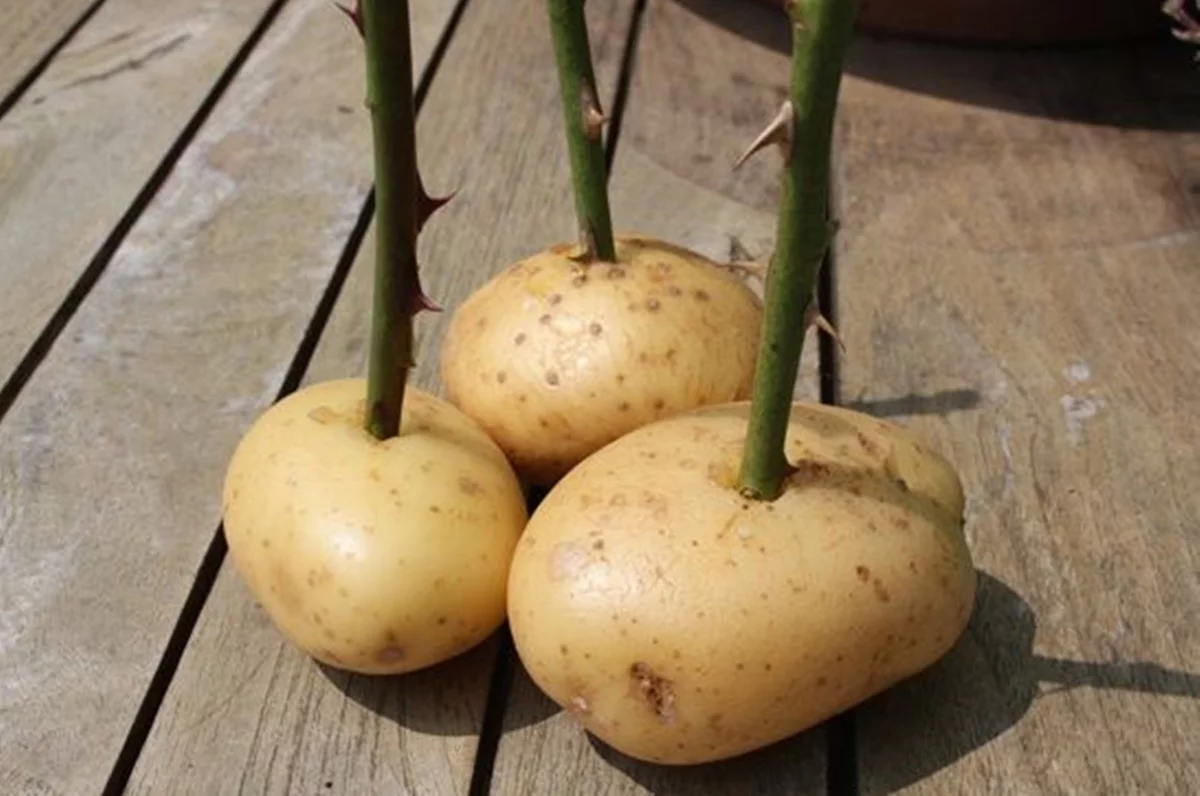
Despite its unusualness, this method is quite productive and is suitable for all types and varieties of apple trees, including columnar ones, which are known for their capriciousness.
For the procedure, select a large potato tuber without mechanical damage or disease. Wash the potato thoroughly, remove any eyes, and then insert the cutting into the potato's flesh and bury it in sand or soil.
A film cover is created on top, which allows for a greenhouse effect.
Using woody cuttings
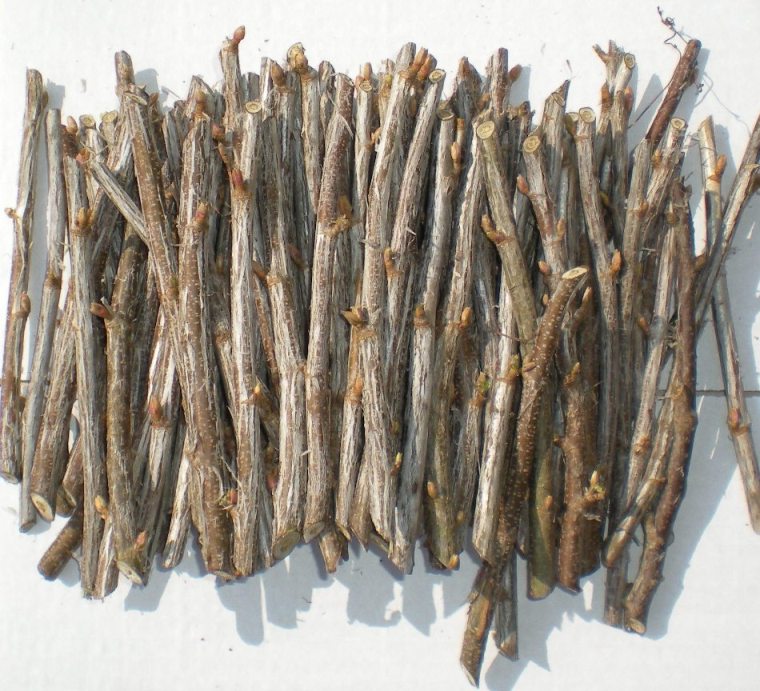
For this method, select completely healthy shoots aged 1 to 2 years, located on the southeast or south side of the parent tree. The planting material should be taken from the middle part of the crown.
In this case, rooting can be done anywhere: indoors, in a greenhouse, or outdoors. The latter method requires setting up a special greenhouse.
At home, boxes are ideal for this procedure. To prepare the substrate, mix store-bought general-purpose potting soil with straw in a 1:3 ratio. In this particular case, the straw acts as a loosening agent.
Rooting outdoors involves mulching, which retains moisture in the soil and prevents the roots from drying out.
Propagating apple trees using woody cuttings has a number of advantages:
- preservation of varietal characteristics;
- the possibility of propagating apple trees of any age using cuttings;
- the possibility of sending and transporting cuttings over any distance without significant financial costs.
The disadvantages of this method include the excessively long rooting process.
In a wooden box
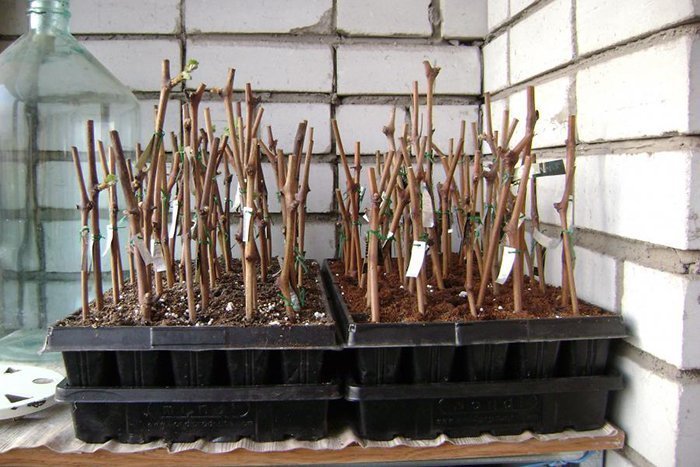
The container is filled with substrate and several cuttings are placed in it at the same time, after which it is placed in a warm place.
The room where the cuttings are rooted must have good ventilation.
In the process of caring for the planting material, drip irrigation is carried out watering.
Planting in open ground
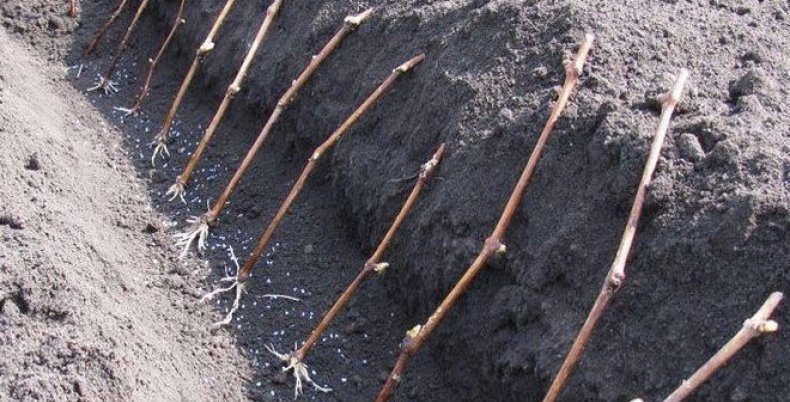
Typically, several young apple trees are planted outdoors at once. The trench method is most often used for this purpose, increasing the chance of obtaining several high-quality specimens.
Before planting, the soil is pre-prepared and fertilized. Subsequently, young shoots require proper care: watering, fertilizing, and loosening the soil.
Grafting method
A common method among gardeners is propagation by grafting, which has its advantages. Direct rooting of a cutting taken from an older parent tree is less effective than grafting. Furthermore, grafting allows for the cultivation of several apple varieties on a single tree, as a mature specimen over seven years old can easily withstand multiple grafts.
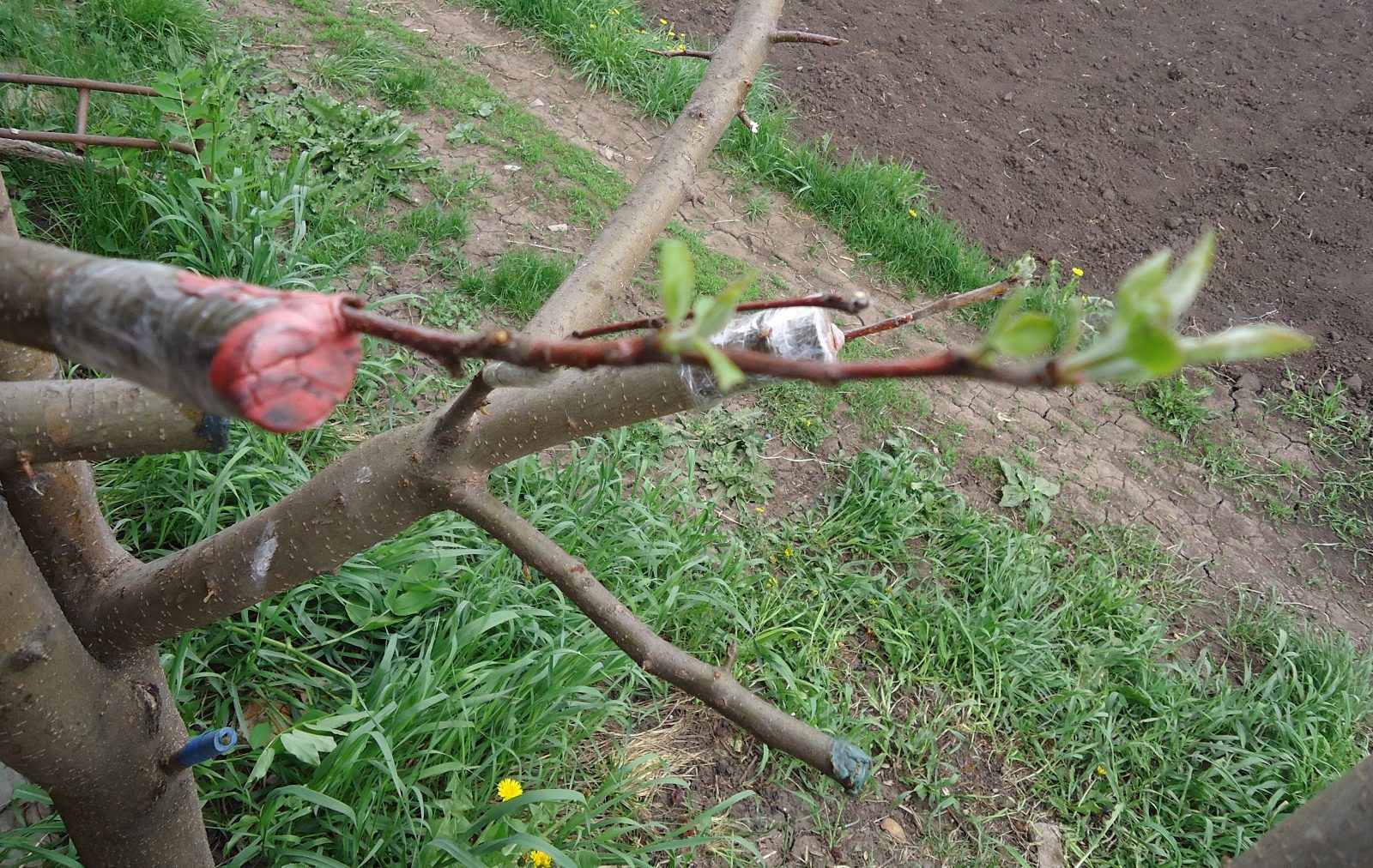
To ensure a successful process, it's important to choose the right rootstock. In this case, wild apple trees are best, as they are characterized by rapid adaptation and viability.
If you plan to grow a single variety, it is recommended to graft the cutting directly onto the roots of the rootstock. For this purpose, use a one-year-old shoot with all its leaves removed.
Cuttings must meet the following requirements:
- presence of 3-4 healthy kidneys;
- the presence of a smooth, oblique cut.
There are several ways to perform vaccinations.
Budding
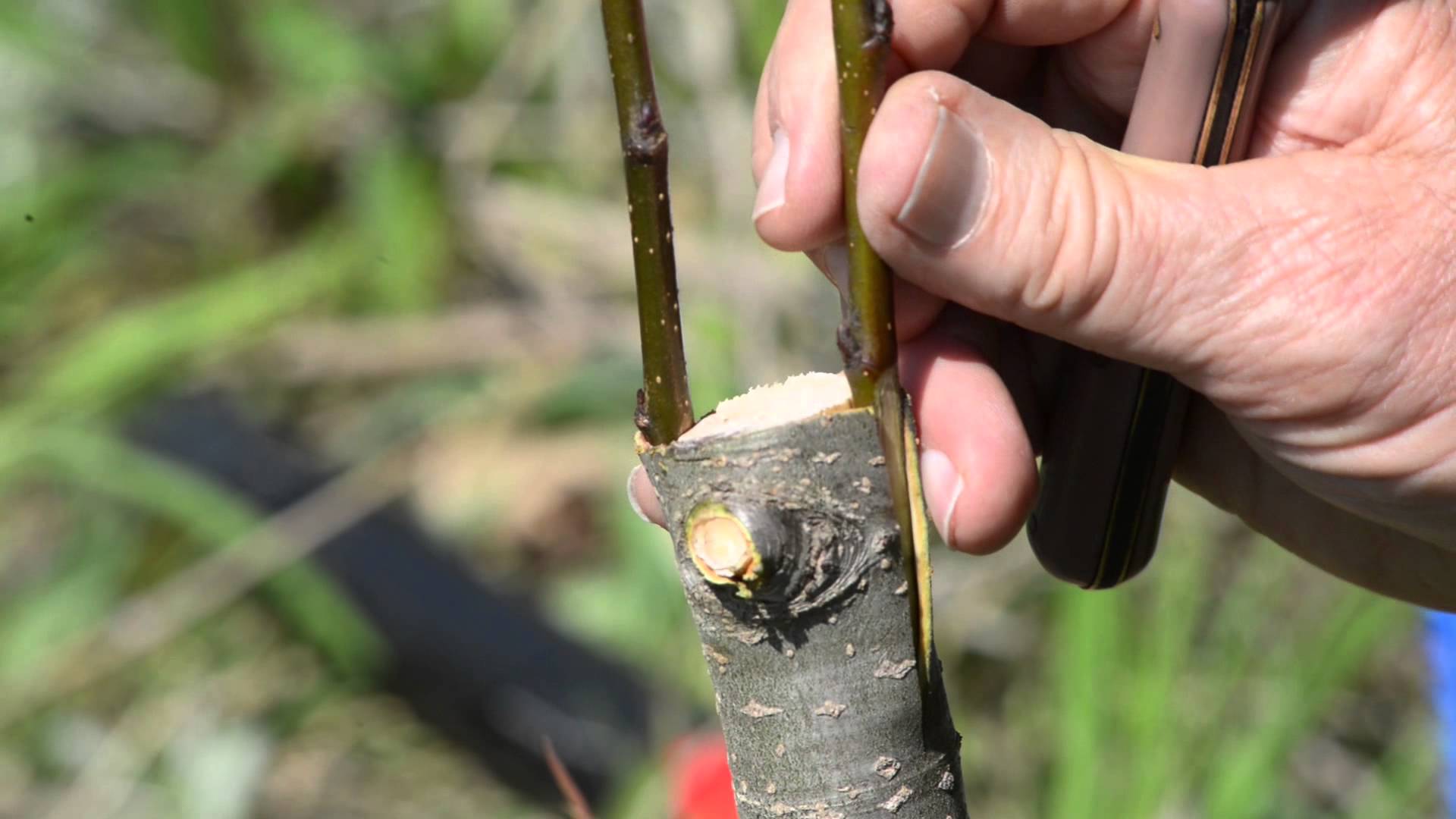
Method budding It's characterized by its ease of implementation and good survival rate. The procedure requires using completely dormant buds, preferably from the previous year. The optimal time for budding is early spring or the first days of August. All operations are performed in a specific sequence:
- On the rootstock, select a reliable shoot growing at least 25 cm from the ground surface.
- In the chosen place, cut the bark to a depth of 2–3 mm so that the letter “T” is formed.
- Carefully lift the bark and press it onto the exposed area of the scion.
- The grafting site is wrapped with a strip of polyethylene film, leaving the bud exposed. Only the bud base should be pressed firmly against the apple tree.
The results of the procedure can be seen after 2 weeks.
In the incision
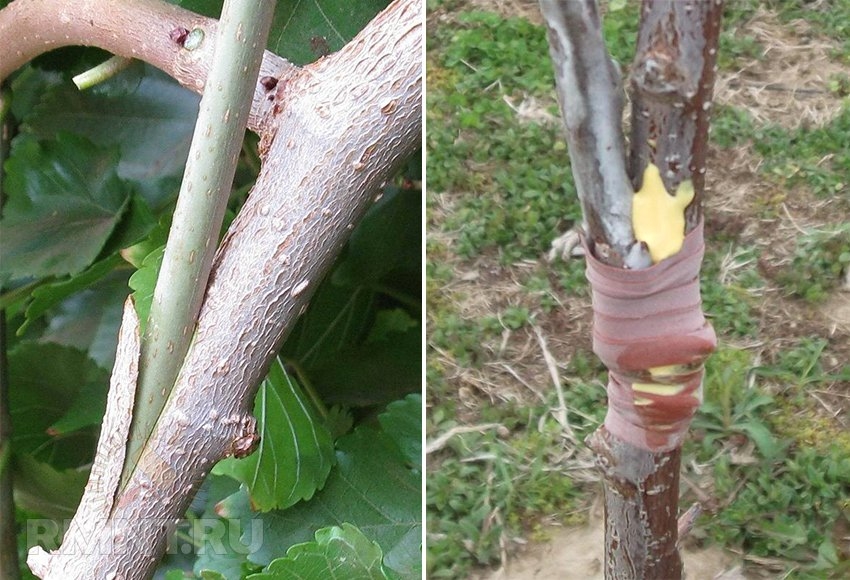
To perform the vaccination into the cleft, located on the side, you should use a special knife sharpened on only one side (where the chamfer is). The work algorithm is as follows:
- The tip of a pre-prepared cutting is cut off.
- To graft the scion, select a branch on an adult tree and step back 250 mm from the place where it adjoins the trunk.
- At the selected location, make a cut with a knife at a depth of 8 mm.
- A cutting is inserted into the resulting crack.
- The damaged area is treated with putty and then covered with polyethylene.
For the bark
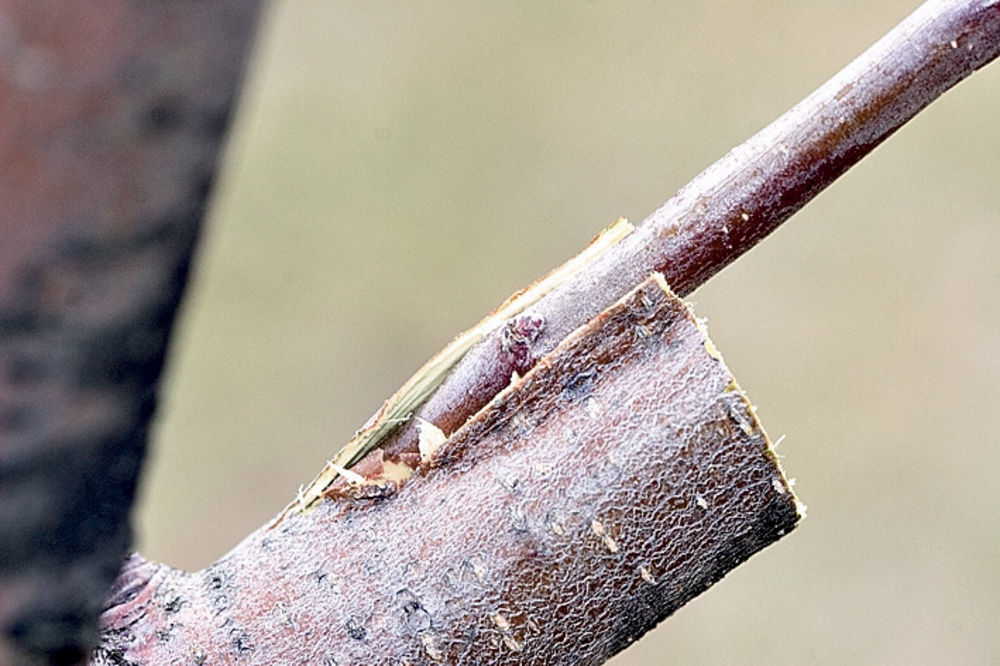 For trees aged three years and older, bark grafting is optimal. This method is recommended in regions where climate conditions limit apple tree growth. Grafting should only be performed in the spring, and no more than four cuttings should be used at a time. The procedure involves several steps:
- On the apple tree, choose a place located at a distance of 1 to 1.2 m from the ground.
- A 5 cm long cut is made by cutting the wood with a sharp knife.
- Carefully move the bark.
- The cutting with the lower end cut off is inserted behind the bark.
- The grafted area is wrapped with plastic film.
When preparing cuttings, it is necessary to take into account the direction of bud growth - they should “look” upward.
Possible errors and failures
When propagating cuttings, gardeners may encounter several problems. One of them is preparing planting material in the spring. Cuttings taken at this time often fail to root because their roots are underdeveloped. This is due to the active movement of sap in the spring, which prevents the production of high-quality cuttings.
Another common mistake among beginning gardeners is grafting at the end of a branch, which leads to rejection. To achieve this effect, the scion should be grafted directly at the base.
Poor survival is often due to insufficient protection from harmful microorganisms, so when taking cuttings, it is essential to treat the cut sites with garden pitch or other similar agents.
Rooting green cuttings
The survival rate of planting material rooted this way ranges from 30 to 60%. The donor's varietal characteristics are fully preserved. The procedure itself consists of several steps:
- The cut green shoot is placed in water with activated carbon dissolved in it.
- To stimulate root growth, special preparations are added to the container.
- After the first roots have formed, the cuttings are planted in a prepared substrate, and after 2 years – in a permanent place in the ground.
This method does not allow the use of cold water; room temperature is optimal. To prevent root rot, the water should be changed regularly and activated carbon added.
When rooting, there should not be more than 2 cuttings in one container.
Preparing a green cutting
For this method, select shoots up to one year old with well-formed wood at the base and at least three buds. The ideal time for cuttings is June, and the time of day is morning. A cutting is made directly under the bottom bud of the cutting. cut, removing the bottom leaf. To reduce moisture evaporation, the remaining two leaves are cut in half.
For quick rooting, it is advisable to take shoots from the lower part of the mother tree.
Before placing the seedling in a container, its lower leaves are removed completely, and the upper ones are partially removed.
Propagation by root cuttings
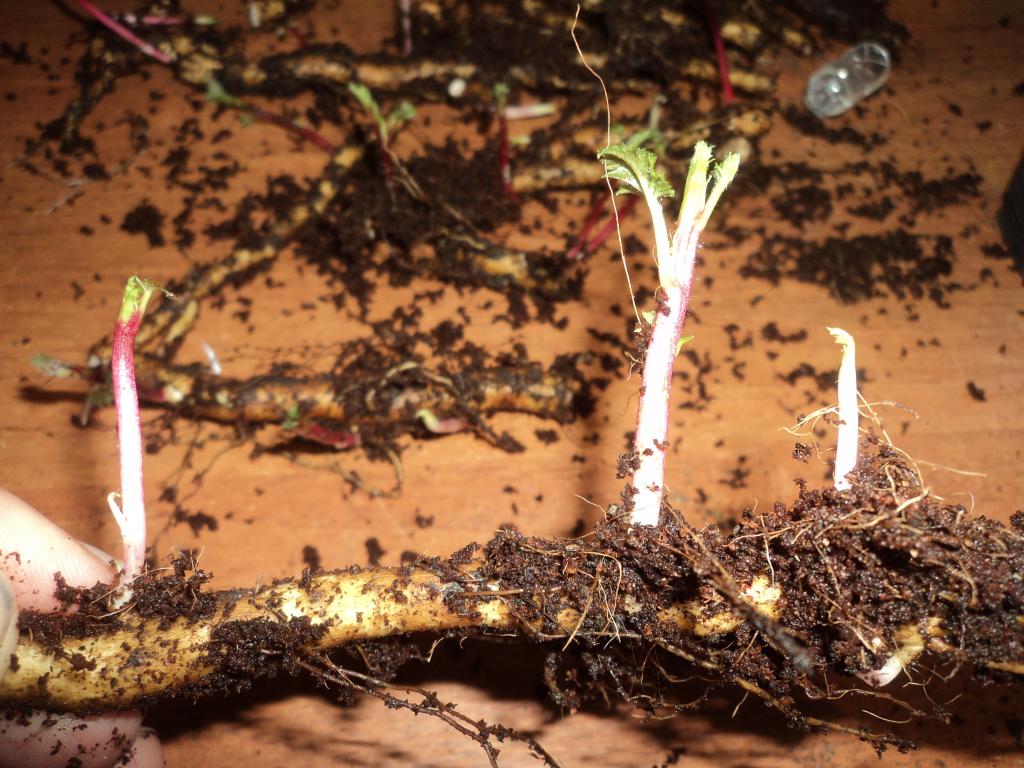
Root cuttings are root fragments removed from the ground and capable of forming shoots from dormant buds. This method allows for the growth of a large number of healthy seedlings in a relatively short period of time, producing abundant harvests in the future.
Since the formation of root cuttings occurs on the root system of an adult apple tree, the planting material is characterized by high viability.
The difficulty of propagating by root cuttings is that high-quality cuttings can only be taken from young, own-rooted trees between 5 and 7 years old. Older trees have reduced sucker production.
Procurement operations
Obtaining root cuttings occurs according to the following algorithm:
- In the fall, roots up to 1 cm in diameter are cut from the donor apple trees, and then cut into segments 10 to 15 cm long. The ends that were located closest to the trunk are marked.
- The prepared ingredients are placed in a container with sand, covered with a sprinkle of water, and left in a cool place for the winter. A cellar is ideal for this purpose.
- In spring, the cuttings are buried at an angle in a box filled with damp sawdust and placed in a room at room temperature. In about 21 days, the cuttings will develop shoots and buds will swell.
From the blanks from grafted apple trees, it is possible to obtain only seedlings of scions, but not varieties planned for breeding.
Work carried out in spring
With the arrival of spring, the shoots are further grown in open ground. The storage area is opened, the planting material is inspected for possible damage, and any fragments are removed. For disinfection, the material is treated with an alcohol solution (5%) or potassium permanganate solution.
During the disinfection procedure, it is unacceptable to touch the kidneys.
Care for planted cuttings is carried out in the standard manner.
At first glance, rooting cuttings may seem ineffective and complicated, but in reality, this is far from the case. This technique requires mastering a few simple steps, after which it becomes accessible even to novice gardeners. The resulting seedlings retain all the varietal qualities of the parent plants and are characterized by resistance to various adverse factors that arise during cultivation.