How to Cover Apple Trees for Winter – Coverings for Young and Mature Trees
Winter frosts aren't just a nuisance for people. They also harm plants. That's why it's important to provide reliable shelter for your fruit trees before the cold weather sets in. Apple trees are especially vulnerable to frost. There are several ways to protect apple trees from winter frosts.
Content
When to Consider Covering Apple Trees
There's no optimal time. It all depends on the climate in the growing region, the age and variety of the apple trees, weather conditions, and much more. Experienced gardeners recommend starting the insulation process only after the average daily temperature outside reaches 9°C or below.
- Carrying out the procedure too early can lead to an extended growing season. Furthermore, seedlings that are protected for the winter too early may suddenly begin to grow rapidly in the fall, which can result in the trees not having time to prepare for the onset of winter cold and freezing, no matter how much you cover them.
- If you insulate your apple trees too late (especially seedlings and young trees), you risk losing them. Their bark will be damaged, preventing them from growing properly, developing, and producing a good harvest.
- In southern Russia, the best time to insulate is early November. At this time, even the latest apple tree varieties are already beginning to slowly enter dormancy, and sap flow in their tissues slows. However, wrapping the trunks too tightly in covering material is not recommended.
- If the winter is mild, then the apple trees will need protection not so much from frost as from attacks by rodents (in particular, mice).
Since most apple orchards are located in central Russia (particularly in the Moscow region), covering the trees should be done between late September and mid-October. In these regions, average daily temperatures can drop below 10 degrees Celsius much earlier than in the south, so all insulation procedures should be carried out well in advance.
How to cover apple trees for the winter
It is important not only to select the right material, but also to treat it with various antiseptic compounds.
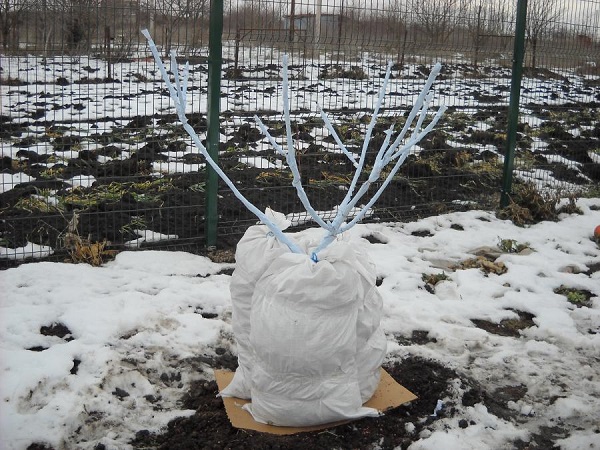 Suitable materials for covering apple trees:
- various rags;
- newspaper sheets;
- sackcloth;
- old stockings;
- plastic bags left over from sugar stocks, etc.
Before using old bags or used stockings, they should be cleaned. They can be washed or soaked in a suitable cleaning agent. If the covering material is not recommended for soaking, it should be treated with a solution. copper sulfate or any other fungicide. This will help destroy all pathogens lurking within the layers of the material.
Means for covering apple trees for the winter
- If apple trees are grown in extremely cold areas, the surface layer should be covered with peat or straw before applying the covering material. This will help prevent the tree trunk from freezing.
- Young plantings can be insulated with corn stalks, pine branches, reed stems, or the same straw.
- If you want to use only natural materials as insulation for your apple trees, be sure to treat them not only with fungicidal compounds, but also with additional protective agents against rodents and other potential pests.
- Many gardeners believe that agrofibre is the best covering material. It allows air to pass through and retains heat. It doesn't require any additional protective or disinfectant treatment before laying. However, if the tree has previously been infected, additional treatment with a suitable product won't hurt. The fence should be formed using metal or plastic mesh.
How to prepare apple trees for winter frosts
 Proper preparation of fruit trees for winter includes several important procedures that should be carried out sequentially:
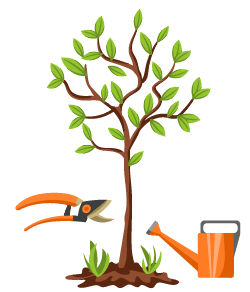
- First, all plantings undergo sanitary pruning. Fallen leaves, cut branches, bruised fruit, and other debris should be collected and burned away from the main plantings.
- Then all trees are treated with a solution of copper sulfate or any other specialized fungicidal compounds that will prevent the development of fungi and the formation of lichens.
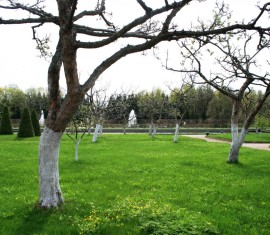
- At the same time, you need to use whitewashing paint the lower parts of the apple tree trunks.
- About 2-3 days before covering the plantings for winter (but before the onset of significant frosts) you need to carefully water substrate under each apple tree.
Only after completing all the above procedures can you begin insulating your fruit trees.
Insulating apple trees
The method of covering will depend not only on the age of the apple tree but also on its height. Younger trees will require more careful insulation, but mature plants should also be given careful attention. The process of creating a cover for columnar varieties also has its own nuances.
Insulation for young apple trees for the winter
 Apple seedlings and young trees, especially first-year ones, require proper and thorough winter protection. Their increased sensitivity to low temperatures makes them vulnerable to winter frosts:
- Find a fairly dry place in your garden that is protected from drafts.
- At the chosen location, dig a hole that is approximately 50 cm deep and 35 cm wide.
- If the substrate is too loose, add a little more humus into the ditch.
- Soak the roots of the apple tree seedlings in a clay slurry, then plant them in the dug hole, sprinkling the plant on top with a mixture of peat and humus.
- Lay a layer of your chosen agrofibre on top. Cover the entire area under the plantings with straw, and tie up the apple tree branches.
- Wrap the above-ground part of the seedling thoroughly with covering material that you have previously treated with a disinfectant.
After a sufficient amount of snow has fallen, the place where the closed seedling is located should be covered with a mass of snow for additional protection from freezing.
How to winterize mature trees
Mature apple trees are more resistant to low temperatures and any temperature fluctuations, but this doesn't mean they don't need frost protection. For most regions of Russia, covering the lower parts of the trees (trunks and branches) with protective material is sufficient. However, if you're growing apple trees in colder regions of the country, you'll need to take a more responsible approach to insulation:
- Place additional insulation (usually a peat mixture or straw) between the covering material and the wood.
- Insulate the tree's root system and lower part by applying a thick layer of peat or spruce mulch to the area beneath the tree.
- Don't forget to treat all materials with special disinfectants before use.
Shelter for columnar apple tree varieties
These apple tree varieties are particularly susceptible to frost, so they will require careful insulation and reliable shelter before winter arrives:
- Drive a pole into the ground next to the tree you are covering. It will serve as a support for the plant and will reduce the risk of trunk breakage in squalls.
- Tie all branches and shoots so that they fit tightly together.
- Then wrap the apple tree in several layers of burlap. Cover the tree with additional agrofibre and tie the insulation in place to prevent it from falling off at the first gust of wind.
- Tie the tree to the pole you previously installed as a support.
The nuances of insulating apple trees for other regions
If with the central zone and the southern regions everything is more or less clear, then with the Ural regions or Siberia everything is a bit more complicated:
- Predict exactly what kind of winter will be like Urals, is practically impossible. Frosts in these regions can sometimes reach -40 degrees Celsius, so covering apple orchards should be considered as early as mid-September. The best method is to lay the covering material in a layered pattern: using one or more types of insulating material, topped with straw, peat mixture, or manure (in the root zone) to protect the plant from freezing in the ground.
- In most regions of Siberia, apple tree plantings are insulated in the same way as in the Urals, that is, in early to mid-September. The trunk and branches are typically covered to a depth of 1.5 meters. Peat or straw should be spread over the root zone. After snowfall, pile as thick a layer of snow as possible under the apple tree to provide additional protection for the roots and lower part of the tree from freezing.
Frost cracks appearing on apple trees
 This phenomenon is quite common among those who haven't properly prepared their apple trees for winter. Frost cracks most often appear after a very cold winter or a prolonged thaw. The defect appears as a depression at the base of the shoots or on the trunk.
Frost cracks can also be triggered by sudden temperature changes. These changes cause the outer parts of the trunk to rapidly contract, and the fluid released from the cells freezes, causing the wood to split. Trees begin to change color from white to brown or light brown, as they are unable to supply nutrients to the shoots.
Vascular blockages form inside the apple tree, preventing nutrients from reaching young shoots. Nutrients begin to mix with the substances that clog the vascular channels or leak out of the resulting frost crack. This allows various pests to colonize or infections to develop around the defect.
To eliminate the possibility of such a problem occurring, you should adhere to the following rules:
- choose only frost-resistant varieties that are suitable for growing in cold regions;
- carefully select the area for planting the apple tree (the place should not be damp);
- fertilize the soil;
- Monitor your trees closely for changes and cover your trees well for the winter to prevent frost damage.
Conclusion
Although apple trees are relatively weather-resistant, they still require additional frost protection. Regardless of the region where you grow these trees, they need reliable shelter before the onset of winter cold. Rag, burlap, agrofibre, straw, and peat are commonly used for insulation. Be careful when constructing the shelter to avoid losing all your plantings after a cold winter.