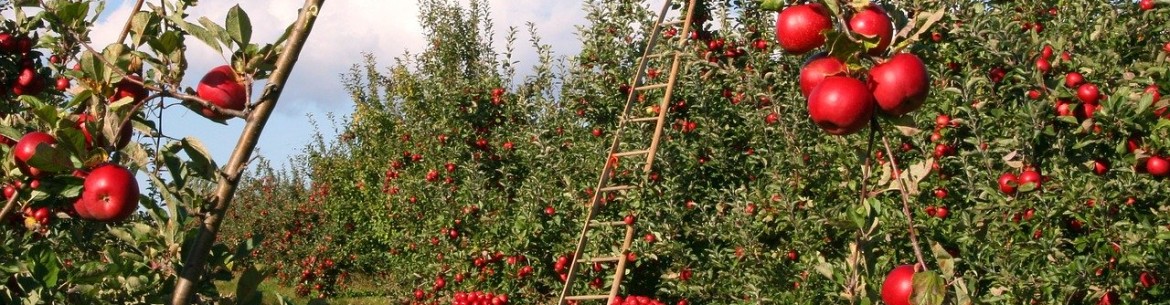
Planting apple trees in Siberia: choosing a variety, choosing a site, and recommendations for planting and care
Due to the harsh climate and high groundwater levels in most regions, growing apple trees in Siberia is quite challenging. To ensure success, it's important not only to choose the right varieties but also to follow a number of tree care recommendations.
Content
Suitable varieties for Siberia
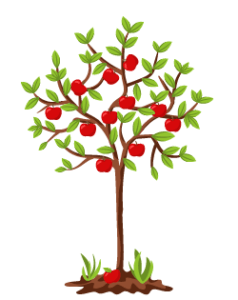 Apple trees grown in Siberia must meet the following criteria:
- have a powerful root system;
- quickly adapt to harsh growing conditions;
- ripen in a short time;
- recover from illnesses in a short time;
- be resistant to severe frosts.
According to their degree of winter hardiness, apple trees are divided into three groups:
- highly winter-hardy, growing freely at a temperature of -40 °C;
- moderately winter-resistant, withstanding temperatures down to -35 °C;
- slightly winter-hardy, capable of surviving a temperature drop to no more than -25°C.
Siberian apple trees are resistant to damage. scab and extremely low temperatures. Recommended varieties for planting in harsh regions include:
- Ranetka ErmolaevaA disease-resistant summer variety, characterized by small yellow-red fruits with a short shelf life (up to 30 days). The first harvest can be seen approximately four years after planting.
- Ermakovskoye MiningThe apple tree begins to bear fruit in the fourth or fifth year, at the end of August. This variety produces moderate yields, and the green-red fruits have a shelf life of no more than a month, making them suitable for processing and canning.
- Altai CrimsonEach tree yields up to 40 kg of small, juicy, purple apples that can be stored for up to 2 months.
- Gorno-AltaiskThis variety is characterized by moderate but consistent yields. The small, red-blushed fruits have a shelf life of up to three weeks.
- ZhebrovskyThis variety is the earliest to ripen in the Siberian regions. Its yellow-red apples are characterized by juicy flesh, a pleasant acidity, and a rich aroma.
- MelbaOne of the most popular varieties among gardeners. Although not particularly resistant to low temperatures, it successfully survives harsh winters when properly covered with agrofibre. This early-ripening variety is used commercially. Each fruit weighs up to 150 g, has very juicy flesh, and a sweet, slightly tart flavor.
- SurkhuraiA fairly common variety in Siberian regions. The fruits are golden in color, have excellent flavor, and weigh approximately 100 g each.
The following varieties are also well suited for planting in Siberia:
- White filling;
- Alyonushka;
- Bayana
- Tolunay;
- Ural bulk;
- Purple anise;
- Lungwort;
- Minusinsk red;
- Souvenir of Altai.
Selecting a site for planting
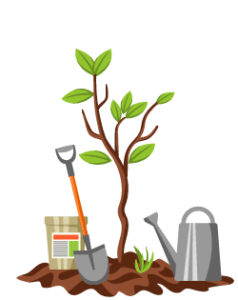 The ideal location for growing Siberian apple trees is a south-facing site on a sloping surface, which will prevent moisture stagnation and root rot.
Basic requirements for the location where apple trees will be planted:
- good sunlight exposure;
- location that prevents penetration of gusty winds;
- saturation of the soil with nutrients necessary for life.
If a particular site doesn't have favorable conditions for growing apple trees, you can provide the trees with everything they need yourself: add fertilizer to the soil, build a windbreak, and protect them from groundwater using drainage.
Preparing for transplanting seedlings
Growing apple trees from seeds is a lengthy process with low yields. Therefore, for planting, select seedlings suitable for harsh regions. Ideally, they should be between 1 and 3 years old. It's advisable to purchase regionalized varieties with fully developed roots. closed root systemIf planting is planned on a small area of the plot, then preference should be given to benefits of columnar varieties.
It is recommended to plant seedlings in the spring; this will allow them time to adapt and grow stronger before the onset of cold weather.
Before planting, the roots of the seedlings should be soaked in a solution containing diluted rooting solution for 24 hours. A suitable time for spring rooting is from the second half of April to mid-May. The distance between planted trees should be at least 4 meters.
Preparing a hole for planting an apple tree
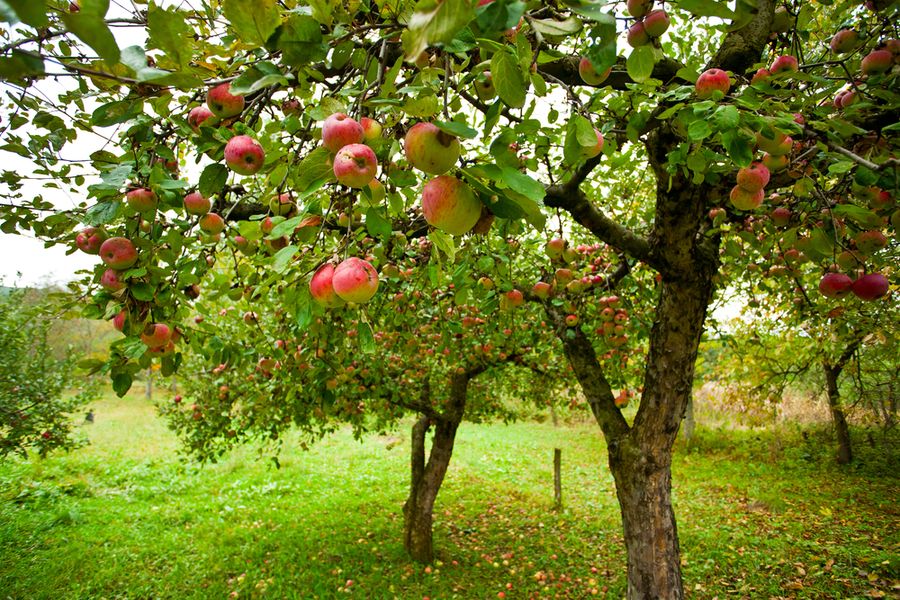
For spring planting of apple trees, holes are being dug in 2-3 months. It's advisable to prepare not only the hole but also the soil around it, as the root system absorbs nutrients from the entire area. Some apple tree varieties have roots that extend up to 12 meters in width. A good harvest from these trees can only be achieved on fertile soil with neutral characteristics.
Before digging the soil, it is necessary to moisten it a little.
It's important to keep the root system at least 2 meters from the groundwater table, otherwise the roots will rot. If the groundwater table is higher, you should first create a mound (1 to 1.5 meters high) and only then dig the hole. The standard hole depth ranges from 1 to 1.2 meters in diameter and 0.4 to 0.6 meters in depth.
Clay soil
 When planting a seedling in clay, the hole should be wide and shallow; in a sandy area, it should be slightly narrower and deeper.
Because heavy clay soil It contains few useful substances and does not allow water to pass through well. A year before planting apple trees, it must be supplemented with several components calculated for 1 m2:
- river sand – 50 kg;
- wood sawdust – 15 kg;
- peat soil, humus, ready-made compost and manure – 15 kg;
- slaked lime – ½ kg.
This mixture will make the soil light and breathable, which will favorably impact the growth and development of apple trees. To ensure proper adaptation of the seedlings, it is recommended to add the following elements when preparing the hole:
- nitroammophoska – 150 g;
- superphosphate – 70 g;
- potassium sulfate – 50 g.
All of them need to be dug up to a depth of ½ meter.
Peat soil
When planting apple trees in peat soil, it is recommended to add slaked lime, chalk, or dolomite flour, which will reduce the high acidity level, which is unsuitable for the growth of these trees.2 The peat area must be distributed:
- 150 g superphosphate;
- 2 kg of cow dung;
- 50 g potassium sulfate;
- 200 g of phosphate flour.
The components must be dug into the ground to a depth of 25 cm.
Sandy soil
Planting seedlings in sandy soil requires the addition of a number of elements, followed by digging them to a depth of up to 50 cm:
- 50 kg of clay;
- 40 g potassium;
- 0.7 kg lime;
- 15 kg of organic matter;
- 70 g superphosphate.
At the bottom of the hole you need to put drainage from silt, or use clay for this purpose.
Landing
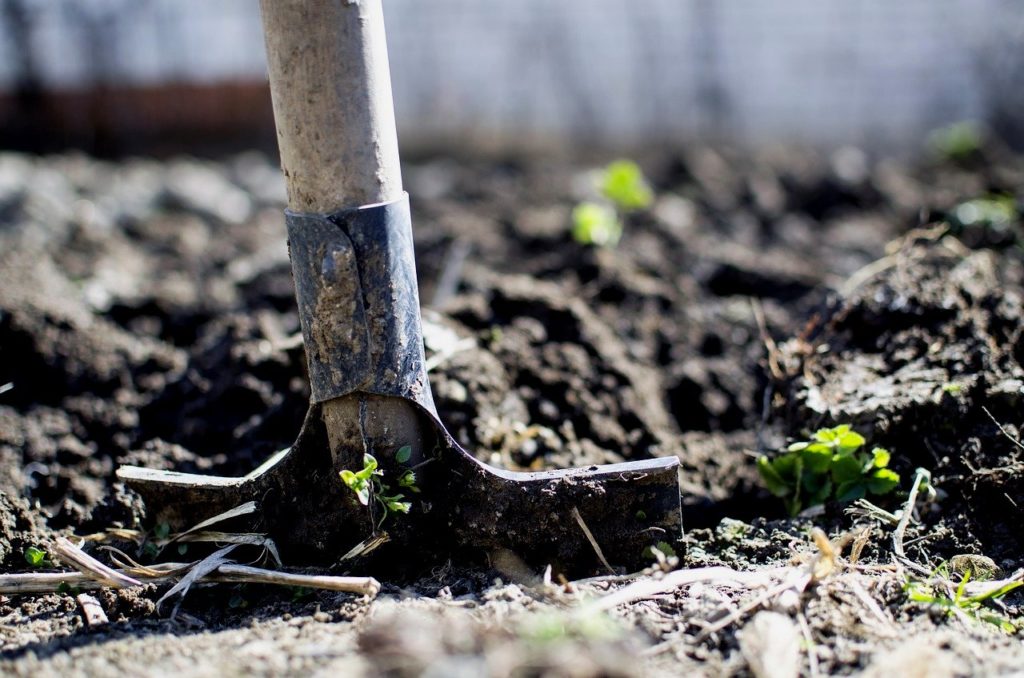
When choosing apple varieties suitable for Siberia and determining planting dates, it is important to consider the specific characteristics of these regions: long winters, extremely close groundwater levels, and a short growing season.
The ideal time for planting seedlings in Siberia is spring.
There are no specific calendar dates for planting apple trees in the spring, as winter can be prolonged, so you'll need to wait until the weather warms up and the snow melts. Gardening can begin as soon as the soil softens. Early planting has its advantages: it extends the seedling's growing season and allows it time to adapt.
Planting diagram
A fruit tree will thrive in Siberia if the planting process is strictly followed. The basic planting principles are as follows:
- The optimal option for harsh climates is planting young apple trees in a mound. With the onset of warm weather, the seedlings will have time to warm up quickly, preventing root rot. The mound is best prepared in the fall; the recommended height is 30 cm.
- In the spring, pour a small amount of wood ash and a bucket of compost onto the prepared hill, and then mix everything into the soil.
- Plant the tree so that its root collar rises slightly above the soil level.
- Water the seedling using 3 buckets of well-settled water.
- Tie the planting to a stake driven in nearby so that the wind does not break it.
- Mulch. For this procedure, use organic matter. Hay and straw are ideal, as these are ideal environments for the active development of microorganisms that feed the apple tree.
Care
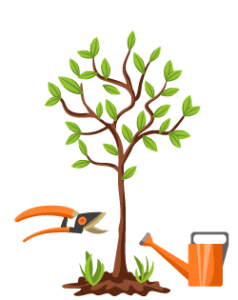 Caring for apple trees after planting includes several activities:
- loosening the soil to a depth of 15 centimeters;
- regular weeding, removing weeds;
- watering as the soil dries out;
- mulching around the trunk with organic matter.
Watering
Due to the high humidity levels in Siberian regions, the soil needs to be moistened as it dries out.
In the second half of July, you need to stop moistening the soil and adding fertilizers to it, and at the beginning of August, you need to stop loosening it.
Trimming
Typically, apple trees in Siberia are pruned by making a 45° cut to a side branch, leaving no stump. This method has several advantages:
- the possibility of changing the direction of growth;
- growth acceleration;
- crown thinning.
In rare cases, a ring cut is performed, completely removing a one-year-old shoot or branch. When using this technique, it's important to remember that inflicting 2-3 close-knit wounds on a tree most often results in the death of the entire branch or the entire apple tree.
In Siberia, pruning is carried out in the spring, following several rules:
- in case of severe freezing of apple trees in winter, the procedure is carried out no earlier than May-June, after the regrowth zone appears;
- The resulting wounds are treated with garden pitch.
Fertilizers
Fertilizing the soil is an important part of apple tree care, especially during the initial growth phase of the seedlings. During the growing season, trees should be fertilized at least three times. For this purpose, you can use any type of complex organic fertilizer, such as:
- bird droppings (dry or diluted in water);
- mullein;
- compost.
Of the mineral fertilizers, it is recommended to use types that contain nitrogen:
- ammonium sulfate;
- potassium sulfate.

Graft
Trees growing in harsh climates require grafting, which makes them resistant to low temperatures and doubles their yield. In Siberia, it's best to graft seedlings into a crown no higher than 1 meter above ground level. Each branch should be grafted individually, 15 cm from its connection to the trunk.
The most suitable time for vaccinations is spring (from April to May).
Protection from diseases and pests
 Siberian apple trees are not susceptible to various diseases. The exception is sunburn and low temperatures. To prevent this problem, whitewashing is recommended; applying it to tree trunks is acceptable as soon as the weather warms. Spraying with plant-based and bacterial agents, such as:
- fitoverm;
- infusion of onion or chamomile;
- a decoction of wormwood, prepared in a ratio of 350 g per 10 liters of water.
The spraying procedure is carried out after flowering has ended, and a week later it must be repeated.
To eliminate leaf scab, it is recommended to use the homeopathic composition "Healthy Garden"; the instructions for its use are indicated on the manufacturer's packaging.
Growing apple trees in harsh regions isn't an easy process due to the high risk of frost and death of fruit tree seedlings. However, a competent approach and care protection from Siberian frosts and maintenance significantly increase the chances of having your own garden and harvesting a good crop.