
Controlling the Apple Blossom Beetle: Effective Methods for Getting Rid of Apple Blossom Pests
Orchard pest infestations are one of the main problems gardeners face annually. They damage not only the trees themselves but also the harvest. The apple blossom beetle is considered a prime example of this type of insect. To effectively combat it without harming your crops, you need to know its distinctive characteristics.
Content
General characteristics
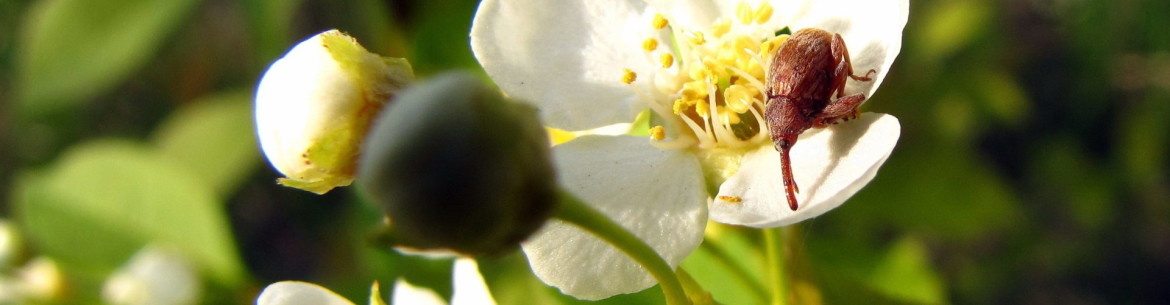
The apple blossom weevil (Anthonomus pomorum) belongs to the weevil family, a suborder of beetles. Because the insect feeds on newly formed buds of pear and apple trees, it can cause significant damage to the crop.
Appearance
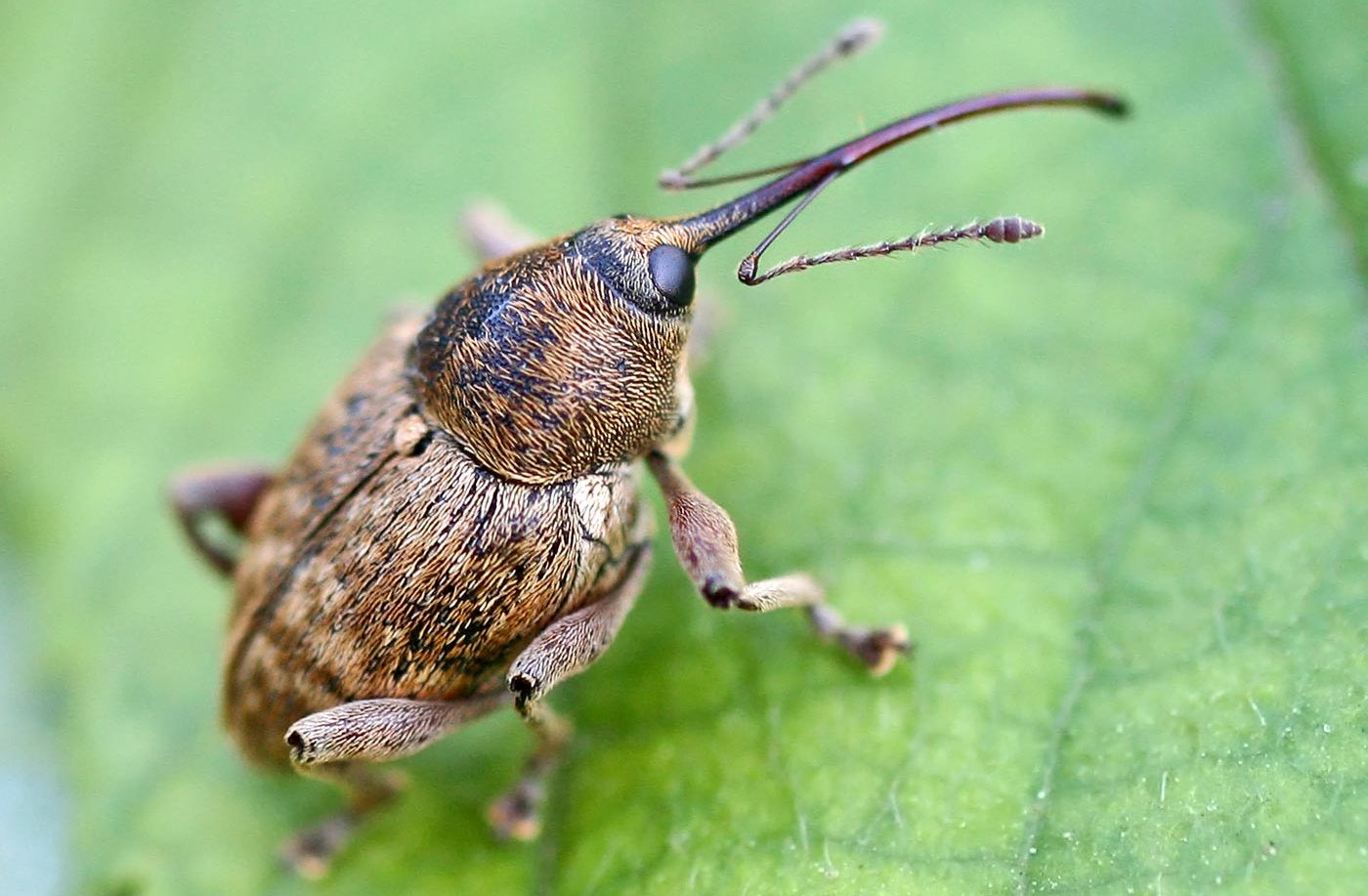 Adults are typically small in size, ranging from 0.3 to 0.5 cm. The legs, abdomen, and back of the beetle are dark brown, while the elytra (elytra) are light brown with dark stripes. The oval body is covered with fine, light-gray hairs, virtually invisible at first glance. The insect's elongated head is triangular in shape. Its anterior portion consists of a thin, elongated proboscis, short in males and long in females. The mouth is located at the end of the proboscis. The apple blossom beetle has three pairs of teeth.
The wings provide this insect with maximum mobility.
Life cycle
In three phases of development the beetle looks like this:
- The egg is oval and white, almost transparent. Its size ranges from 0.5 to 0.9 mm. Each clutch contains 50 to 100 eggs.
- The larva is distinguished by its curved shape, with a thicker anterior portion. Its body is light yellow, while the head is dark brown. The larva lacks legs.
- The pupa is the same size and shape as the adult. On the yellow body, signs of the formation of wings, a proboscis, and legs can be seen. Two spines are located on the abdomen.
During a season, the apple blossom weevil produces no more than one generation.
Area of distribution
Anthonomus pomorum is a fairly common insect, found almost everywhere where domestic apple trees are grown. This pest's range in Eurasia is as follows:
- in the east – China, Korea, Japan; Primorye, Manchuria, the Japanese Islands, the Far East;
- in the West – all of Europe;
- in the south – the Caucasus;
- in the north – the 59th parallel (including St. Petersburg).
The beetle is especially common in southern regions, where orchards adjoin forests with wild pear and apple trees.
Lifestyle
The apple blossom beetle is a complete metamorphosis insect with a development cycle of 35 to 40 days. During winter, these insects remain in the adult stage; during cold weather, they crawl deep into the bark of apple trees or into the leaf litter around the trees. In early spring, after temperatures rise to 6°C, the beetles awaken and move to the upper part of the bark.
The food for weevils is the swelling buds of flowers and leaves on the tree.
These pests primarily prefer various varieties of apple trees, but they can also be found on pear trees. The largest concentrations of beetles are observed on trees located at the edge of the orchard. During the apple tree's blossom season, after the buds open, the insects begin mating. The fertilized female makes a hole in the petals and lays eggs between the stamens. This usually occurs in late April.
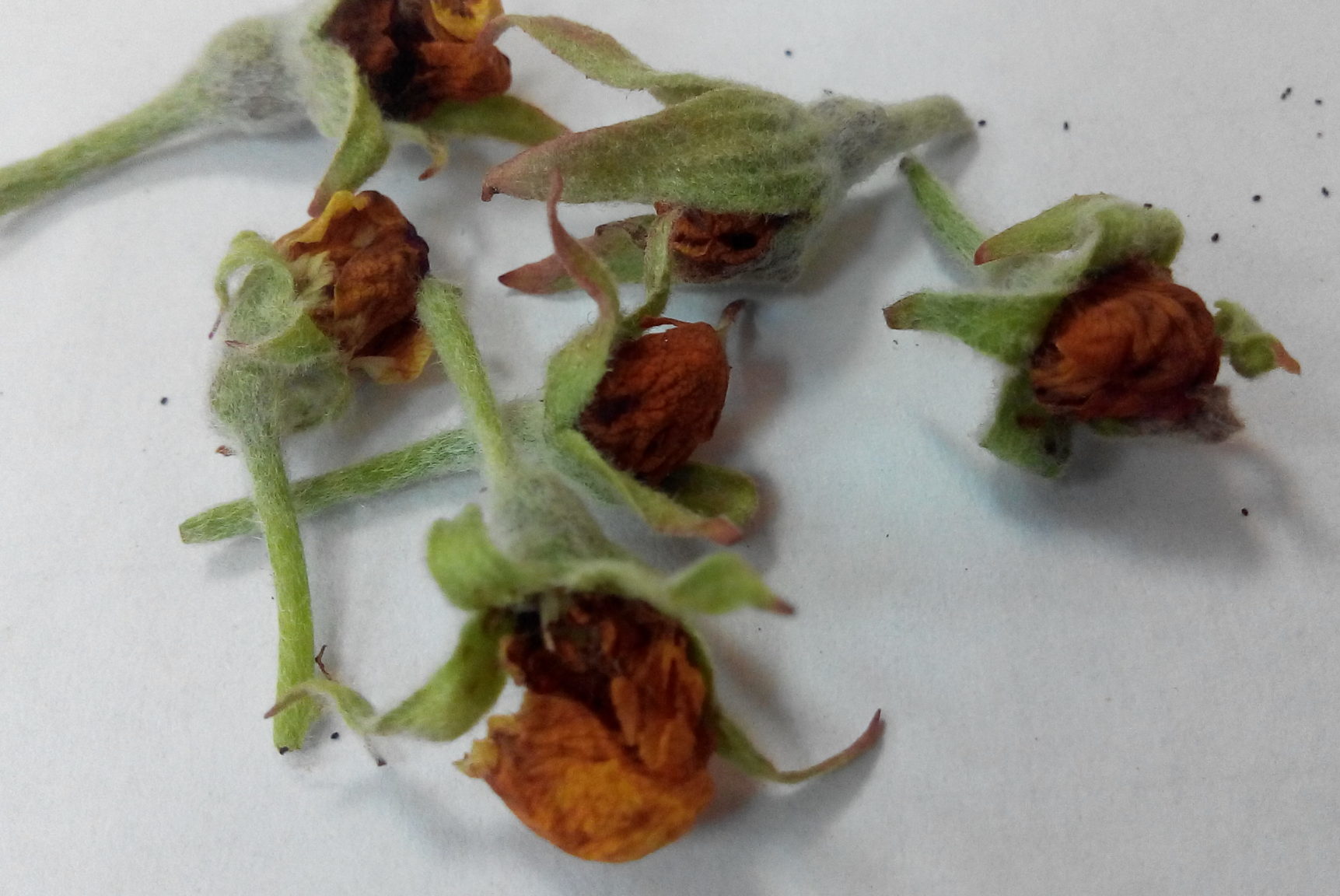
The mature larva consumes the pistil and stamens of the flower, and its excrement, left inside the bud, glues the petals together. The damaged flowers first turn brown, then dry up and fall off. The young remain in the bud until their chitinous covering hardens. Then they burrow out and feed on the leaves. Their wings allow the weevils to attack nearby trees.
The mass flight of these insects occurs simultaneously with the shedding of excess ovaries from apple trees – at the end of May and the beginning of June.
Damage caused
 Weevils are characterized by good fertility: the beetles quickly reproduce and settle in new territories, damaging trees, which negatively affects their healthFruits do not form from buds eaten by larvae.
Buds that fail to open properly are a sign of apple tree pest infestation. Damaged areas are easily visible on a green tree due to their brown color and unsightly appearance. In sunny weather, sap secreted by the affected buds can be seen, as well as small holes containing beetle eggs.
Weevils eat the leaves of faded apple trees, gnawing out delicate holes in them.
Ignoring the problem will result in crop loss as the rapidly multiplying insects overrun the entire garden.
Varieties resistant to blossom beetle
For gardeners who lack the time to treat their fruit trees to combat apple blossom beetles, experts recommend growing pest-resistant varieties. These include:
These apple trees are not susceptible to the serious diseases common to other varieties.
Methods of weevil control
Spring is considered the optimal time to get rid of pests. It's recommended to carry out all measures before buds begin to open, which will help prevent the appearance of the flower beetle. There are several ways to eliminate the beetle:
- chemical;
- biological;
- mechanical;
- use of traps.
Effective chemicals
Pesticides are considered the most effective means of getting rid of weevils. The most common of these include:
- "Calypso";
- "Decis";
- Inta-C-M;
- "Karbofos";
- "Aktara";
- "Kinmiks";
- "Tanrek";
- "Engio".
If a particular preparation is being used for the first time, then before treating the entire garden, it must be tested on one of the apple trees and the condition of the tree must be observed for 24 hours.
Processing technique
Most chemicals used to control flower beetles must be diluted with water in the proportions specified by the manufacturer. Spraying is done using a spray bottle, and it is recommended to follow a few guidelines:
- dilute the concentrate according to the measuring instructions;
- carry out the treatment in warm and dry weather, otherwise rain and wind will prevent the composition from penetrating into the affected areas of the apple tree;
- use personal protective equipment (gloves, mask) due to the toxicity of some drugs;
- Work should be carried out at the flowering stage, which will prevent the insecticide from getting into the developing fruit.
For this procedure, it is best to use a sprayer equipped with a long hose, which allows you to treat the upper part of the apple tree.
It is recommended to spray the product from a distance of 70–90 cm. All parts of the tree should be treated: the trunk, branches, foliage, and the surrounding ground (within a 1-meter radius). Maximum results can only be achieved with the right approach to getting rid of beetles. Experienced gardeners recommend a comprehensive pest control strategy that includes chemical, agricultural, and preventative measures.
Time for processing
The desired results from tree spraying can only be achieved if it's performed in a timely manner. In the spring, this procedure is performed four times:
- through bare apple trees;
- during kidney formation;
- when buds appear;
- after flowering, when the ovaries appear.
Before the flowering period
 The first spraying should be done before the apple trees begin to flower, that is, in early spring. This is because chemicals are ineffective against the eggs and larvae of the weevil. Pesticides only kill adult weevils. As mentioned earlier, the procedure is performed three times in the spring: on completely bare trees, then on trees with swelling buds, and on buds that have emerged but not yet opened.
After flowering
A new generation of weevils chews holes in the dried buds and emerges after the flowering period ends. During this time, the apple tree sheds its excess buds. Over the next 14 to 20 days, the young insects migrate to the leaves and buds, feeding on them and causing damage. During this time, the trees are sprayed again with pesticides. Experts recommend alternating the chemicals to prevent the pests from becoming accustomed to one solution.
During the period of fruit ripening
In midsummer, the activity of apple blossom beetles decreases: the beetles enter a dormant state and do not require feeding. Fruit formation occurs during this time, so spraying apple trees with chemicals is not recommended.
Autumn procedure
Immediately after harvesting, trees undergo another treatment, which significantly reduces the number of pests before they go into hibernation.
In autumn, it is recommended to collect and burn fallen leaves, and then dig up the soil around the apple trees.
To prevent mass reproduction next season, remove and burn any brown, unopened buds. The use of pesticides during bee pollination of apple blossoms is prohibited.
Frequency of spraying
The timing of tree treatment depends on the climate conditions of the specific region, the variety, and the age of the apple trees. In the spring, spraying is carried out according to basic guidelines, in the summer – as needed, and in the fall – before the leaves fall.
Processing in different regions
The first spraying of apple trees in different locations occurs at different times due to their climate. The following factors will indicate the need for this procedure:
- lack of snow;
- buds that have not yet swollen;
- air temperature from +4 to 5 °C.
The second treatment is carried out when the temperature reaches 15°C. This typically occurs two weeks after the first spray. At this time, the appearance of a green cone (bud swelling) is observed. Subsequent measures to eliminate the flower beetle are carried out after bud formation and after harvest.
Methods without the use of chemicals
Besides using pesticides, there are several other ways to control weevils. All of them are easy to implement and, when used correctly, quite effective.
Biological measures
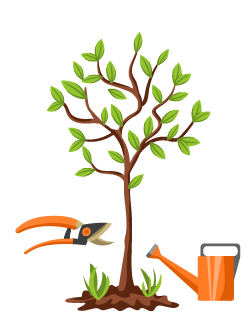 This method of getting rid of apple blossom beetles is considered safe. Since the insects prefer dense plantings, it is recommended to plant apple trees in an open, well-lit area, away from abandoned orchards and wild apple trees.
Some birds enjoy eating weevils., For example:
- redstarts;
- nuthatches;
- tits;
- flycatchers.
To attract birds to your garden, you need to hang up bird feeders; this will reduce the pest population.
Also the fight against beetles can be conducted using trapsTo achieve this, in early spring, the base of the apple tree is wrapped with an insecticide-impregnated belt. Unable to overcome this barrier, the weevil is left without food and dies.
Mechanical method
Despite its labor-intensive nature and limited effectiveness, this method of controlling the apple blossom beetle is popular among gardeners. Its unique feature is in collecting pests by hand or shaking them off the treeIn the first case, the beetles are immediately placed in salt water, and in the second, they fall onto oilcloth or fabric previously spread under the tree, after which they are swept up and burned.
Mechanical treatment is effective in early spring after the air temperature warms to 5–6°C, as this is when insects emerge from their wintering habitats. Morning is considered the best time for this procedure. For maximum results, at least three such treatments should be carried out between the beetles emerging from hibernation and the start of flowering.
Folk remedies
Gardeners often use folk remedies to kill pests—less effective, but safer for human health and the environment. For this purpose, they prepare special compositions, using the following recipes:
- Chamomile flowers are steeped in hot water at a ratio of 200 g per 10 liters for 24 hours. To ensure good adhesion, laundry soap is added to the resulting solution.
- Spruce cones are placed in 1 liter of water and left in a warm place for two weeks. After this time, the fermented mixture is strained and diluted in a bucket of water.
- Add 400 grams of dried wormwood to a cup of water and let it steep for 24 hours. Then strain and bring to a simmer over low heat. Add laundry soap to the hot infusion.
Apply the prepared solutions once a week. These treatments are suitable at the beginning of the growing season, during flowering, and during fruiting.
Preventive measures
To prevent parasites from appearing, it's important to take preventative measures in a timely manner. These include:
- cleaning fallen leaves in autumn and removing weeds;
- removal of peeling bark;
- digging the ground near the apple tree;
- carrying out sanitary pruning;
- whitewash the trunk with a solution of lime combined with insecticides.
To protect against weevils, it is recommended to plant herbs, tansy, marigolds and nasturtiums near apple trees.
Timely measures to combat apple pests and an effective combination of all available methods will allow you to obtain a large, high-quality harvest.




Comments
There's a very effective way to get rid of ants. They have a sweet tooth and take everything to the queen, who is deep in the ground. You just need to add yeast to jam or syrup. The queen dies, and the sweet reserves will ferment.
Among insecticides, malathion has been tested for many years. Its advantage is its rapid transformation into harmless substances, which is facilitated by both cloudy and sunny weather.
Let's use a folk method to combat the flower beetle - a decoction of dandelion roots
I confirm the excellent method of fighting even indoor ants by using honey water with yeast.