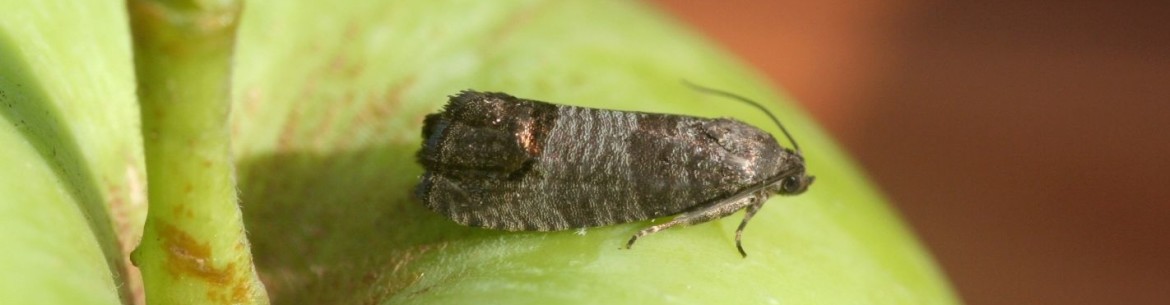
Codling moth and effective methods of control
The codling moth is a common pest in apple orchards. It can cause significant damage to crops due to the development of several generations within a single season. However, it has a weak link: caterpillar, which will not be difficult to exterminate if you know the methods of its destruction.
Content
Description of the pest
The codling moth is a nocturnal pest of the leafroller family of the Lepidoptera order. There are over 50 known species, with the most dangerous to apple trees being:
- codling moth;
- Oriental codling moth.
Significant damage to apple growing is caused by their larvae – caterpillar.
Codling moth
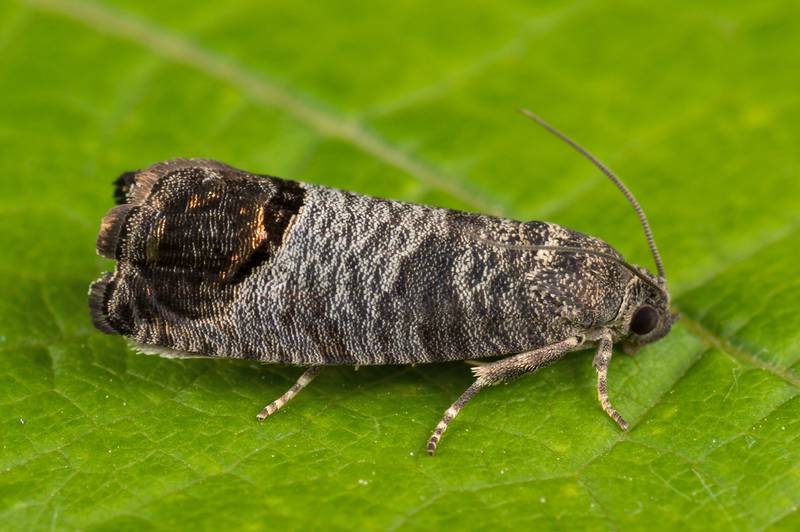
It is widespread throughout Russia in areas where fruit growing occurs. It feeds exclusively on fruit and can destroy up to 90% of the harvest in a single season.
Main characteristics of the butterfly:
- color – gray-brown, with dark brown spots, transverse dark stripes and an oval yellowish spot on the top of the wing;
- the shape of the folded wing is roof-shaped;
- wingspan – 16–23 mm;
- body length 8–12 mm;
- the laid eggs are light green, up to 1 mm in diameter;
- fertility – 50–200 eggs;
- number of generations per season – 1–3 depending on climatic conditions;
- the peak of the flight is 10–12 days after the apple tree begins to bloom;
- Egg laying occurs 7–10 days after the end of flowering, when the average ambient temperature reaches +16…+18 °C.
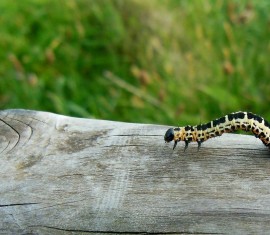
Caterpillar:
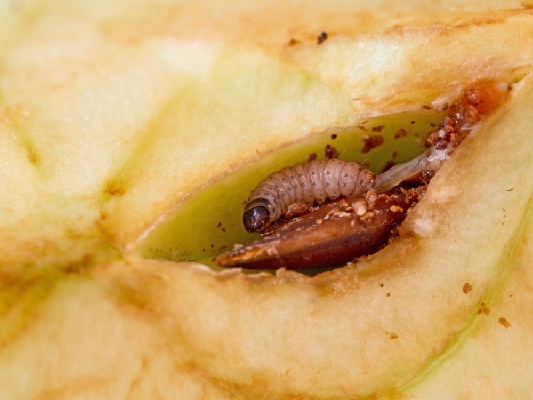
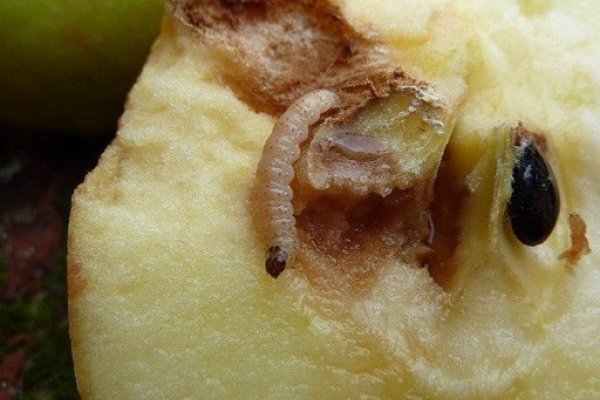
- color - pale pink or flesh-colored with gray warts;
- head - brown;
- length – up to 22 mm;
- The pupa is light brown or beige with a golden tint, 9–12 mm long.
Life cycle
Mature individual of the first generation
The mass flight of mature moths begins during the formation of the apple tree ovary and continues for 45–60 days. Peak activity occurs in the evening, after sunset.
During this period, mating occurs, culminating in egg laying. The pest lays eggs first on the upper surface of the leaf, then on the fruit.
Egg
Embryonic development begins within the laid egg, which lasts 9–12 days. During this period, the ambient temperature reaches a stable level of +20…+22°C.
The development of second and third generation embryos requires significantly less time – 3–5 days from the start of laying.
Larva (caterpillar)
Rebirth caterpillars begins 15–17 days after the end of flowering of the latest apple varieties.
Within 1–3 hours, the caterpillar moves to the fruit, and from this moment on, its damage begins, which consists of several stages and is accompanied by the stages of larval development:
- the caterpillar covers the selected fruit with a thin, almost invisible web;
- within 10–30 minutes it chooses the most vulnerable spot, gnaws through the skin and penetrates the pulp of the fruit;
- Having penetrated the fruit to a depth equal to the length of its own body, the caterpillar turns its head towards the opening and closes the passage with a dense plug consisting of pulp and cobwebs;
- for 24-48 hours the caterpillar feeds on the subcutaneous pulp, then gnaws out a chamber and molts in it for the first time;
- over the next 48 hours, it gnaws a passage into the seminal chamber and molts a second time;
- having destroyed seeds in the chamber, the larva molts again;
- the last, fourth, stage of development caterpillars accompanied by gnawing out the exit from one fruit and moving to another.
An affected apple often appears prematurely ripe, then falls off and rots. A single caterpillar can destroy up to three fruits per season.
The mature larva forms a dense cocoon in cracks in the bark of an apple tree or in the soil, at a depth of no more than 3–4 cm, with fallen leaves or weeds providing additional shelter and protection.
Doll
When spring temperatures reach a stable temperature of 8 to 10°C, the caterpillar begins the pupation process. Pupal development lasts 14 to 25 days and culminates with the emergence of the butterflies during the apple tree's early blossom season.
Eastern codling moth
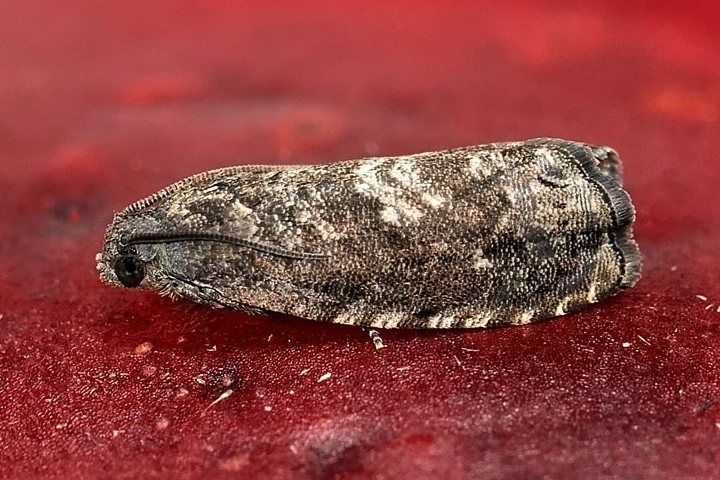
Distribution: Central Russia, southern regions, and Crimea. This dangerous apple pest damages fruit and young shoots during the first year of growth. It can destroy up to 100% of the crop in a single season.
It is a quarantine pest: the import of seedlings from areas where the oriental codling moth is widespread is prohibited.
Main characteristics of the butterfly:
- color – dark gray and gray-brown, with dirty white scales on the forewings, transverse light stripes and gray fringe;
- the shape of the folded wing is roof-shaped;
- the lower part of the wing is silvery;
- antennae – gray, up to 24 mm long;
- wingspan – 10–14 mm;
- the laid eggs are transparent, with a pearlescent sheen, and as they mature they become pink, up to 0.4 mm in diameter;
- fertility – 180–200 eggs;
- number of generations per season – 5–6.
Caterpillar:
- color – pale pink, flesh-colored or white;
- head - black;
- length – 12–13 mm;
- pupa – brown, with sharp spines, 6–8 mm long;
- cocoon – transparent, length 10–12 mm.
Life cycle
Mature individual of the first generation
In spring, when average daily temperatures reach 14–16°C, butterflies begin to emerge. They are most active during cloudy weather and after sunset. After 3–5 days, the first generation begins laying eggs on the upper surface of apple tree leaves, which lasts for 7–14 days.
Mature individuals of the second and subsequent generations lay eggs on fruits and stalks.
Egg
Embryonic development lasts 3–12 days depending on temperature conditions.
Larva (caterpillar)
The hatched first-generation caterpillars penetrate the apical bud of a young shoot and chew a tunnel up to 12 cm long, completely disrupting sap flow and destroying the structure. The damaged shoot becomes nonviable, dries up, and dies. The mature larva pupates inside the dead shoot or in cracks in the tree bark.
The larvae of the second and subsequent generations feed on fruits and mature similarly to the caterpillars of the codling moth, but they rarely attack the seed pod, preferring the apple pulp.
The average duration of larval development is 10–22 days, depending on the generation.
Doll
Pupae of the second and subsequent generations mature under fallen leaves, on the surface of damaged fruits or inside shoots damaged by first generation larvae.
The maturation stage lasts for 5–10 days, then the development of the next generation begins.
The caterpillars of the last generation form cocoons in places where they will spend the winter: in damaged bark, in uncleaned dry remains under a tree, and in the soil at a depth of 2–3 cm.
The complete development cycle from egg laying to subsequent maturation of the mature individual is 22–30 days.
Damage caused
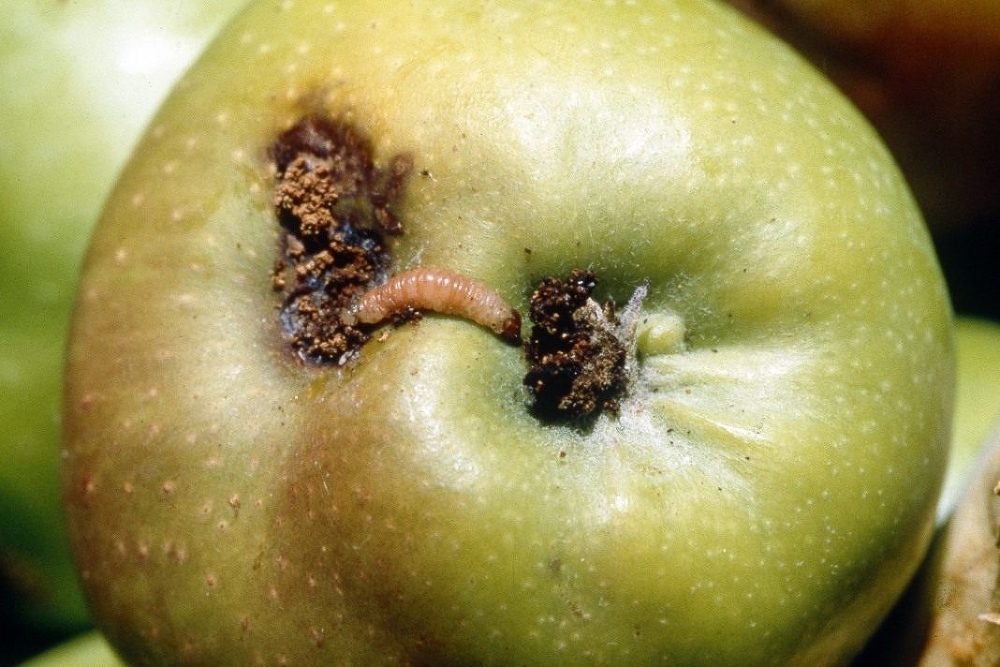 The eastern codling moth causes irreparable damage due to extensive damage to the tree. These apple trees:
- do not develop due to the death of new shoots;
- lose frost resistance;
- have weak immunity to fungal or viral diseases;
- Even after getting rid of the pest, they produce a low yield due to the disruption of the formation and development of new branches.
The yield loss is 100%, since due to the large number of generations and laid eggs, each fruit is attacked by up to 5-7 larvae.
The codling moth causes 90% crop loss, and its effects significantly reduce the tree's frost resistance and immunity to fungal diseases.
Causes of infection
The codling moth gets into the garden plot:
- with purchased seedlings infected with pest eggs;
- when the pest moves from neighboring areas.
The lack of preventive measures and non-compliance with agricultural practices significantly reduces immunity to apple moth infestation.
Signs of the presence of codling moth
The main signs of the presence of a pest:
- mass flight of butterflies;
- fruit drop;
- accelerated ripening of apples;
- drying of young shoots;
- presence of caterpillars.
Apple varieties resistant to codling moth damage
Only one apple variety, Vinny, is immune to the oriental codling moth, but only if timely agricultural measures are taken.
No varieties resistant to codling moth have been developed.
Pest control methods
 Destroying adult codling moths and their larvae is only possible through a comprehensive approach. It's important to remember that the codling moth larva—the caterpillar—is the weakest and most fragile part of its development. Basic control measures aimed at its destruction lead to the complete eradication of the pest from crops.
Mechanical method
The mechanical method of getting rid of the codling moth is as follows:
- removal of young shoots in the initial stages of damage by the oriental codling moth, while the cut sites must be cleaned and processed garden pitch;
- collection of fallen fruits;
- manual collection of caterpillars from the surface of bark, leaves and fruits;
- overlay hunting belts in the lower and middle parts of the trunk in early spring before the butterfly begins to emerge.
Collected waste, damaged or affected parts of the plant must be destroyed by burning.
Make hunting belt You can make it yourself. To do this, take several strips of fabric or thick cardboard, dip them in adhesive or coat them with Vaseline, and attach them to the tree's trunk and skeletal branches. Fly tape attached to the fabric can be used as a belt to prevent it from sticking to the trunk—the sticky solution is difficult to wash off and can damage the bark.
The following devices are used to destroy butterflies:
- Pheromone trapIt consists of a triangular prism with a sticky bottom and a bait—a substance containing codling moth pheromones that attract the moths. Once trapped, the pest sticks to the tape and dies within 4-6 hours. For effective control, the sticky tape should be replaced at least every 7-10 days. One trap is effective against pests inhabiting 3-5 trees.
- Sweet TrapTo make it, prepare apple compote, adding three times the recommended amount of sugar. Pour the mixture into a wide-bottomed container and place it near trees. Since moths fly most often in the dark, a light source—a table lamp or flashlight—should be placed near the trap. Attracted by the flame, codling moths will flock to the trap and drown. This method can kill 30–40% of the moths.
Agrotechnical measures
 They are carried out for preventative and protective purposes, and as part of a comprehensive pest control program. They include the following:
- removal of dry branches and those damaged by fungal diseases;
- maintaining optimal distances when planting fruit trees;
- healing or removal of damaged bark;
- timely destruction of weeds and root shoots from the tree trunk circle;
- timely fertilization of apple trees with mineral additives containing potassium and phosphorus in order to increase resistance to pest damage;
- compliance with the recommended rate of application of nitrogen fertilizers;
- autumn and spring cleaning of dry leaves, fallen fruits and weed residues from the tree trunk circle;
- Mandatory digging of the soil under the apple tree at least twice a season, followed by treatment with a pink solution of potassium permanganate or a solution of the biological preparation "Fitoverm".
Fallen fruit can be collected in an airtight container, the bottom and sides of which are lined with glossy paper. Once the caterpillars leave the apple, they will be unable to move, remain at the bottom, and will be unable to continue their development.
Chemical control
 Chemical control is an effective way to get rid of codling moth at any stage of development, and it is important to treat the affected plant throughout the season.
To destroy the pest, use any of the preparations diluted according to the attached instructions:
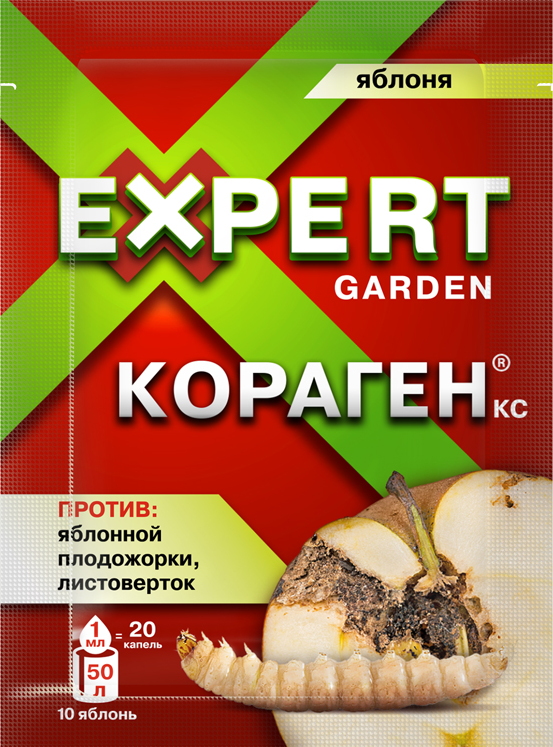
- "Koragen Expert Garden"It is non-addictive to pests. It affects all stages of pest development—from egg-laying to larval stages of all ages to adulthood. The first treatment with a working solution at a rate of 0.2 ml per 10 liters of water is carried out during the period of mass hatching of larvae from eggs, 2-3 weeks after apple tree blossoming (coinciding with the beginning of white acacia blossoming). The following 2-4 treatments are carried out at 2-week intervals.
- DimilinCharacterized by a long (30–40 days) period of action. Spray the tree three times at the green cone stage, then at the beginning of the growing season, and then again 10–14 days later.
- Kinmix. It requires three treatments before the start of the growing season and then 12–15 days later.
- ActellicIt is characterized by a rapid action. It penetrates instantly upon contact with the caterpillar and paralyzes its nervous system, leading to its inevitable death within 12–36 hours.
- FufanonA phosphorus-containing intestinal insecticide. Causes death of larvae within 24 hours.
- "Calypso"A systemic insecticide with contact and stomach action against chewing apple tree pests. It has a paralytic, fatal effect on larvae at various stages of development.
Biological control
The use of biological preparations has several advantages over chemicals:
- non-toxic to humans;
- do not cause plants to become addicted to the components;
- are not inferior in efficiency;
- contain minerals necessary for tree nutrition;
- It is allowed to use 3-5 days before harvest.
To destroy the codling moth, you should use:
- FitovermIt causes paralysis of the larva within 6–12 hours and leads to death within 24 hours. It is effective even in cases of extensive infestation. caterpillars.
- LepidocideSafe for humans, effective against all stages of lepidopteran insects. Can be used at any stage of tree and codling moth development.
- BitoxibacillinAn insecticide with intestinal action. It kills the caterpillar within 12–36 hours.
Prevention and treatment of apple trees using traditional methods
Spraying the tree and watering the soil with various infusions increases disease resistance and prevents pest infestation and development. Infusions are prepared using:
- Onion peel: brew 3-5 thick handfuls in 5-7 liters of boiling water, leave for 3-5 hours.
- Insecticidal herbs – tansy, wormwood or burdock: 200 g of dried herbs per 5 liters of water.
- Tobacco: pour 500 g into 10 liters of hot water and leave for 2-3 days, dilute with warm water 1:2.
- Red pepper: simmer 100 g of fresh peppercorns in 3 liters of water over low heat for 1–1.5 hours. Cool and dilute with water in a 1:3 ratio.
Thoroughly washing or spraying the apple tree with a soap solution prepared from 150 g of laundry soap and 10 liters of warm water provides protection against diseases and prevents pests from attaching to the trunk or leaves.
Soap solution can be added to prepared infusions.
Conclusion
Getting rid of codling moths is a rather laborious and time-consuming process. However, timely recognition and the use of a comprehensive control program yield good results: the pest can be eradicated before the end of the fruiting season. And proper agricultural practices can protect your garden from codling moth infestations.