
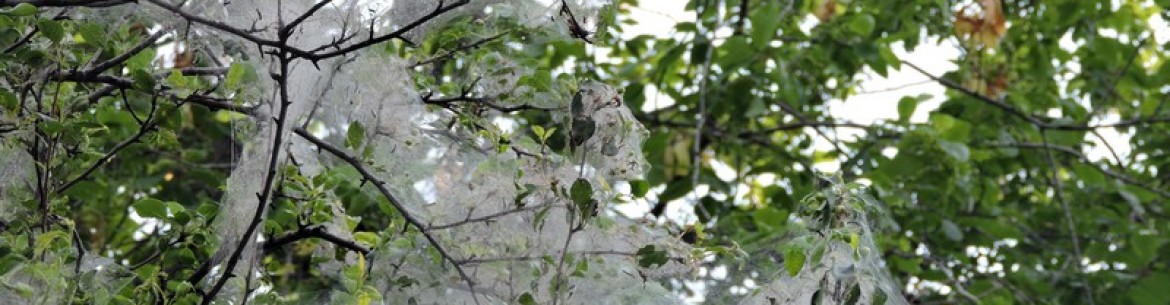
Causes of spider webs on apple trees and methods for pest control
The appearance of spider webs on an apple tree indicates that garden pests have taken a liking to it. Fruit trees can become infected both during the period of active growth and during flowering. If the problem isn't identified promptly, you could be left without a harvest.
Sources of cobwebs
Most often, webbing is caused by one of the life stages of various insects. During reproduction, they lay eggs on the leaves and trunks of apple trees, choosing young shoots and branches best protected from external factors. The diversity of pest species is staggering. Therefore, it is crucial to first determine the pest in question in order to choose the most effective control method.
The appearance of white-yellow weaves is provoked by the following parasites:
 spider moth;
- ringed silkworm;
- apple codling moth (leaf roller);
- psyllid (sweetweed);
- spider mite;
- red spider mite;
- arachnoid aphid;
- hawthorn;
- winter moth;
- gypsy moth.
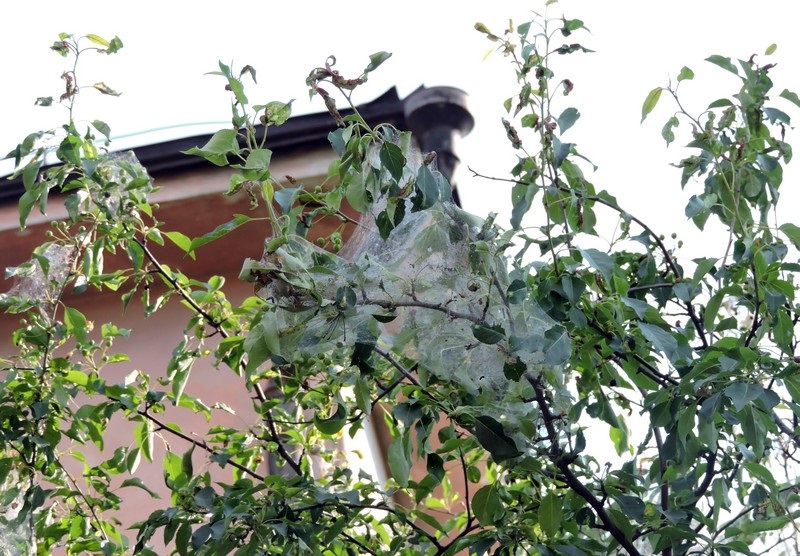 spider moth;
All of the listed insects and their larvae suck the juices from the plant and can cause not only the loss of the crop, but also the drying out of the tree itself in the future.
Spider moth: detection and control
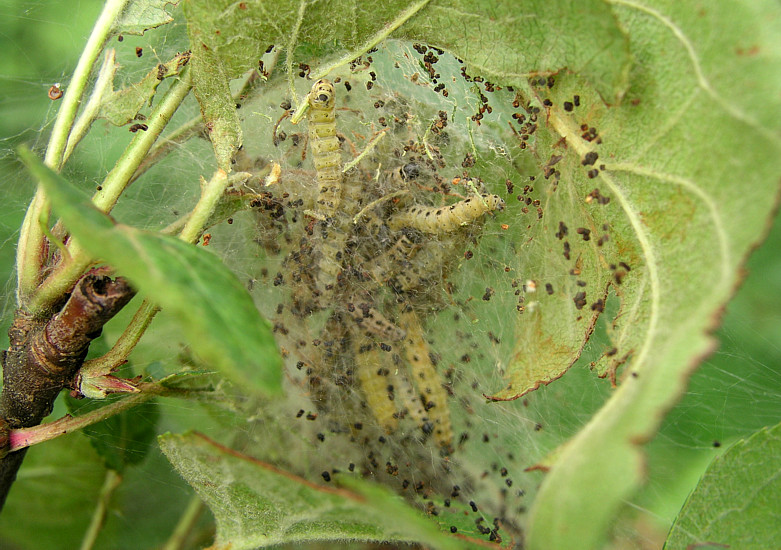 This small butterfly with snow-white wings lays numerous eggs in the branches of the trunk and at the base of buds. Its offspring, which pose the tree's greatest threat, survive the winter under the protection of the unique egg-laying shields. And in early spring, the bloodthirsty caterpillars, which easily tolerate frost, begin to attack young foliage en masse.
Under their pressure, leaves dry up and shrink, and in the resulting shelters, the moth's offspring create web colonies. Each colony can contain up to 70 individuals, which eventually transform into pupae. These pupae then emerge as moths, which immediately begin laying eggs on the tree.
Each individual of this pest destroys apple buds and foliage over the course of a month and a half.
To combat the pest, inspect young shoots in the fall. If eggshells are found, they should be destroyed, damaged and dry branches should be pruned and burned, and the tree itself should be treated with lime "milk." For prevention in the spring, spray unblown buds with a solution of Decis, Fitoverm, or Kemifos. If there are a lot of insects, it's better to spray with Fufanon, diluted at 10 ml per bucket of water.
Ringed silkworm
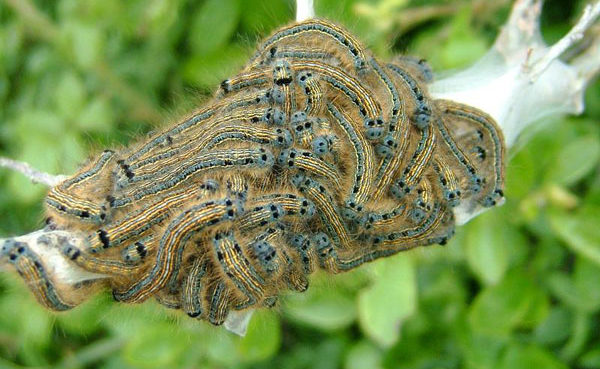 After the light-brown moths visit an apple tree, ring-shaped egg clutches can be found on thin young branches. These eggs will eventually develop into gray-brown caterpillars with blue stripes along their bodies. This garden pest is called the ringed silkworm. The caterpillars remain motionless throughout the day. Only at nightfall do they begin to actively feed on flowers and leaves. Attacking young foliage, they produce massive clumps of webbing, which significantly damages the tree's health.
Prevention of the reproduction of ringed silkworms can be carried out using folk remedies - caterpillars are repelled by spraying unblown flower buds with infusions of milkweed or wormwood.
To treat apple trees, the drugs "Bitoxibacillin" and "Lepidocid" are used, the use of which is permissible at an average daily air temperature of no more than +15 degrees.
Codling moth (leaf roller)
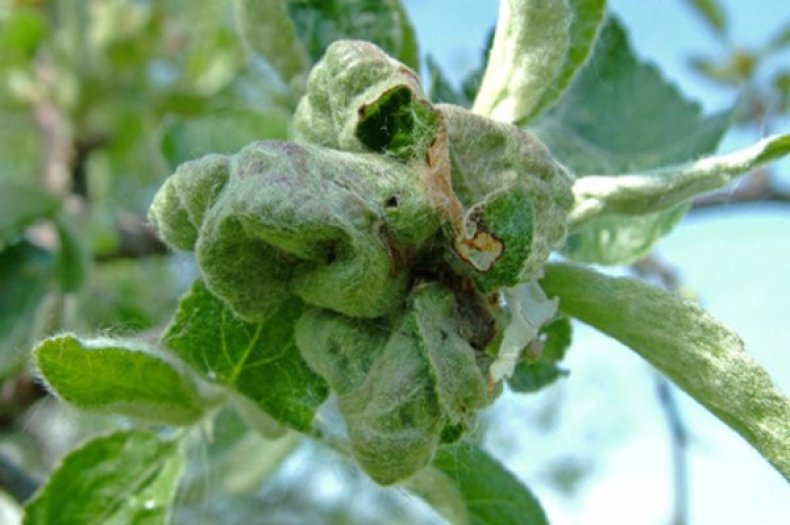 This pest lays its eggs on the outer surface of leaves. The tiny pink caterpillars hatch after two weeks and vigorously destroy buds and unopened buds. Under the influence of the developing pupae, the apple tree leaves begin to curl into tubes and become covered in webbing.
Mechanical treatment plays a key role in combating this parasite. Follow these steps:
- collect the eggs and hatched caterpillars from the branches into suitable containers;
- burn the pests;
- peel off the old bark.
The final step will be treatment with bioinsecticides.
The leafhopper is the cause of webbing on young apple trees.
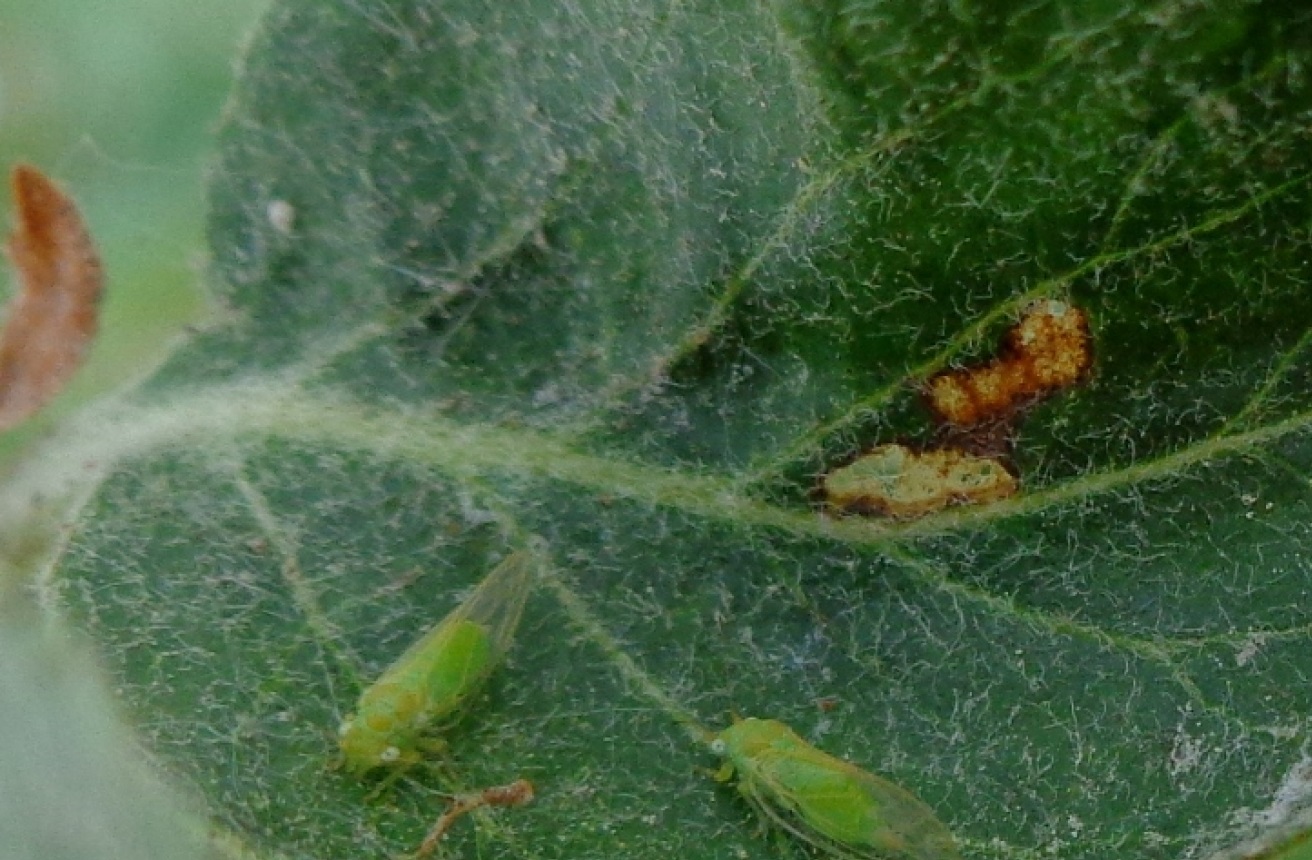 Apple leafhoppers, or psyllids, prefer to attack young trees. These tiny insects, reaching only 3 mm in size, can cause significant damage to growing fruit trees. The leafhopper hides its egg masses in the folds of the bark. In the spring, the hatched larvae suck the sap from the buds. The byproducts of their metabolism, which look like sticky deposits, coat parts of the tree with a honeydew-like web. Sooty mold nests in these deposits. fungus, causing blackening and drying of foliage.
The following folk remedies have proven effective in eliminating larvae:
- wood ash tincture;
- tobacco;
- yarrow;
- soap solution.
It is necessary to spray young apple trees at the beginning of the growing season.
Psyllid infestations can be controlled by fumigating young trees. To do this, burn tightly compressed bundles of straw, sprinkled with tobacco, under the trees for two hours. The fallen insects should be dug up into the soil beneath the apple trees.
Spider mites are a threat to seedlings.
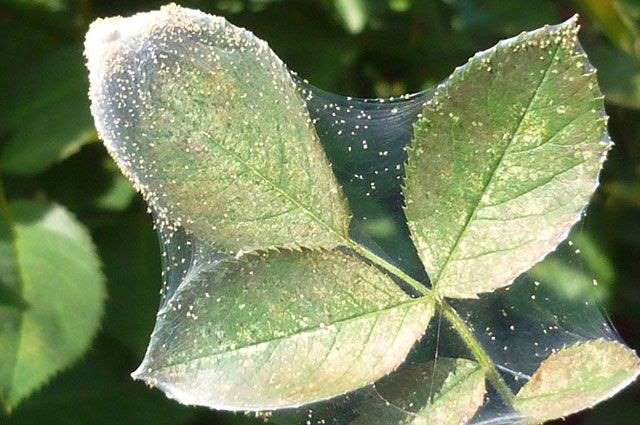
The appearance of cobwebs on apple tree seedlings is caused by spider miteThis tiny green or red insect is distinguished by its fecundity and rapid reproduction. Entire colonies of the pest occupy leaves, young stems, and even fruit. The mite is especially active in dry and hot weather. It can quickly cover all greenery in a garden with a web.
The presence of a tick can be determined by the following signs:
- silvery, creamy or scarlet spots on leaves;
- whitening the back of the leaves;
- the appearance of cobwebs on trees.
You can fight it using the following methods:
- chemical - spray with insecticides;
- biological – treatment with biological preparations;
- agrotechnical – preventive maintenance;
- folk - irrigation with solutions that have nothing to do with specialized chemicals.
Spider aphid
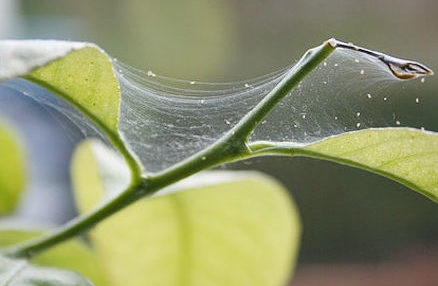 Aphids reproduce very quickly. A female can lay up to a hundred eggs at a time. Although there are several species of this pest, their primary effect on plants is the same: sucking out the sap. This is followed by curling, drying, and leaf fall. Spider web larvae aphids They wrap young shoots in a light but dangerous weave for the tree.
Bioinsecticides such as Bicol, Bitoxibacillin, and Verticillin are successfully used to control this pest. Spraying is carried out in dry, warm weather. Afterwards, the dry bark is removed and the trees are whitewashed.
A good preventative measure is trapping belts made of thick paper or straw, which are attached to tree trunks. Aphids lay their eggs on them, and all that remains is to collect and burn them.
Hawthorn
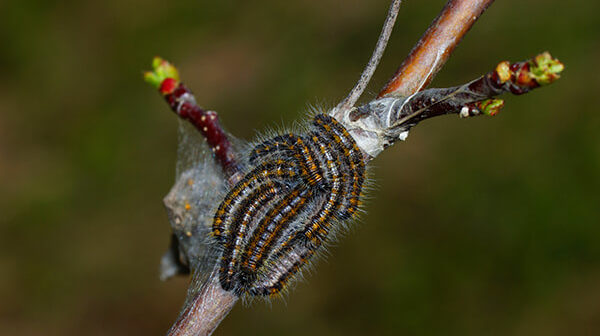 This fairly large insect is an active garden pest. During its second or third instar stage, it chooses apple tree leaves for comfortable overwintering.
This greenish-brown insect curls up the foliage of fruit trees and covers it with a fine web. The improvised nests hanging on branches are easy to find and destroy in the spring. Otherwise, the caterpillars will quickly begin eating the buds and flowers.
The most effective method of control is treatment with toxic insecticides: "Accord", "Gerold", "Metaphos".
Winter moth
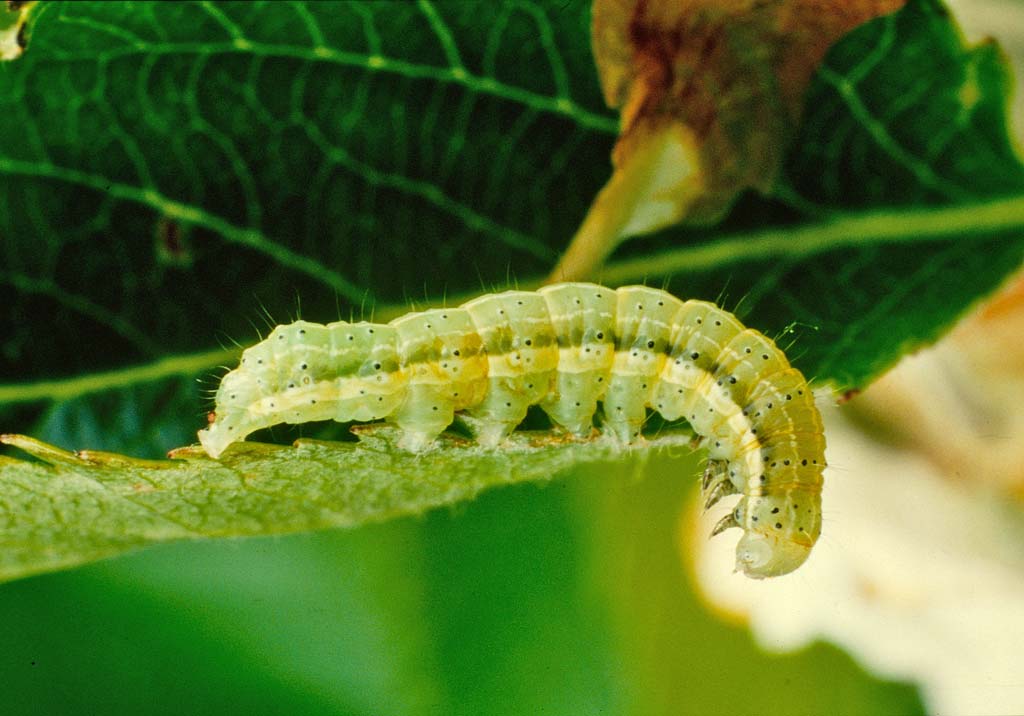 After the hot summer season ends, a brownish-gray moth appears in gardens. The moth begins laying eggs and continues to do so until December. Its offspring can survive temperatures as low as -15°C (-5°F). In spring, the yellow-green caterpillars begin to attack the buds and buds of apple trees. Their activity increases significantly at night and in the evening.
Methods of controlling geometer moths include:
- installation of adhesive belts;
- manual collection;
- spraying;
- digging the soil;
- tree care.
Gypsy moth
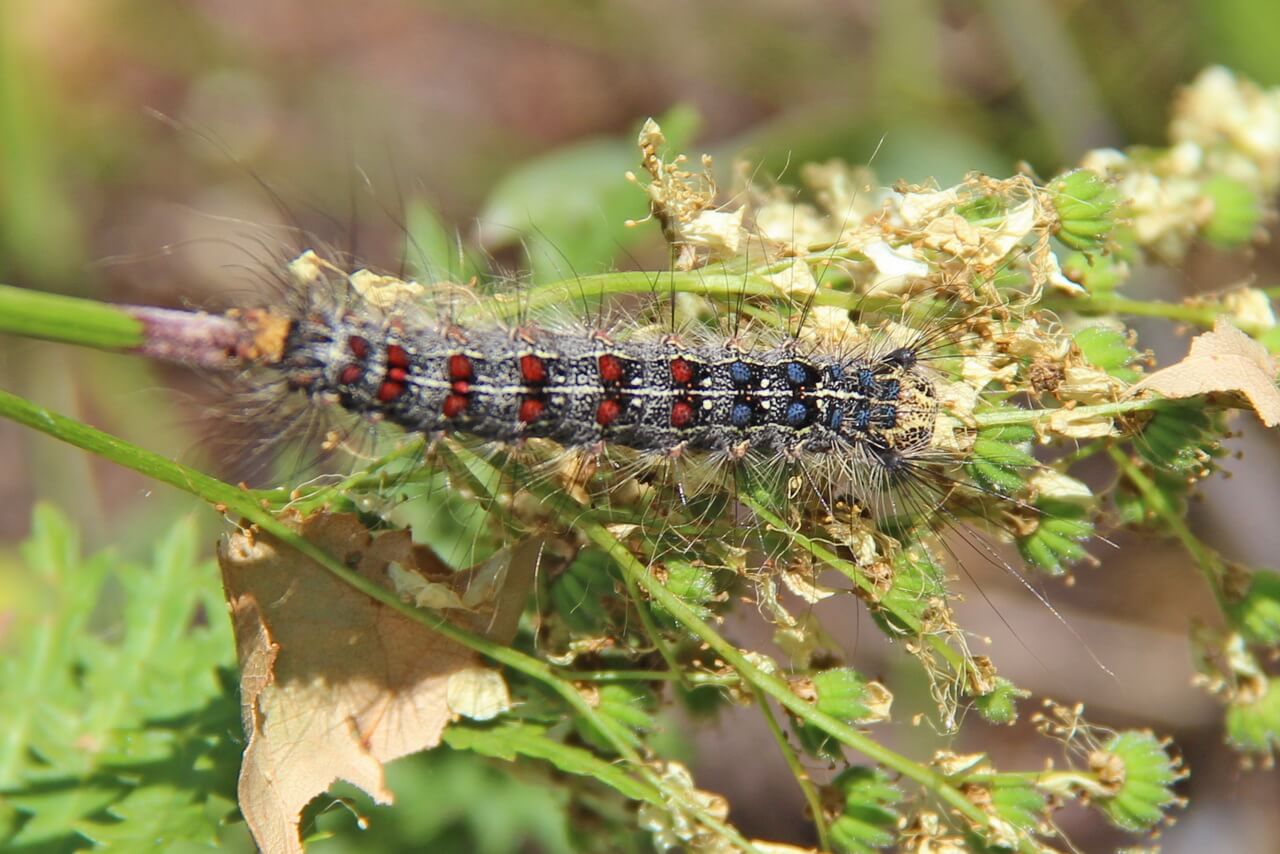 This light-brown moth of the tussock moth family is particularly prolific. A single clutch can contain up to 1,000 eggs. Once hatched, the tiny caterpillars can travel from tree to tree on gusts of wind. This allows the pest to quickly overrun an entire apple orchard. After spreading across a new territory, the caterpillars begin actively feeding, destroying large amounts of foliage. This is followed by pupation, during which all affected apple trees become covered in webbing.
To kill gypsy moths, insecticide treatment is required. In early spring, trees are treated with:
- "Chlorophos";
- Metaphos;
- organophosphorus compounds.
How to cure apple trees of spider webs
There are many effective ways to combat the pests that cause spider webs on apple trees. In the initial stages, it's recommended to use the most gentle folk remedies. Industrial insecticides will be effective in severe infestations. Preventative measures should also be taken into account.
Folk remedies
This method will not only protect apple trees from the effects of garden pests, but will also not in any way affect human health.
The most common means of folk production:
- a piece of laundry soap is grated, diluted with water and wood ash is added, spraying the apple tree leaves with this solution;
- 1 kg of young nettles is infused in 10 liters of warm water – then the trees are treated;
- 1 kg of tobacco dust is boiled in a bucket of water for 15 minutes, left for 3 days, diluted with 2 more buckets of warm liquid and used to treat the garden;
- 300 g of onion with peel is chopped and poured with a bucket of warm water, infused for up to 6 days and sprayed, repeating 3 times over 6 months.
Chemical and biological preparations
When choosing specialized store-bought products, first determine the type of pest. This will help you find a product with the most effective and rapid action. The most common commercial solutions suitable for treating apple trees include:
- "Bitoxibacillin" is a universal insecticide that will destroy spider mites, hawthorn mites, silkworms, aphids, leaf roller and the geometer moth;
- "Bicol" is effective in the fight against aphids, apple moth, hawthorn, spider mite, codling moth;
- "Verticillin" is a bioinsecticide that destroys spider mites and all known types of aphids;
- "Entobacterin" - helps get rid of aphids, silkworms and other leaf-eating insects;
- "Dendrobacillin" is a dry powder bioinsecticide that eliminates caterpillars, leaf rollers, silkworms, moths and geometers.
The use of chemical and biological products must be carried out in strict accordance with the instructions. Mixing products with similar composition and mode of action is strictly prohibited.
Mechanical method of control
 Methods of mechanical control of apple pests include:
- attracting birds by installing birdhouses;
- installation of pheromone traps for males of various insects;
- securing the trapping belts;
- collection of nests and web adhesions;
- digging the soil;
- fumigation of trees.
Preventive measures
To prevent spider webs from taking over your apple orchard, it's important to take preventative measures to prevent pest infestations. These measures include:
- Weed control.
- Trimming root shoots.
- Zoning of the site - cruciferous plants should never be planted next to apple trees.
- Timely fertilization of trees.
- To attract beneficial insects, such as ladybugs, plant dill, parsley, and caraway.
- Hygienic pruning of trees.
- Closing hollows and treating wounds.
Processing times
To protect trees from spider web infestation, they should be treated several times per season. The following spraying schedules apply:
- before the buds open - when dry and warm weather sets in (10-15 degrees above zero);
- after the buds have fully opened, repeat the treatment;
- during flowering, manual collection is preferred and spraying with insecticides is contraindicated;
- during fruiting – exclusively with biological preparations 3 weeks before harvesting;
- The final stage is after the leaves have fallen in dry and windless weather. Watering the surrounding soil is also recommended.
Conclusion
Careful garden maintenance and timely treatment, using a comprehensive range of pest control measures, significantly reduces the likelihood of spider mites appearing on apple trees. It also helps increase fruit yields.




Comments
My apple tree was infested with spider mites. To treat them, I treated it and the nearby trees with Fitoverm and added a little green soap to the solution. I sprinkled birch ash on the soil surface within a 0.5 m radius around the apple tree. I applied Fitoverm three times, five days apart.
The apple moth is a real scourge; it entangled my entire tree and ruined my apple harvest. I was away at the time and couldn't treat it in time. The following year, the pest reappeared, and I got rid of it with Fastac insecticide. I sprayed it in the spring, after flowering.
I encountered a web on the leaves of my apple tree caused by spider mites. Spider mites aren't as harmless as I thought, and the apple tree was wilting before my eyes. To combat the mites, I bought Fitoverm. To help the product "stick," I added a little green soap to the Fitoverm solution. I sprayed the apple tree three times, five days apart, in calm weather. Fitoverm is non-phytotoxic, so it's relatively safe. I also treated nearby trees to prevent a recurrence. I sprinkled the soil around the apple tree trunk with birch ash within a 0.5-meter radius. The pest hasn't appeared since.