Caterpillars on an apple tree: how to deal with tree pests
Caterpillars are one of the life stages of butterflies. They can feed on leaves, tree sap, bark, flowers, or fruits. A caterpillar infestation in a garden can easily turn flowering trees into dry, lifeless trunks. Where do these pests live, and how can they be controlled?
Content
Where can you find caterpillars?
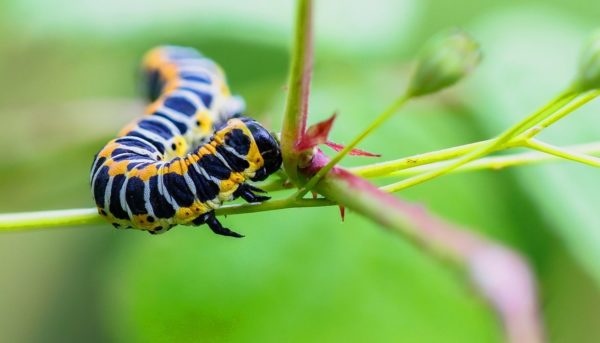 Depending on their diet and food source, caterpillars of various butterflies can inhabit various parts of the apple tree: foliage, buds, and even under the bark. Pest distribution is a species-specific characteristic that allows you to identify the unwanted intruder on the tree and choose the appropriate control method.
Leaves and cobwebs
 Some species of caterpillars are capable of releasing a thin fiber from their body that looks like webThey entangle twigs and leaves, creating a kind of shelter—tents, houses, and sometimes even entire domes. The extent of the infestation depends on the number of caterpillars—sometimes these formations may be invisible under the foliage, while other times they take on the appearance of enormous sheets.
The main species of butterflies whose caterpillars weave webs are:
- ringed silkworm;
- gypsy moth;
- winter moth;
- ermine moth;
- hawthorn;
- goldtail.
Bark
Caterpillars that feed on plant sap are considered the most dangerous, as they live under and within the bark and can remain undetected for long periods. These pests include the caterpillars of the apple clearwing moth, the oriental codling moth, and the woodworm. They burrow through the bark, creating cavities and entire labyrinths, damaging the tree's vascular tissues and negatively affecting the vegetative and reproductive functions of the apple tree as a whole. Affected apple trees experience reduced leaf area, flower stalks, and ovary production.
To detect such "residents", it is necessary to regularly inspect the bark for small entry holes and remains of insect activity.
Buds
Pests that infest buds are highly visible, making them easy to spot. However, they cause damage much more quickly, feeding on flower buds and parts of the flower, inhibiting flowering and fruit set. If the infestation is extensive, the apple tree may even shed healthy blossoms and fail to produce fruit at all. If fruit sets do form, the caterpillars can feast on them.
Most often, butterfly caterpillars settle in the buds.leaf rollers, hawthorn and codling moth.
How to control caterpillars on apple trees: methods
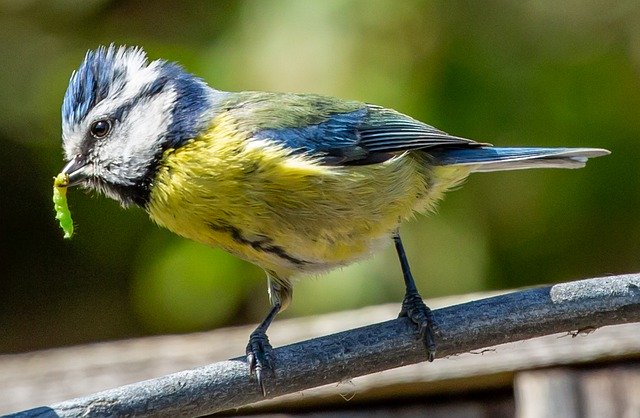 Pest control is essential because, if left untreated, the infestation can not only result in crop loss but also lead to complete depletion and death of the plant. By damaging the tree's organs, the caterpillars create entry points for secondary infections. Therefore, immediately upon detection of insects, immediate measures must be taken to eradicate them.
Folk remedies
Traditional methods are time-tested, often quite simple to implement, and don't require excessive financial, time, or energy expenditure. While they are sometimes less effective than chemical or biological methods, they remain popular among gardeners, especially those who advocate organic gardening.
All treatments with herbal preparations must be repeated 3-4 times at weekly intervals.
Celandine
Celandine is a well-known weed that grows almost everywhere. Its characteristic property when fresh is a caustic milky sap that is detrimental to caterpillars. However, even when used in its dried form, as a decoction or infusion, it is effective and environmentally safe.
- To spray the leaves and flowers, prepare an infusion of dried leaves. Soak a cup of crushed dry leaves in 10 liters of water for 48 hours. Then strain and add 2 tablespoons of liquid or finely ground laundry soap until completely dissolved. Thoroughly spray the apple tree with the resulting fresh infusion.
- A decoction of dried leaves is prepared using 200 g of dry matter and 1 liter of water. The leaves are brought to a boil and simmered for 13–15 minutes. Boiling in a double boiler is also acceptable. The resulting decoction is filtered and diluted in 10 liters of water. All trees, including apparently healthy ones, are sprayed with the fresh solution to prevent the caterpillars from relocating.
- In the fight against apple codling moth and other flower beetles use belts of fresh plants. To do this, a large bunch of celandine, including leaves and flowers, is cut to the root. The bunch is wrapped around the tree trunk, preferably at several levels and on each large branch. The binding should be quite tight. This belt is removed only in the fall.
Tomato tops decoction
A tomato-botvin decoction is effective against leaf-eating caterpillars. To prepare it, use 1 kg of tomato tops and 10 liters of water. The freshly picked tops are steeped for 4-5 hours, then simmered over low heat for 2.5-3 hours. The resulting decoction can be stored in a dark glass container. A working solution for spraying is prepared by diluting 1 liter of the decoction to 2.5 liters of water.
Sagebrush
This fragrant plant is effective against codling moths and leaf rollers. To prepare a remedy, you can use dried flowers or an infusion of fresh wormwood during the flowering stage.
- A decoction is prepared from dried flowers: 1 kg of dried flower material is poured into 1 liter of water, brought to a boil, and simmered for 13-15 minutes. The decoction is then strained and diluted with 10 liters of water. The resulting solution is thoroughly sprayed on trees, paying particular attention to the foliage.
- An infusion is prepared from flowering wormwood. To do this, add 5 liters of freshly cut wormwood to 10 liters of water and let it steep for 24 hours in a dark place. Then, boil for 30 minutes. The resulting infusion is diluted in a 1:1 ratio.
Baking soda
Common baking soda, which is readily available in every home, can help combat pests. Its alkaline properties have a negative impact on caterpillars' shells and digestive tracts. You can dust the crown with baking soda or make a solution from it.
- A baking soda solution is prepared from 3 tablespoons of powder and 10 liters of water. Use the resulting solution within 3 hours of complete dissolution, as baking soda decomposes quickly, especially in hot weather.
Only glass containers are used to prepare the soda solution!
- To dust the crown, use a mixture of soda with wheat flour or ash in a 1:1 ratio.
Birch tar and soap
- Birch tar is made from birch bark. It is a well-known and effective remedy against hawthorn moths and codling moths. The solution used to combat them is the same, but the methods of application differ slightly. To prepare the working solution, dissolve 10 grams of birch tar and 1/2 bar of laundry soap in 10 liters of water.
- To protect against codling moth, plastic bottles filled with a solution are hung in the crown of the apple tree.
- To combat hawthorn, the crown is sprayed after collecting the cocoons.
Chemicals
Chemical preparations are more effective than folk remedies, have a broad spectrum of action, and most often require a single treatment.
Intavir
A synthetic, broad-spectrum pesticide. The active ingredient inhibits the pest's nervous system, paralyzing its internal organs and causing its death. It is available in powder or tablet form. A working solution is prepared by diluting one tablet or one sachet of powder in 10 liters of water. The recommended dosage is 10 liters of solution per tree.
The solution is used only fresh and cannot be stored. It is sprayed liberally over the entire crown. Do not use during flowering or fruiting, as it is toxic to bees. When working with Intavir, be sure to wear gloves and a protective face mask.
Tanrek
A synthetic product that affects plant tissue and inhibits the digestive function of caterpillars. It is available in 3 ml liquid ampoules. A working solution is prepared by mixing 3 ml of the product with 10 liters of water. Consumption: 2.5 liters per tree.
The product is used once per season, as it can cause insect resistance. When treating for codling moths, spraying is done 7-10 days before the expected harvest. Wearing gloves and a mask is mandatory when handling the product.
Fufanon
An organophosphorus product available in emulsion form. It acts through contact and stomach contact, causing acute poisoning and death of caterpillars. A working solution is prepared from 10 ml of emulsion concentrate and 10 liters of water. Consumption is 3–5 liters per tree.
Do not use during flowering, as it is toxic to pollinating insects, including bees. Treatment should be carried out in the spring before flowering and no later than three weeks before the expected harvest.
Karbofos
An organophosphorus product with contact and stomach action. Available in various solid forms. To prepare a working concentration, use 60 g of dry matter and 8 liters of water. Consumption: 2 liters per young tree and 10 liters per mature tree.
Do not use during flowering. The final treatment should be carried out 20–25 days before the expected harvest. Wear a mask and gloves when handling the solution.
Identifying a pest by its appearance: how to understand its type
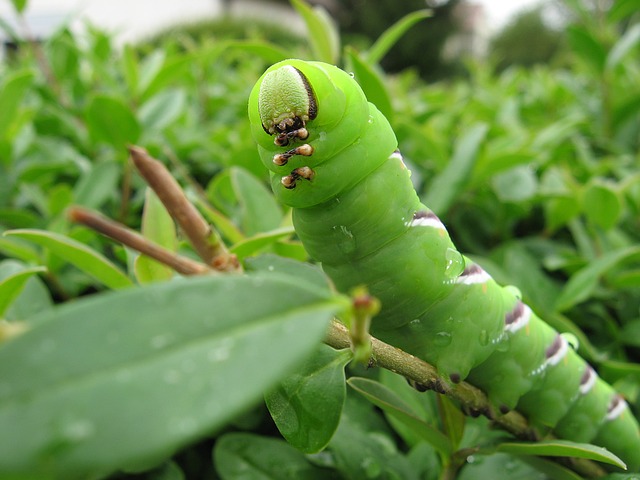
To choose the right drug or folk To combat caterpillars, you need to know your enemy. There are a huge number of species of egg-laying butterflies, and each caterpillar has its own distinctive features. For ease of understanding, let's categorize these pests by color.
Black
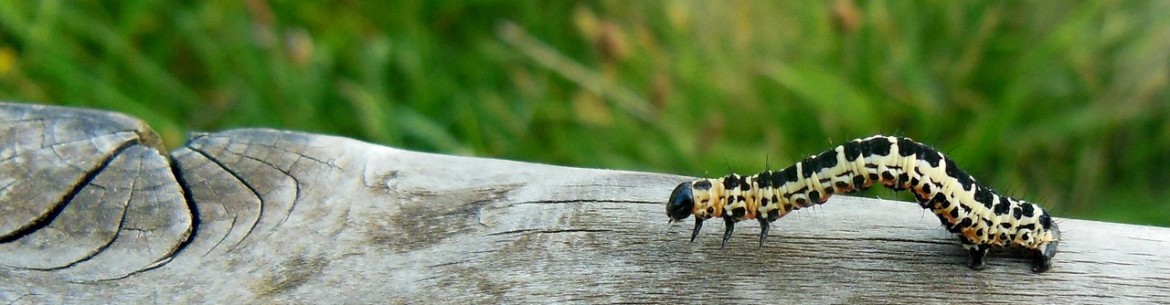
There are few species of black caterpillars that attack apple trees. The most notable and noticeable is the caterpillar gypsy mothThis is a large, hairy caterpillar, about 7 cm long. Its body is black with red dots and yellow longitudinal stripes. It eats leaves, flowers, and ovaries.
Small black caterpillars with yellow longitudinal stripes on the body and white short hairs are butterfly caterpillars.hawthornThey often spin webs. They also typically damage foliage—they eat only the pulp of the leaf, leaving the veins untouched.
Gray
Of the gray caterpillars, the most common attacker on the apple tree is the caterpillar ringed silkwormIt has a bluish-gray body with narrow longitudinal stripes on its back—white in the center, then orange and black. Its body is covered with short orange fluff. These pests are primarily nocturnal, sleeping during the day in their web cocoons.
Greens
Small bright green caterpillars winter moth They have thin white longitudinal stripes on their backs. They feed on leaves, flowers, and ovaries, producing a sticky web as a byproduct of their metabolism, which they use to twist the leaves.
Small, dense green caterpillars, darker near the head section, are leaf rollersThey also feed on all parts of the plant and curl the leaves into tubes before pupation. They easily damage young leaf buds and therefore require prompt destruction.
Whites
White or yellowish-white, with black dots all over the body, dense caterpillars of the corrosive wood-growing They live in thin branches and tree bark. Their presence can be identified by a large entrance in the bark and long corridors, within which the pests themselves can sometimes be found. They are dangerous because they are practically invisible to the naked eye.
Yellow
Yellow caterpillars codling moth form colonies-nests. They reproduce several times per season. These are small yellowish worms, which, with the help of cobwebs weave a nest from leaves.
Codling moth caterpillar
Codling moths are one of the most dangerous pests. They live in the soil and in the bark of trees, and as fruiting approaches, they burrow inside the fruit, eating away at the pulp and seedsThey look like small, dense caterpillars with an orange head, a dark head end, and a light, almost white tail end.
Apple glassworm caterpillar
These tiny white worms, up to 2 cm long, have a bright red-orange head. They attack only apple trees. They live under the top layer of bark, burrowing through it. The branches they damage quickly die, and black cavities are found inside.
Processing timeframes
When treating trees for caterpillars, it's important to consider the insects' life stages and the products used. Not all chemicals are effective against the eggs and larvae of pest moths. Some products act through contact and stomach contact, so they work exclusively through the mouthparts.
Before the sap starts to flow
In the spring, before the sap begins to flow, apple trees are inspected for webs and entrance holes in the bark. All webs, egg masses, and cocoons are removed and burned. Treatment or preventative treatment is carried out before the leaf buds open.
For prevention, the soil around the tree trunk is additionally treated. copper sulfate 3% concentration.
Before flowering
When leaf buds have emerged but flowering has not yet occurred, the second stage of treatment begins. This will eliminate caterpillar populations that feed on young ovaries, buds, and flower parts. Organophosphates (Karbofos, Fufanon) are most commonly used.
During flowering
During the active fruiting period, treating apple trees is not recommended due to the risk of harming pollinating insects. During this time, it's best to focus on mechanical removal of pests, if present. If treatment is necessary, it's best to opt for folk remedies over chemicals.
After flowering
After flowering and when fruit set begins, insecticide treatments are permitted. This is often the last chance to protect the apple tree from codling moth attacks. Later treatments will be ineffective, as the caterpillars will migrate to the ripening fruit.
During fruiting
During fruiting, treatment with chemically active substances should be avoided, or should be done no later than three weeks before harvest. During this time, mechanical removal of caterpillars and damaged plant parts is used, as well as folk remedies.
After fruiting
Preventative measures. Fallen leaves from under trees are removed and burned, as is fallen fruit, as they may harbor dormant pests until the next season. The soil around the tree trunks is thoroughly dug over and treated with copper sulfate.
At the same time, sanitary pruning of branches is carried out, carefully examining the cuts for passages in the bark and wood. All cracks and wounds are carefully treated with garden pitch.
Conclusion and useful tips
Experienced gardeners recommend:
- inspect trees regularly;
- pick and burn curled leaves during the season;
- breed beneficial insects - natural enemies of caterpillars: ladybugs, red beetles, spiders;
- Hang bird feeders on trees to attract pest-eating birds.
Every leaf on a tree is an important organ with its own function. The loss of even a small number can impact yield, fruit set, and fruit quality. Don't let the disease progress until the foliage is completely destroyed, as this could result in the tree's death.