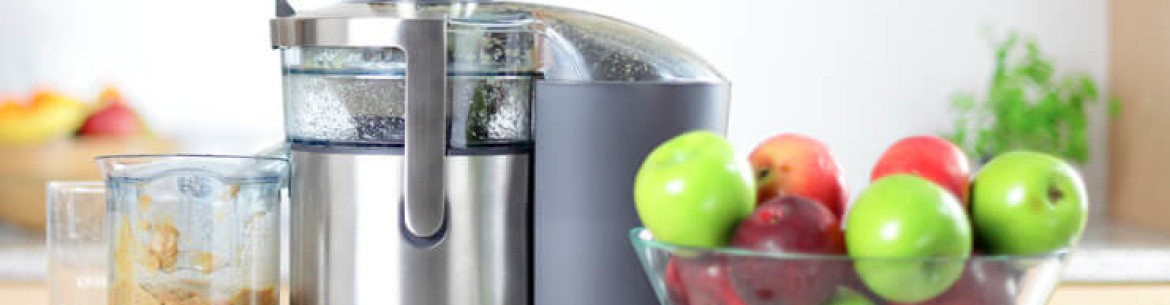
Juicer vs. juicer: what's the difference and which is better?
Freshly squeezed juice isn't cheap, and canned juices are full of unhealthy additives. To enjoy a healthy drink year-round, you can buy a juicer or a juice extractor. Or maybe even both! But what are the operating principles and features of these machines? Let's take a closer look.
Content
Juicer or juicer – which is better?
To determine which unit is best, it's important to understand their intended purpose and how they operate. A juicer produces a small amount of freshly squeezed juice for immediate consumption. A juice cooker is used for canning and preserving foods.
The operating principle and design of juicers
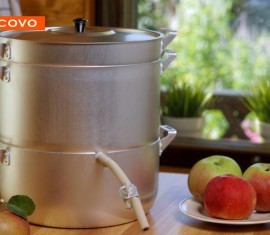
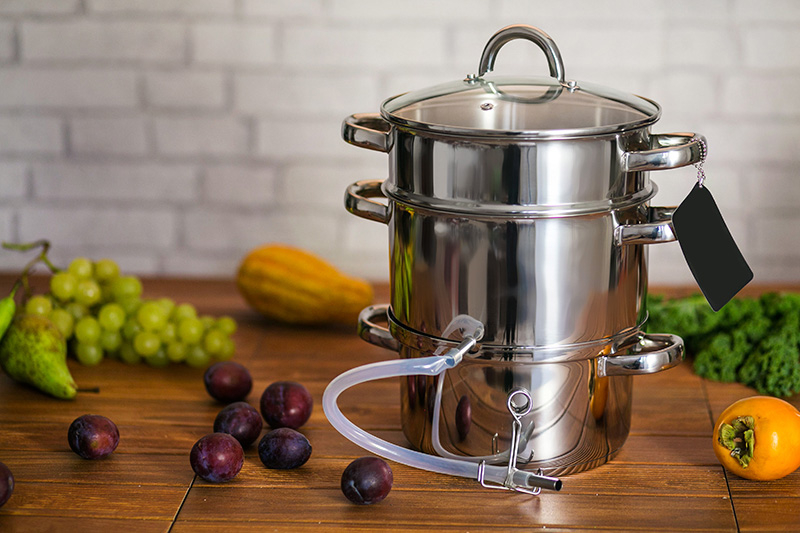 A steam juicer is a construction kit consisting of several containers that can be used separately. The unit includes a lower pan for water, a juice collector (a tall pan with a steam outlet and a juice drain tube), a steam basket for fruit, and a lid with a safety catch and a drain hose.
Operating principle The process involves exposing the raw materials to hot steam. At high temperatures, fruits and vegetables soften and release juice, which flows into a juice collector, where it undergoes additional heat treatment and pasteurization, and then flows through a spout into a collection container.
The product obtained from juicers can hardly be called juice – it is an extract, poorer in vitamin composition compared to freshly squeezed juice.
The operating principle and design of a juicer
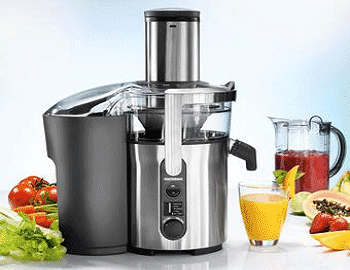 A juicer is a must-have if you want to provide yourself and your family with healthy juice from fresh fruits and vegetables every day. However, such drinks are absolutely not suitable for long-term storage.
Juicers are divided into two main categories: those for citrus fruits (oranges, lemons, grapefruits, and others) and general-purpose juicers. They differ in both design and operating principle.
- Citrus juicers Juicers consist of a motor, a juice reservoir, and a ribbed cone-shaped attachment that holds half the fruit. These models are easy to use and inexpensive.
Universal models are more expensive, but they also offer a wider range of applications. They are not particularly suitable for stone fruits and berries, although the most modern models can handle them as well. They are arranged much more complexly. Designed for citrus fruits. Universal models, on the other hand, can be divided into centrifugal and auger models.
- Centrifugal juicers They take up more space and are considerably more expensive. They consist of a motor, a tank, a product pusher, a sieve, a separator ring, and a disc grater. When the fruit enters the machine, it is crushed by the disc grater, after which the pulp passes through a separator. The crushed pulp moves rapidly in a circle, and centrifugal force forces the juice out, which flows through holes into a special cup. A cylindrical separator can extract up to 90% of the liquid from the initial product, but it does not have a pulp ejector, which must be removed manually. Machines with a canonical separator are equipped with a container for the used material, but they also produce significantly less juice.
- Auger-type devices They resemble meat grinders. They are powered either manually or by an electric motor. Depending on the number of augers, they are classified as single- or twin-auger, as well as horizontal and vertical. They consist of a loading chute, an auger, a rotating brush, a feed tube, a pulp compartment, and a juice compartment. They operate on the same principle as a meat grinder. A rotating axle propels the ingredients toward the auger, where they are chopped and moved into the compartment. The pulp that follows is squeezed through a fine screen, and the pulp is discharged into a special compartment.
The amount of juice squeezed out by such models is higher than by centrifugal ones, but also lower than by cylindrical options.
Operational nuances
The units differ in several nuances of use.
Juicers
 The nuances of using juicers mainly lie in the features of using the lid - it should fit tightly to the steam pan to minimize steam loss and the likelihood burnsAlso, the lid should not bounce during operation, for which purpose it should be equipped with a steam vent.
For induction cooktops, select special juice cookers with a ferromagnetic bottom or stainless steel options. The bottom diameter must match the burner size; significant deviations will result in excessive energy consumption or slower cooking.
Juicers
The nuances of using juicers depend on their type. Citrus juicers may not be able to extract sufficient juice from other fruits, or they may result in significant losses in the final product. Furthermore, such juice may contain a large number of unnecessary ingredients. seeds, pieces of fruit.
With cylindrical models, the pulp must be removed manually, while with canonical models, you have to sacrifice the amount of juice.
Compared to separation models, screw models have a low vibration level, but they take up a lot of space and require good stability.
Juicer: main advantages and disadvantages
The main advantages of juicers include:
- minimum waste - the raw materials left over after cooking can be preserved, frozen or immediately used processing for jelly, marmalade, puree;
- the raw material does not require preparation, there is no need to clean or remove the seeds;
- works with fruits of any hardness;
- the juice is immediately ready for preservation, no additional sterilization is required;
- the drink turns out clean and transparent;
- You can prepare juices from different ingredients at once, mixing them in different proportions;
- ease of assembly and maintenance;
- Suitable for large volumes of raw materials.
But there are also some negative aspects:
- bulkiness;
- low cooking speed;
- reduction of vitamin value due to heat treatment.
Juicers: Main Pros and Cons
The juicer also has its advantages:
- juice preparation speed;
- preservation of vitamins;
- the ability to work with small volumes;
- large selection of models.
They have few disadvantages:
- noisy;
- difficult to clean;
- demanding of raw materials.
The process of making juice
Due to the different operating principles, the juice preparation process also differs.
Juice from a juicer
Juicing in a juice cooker works like this: Water is poured into the bottom pan, and the ingredients are placed in the steam basket. Hot steam from the boiling water enters the steam basket, softening the ingredients and releasing juice. The juice flows through the steam basket's openings into the juice collector, where it undergoes additional heat treatment, is pasteurized, and then flows through a tube into a canning container or pitcher.
Juice from a juicer
The process of making juice in a juicer requires certain preparation of the raw ingredients. They must be peeled and, if possible, removed. seedsLarge fruits are cut into several pieces.
Auger-type models are operated manually or powered by an electric motor. The fruit is placed in a loading chute, from where it passes through a feed tube onto a rotating brush and a crushing auger. Under pressure, the juice is released into a prepared container, and the pulp is removed to the side.
What to choose: a juice cooker or a juicer
- Juicer – the ideal choice for those who lead a fast-paced life. It can be used to maintain energy. quickly get a freshly squeezed drink made from fresh fruit, which will strengthen the immune system and saturate the body with vitamins and minerals, help cope with fatigue and increase resilience to stressful situations.
- Tasks juice cookers somewhat different. She It will come in handy when you have a large amount of vegetables and fruits available, requiring processing and long-term storage. Furthermore, a juicer allows you to obtain a large amount of juice for future use. A juicer won't allow you to preserve the product. Furthermore, juicing with a juicer requires less labor and produces a larger final product. Juicers are also significantly less expensive.
To summarize: juice cookers and juicers differ not only in their operating principles but also in the final product. Juicers produce fresh juice for immediate consumption, unsuitable for long-term storage without additional processing. Juicers are also more demanding on the ingredients. Juicers take longer to prepare juice, but the resulting product is ready for canning. They handle larger volumes, are undemanding in terms of size and cleaning of ingredients, and allow for large quantities of juice at once.