What to do if the leaves on an apple tree are curling: how to treat trees to cure
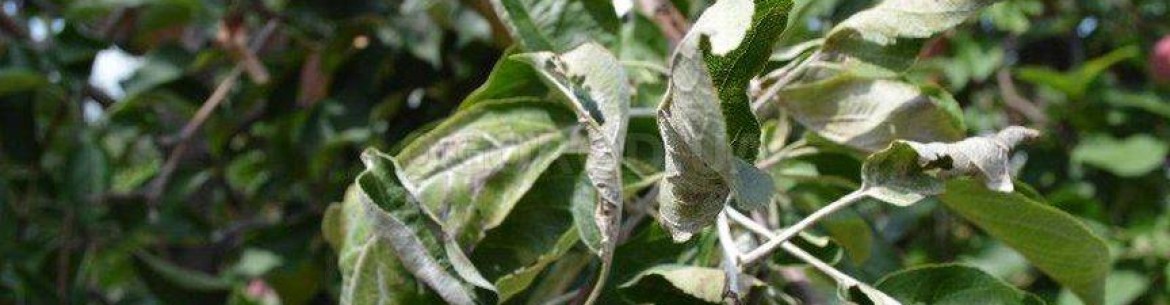
If you notice curling leaves on your apple tree and don't know what to do, you first need to determine the cause of this unpleasant phenomenon. Most problems are easily resolved by adjusting your maintenance routine. However, there are also problems that require time and considerable effort to resolve.
Content
The main reasons for apple tree foliage curling
There are many reasons why apple trees curl their leaves. Damage to the foliage can be caused by insect pests, poor agricultural practices, or infection with pathogenic microorganisms. If a gardener skimps on fertilizer, waters the trees improperly, or fails to insulate the plants for the winter, it's not surprising that their apple trees will eventually lose their foliage.
Lack of fertilizer
Leaf curling indicates a deficiency in the soil of nutrients essential for the proper functioning of green plants. Light green leaves, along with curling leaves in an apple tree, indicate a catastrophic nitrogen deficiency. Applying ammonium nitrate (20 grams dissolved under each trunk) to the soil will help stabilize nitrogen levels. You can also spray with a 0.5% urea solution in the evening.
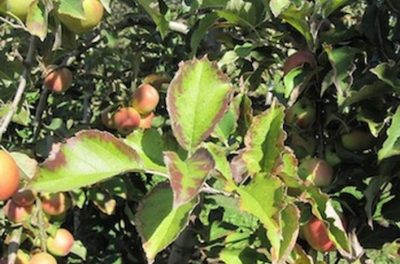
 A characteristic symptom appears on apple trees that lack:
- calcium;
- potassium;
- boron;
- magnesium;
- phosphorus.
Calcium deficiency manifests itself as whitening and curling of foliage, which later turns brown and falls off. Magnesium deficiency symptoms affect the lower part of the crown, while boron deficiency also leads to deformed fruits. Boron deficiency manifests itself as bronze, purple, and red discoloration of foliage, while potassium deficiency causes the foliage to take on a strange bluish tint.
If the above symptoms are detected, it is necessary to urgently carry out unscheduled fertilization of the garden with the missing nutrients.
Lack of moisture
The most common cause of leaf curl is a simple lack of soil moisture. Additionally, the foliage will begin to dry out and fall off. The optimal moisture level in the soil for an orchard should be 70–75%. This moisture level promotes better dissolution of nutrients in the soil and accelerates their absorption by the root system. When watering manually, try to use settled rainwater. A drip irrigation system is ideal for an apple orchard.
Trees should definitely be water at the beginning of their growth (in spring), during flowering, the formation of buds and buds, and also during fruit development.
Fungal infections
Leaf curling is a characteristic sign of apple tree damage caused by diseases such as powdery mildew And scab.
Powdery mildew
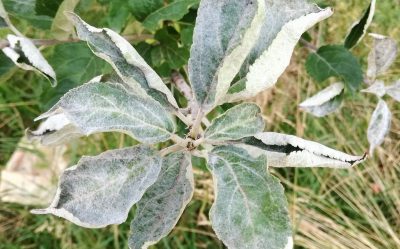
 To diagnose infection of fruit trees powdery mildew, a thorough inspection of the green foliage is necessary. Particular attention should be paid to young leaves, as this is where the disease most often begins. Infection typically occurs in early spring and appears as a white coating, leading to the shoots drying out.
Powdery mildew is most active in warm, humid weather, and its spread is facilitated by poor tree maintenance, dense canopies, and poorly cultivated soil. Although this disease appears relatively harmless, it can ultimately lead to complete crop failure.
Don't delay treating your apple tree. If numerous leaf blades are already infected, the most sensible solution is to use fungicides.
Treatment can be carried out at least a month before harvesting apples.
Folk remedies cannot completely cure powdery mildew, but can only slow its progression. However, they should not be avoided completely. Treat affected apple trees with a 1% Bordeaux mixture solution. Do this 20 days before harvesting or immediately after. After the leaves fall, remove all plant debris from and under the affected trees and dispose of it properly. You can either compost it or burn it off-site.
Scab
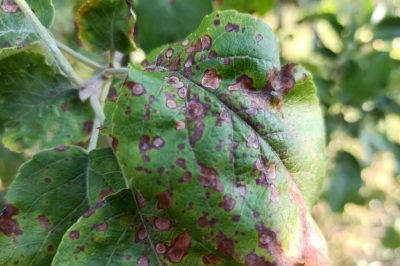 In orchards, this fungal infection most often affects apple trees, and its effects invariably result in leaf curling. The disease spreads by spores, so wet and windy weather is ideal for it, allowing it to infect virtually the entire plot. Following the leaves, the disease spreads to the fruit, causing them to rot. The first sign of fruit tree infestation by this pathogenic fungus is the appearance of a brownish-olive coating on the leaves, which over time begin to dry out and curl up.
A significant contribution to the fight against scab Preventive measures taken in the fall include clearing fallen leaves and cutting and burning affected shoots.
In the spring, treat apple trees with a biofungicide solution. If infestation cannot be avoided, be sure to use fungicides. For maximum results, it is recommended to do this before and after flowering. Experienced gardeners have reported that the following mixture has shown good results in combating scab:
- 15 g potassium sulfate;
- 15 g potassium nitrate;
- 10 g ammonium nitrate;
- 10 g ammonium sulfate.
You can treat plants with this solution every 5 days. For greater effectiveness, use a spray bottle.
If the disease continues to rage after all treatments, additional tree fertilization can save the situation.
Pests
An equally common cause of apple tree foliage curling is an attack by insect pests on the apple orchard.
Red gall aphid
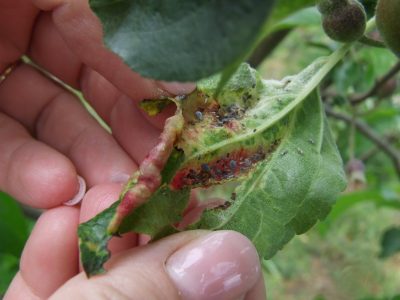 Red gall aphid attacks not only curl the leaves but also cause distinctive red swellings. This fruit pest most actively attacks the following varieties:
- Bellefleur the Chinese;
- Antonovka;
- Golden Reinette;
- Cinnamon striped.
The red gall aphid prefers to destroy the leaf blades of these apples much more actively than all other apples. Given that these pests appear in orchards at the same time as beneficial insect activity is at its peak, the use of insecticides is unjustified. As a preventative measure, you can install numerous trapping belts in the orchard. These will help eliminate not only the aphids but also the ants that disperse them on the plants.
Place the belts on the site at the end of April at a height of about one and a half meters.
In addition, it's worth using regular adhesive tapes, which will help get rid of not only aphids, but also:
- case moth;
- apple blossom weevil;
- earwigs;
- leaf roller caterpillars.
To minimize the chances of red gall aphids appearing in your area, carefully monitor your trees and remove damaged bark. Replace trapping belts and sticky tape with new ones every 5-6 days. There are special installation guidelines that will increase the effectiveness of the traps. The belts should fit as tightly as possible to the trunks to prevent the small insects from crawling through them and the bark.
Common aphid
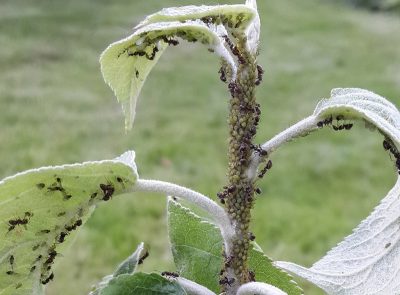 Unlike their relatives, the common aphid doesn't target specific apple varieties. Forming colonies, it viciously attacks all fruit trees, destroying young shoots and causing leaf blades to curl. This looks as if someone has forcefully crumpled the new growth, along with its green mass, and it never straightens out. This occurs because the aphids suck the plant's vital sap, which, in turn, causes deformation, shoots become twisted, and photosynthesis is disrupted.
To control aphids, use insecticides applied to the orchard a month before harvest. Infected tree parts must also be removed. To prevent ants, which breed these green pests, from settling under the apple trees, avoid overcrowding.
Other errors and solutions: what to do if the leaves on an apple tree are curling
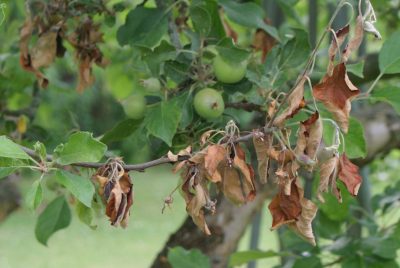
Failure to prepare apple trees for winter, as well as sudden temperature fluctuations during the cold season, can lead to frost cracks in tree trunks. Such deformations in the trunk make apple trees vulnerable to diseases and pests, which in turn can contribute to leaf curl. Take care of your orchard and insulate your trunks for the winter. This will help prevent more serious problems in the future.
Another disease that can lead to damage to the green mass of the garden is called bacteriosis (or bacterial burn). It's an infectious disease that can destroy all fruit trees in a plot within two seasons. The entire plant suffers from the disease: the bark and branches become covered in a black coating, as if they've been exposed to an open flame. The foliage, along with the fruit, turns black and curls up, but doesn't fall off. The disease is contagious to surrounding trees, so immediate intervention is required.
There are currently no effective measures to combat this disease. The primary preventative measure is spraying the garden with copper-containing preparations. Suspected branches are pruned, removing at least 30 cm of healthy wood, and burned.