Bellefleur-Kitayka apple tree: characteristics of the variety and care
| Color | Reds |
|---|---|
| Ripening season | Autumn |
| Size of apples | Average , Large |
| Taste | Sweet and sour |
| Crown type | Tall tree |
| Shelf life | Average shelf life |
| Application | For recycling , Fresh |
| Winter hardiness | Average tree height |
| Fruiting age | From 5 years old |
 History of origin and regions of growth
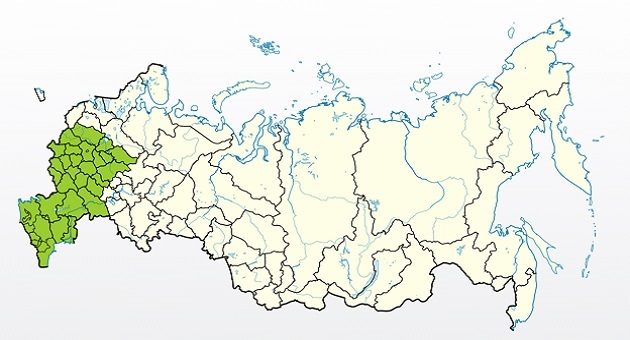
Growing regions
- Middle zone.
- North Caucasus.
- Crimea.
- Moscow region.
- Leningrad region.
Origin
This variety is considered ancient, as the first mentions of it can be found in documents dating back to the 18th and 19th centuries. It has many varieties, the most popular of which is the Bellefleur-Kitaika. This apple tree first appeared in Russian orchards at the dawn of the 20th century, around 1906-1908. It was developed by the great Russian breeder and enthusiast Ivan Vladimirovich Michurin, who crossed the old Bellefleur yellow with the large-fruited Kitayka.
The first fruits from the seedling weren't produced until 1914, that is, seven years after the new hybrid was planted outdoors. The variety immediately gained enormous popularity, as it could be grown even in harsh conditions, such as the Leningrad Region, the Moscow Region, and even further north. The Chinese Bellefleur variety was only added to the State Register of Breeding Achievements in 1947, and was then zoned for the North Caucasus region.
Content
Description of the Bellefleur-Chinese variety
 This autumn variety is ideal for the European part of Russia. It's quite hardy, requires no special care, thrives in a variety of soils, and doesn't require frequent watering or fertilizing. The apple trees bear fruit abundantly and regularly, without a break from the very beginning to the end of their active life.
The fruits are somewhat plain, according to professional tasters. They are large, attractive, and tasty, but a bit bland. However, these fruits are well suited for dietary use, for example, for diabetics. They are not cultivated in intensive commercial orchards; they are more suitable for individual cultivation. They are being actively replaced by newer, more disease- and frost-resistant varieties.
Apples: What do they look like?
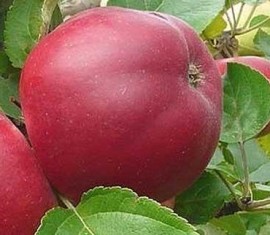
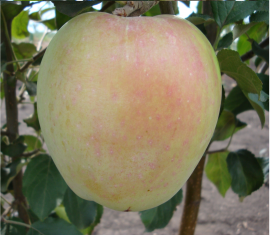
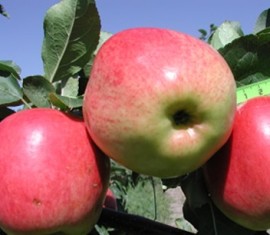
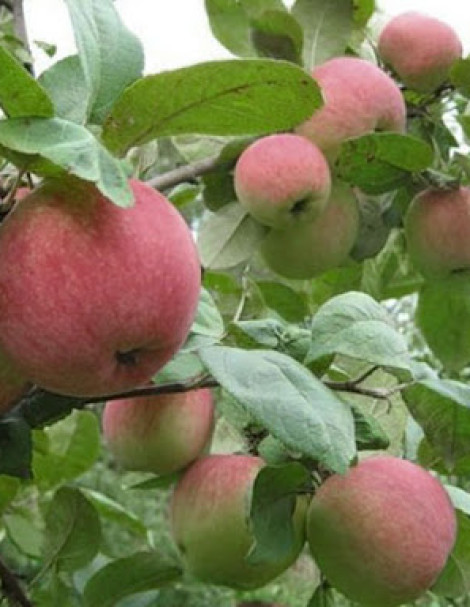
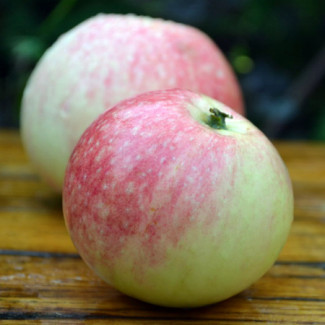
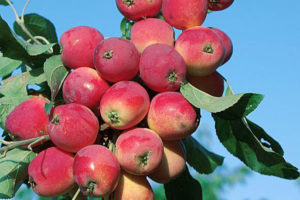 The fruits are usually large or very large. They easily grow to 200-230 grams even without any care, and in favorable years, with timely fertilizing and watering, they easily exceed 300-340 grams. Some young apple trees reach 450-500 grams, although this is rare. The apples are round, mostly uniform, symmetrical, smooth, round, oval, or slightly flattened. Ribbing is good, but the side seam is not visible.
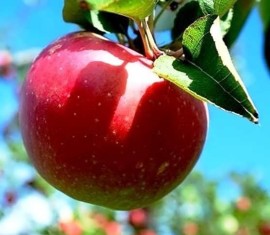
The skin is dense and elastic, but quite thin, easily peeling off when bitten. It is a distinct, rich green color, lightening to a whitish-yellowish as it ripens. The blush is mottled and striped, blurred, reddish-pink or crimson, and may have a slight carmine tint. Subcutaneous spots are small, light green or slightly grayish, and almost invisible against the variegated surface. The chemical composition is most easily assessed using the following data:
- Sugar (fructose) – 12.8%.
- Ascorbic acid (vitamin C) – 11.2 grams.
- Pectins (fiber) – 14%.
- P-active substances (catechins) – 184 milligrams.
- Titratable acids – 0.18%.
The flesh is fine-grained, medium-dense, juicy, pleasantly crisp, and can be slightly prickly. The flavor is considered dessert-like, predominantly sweet with a distinct apple tartness and a strong, spicy lemonade-wine aroma.
Professional tasters give the apples a 4.6 out of 5 for taste and a 4.7 out of 5 for appearance.
Bellefleur-Chinese apple tree: characteristics
Crown and root system
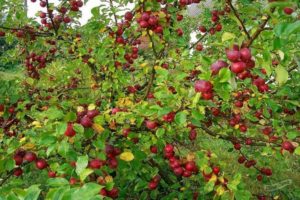 Trees are considered to be of medium or vigorous growth. Without additional shaping, they reach approximately 5-7 meters in height, and under favorable conditions even higher.However, in most cases, gardeners limit trunks to 4-5 meters to simplify gardening and harvesting. The crown is oval in youth, later becoming rounded. It is densely packed, with strong, sturdy branches covered in pubescent, dark green or brownish-green bark that turns brown with age.
The leaves are large, thick, wrinkled, and coarsely nerved. They are oblong, elongated, lanceolate, and leathery, albeit matte, with dense pubescence on the underside. The leaf blades are rich green or emerald, with long, pointed tips and serrate-crenate margins with large serrations. The root system varies depending on the rootstock, but is generally fibrous. It is well-rooted and branched, penetrating the soil and able to find water even at great depths, although some shoots extend beneath the surface.
Productivity and pollination
This figure depends on many environmental factors, including care. The largest yields are grown in warmer regions.
One mature tree can produce approximately 65-80 kilograms of aromatic fruit per season. However, under favorable weather and climate conditions and with proper care, this figure can be increased by 45-55%, which is a significant increase..
Bellefleur is relatively self-fertile, so some fruit will ripen even if there's not a single apple tree of another variety within 100 meters. However, don't expect more than 25-35% of the maximum possible yield. It's best to plant all the trees interspersed, choosing them based on their flowering times, ensure direct access to the seedlings for bees, and spray the trunks with sugar syrup.
Winter hardiness and disease resistance
This tree's frost resistance is average. It tolerates temperatures down to -25-27°C very well, even without special protection. However, it can react to sudden changes in temperature and even become ill, suffering severe stress, after which it will take several years to recover. This is a significant drawback, allowing newer, more resilient hybrids to displace the Bellefleur from the market.
The second problem owners of this variety must address is its susceptibility to disease. It is susceptible to powdery mildew and cytosporosis, and is very susceptible to scab, which affects the fruit more than the foliage. Therefore, it will be necessary to carefully monitor the area around the trunk, carry out preventative spraying and treatments with various commercial products.
Rootstocks and subspecies
Bellefleur is grown on various rootstocks, and the subspecies deserve a special mention. But first, it should be noted that the ancient Bellefleur variety and its direct descendant, the Chinese Bellefleur, are excellent rootstocks themselves. More than a dozen completely new, unusual apple trees have been created using them, including the Altai Velvet, Autumn Joy, Rossoshanskoe, and Izbrannitsa.
| Subspecies | Peculiarities |
| Yellow | An ancient variety with medium-sized fruits and bright yellow skin. They usually lack a skin color or have a light, diffuse, translucent orange blush. They ripen slightly earlier than Kitayka, have reduced shelf life and transportability, but have a more intense flavor and aroma. |
| Bashkir | Developed by breeders G. A. Mansurov, R. I. Bolotina, and T. G. Demina at the Bashkir Research Institute of Agriculture in the early 1990s, the variety's parent stock was Bellefleur and Bashkir Krasavets. In 2008, it was included in the State Register of Breeding Achievements. The resulting tree is shorter, reaching a maximum height of only 4-5 meters. Its fruits are smaller than those of the Chinese apple, but the yield is similar. Its winter hardiness is above average, allowing it to be grown even in the Urals and Siberia. Its main advantage is its enviable drought tolerance; these trees require virtually no irrigation. |
| Kuibyshevsky | Another unusual new hybrid was developed at the Kuibyshev Experimental Station. It is resistant to low temperatures and drought, requires little care, is highly productive, and, most importantly, ripens early. In just four to five years, it produces approximately 6-10 kilograms of aromatic fruit with a sweet, spicy flavor and aroma. Resulting from a cross with Borovinka, the variety has a shelf life of no more than 45-60 days. |
Features of growing Chinese Bellefleur
 Landing
 Landing
Basic conditions
- It's recommended to plant this variety in open, well-ventilated areas with full sun for most of the day. In the shade, apple trees grow poorly and may even die in the first few years. They refuse to bloom or bear fruit, and are prone to disease.
- It's best to keep groundwater levels below two meters. Apple trees can reach the water with their long roots, which can cause them to rot.
- Drafts often lead to apple tree diseases, so you will have to protect them from strong winds.
- Moist, loose, and airy soils are ideal. Bellefleur grows well in black soil, loam, and even sandy loam, as long as the soil around the rhizome doesn't become compacted. Acidic and excessively saline soils, peat, and pure clay are not suitable for these apple trees.
- Most experienced gardeners prepare planting holes in advance (6-9 months). They dig holes 60-80 centimeters deep and up to 1 meter in diameter, add fertilizer to the bottom, then add drainage, fill with plenty of water, and leave them outdoors.
- Root collar It should always protrude above the surface by at least 5-8 centimeters, otherwise the tree will take root higher and the properties of the rootstock will be lost.
- Leave approximately 4-4.5 meters of space between the holes, and up to 5-6 meters between the rows, so that the crown and rhizome do not conflict when the trees grow.
- Special supports—stakes, planks, or rods—are driven or dug into the holes immediately to tie the seedling to. These can be removed no earlier than 4-5 years after planting.
- Before planting, be sure to check the rhizomes; all shoots should be moist and vibrant, and any damaged or dry ones should be cut off. It's a good idea to soak the trees in water for 6-8 hours before transplanting them to the open ground.
- Place the seedling on a pile of drainage material, straighten the roots with your hands, cover with soil and compact it carefully.
It is recommended to purchase seedlings only from reputable sellers or specialized nurseries that have all the necessary documentation. Preference should be given to robust, two-year-old trees with a vibrant, robust, and extensive root system.
Landing dates
Bellefleur can be planted in both spring and fall, and its survival rate is roughly the same. The further north the growing region, the better the early spring planting, from late March to early April.
Tree care
 Tree care
Protection from frost and pests
Standard frost protection measures are sufficient for trees. Their trunks are wrapped in burlap or other material, including roofing felt or tar paper. Straw, dry leaves, grass, or spruce branches can be piled on the root zone. Covering trees with a tent-like covering is only possible when they are young, as they grow quite tall.
To repel rodents, apply a thick layer of fuel oil, grease, or lard to tree trunks to repel pests. To eliminate or minimize the risk of insect infestation, tree trunks are whitewashed with lime in the spring and fall.
Loosening the soil, watering: proper agricultural technology
It is necessary to dig up the soil around the trunk in a timely manner twice a year, not forgetting mulch It's used to retain moisture. Hoeing can be used in between to break up compactions, but this should be done very carefully. Some roots are located close to the surface, and it's important not to damage them.
It's also important to monitor the tree's watering and fertilizing, especially if the soil is poor and the weather is dry and hot. Approximately 25-40 liters of water should be applied per tree every 14-16 days, preferably by sprinkler or drip irrigation. Fertilizer should also be applied at the same time; moisture helps the roots absorb it more quickly and effectively.
Pruning: simple crown shaping
It's recommended to cultivate a sparse, tiered crown for this variety. This way, as it becomes spreading and drooping over the years, it won't interfere with itself, making it easy for the gardener to harvest and perform standard pruning and shaping.
Saplings usually arrive from the nursery with a main trunk and 2-4 skeletal shoots. All that remains is to maintain this shape by promptly removing shoots that grow upward or inward. Old, diseased branches are removed, and after 15-18 years, 2-3 mature branches can be pruned to rejuvenate the tree.
Pollinator varieties
- Bellefleur yellow.
- Saffron pepin.
- Antonovka.
- Korobovka.
- Autumn striped.
- Cinnamon striped.
- Folder.
- Slav.
- Nastenka.
- Quinti.
Reproduction
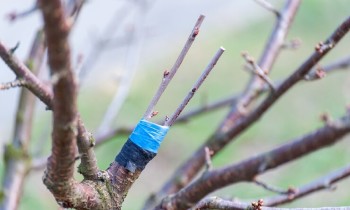
- Grafting.
- Rooting.
- Layers.
Ripening and fruiting of the Chinese Bellefleur
The beginning of fruiting
 The beginning of fruiting
Growing this variety requires patience, as it's not exactly an early-bearing variety. It only begins bearing fruit 5-8 years after planting, not earlier. Even flowers are extremely rare before the fifth year, even under the most favorable conditions. The first harvests will consist of only a dozen or so apples, but it's worth trying.
Flowering time
The Chinese Bellefleur, like most similar apple trees, typically begins blooming around mid-May. However, this depends on climate and weather conditions. The timing may shift slightly toward the beginning or end of the month. The tree produces abundant flowers, either snow-white or with a delicate, barely noticeable pink hue, densely covering the branches, making the tree look attractive.
Fruiting and growth
The tree grows at a moderate rate, approximately 25-30 centimeters per year. Therefore, it quickly reaches its normal fruiting rate. Full harvests can be reaped as early as 12-15 years.
Apples ripen in the first half of September, around the tenth. But there's no need to rush; they can hang on the tree for a long time without falling off. The fruit transports well, surviving shipping fairly well, but their shelf life is a bit lackluster. They'll keep until about early December, and in some cases until early January, without losing their flavor or appeal, but no longer.
Top dressing
- Mineral complexes.
- Compost.
- Manure.
- Chicken manure.
- Humus.
What to do if it doesn't bloom or bear fruit
- Check that there are no diseases or pests.
- Organize regular watering.
- Fertilize.
- Transplant.
Why do apples fall?
- Natural weather conditions (wind, rain, hurricane, hail).
- Pest damage.
- Various diseases.
Share your own experience with the Bellefleur-Kitaika apple variety so everyone can get to know it and get maximum yields with minimal effort.