Red spots on apple tree leaves: what to do and how to treat the trees
The appearance of red spots on the leaves is a warning sign that something is wrong with the tree. Such redness can be caused by a variety of factors. Without proper treatment, this problem worsens and causes significant damage to the entire apple orchard.
Causes of red spots
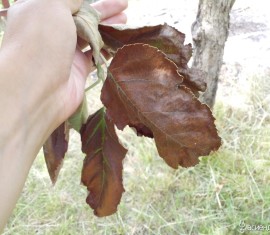
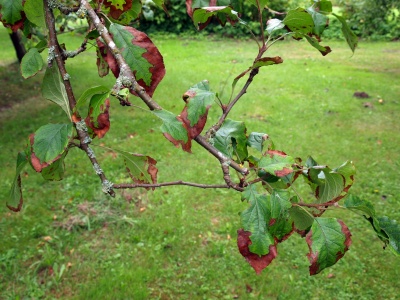 Reddening of apple tree leaves is a fairly common occurrence, indicating a problem. Ignoring this symptom is unacceptable, as failure to treat it can lead not only to significant crop losses but also to the death of the tree. Treatment is only possible after determining the exact cause of the reddening; otherwise, all efforts will be in vain.
In most cases, red spots are caused by improper care of the fruit crop, as well as deviations from agricultural practices. In this case, timely corrections will help resolve the problem quickly. However, this symptom can also signal the development of a disease. In this case, a range of measures will be required to treat it and prevent further spread.
Nutritional deficiencies
 Apple trees do poorly in heavy clay soils, growing near groundwater, and in low-lying areas with high moisture from rain and fog. As a result, the root system does not receive sufficient nutrients. The same applies to light sandy soils, where fruit trees suffer from mineral deficiencies, leading to reddening of their leaves. For proper development, apple trees require phosphorus, nitrogen, potassium, iron, and magnesium. Low levels of these nutrients in the soil manifest as yellow or red spots on the leaves.
Reddening of leaves can be caused by mechanical damage to the root system or bark of the apple tree. This is usually due to a number of factors:
- rodent infestation;
- wire binding;
- cutting branches into a metal fence.
In each case, the tree's nutrition in the damaged area is disrupted.
Potassium deficiency
Potassium deficiency manifests itself as a reddish border along the edges of leaf blades. This problem is often accompanied by nitrogen deficiency, as the apple tree is unable to absorb one nutrient without the other. To replenish the soil with these elements, foliar feeding is used, which accelerates the absorption of potassium into the tree's tops. To prepare a working solution, dissolve 50 g of potassium salt in 10 liters of water. Additionally, water the apple tree with an extract prepared from wood ash:
- 200 g is poured into 1 liter of boiling water and infused for 24 hours;
- Before use, dilute with cold water to obtain 10 liters.
2 liters of the prepared nutrient solution are poured under each trunk.
Low phosphorus content
When there is a deficiency of this element, the color of the foliage changes completely, acquiring a bronze or purple tint, which initially appears near the petiole.
A tree suffering from a phosphorus deficiency begins to shed its leaves prematurely and fruits that have not yet ripened begin to fall off.
The problem is resolved as follows:
- the crown is treated with a solution of ammophos (0.5%);
- repeat the procedure in the next season from April to July with a frequency of once every 3 weeks;
- Spray apple trees 3 times during the season with a superphosphate solution prepared in a ratio of 40 g/10 l of water.
Magnesium deficiency
A deficiency of this element is commonly observed in apple trees growing in sandy loam soil. In this case, red spots form between the veins. This problem is solved by treating the shoots and foliage with a magnesium sulfate solution (2 g/10 l of water). This solution should be applied no more than four times per season.
Incompatibility of scion and rootstock
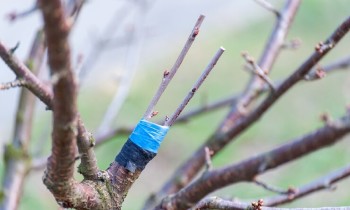
The resulting problem is accompanied by reddening of all the leaves on the tree. This indicates a physiological incompatibility between the scion and rootstock. Furthermore, a distinctive swelling has formed at the site of the graft. In this situation, there is only one solution: replacing the apple tree with a new one.
Colonies of red gall aphid
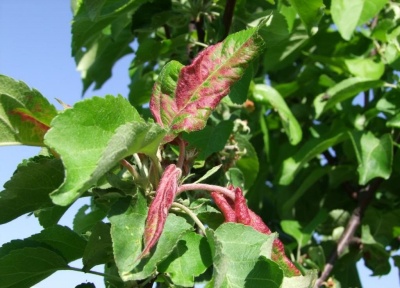 An infestation of these pests results in red, raised spots appearing on leaf blades. Red gall aphids can be found on the undersides of leaves. These insects feed on apple tree sap and cause significant damage to young shoots. Large-scale attacks and a lack of control measures lead to curling and deformation of leaves.
To eliminate the problem, the crown is treated with systemic preparations, the most effective of which are:
- "Actellic";
- Fufanon.
The most favorable conditions for the activation and mass spread of red gall aphids are hot and dry days.
During rainy and cold summers, the population of this pest significantly decreases. The first sign of an aphid infestation on the leaves is the constant movement of ants on the apple tree.
Phyllostictosis or brown spot
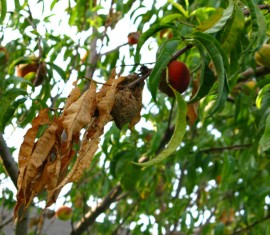
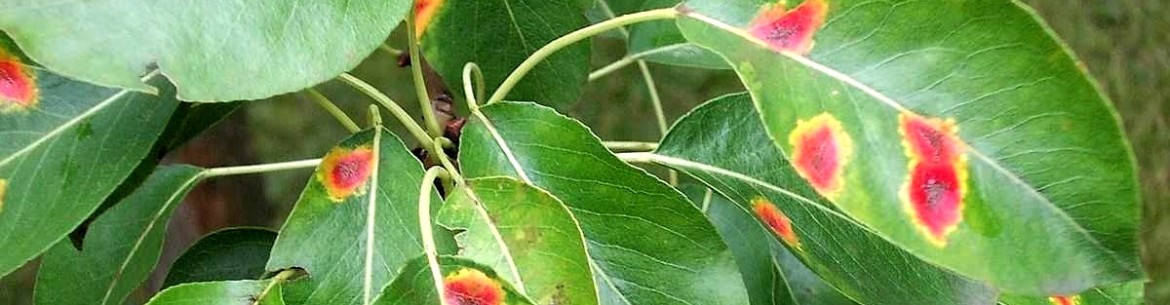
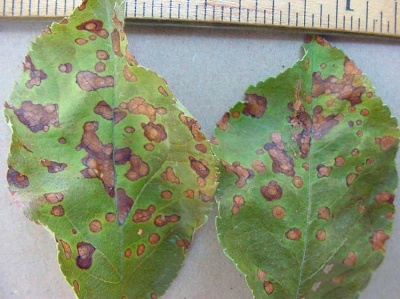 This disease is characterized by the formation of red spots on the leaf blades, which eventually spread across the surface and turn brown. By feeding on cell sap, the fungus interferes with metabolic processes in the tissues, leading to necrosis. Affected leaves gradually begin to dry out and die. The first signs of fungal infection of fruit crops appear in May.
Failure to treat phyllostictosis leads to loss of crop yield and, after some time, the entire tree.
You can get rid of the disease by treating the crown with the following preparations:
- "Topaz";
- copper sulfate;
- "Strobie";
- Falcon.
The rapid spread of brown spot occurs in rainy and windy weather.
Black crayfish
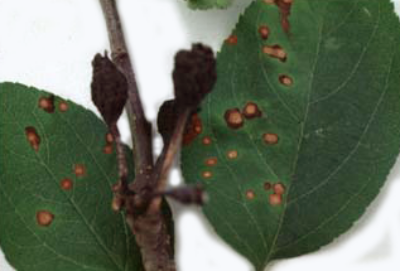 This disease most often affects weakened crops with low immunity. It is characterized by the appearance of red spots on the leaves, which subsequently darken and affect all parts of the tree: the trunk, fruits, and branches.
Especially black crayfish affects fruit orchards grown in the southern regions.
The complex of treatment procedures includes the following:
- removal of all necrotic fragments from the tree;
- treatment of open wounds with a solution of copper sulfate (3%);
- filling in dried-out areas garden pitch.
For preventive purposes, it is recommended to spray trees monthly with a solution of Bordeaux mixture (1%), except during the flowering period.
Milky shine
This disease is easily recognized by the light pink spots that appear on the leaves. This phenomenon is typically observed on the south side of the apple tree. Over time, a gray, pearly coating (shine) develops on the branches, which can spread rapidly. This causes unripe fruit to fall off.
In case of defeat milky shine all skeletal branches of the tree die.
The disease can be caused by a number of factors:
- freezing;
- sudden changes in temperature;
- mineral and water "starvation" of the crown;
- poor drainage;
- low lime content in the soil.
Milky shine Treatable only in the early stages of development. Treatment includes treating the crown with a 5% copper sulfate solution and strictly adhering to a watering regimen. As a preventative measure, gardeners whitewash the trunk and main branches in the spring and fall. Fertilizing apple trees with phosphorus-potassium fertilizers increases their resistance to this disease.
Excess moisture in the soil
This problem can be caused by a high water table, growing fruit crops in clay soil, or planting them in a low-lying area. All of these factors can block air flow to the roots and cause leaf discoloration.
In this situation, the soil around the root zone is dug over, adding peat and sand. Additionally, a drainage ditch is dug 1.5 meters from the apple tree, and the watering schedule is adjusted.
Fruit rot (moniliosis)
The first signs of this disease appear during the flowering period. First, the buds wilt, and then moniliosis affects shoots and leaves, causing them to turn red and curl. As the disease progresses, all infected areas turn brown, which resembles the aftermath. burn.
Treatment begins with pruning damaged branches, removing a small portion of healthy tissue. The tree is then treated with Horus three times at 10-day intervals. Subsequently, moniliosis A rainy and cold summer can contribute to this. In this case, rotting fruit should be promptly disposed of, and the apple tree should be sprayed with "Strobi."
Cytosporosis
The disease primarily affects weakened crops. The first symptoms appear during the flowering period, in June: red swellings filled with fungal spores form on the tree bark.
Defeat cytosporosis This causes reddish-brown spots to appear on leaf blades. Treatment involves cleaning the damaged bark and treating all above-ground parts of the apple tree with iron or copper sulfate.
Development cytosporosis It can happen slowly and stretch out over a long period of time, or, on the contrary, so quickly that the tree dies in literally one season.
Mosaic
This viral disease is spread by tree seeds and pollen. The main sign of infection is the appearance of a light red mosaic-like defect on the leaves. Symptoms are readily visible early in the growing season.
Mosaic cannot be cured; the virus itself dies at air temperatures reaching +40°C.
Rust
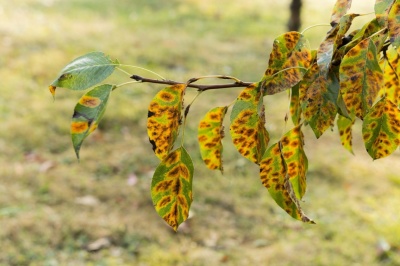 This fungal disease typically spreads to apple trees from nearby conifers, particularly junipers. The disease is characterized by yellow-green spots on the leaves, which turn red by midsummer. Bumps appear on the undersides of the leaves, where fungal spores mature.
The most widespread rust observed in the Krasnodar region and Crimea.
For medicinal purposes, trees are treated with Strobi and Horus. The recommended number of treatments is three, spaced 10 days apart.
Actions to take when leaf reddening is detected
If leaf discoloration and swelling appear on the surface, it's important to first determine the exact cause to select the appropriate treatment. To strengthen the tree's immune system and increase its resistance to adverse factors, fertilizing it with phosphorus-potassium fertilizers is recommended.
If the apple tree is infested with pests, treat it with an insecticide; if it's infected, treat it with a suitable fungicide. Clean skeletal branches and trunks and whitewash them with lime. Install trapping belts to control pests.
Drugs used for treatment
The most common remedies for getting rid of fungal diseases that cause apple tree redness are the following:
- "Topsin";
- colloidal sulfur;
- "Impak";
- "Topaz";
- Horus;
- "HOM";
- "Vincint";
- Fitosporin;
- copper sulfate.
To combat red gall aphids and other pests, use:
- "Nitrofen";
- "Aktara";
- "Tanrek";
- "Actellic";
- Karbofos.
Preventive measures
To minimize the risk of such a problem occurring, the following is recommended:
- compliance with the watering regime;
- timely application of fertilizers taking into account the phase of the growing season;
- treatment of tree crowns with fungicides and insecticides (in spring and autumn);
- regular loosening of the tree trunk circle;
- cleaning and destruction of plant waste;
- periodic checking of soil acidity, correction if necessary.
Ignoring red spots on an apple tree is unacceptable, as this phenomenon indicates that the tree needs treatment. In most cases, the problem is easily resolved by adjusting the apple orchard's care.