Creeping apple tree: planting, care, and fertilizing in Siberia and elsewhere
The harsh Siberian climate doesn't always allow for a desirable harvest. Regular tall apple varieties often freeze, and the fruit of local varieties is characterized by poor taste and unattractive presentation. For this reason, gardeners in the northern regions were the first to cultivate escarpment apple trees.
Content
General description
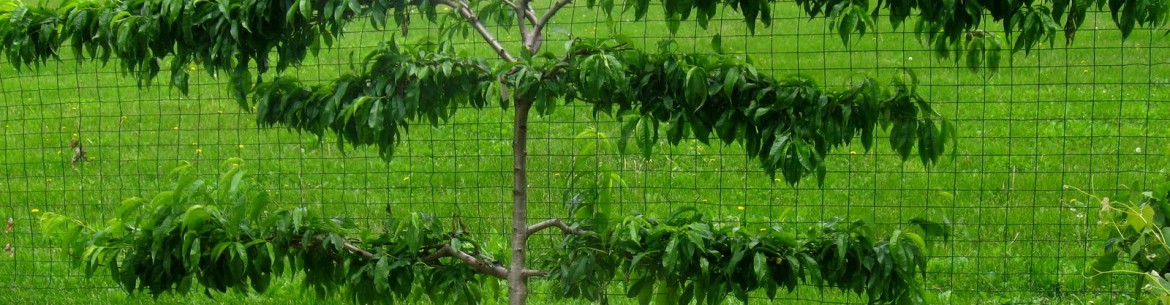
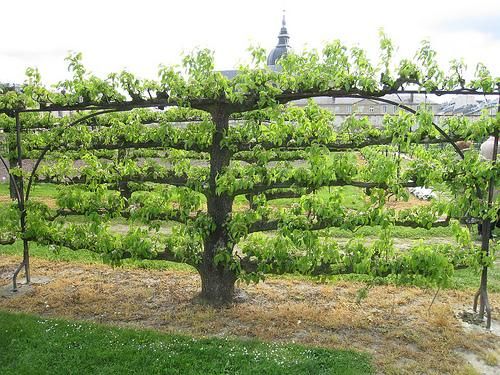 The creeping apple tree is a dwarf tree with a squat crown. In this form, this fruit tree takes up much more space than regular apple trees, but at the same time, it tolerates harsh winters much better.
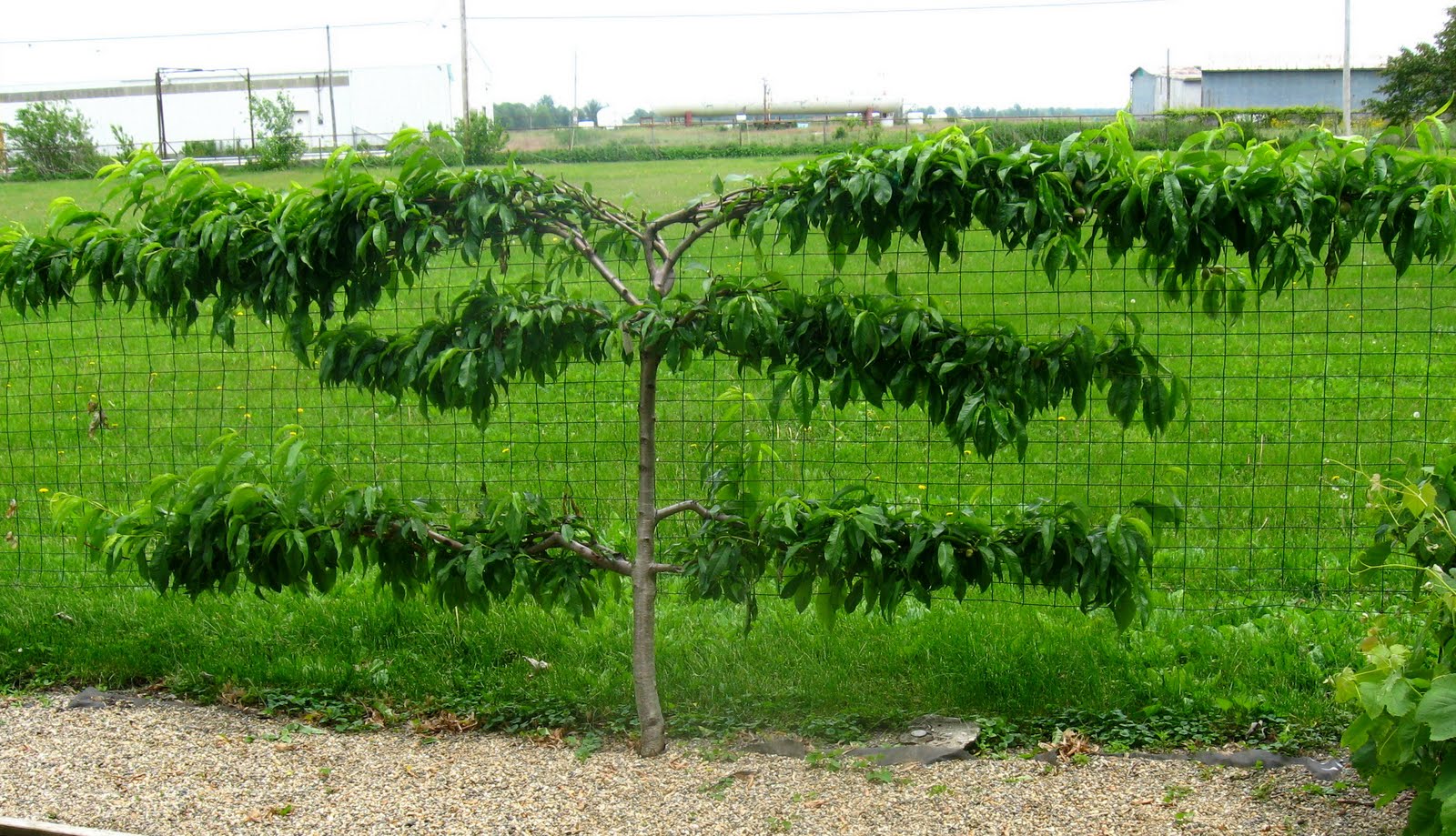
Creeping, low-growing trees reach a height of 45–50 cm and are distinguished by their unusual branching: not upward, but parallel to the ground. Some creeping varieties have a squat crown, but others can easily adapt their crown thanks to flexible branches and trunks.
To create a spreading crown, shaping begins immediately after planting the seedling. After attaching weights to the branches, they are carefully bent toward the ground. This process is carried out gradually, controlling the load to prevent the shoots from breaking.
The small stature of apple trees allows them to be easily covered for the winter, which significantly increases their survival rate and has a positive effect on the harvest.
If agricultural practices are followed, the first fruits of dwarf varieties can be obtained 3–4 years after planting.
Advantages
The main characteristic of creeping apple trees is their low growth rate. This quality was the primary goal in their development. A tree height of ½ meter allows for complete winter cover and facilitates some maintenance procedures (spraying, pruning). Proper winter cover for apple trees in the harsh Siberian climate ensures the full development and early fruiting of fruit crops. Moreover, the lifespan of creeping apple trees is not shortened at all, as is the case with, for example, dwarf varieties.
With proper agricultural technology, the lifespan and fruiting period of creeping apple trees ranges from 40 to 50 years.
Principles of variety selection
Although any apple tree variety can produce a creeping variety, it's recommended to choose varieties with large fruit and good flavor. Southern varieties should also be avoided: due to their unsuitability for harsh conditions, they risk not surviving Siberian winters.
Varieties bred specifically for cultivation in northern regions are ideal. Rootstocks from local wild varieties with high winter hardiness will yield excellent results. In this case, any variety can be used as a scion.
For planting, it is advisable to select flexible one-year-old seedlings that can quickly adapt to an unusual shape and not break during the formation process.
The purchased seedlings must have a well-developed root system, and the trunk thickness must not exceed 1 cm.
Preparing a creeping apple tree for planting
Climbing apple trees take up a lot of space, so it's important to plan your garden well in advance, choosing the optimal site with fertile soil. Fruit trees should be protected from drafts, strong gusts of wind, and excess moisture. Avoid locations near groundwater, which often causes root rot.
The ideal place for creeping elm trees to grow is a lowland that retains snow in winter.
It is advisable to dig the holes a few days before planting and fill them 2/3 full with a mixture consisting of 3 components:
- the top fertile layer of soil;
- turf soil;
- humus.
Phosphorus and potassium preparations in proportions calculated for tall, mature trees are suitable as fertilizers.
Landing
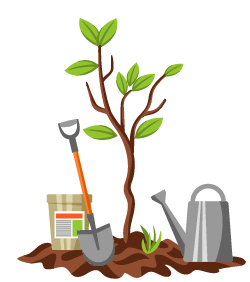 Apple trees can be planted not only in spring but also in autumn (20 days before the onset of frost). In the first case, the crown is formed during the summer; in the second, the branches, leaning toward the ground, are secured in place with pins or hooks. In both Siberia and other regions, planting is done in the traditional way: at a 40-degree angle or vertically.
The root collar should only be planted deep in dry soil. High humidity can cause tree rot. Planted seedlings should be watered 2-3 buckets per plant, and then the soil around the trees should be watered. mulch humus or peat. Mulch protects the soil from drying out and the root system from frost.
Rules for caring for a creeping apple tree
Caring for creeping apple trees has its own subtleties, particularly regarding pruning and crown shaping. These two procedures require detailed study.
Crown formation
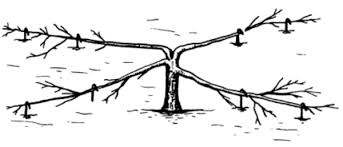
 It takes 4 to 6 years for the tree's creeping skeleton to fully develop. During this time, pruning and branch fixing must be performed in a timely manner.
Saplings planted in the fall are uncovered in the spring and allowed to grow freely until approximately June. The branches are then bent down so that they are at least 5 cm from the ground. In August, the branch tips are pinched, which inhibits their growth and accelerates lignification of the bark.
Spring plantings also grow freely until summer. To promote abundant branching, apple tree trunks can be pruned by one-third, but this is not necessary. In summer, gardeners begin shaping the branches: carefully bend the trunk toward the ground and secure it in place.
It is necessary to keep the branches in a completely horizontal position, since the appearance of bends often leads to burns or frost cracks.
Trimming
In spring, seedlings are pruned to the fifth bud, allowing the spreading crown to develop from the emerging young shoots. These shoots are secured horizontally, ensuring the branches are level and not touching the ground.
The crown can be formed into a saucer shape by securing the branches evenly in a circle or forming two arms. The second option is as follows: two main "arms" are positioned opposite each other, each with 4-5 branches (spaced 0.4 m apart).
To maintain the creeping shape of apple trees, it is necessary to bend down and fix new shoots growing upwards to the ground in a timely manner.
Creeping trees especially require timely pruning, as excessive crown density negatively impacts yield. A lack of proper garden maintenance can lead to a number of problems:
- susceptibility to various diseases and pest attacks;
- late fruiting;
- deterioration of fruit quality, change in their color.
An orchard with creeping apple trees requires annual pruning to remove diseased, damaged, and inward-growing branches.
Timely and proper pruning rejuvenates apple trees and stimulates the growth of young fruit-bearing branches.
Correction of irregular shape
In some cases, the skeleton develops an irregular shape as a result of development. This can be corrected by bending the growing branches to the side and securing them to the ground with staples or hooks.
Restoration of frozen trees
The main signs of apple tree damage from severe frost are leaf shrinkage and discoloration. In this case, rejuvenating pruning can help save the tree. Young branches keep the tree's vascular system healthy. Therefore, the growth of new shoots promotes the rejuvenation of the fruit tree as a whole and normalizes metabolic processes. Pruning is performed in early spring. Once completed, the cut branches are completely removed, and the damaged areas are treated with garden pitch. Large cuts are painted over with ocher, iron red lead, or oil paint.
A frozen apple tree requires special care: regular fertilizing and watering, after which the trunk circle is sprinkled with mulch.
Whitewash
In the fall, the creeping tree needs whitewashing of the trunk and main branches. For this procedure, prepare a solution containing:
- a small amount of clay;
- lime;
- paste that ensures adhesion.
During the whitewashing process, the composition is applied to the skeletal branches and trunk. This process protects the tree not only from ultraviolet rays but also from pests, since all parts of the apple tree are located as close to the ground as possible. Whitewashing helps destroy insect pupae and eggs.
Before whitewashing, it is recommended to clean the parts of the wood where the composition will be applied from dirt.
Protection from rodents
There are several ways to protect creeping apple trees from rodents:
- adding creosote to the whitewash, which has repellent properties;
- creating a shelter from spruce branches;
- placing plastic bottles filled with poisonous bait under the trunk of an apple tree;
- use of special meshes;
- fixing herbs with a specific smell to the branches: marsh wild rosemary, mint, elderberry.
Using one of the listed options, you can protect the bark from pests.
Weed removal
It's important to keep the area around the trunk of creeping apple trees clean, as grass is an attractive breeding ground for insect pests that subsequently migrate up the tree. Furthermore, tall weeds negatively impact photosynthesis and fruit ripening.
In addition to destroying weeds, it is necessary to regularly loosen and mulch soil: cover with mown grass or sawdust.
A thick layer of mulch creates a barrier to weed growth and retains moisture in the soil.
Watering mode
Creeping fruit trees require thorough watering, but the branches should not touch the ground. Therefore, they are supported by supports to a height of up to 30 cm.
At the end August frequency glaze They are reduced, and in October, moisture is added for the last time before preparing the trees for winter.
Fertilization
When fertilizing espalier apple trees, it is important to maintain a neutral soil pH. If the pH is elevated, use dolomite flour or lime, and if the soil is too dry, sawdust or peat. Fertilizing instructions:
- in spring – compositions containing nitrogen: ammonium nitrate, urea, humus or nitroammophoska;
- during the flowering period – urea, superphosphate or chicken manure;
- after flowering – sodium humate, nitroammophoska, infusion of mown grass;
- In the fall, apply root-applied preparations containing phosphorus or potassium to strengthen the immune system, which is important when preparing for winter.
In summer, root fertilization can be replaced with foliar feeding using mineral compounds. This method increases cold tolerance.
Cultivation in Siberia and the Urals
Growing creeping apple trees in Siberia and the Urals has several unique characteristics. There are several recommendations to follow when gardening in these areas:
- the maximum approach of the crown to the ground, allowing the tree to create reliable shelter;
- wrapping branches with thick cloth in winter to protect against rodents;
- insulating the root zone with a layer of humus;
- covering the crown with snow and then with burlap on top of it;
- complete preparation of the garden for severe frosts before they arrive, preventing freezing.
Possible causes of infertility
Climbing apple trees begin to bear fruit 3-4 years after planting, while late-bearing varieties begin to bear fruit after 8 years. A lack of fruiting can be caused by a number of factors:
- incorrect planting of seedlings;
- illiterate crown formation;
- failure to comply with agricultural conditions;
- mismatch between the variety and the growing region.
Fruiting may also depend on the quality of the seedlings, so it is recommended to purchase them only from farms that specialize in this field.
Features of reproduction
 The most common method for propagating creeping apple trees is by burying them. This process is relatively straightforward due to the low-growing nature of the branches. A careful transverse cut is made where the branches touch the soil, slowing the nutrient flow. This encourages swelling and the formation of small roots. The prepared branch is buried in the soil, secured with wire, and covered with soil. Watering should be done at least twice a week during dry weather. In the fall, the parent branch is pruned and the rooted section is replanted.
Climbing apple trees can also be propagated by grafting. This requires selecting the right rootstock. In the fall, when the sap stops flowing, take a one-year-old scion from the apple tree and save it until spring. The graft is made on a solid branch before bud break.
The grafted branch should not grow in the shade.
The algorithm for performing the operation is as follows:
- make an oblique cut on a branch;
- cut the cutting in the same way, leaving up to 4 buds on it;
- join the cutting and the branch so that their bark touches;
- wrap the graft with film and treat with garden pitch.
Selecting a rootstock
Any variety is suitable as a rootstock for creeping apple trees, but it must be as flexible and frost-resistant as possible. Experienced gardeners recommend the clonal rootstock "Progress" for this purpose, characterized by maximum resistance to harsh conditions not only in the upper part of the tree but also in the root system.
Advice from experts
It will take several years for a creeping tree to develop a proper crown. To achieve the desired result, it's essential to strictly adhere to proper agricultural practices: timely branch bending, pruning, and fertilizing. watering, loosening and mulching soil. When caring for your garden, you can follow several recommendations:
- In the first few years after planting, thin out the buds during periods of intense flowering. This way, once the load is removed, all the tree's energy will be directed toward strengthening and developing, which will positively impact future harvests.
- Provide support for the branches to prevent fruit from rotting.
Growing trailing apple trees requires more time and effort than tending a traditional orchard. However, a smart approach will reward the gardener with frost-resistant trees producing a tasty, high-quality harvest.