Apple tree Nadezhnoe: characteristics of the variety and care
| Color | Reds |
|---|---|
| Ripening season | Summer |
| Size of apples | Small ones |
| Taste | Sweet and sour |
| Crown type | Average tree height |
| Shelf life | Low shelf life |
| Application | For recycling , Fresh |
| Winter hardiness | High winter hardiness |
| Fruiting age | Up to 5 years |


 History of origin and regions of growth
Growing regions
- Jewish Autonomous Region.
- Amur region.
- Sakhalin Oblast.
- Primorsky Krai.
- Khabarovsk Krai.
Origin
The Far East is home to approximately seventy species of a wide variety of wild fruit and berry plants. This isn't a huge number, so the development of new varieties continues. In the mid-1960s, Alexey Vasilyevich Bolonyaev, head of the fruit crops department, developed a new apple tree, named Nadezhnoye (Reliable), due to its enviably consistent yield. The Rebristoye and Avgustovskoye (Far Eastern) apple varieties were used as parents.
There is no record of this apple tree in the State Register of Breeding Achievements, and it has not undergone official zoning. It is distributed primarily in the Khabarovsk and Primorsky Krais, Sakhalin and Amur Oblasts, and the Jewish Autonomous Oblast. The crop can easily grow throughout almost the entire country, with the exception of permafrost and the Arctic.
Content
Description of the variety Nadezhnoe
 Of all the Far Eastern apple trees, this variety is considered the best for cultivation. The trees are small, with compact, neat, and attractive crowns, easily withstanding even the most severe frosts. They are undemanding in terms of moisture, soil quality, growing conditions, and care, and annually produce a bountiful harvest of apples with high commercial and consumer qualities.
Recommended for growing in small garden plots, this variety is reliable. It is considered unsuitable for intensive commercial plantings due to its short lifespan.
Apples: What do they look like?
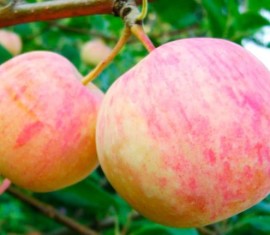
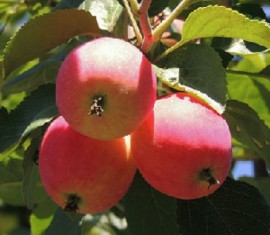
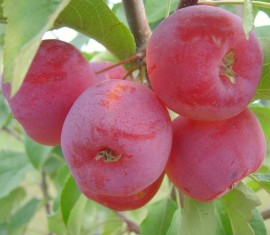
 The fruits are small to very small, uneven in size, with some specimens approaching average. Their weight ranges from 35-48 grams, but can reach as low as 60-90 grams. The fruits are generally spherical, round, or flattened, and smooth. The ribbing is quite visible on the calyx side, but is smoothed out on the rest of the fruit.
The skin is thick, dense, and very elastic, effectively protecting the fruit from various types of damage. It is green, but over time it becomes yellow-green or golden-green, and can be full-bodied or translucent when overripe. The blush can be striped and streaked, or spotted and diffuse, bright red, red-orange, or slightly carmine, and covers 55-70% of the surface. Subcutaneous punctures are very small, but numerous, and light, greenish-gray. The following factors are usually included to determine the chemical composition:
- P-active substances – 367 milligrams.
- Ascorbic acid (vitamin C) – 1 gram.
- Sugar (fructose) – 14.9%.
- Titratable acids – 0.9-1%.
- Pectins (fiber) – 8.7%.
The flesh is dense, crisp, fine-grained, and very juicy. It's mostly pure white, but can also be slightly green, lemony, or creamy. The flavor is considered dessert-like, with a sweet, slightly tart finish and a distinctive, powerful aroma. Unofficially, tasters give these apples 4.7-4.8 out of 5 stars.
Apple tree Nadezhnoe: characteristics
Crown and root system
 The tree is considered vigorous, but compared to similar trees, it appears quite compact. It can reach a maximum height of 4.5-5 meters. However, in temperate climates and other more favorable regions, it can reach 6-8 meters. The crown is oval, oval-elongated, or rounded-pyramidal. The branches are arranged at almost right angles, are of medium density, and covered with brownish-green or brown bark with almost no pubescence. It bears fruit on ring-shaped growth and the previous year's growth.
The leaves are large, leathery, and dense, with coarse ribbing. They are glossy, green or deep green, and oval-elongated or ovoid in shape. The tips are long-pointed, and the margins are serrated, serrate, and may be slightly wavy. The root system is most often taproot, but may be fibrous, depending on the chosen rootstock.
Productivity and pollination
The crop's fertility is considered consistently high. The apple tree bears fruit regularly, regardless of weather or climate, without taking breaks for rest.
A skilled grower can harvest 45-70 kilograms of delicious, aromatic fruit from a single mature tree per season. The yield depends on the tree's age, care, and the specific year's weather, but it will certainly not be less than the lower limit.
The variety is relatively self-sterile, but some apples will ripen even if no nearby apple tree grows at the appropriate flowering time. To achieve higher yields, Nadezhnoye will need to be interplanted with other varieties and sprayed with sugar or honey syrup during pollination.
Winter hardiness and disease resistance
The tree can tolerate low temperatures quite easily, even without requiring special protection. It can reliably survive frosts down to -40-42°C with virtually no damage, but only if they last no more than 3-5 weeks at a time. Therefore, it's still worth covering trunks for the winter using standard methods in harsh regions to prevent them from dying.
Nadezhnoye is resistant to fungal infections, especially scab, and is rarely affected. However, even if the leaves become infected, the apples remain completely undamaged and are suitable for processing and fresh consumption. Burns can be painful, and insect damage is common without proper preventative measures.
Rootstocks and subspecies
No subvarieties of this variety are currently known, and it's unlikely that any will appear in the future. However, the variety can be grown on a wide variety of rootstocks, and the trees themselves serve as excellent grafting stock for apple and pear trees, imparting exceptional winter hardiness. Depending on the rootstock, the fruit size and quantity, as well as the tree's height, may vary slightly. This will not affect the taste or marketability in any way.
Features of growing Reliable
 Landing
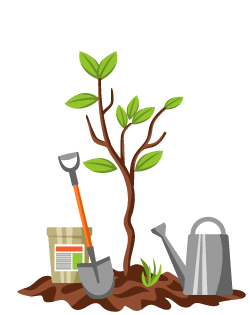 Landing
Basic conditions
- It's customary to choose an open location for this variety so that the crown receives good ventilation during growth. Care must be taken to avoid drafts, which can lead to the development of many diseases.
- A sunny, spacious site is a good choice for planting Nadezhny. The tree can also grow well in the shade and even bloom and bear fruit, but the fruit is often smaller and more sour.
- Groundwater depth plays a significant role. If it's deeper than 2.3-2.5 meters, all necessary drainage measures must be taken. For example, the easiest way to create a kind of barrier is to bury a sheet of slate or several layers of roofing felt at a depth of two meters.
- Experienced gardeners dig holes well in advance, even a season before planting, so they have time to mature properly, fertilizers don't burn the roots, and the trees take root well. However, if you miss the opportunity, they should be dug no later than 3-4 weeks beforehand.
- Dig holes 80-95 centimeters deep and the same diameter, and add a small amount of topsoil mixed with fertilizer to the bottom. Add drainage material on top, if needed, such as gravel, nut shells, vermiculite, or brick chips. Water the entire mixture generously (up to 45-50 liters) and leave it outdoors until planting time.
- It is usually customary to leave at least 3.5-4 meters between rows, and 2.5-3.5 between trees in a row, depending on the chosen rootstock.
- Root collar The tree's height should always remain above the surface if the rootstock's properties and qualities are important. 4-6 centimeters is sufficient to prevent the seedling from taking root higher.
- Planks or stakes are driven into the holes, to which young apple trees are tied after planting. This will give the tree not only additional support, but also protection from the cold if the rod is located to the north of the trunk.
- Before planting, the roots are inspected, any damaged ones are cut off, and then they are placed in a basin or bucket of water for 4-6 hours.
- Place the seedling vertically in the hole, supporting it with your hand. Place the roots directly onto the drainage hole and spread them out with your hands so they lie freely. Cover with soil, compacting it layer by layer. Water with 35-40 liters of water, and the surface mulch sawdust, manure, compost or any other available material to retain moisture.
Landing dates
Experts recommend planting trees in the spring, when the soil has warmed up completely. Choose a warm day in late March or early April, when it's clear there's no longer any risk of frost. In warmer regions, Nadezhnoye can be planted in the spring, and trees with closed root systems—those in pots, bags, or containers that don't require additional disposal—can be planted at any time during the growing season.
Tree care
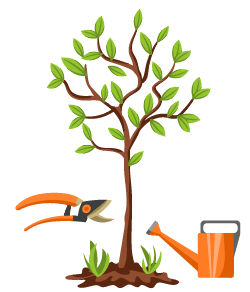 Tree care
Protection from frost and pests
Although this Far Eastern tree was bred for extra resistance to low temperatures, it's important to protect it during cold weather. Cover the root area with sawdust, dry straw or hay, or spruce branches, ensuring moisture doesn't accumulate and rot doesn't occur. Trunks should be wrapped with roofing felt, burlap, or tar paper; young trees can be covered with a tent-like structure.
To get rid of rodents, coat the lower part of the trunk with melted animal fat, drying oil, fuel oil, grease or other strong-smelling substances. Whitewash Lime to a height of 1.2-1.3 meters helps drive away annoying insects from cracks and chips in the bark, which happily settle there.
Loosening the soil, watering: proper agricultural technology
The soil around a sturdy tree trunk is usually dug twice a year, in early spring and late fall, when sap flow is dormant. You don't need to be particularly careful, as the roots aren't located right at the surface, but are well buried. Hoeing the soil and removing weeds and root suckers can be done three to four times per season.
Watering Trees aren't required to be watered, but 3-4 times a day certainly wouldn't hurt, especially if the weather is dry and very hot. The rest of the time, trees do a fine job of finding water themselves with their extensive rhizomes. It's a good idea to add various fertilizers and nutrients along with the water.
Pruning: simple crown shaping
Most often, the tree is shaped in the nursery, and the optimal crown type is a sparse, tiered one. This is easy to achieve: in the first year of growth, trim the central conductor by a third, then prune all but three or four main branches. These should be spaced widely apart at different heights and shorter than those located higher up. Repeat the shaping process as needed, removing shoots that protrude vertically upward or point inward.
Every spring and fall, the tree should be inspected for diseased, dead, or broken shoots. These should be trimmed with pruning shears, and the cut areas should always be coated with garden varnish or at least water-based paint. Due to its short lifespan, rejuvenation of the Nadezhny is not performed.
Pollinator varieties
- Amur red.
- Precise.
- Avant-garde.
- Augustovskoye Far Eastern.
- Ribbed.
- Ranets.
- Amur filling.
Reproduction
- Rooting.
- Kidney grafting.
- Growing from seeds.
- Cuttings.
Diseases and pests
- Black crayfish.
- Scab.
- Bacterial burn.
- Powdery mildew.
- Green aphid.
- Codling moth.
- Leaf roller.
- Hawthorn.
Ripening and fruiting of Nadezhny
The beginning of fruiting
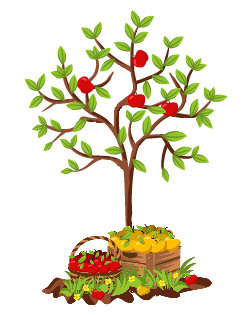 The beginning of fruiting
You won't get your first fruit right away, so don't expect it in the first year. The tree begins to bud around the third or fourth year, and by then you'll be able to harvest approximately 5-8 kilograms of fruit, which are truly delicious, beautiful, and fragrant. This wouldn't be considered full fruiting, but you'll definitely be able to try the apples.
Flowering time
Like all summer apple trees, Nadezhnoye usually blooms quite early. Buds can be seen on the tree as early as April, and they open in early May, though in the coldest springs, they can linger until mid-May. Blooming lasts approximately 10-15 days, depending on the weather. The flowers themselves are medium-sized, mostly white but can have a slight pinkish tint. They are cup-shaped, with large, delicate petals, gathered in clusters of 5-8, and are intensely fragrant.
Fruiting and growth
The Reliable tree begins to produce fruit very quickly. By the fifth to eighth year, it can reach 25-30 kilograms, and by the eighth to tenth year, careful gardeners begin to harvest a full crop. The tree also grows very quickly, gaining at least 45-60 centimeters in a single year. Therefore, it can reach its final height very quickly.
Apples begin to ripen in the second half of August. Many quote dates from the 15th to the 22nd, but this is unlikely to be completely accurate for all regions. In warm climates, apples can be picked early in the season, while in cold climates, the ripening process can drag on until the very end. Their shelf life is not ideal; they can be kept in a cellar for no more than 15-25 days, and in special refrigerators for about 45-60 days. By that time, the entire harvest should have been completely processed or eaten.
Top dressing
- Peat.
- Compost.
- Ammonium nitrate.
- Humus.
- Chicken manure.
- Superphosphate.
- Manure.
- Mineral complexes.
What to do if it doesn't bloom or bear fruit
- Check for pests or diseases.
- Transplant into the sun.
- Water.
- Fertilize.
Why do apples fall?
- Wind, hail, hurricane, rain.
- Overripe.
- Pest damage.
- Diseases.
Please leave your feedback on the Nadezhnoe variety, as many gardeners would like to grow similar ones in their gardens.