How to prune an apple tree in the fall: pruning pattern, timing, and tips for beginners
Autumn is harvest time, and it's time to prune your apple tree. It's important to remove diseased and dead branches to ensure the tree develops normally in the spring. This article will provide step-by-step information on how to prune your apple tree in the fall to ensure a bountiful harvest.
Content
- Why prune an apple tree in the fall?
- When is the best time to prune?
- What you need to prepare
- Types of pruning
- Methods for autumn pruning of apple trees
- Degree of pruning
- How to prune an apple tree in the fall: step-by-step tips for beginners
- How to care for an apple tree after pruning
- Common mistakes beginners make
Why prune an apple tree in the fall?
To ensure a good harvest, apple trees require proper care. This includes pruning in the fall. The purpose of this procedure is:
- maintain the tree in a healthy condition;
- rejuvenate;
- ensure longevity;
- increase crop yields;
- improve air access to the branches:
- form the crown.
When is the best time to prune?
Pruning is carried out annually. Beginning in mid-September, after the harvest and leaf fall, before frost sets in. Other times are undesirable:
- after later pruning, the plant's wounds will not heal before the cold weather sets in;
- The plant will not tolerate early pruning well due to the heat.
What you need to prepare
It is necessary to carry out preparatory work: purchase garden var for wound treatment, tools:
- Secateurs. Remove shoots up to 2 cm thick.
- Hand saw. To cut thick branches.
- Garden knife. To trim the bark on the cuts.
- Stairs.
The instruments are disinfected and their functionality is monitored.
They assess the scope of work and pay attention to the condition of the apple trees:
- development;
- crown size;
- age of trees;
- condition of wood.
Types of pruning
 Pruning is divided according to its purpose:
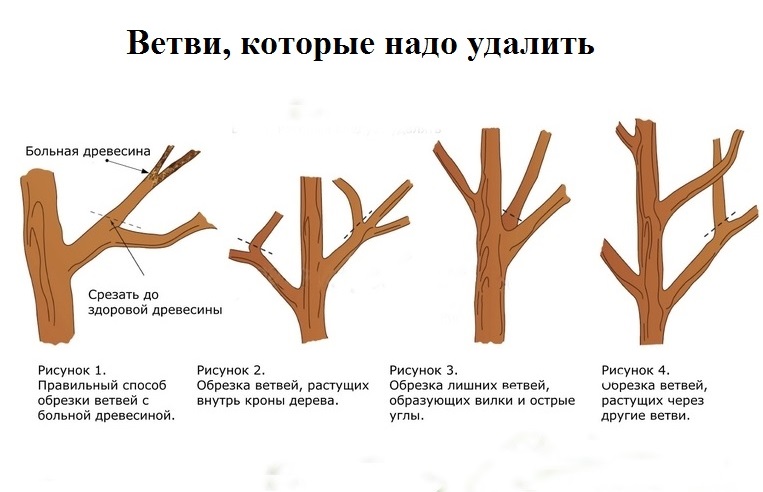
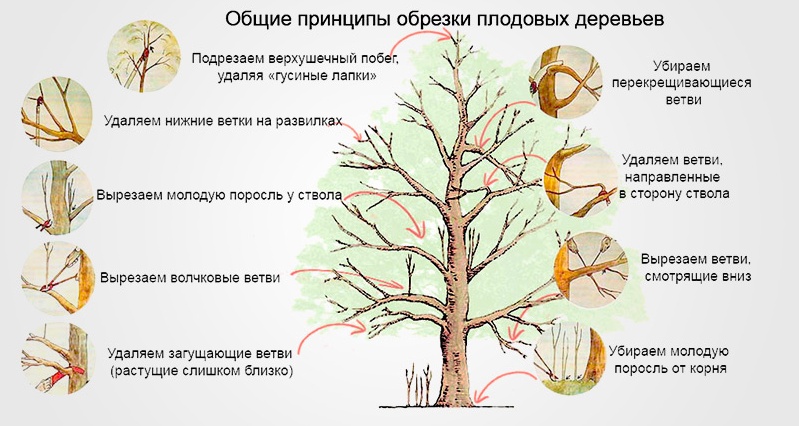
- SanitaryThis procedure is performed regardless of the season. It improves the tree's appearance. It removes diseased, dead, broken, and sucker branches from the crown, and corrects any previously made improper cuts.
- FormingForms the crown of young seedlings.
- StructuralCorrects the tree's structure. Thinns the crown. Removes branches that touch others, cross, rub, thicken the crown, grow vertically, at an acute angle, or interfere with the growth of neighboring trees, or damage the trunk.
- Rejuvenating. Ensures the growth of young shoots on old trees.
During fall pruning, do not remove more than 40% of the shoots. This may weaken the tree and prevent it from surviving the winter.
Methods for autumn pruning of apple trees
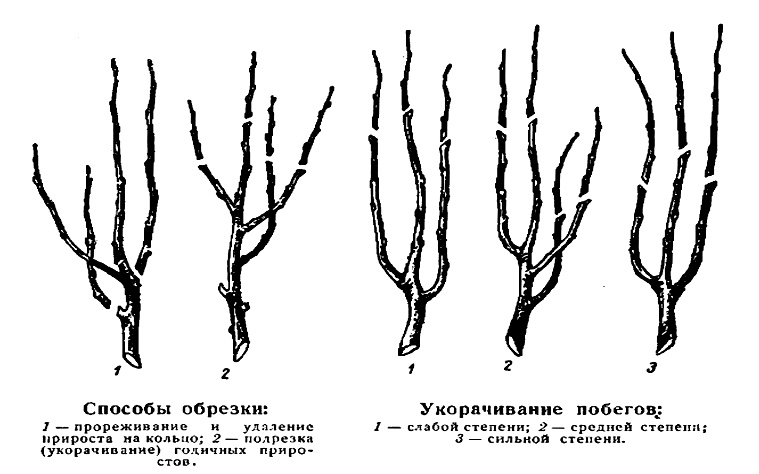
There are two ways to prune an apple tree:
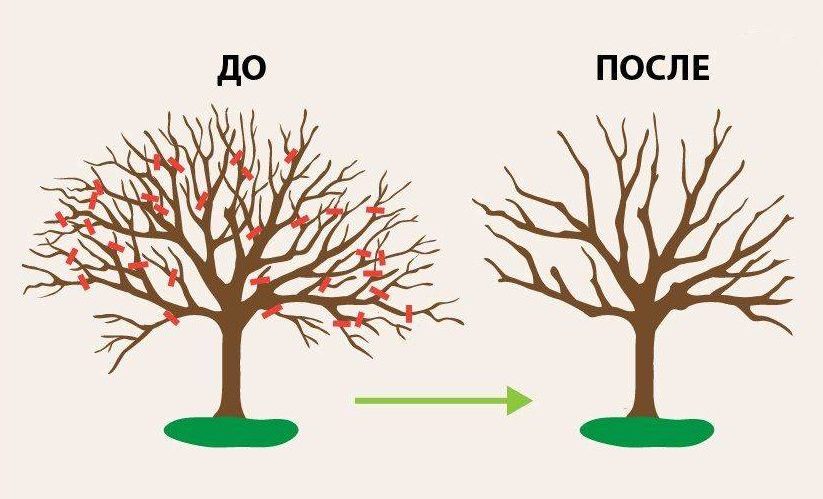
- thinning (removal of branches);
- shortening (changing the length of a branch).
Shortening
This method affects the tree's development in the same way as thinning. Branches are not completely removed; their ends are trimmed.
The advantages of shortened shoots over non-shortened ones: increased thickness, improved branching, and better bud formation.
Thinning
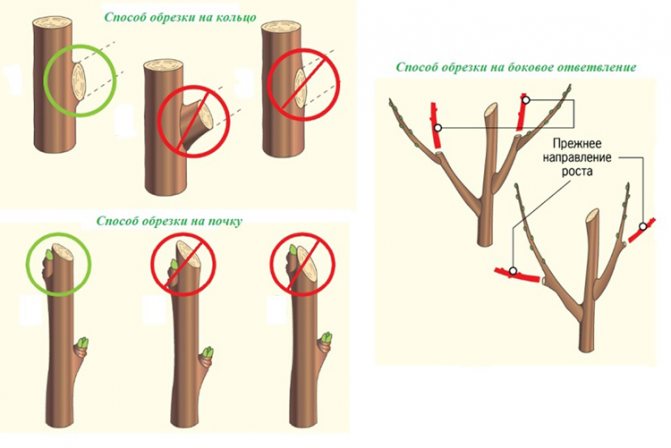
Thinning improves air and sunlight access for the branches, increasing the exposure of the crown to light. This protects against diseases and increases apple tree yield. Cuts are made at the ring, flush with the trunk. Avoid leaving stumps or cutting branches too deeply. A long stump will rot, forming a hollow, which will lead to the death of the tree.
Degree of pruning
 Beginners should know that pruning increases apple tree yield. There are three types of pruning, depending on the tree's age:
- WeakFruiting shoots are formed on young apple trees. A quarter of the branch is cut off. New shoots grow from the last buds the following year. Branch growth increases on the pruned portion.
- AverageA third of the branch is cut off. This is intended to increase the number of fruiting shoots on 5-year-old plants and to rejuvenate old apple trees.
- StrongUsed to thin the crown and improve ventilation. Branches are cut in half.
Don't cut dead branches to the base. A hollow will form at the cut site, which could kill the apple tree. The cut should be treated. garden pitch.
The age of an apple tree is determined by its appearance. One-year-old trees are 100–120 cm tall and have no side shoots. Two-year-old trees are taller than 120 cm, have side shoots, and no apples.
How to prune an apple tree in the fall: step-by-step tips for beginners
Apple trees are pruned from the first year onwards throughout their life. Fall pruning prepares the trees for winter. The following procedure is recommended:
- Remove dead and broken branches. Leave the stump up to the first bud. Don't remove the branch all the way to the base, otherwise a hollow will form at the cut end over time.
- Rotten, diseased, and pest-damaged shoots are cut off: thin ones - with pruning shears, thick ones - with a hacksaw.
- The crown is thinned. Live branches are removed "to the ring," leaving no stumps.
- The remaining branches are shortened.
- Cropped The branches are removed from the area and destroyed.
Cuts thicker than two centimeters are treated with garden pitch. Sawn and cut branches are immediately removed from under the trees, as they may harbor pests.
Using a hacksaw, start cutting from the bottom side of the branch, and after cutting a few centimeters, continue working on the top part.
Structural and formative pruning are performed simultaneously in the fall. If a large number of branches have been cut, formative pruning is postponed until spring.
Treatment of cuts and wounds
Wounds with smooth edges heal quickly, so it's important to use a well-sharpened tool. Cuts on old, dry branches should be treated immediately, while cuts on fresh shoots should be treated within 24 hours. Wounds larger than 7 mm should be treated as follows:
- disinfect copper sulfate and lime 1:10;
- covered with garden pitch or oil paint on drying oil.
One-year-old branches
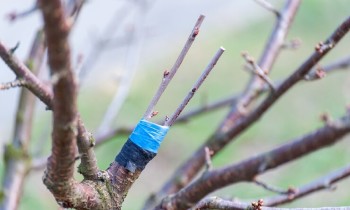
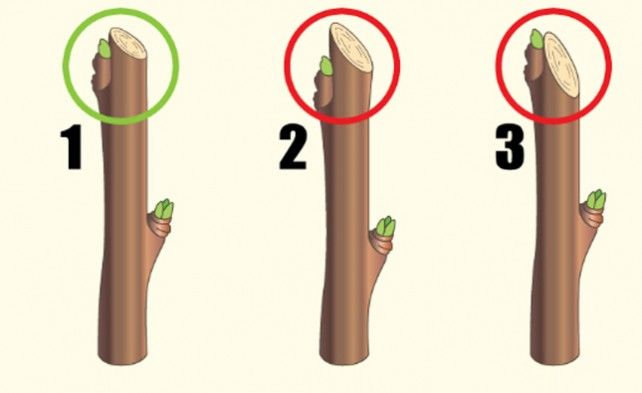
The cut on one-year-old branches is made above a developed bud. The stump must be level with the bud (Fig. 1).
A stump should not be placed above a bud, as the wound will take a long time to heal (Fig. 2). A stump below a bud (Fig. 3) will eventually die.
The main thing in processing annual plants is to form the crown.
How to care for an apple tree after pruning
Fertilizers are added to the soil:
- They start fertilizing in April. They take half a bucket of rotted manure or 2 kg of chicken manure per 1 m² of tree trunk circle.
- In early June, apply the same fertilizers in the same quantities. Organic fertilizers can be replaced with mineral fertilizers such as ammonium nitrate.
- In the spring, add phosphorus fertilizer. This will encourage the tree to bloom abundantly.
- Autumn is the time to apply potassium fertilizers. Potassium will improve crop quality and increase winter hardiness.
After fertilizing, the trees are watered generously – 2 buckets per m².
Common mistakes beginners make
Beginners often make the following mistakes when pruning apple trees in the fall:
- Pruning is carried out once a year. The tree must be constantly monitored. During the growing season, suckers appear after pruning and must be removed regularly.
- When pruning, leave a large stump for the bud. In the spring, an unwanted shoot will grow from the bud.
- When pruning to a ring, a large stump is left. The shoot should be 1–2 mm long.
- Pruning can be done in the fall at any time. Work should be done after leaf fall or in the spring before bud break.
- Using unprepared tools can lead to bark tearing, which can lead to infection.
- HollowAny growth that appears after pruning is cleared down to healthy tissue. It's sufficient to seal it with foam, clay, or concrete.
- Garden varnish is applied to the cut immediately, without allowing it to dry out.
Fall pruning is crucial. It affects the plant's development, crown shape, and winter readiness. Prune correctly to ensure a bountiful harvest next year.