Plant blight: how to treat trees and bushes against late blight
Late blight is a common and highly dangerous disease caused by microorganisms of the Phytophthora family. The spores of this fungus are highly viable and easily spread throughout a garden. The disease primarily attacks nightshade crops, destroying all their organs.
Characteristics of the disease
Late blight first appeared in Mexico, the birthplace of the potato. In the 19th century, it rapidly spread throughout the Americas and was then brought to Europe. At that time, the disease caused widespread epidemics of agricultural crops.
Causes of occurrence
 The progression of late blight is caused by several factors:
- Excess lime in the soil, added by gardeners to correct acidity, is ideal for the growth of late blight.
- Ignoring the thinning process. Fungal growth in dense thickets is more active than in beds where a certain distance is maintained between vegetable crops.
- Significant differences between day and night temperatures promote dew formation. Humid conditions encourage the growth of late blight.
- Weak plants with low disease resistance. This is caused by improper agricultural practices during seedling cultivation.
- Excessive soil moisture.
- Overuse of nitrogen-containing fertilizers.
- Deficiency of manganese, potassium, copper and iodine in the soil.
Each year, pathogen strains become more resistant and aggressive. Fungal spores are carried long distances by the wind and survive well in dry conditions exposed to the sun.
Phytophthora develops most actively at moderate temperatures (from +14 to +18°C) or on hot days with high humidity (up to 80%).
Signs of the disease
The following symptoms indicate that garden crops are affected by late blight:
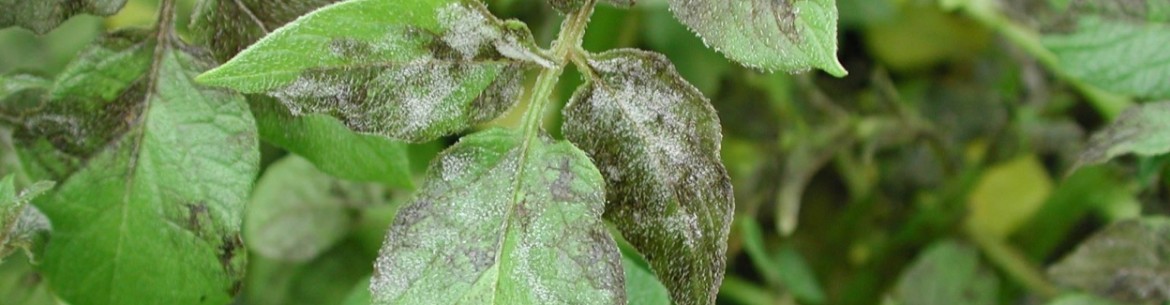
- the appearance of small dirty brown spots on leaves, stems and fruits and their subsequent growth;
- formation of a gray coating on the affected areas;
- drying out of the tops, and in humid conditions – rotting;
- the appearance of sunken black spots on the tubers, growing into the pulp and coloring it brown, which subsequently causes the pulp to rot.
The danger presented
The particular danger of late blight lies in its ability to spread from one plant to another, affecting different species. When it gets onto a garden crop, fungus completely destroys all of its above-ground and underground organs: stems, fruits, leaf blades, tubers.
Phytophthora spores are present in soil, plant debris, on the surface of greenhouses and garden tools, and even on seeds.
Fungus is spread not only by rain and wind, but also on shoes.
Late blight of various crops
Symptoms of this disease vary across plant species. The fungus most commonly attacks plants in the nightshade family: eggplant, bell peppers, tomatoes, and potatoes. Strawberries, buckwheat, and castor beans are also susceptible.
If gray-brown spots and spore deposits appear, it is important to immediately treat the crops with medicinal preparations; otherwise, the fungus will quickly spread throughout the entire garden plot.
Apple trees

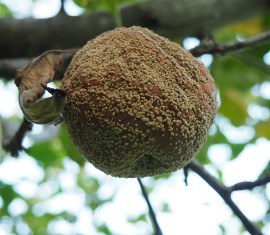
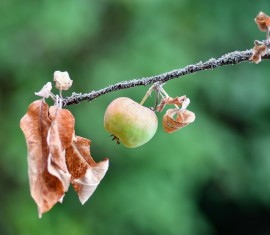
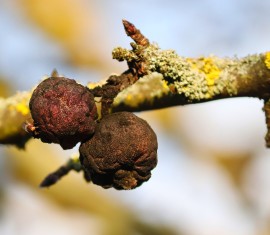
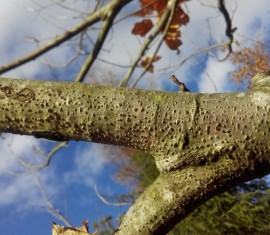
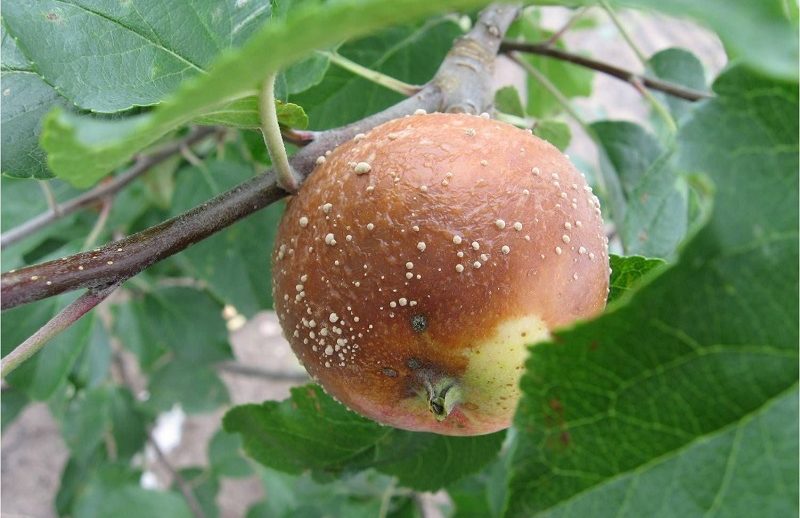 In stone fruit crops, late blight affects root collar, and then spreads to the trees. Affected tissues take on a purple hue and develop cracks, revealing a brownish, rotting core, where other infections and pests can easily penetrate. The damage then spreads to the harvest: the fruits become watery and lose their original flavor. The apple skin becomes covered with mycelial spores, and the flesh inside begins to turn brown. The external symptoms of late blight are similar to moniliosis, only concentric circles are missing.
Since it is quite difficult to cure trees in the advanced stage of the disease, they are uprooted to prevent the infection from spreading to other garden crops.
For preventive purposes, various damages on apple trees are promptly cleaned and then treated. garden pitch, and also remove and destroy fallen fruits, dry branches and leaves.
Tomatoes
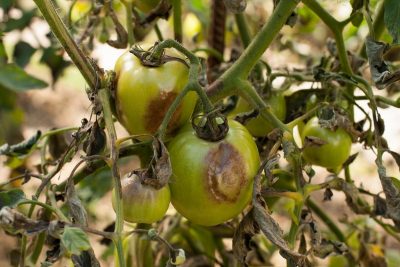 This crop is most often affected by late blight, especially if grown near potatoes. The presence of brown spots with a gray border on the bushes and a gray coating on the undersides of the leaves indicates a fungal infection. Ignoring the problem will result in the death of the tomatoes within two weeks, and their spotted fruits will rot on the vine.
Fruits taken from diseased specimens and brought home rot, releasing spores that infect indoor plants.
Given the complex process of eliminating late blight, it is recommended to implement preventative measures in a timely manner to protect against this disease. These measures include:
- regular fertilizing with potassium-phosphorus preparations;
- maintaining the required distance between bushes and rows when planting to ensure adequate ventilation (late blight actively develops in stagnant air);
- adherence to crop rotation (annual alternation of plants);
- moderate watering;
- periodic treatment with biofungicides: Fitosporin-M or similar preparations;
- frequent loosening of the soil.
Diseased bushes are cleared of affected leaves and sprayed with fungicides.
Potato
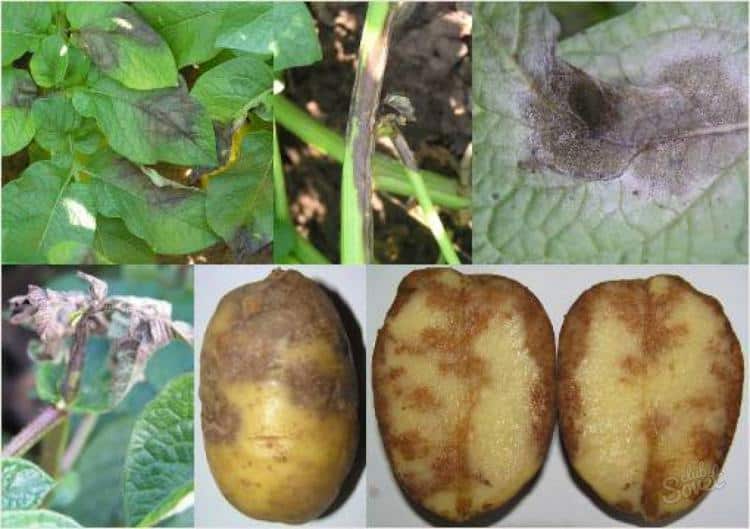 Potato late blight manifests as large brown spots spreading along the edges of leaf blades, with spores colonizing the undersides. Affected leaves quickly die. Tuber destruction occurs as follows: gray spots first appear, followed by rotting of the underlying tissue.
Basic preventive measures include the following:
- planting only healthy tubers;
- doubling the doses of phosphorus-potassium fertilizers;
- maintaining the recommended height during the hilling process;
- removing tops from the beds two weeks before digging up the tubers;
- harvesting only in dry weather.
Peppers and eggplants
The signs of late blight infection in peppers and eggplants are the same as in tomatoes: the formation of brown spots followed by rotting.
The fruits of these crops also die when affected by late blight. Prevention and treatment include the same measures as for tomatoes.
Strawberry (garden strawberry)
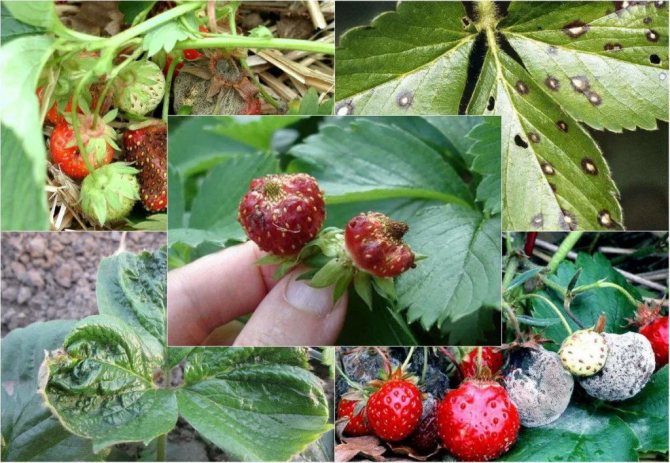 Strawberry bushes affected by late blight often die. First, the leaves dry up, and brown spots appear at the base of the flower stalks and petioles, causing rot. The disease causes the most damage to the fruit buds and ripening berries. The flesh, covered in brown spots, becomes tough and acquires a bitter taste. After a while, the fruits dry up and fall off.
For prevention purposes, several rules are observed:
- avoidance of excess glaze;
- compliance with all recommendations and plans during planting;
- use of disease-resistant varieties.
Bushes infected with late blight stop growing and forming tendrils, their leaves and roots dry up and die.
Grape
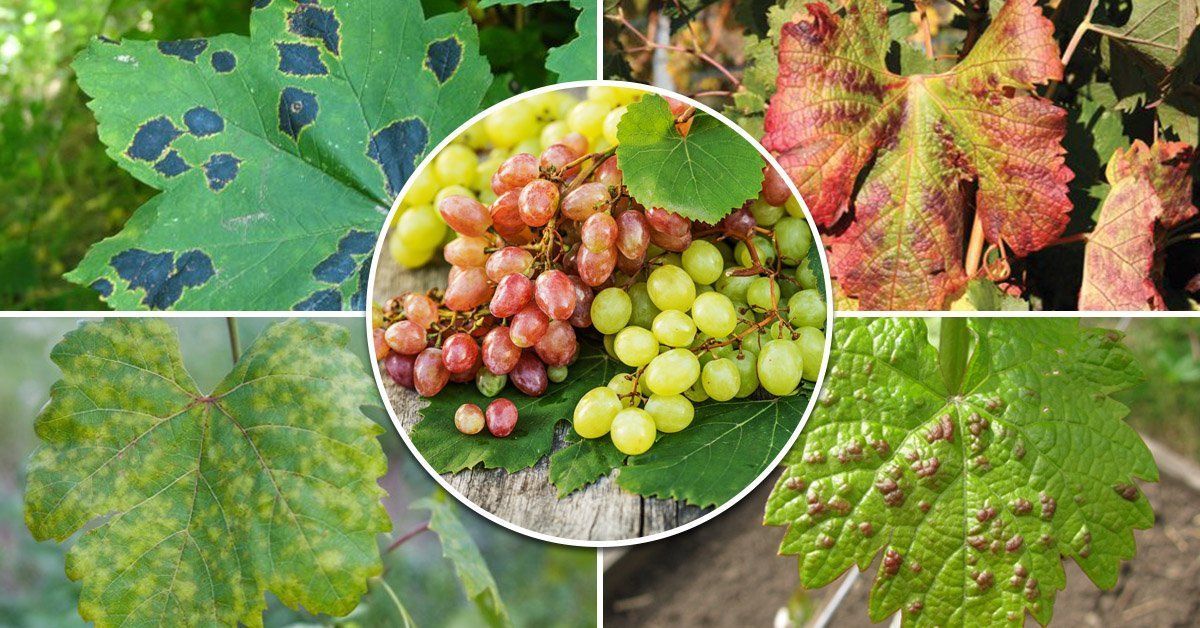 The fungus first attacks the root system and then moves up the stem. Cracks form on the vine, oozing sap. A number of signs indicate a chronic form of the disease:
- change in the color of leaf blades: the appearance of yellow spots located along the veins;
- the presence of a fluffy coating on the inner side of the leaves – mycelium;
- twisting and drying of inflorescences;
- darkening and wilting of fruits;
- premature fall of leaves with simultaneous death of growth points.
Favorable conditions for the development of late blight on grapes include high humidity and air temperatures ranging from 8 to 20°C. Infection occurs in vineyards if these conditions remain unchanged for four days. This is due to the pathogen's characteristics: it becomes dormant in hot weather and becomes active during colder weather.
Buckwheat
The disease attacks emerging cereal crop seedlings. Initially, white spots appear on the leaves and stems, and after some time, spores colonize the undersides of the leaf blades. Infected plants begin to rot and die.
Citrus
On oranges, lemons, and other citrus fruits, late blight appears as brown spots along the central vein of the leaf blades. At the same time, the inner side is affected. white plaque from spores. Similar spots are also observed on the bark of plants, which subsequently lead to its death and the drying out of shoots.
In the early stages, the problem is solved by removing the affected fragments; if the disease progresses, fungicides are used.
Violets (Saintpaulias)
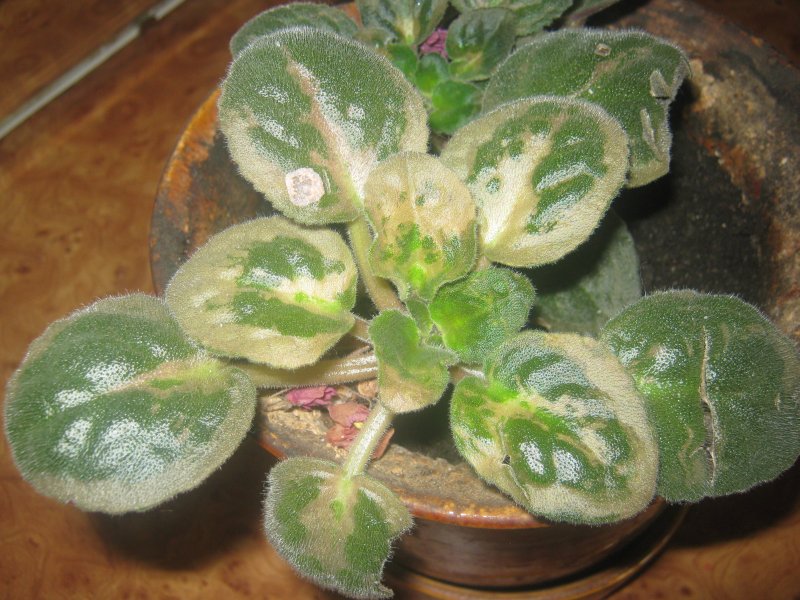
Late blight of violets is caused by excess moisture and stagnant air in the room. The disease is identified by the following symptoms:
- slow flower growth;
- leaf discoloration, lack of elasticity.
The rapid development of the disease ends with the death of the plant.
It is almost impossible to cure late blight in violets, so it is best to destroy the affected specimen.
You can prevent fungal infection by following several recommendations:
- do not use untested containers and soil for growing;
- Before planting the flower, sterilize the soil mixture you prepared yourself.
Ways to get rid of late blight
Detecting the disease in its early stages is quite difficult, as it progresses very quickly. In the early stages, the fungus can be controlled using folk remedies that are not harmful to human health. In advanced cases, professional pesticides are required.
Chemicals
 Copper-containing compounds are used to treat mature plants, while less aggressive solutions are used for seedlings and saplings with weak immunity. Proper treatment will prevent the development of resistance in fungal microorganisms.
Peppers, tomatoes and eggplants treated against late blight Ridomil Gold, a product that penetrates plant tissue and effectively kills late blight. It also forms a protective film against the disease.
Potatoes are treated with a copper-containing compound called "Hom." When preparing the working solution, maintain a ratio of 40 g per 10 liters of water. Both the above-ground parts and the soil are sprayed.
After using the chemical, potato tubers can be consumed no earlier than 30 days later.
Grapes, tomatoes, strawberries, and wild strawberries are sprayed with Oxychom, which takes effect two hours after the treatment is completed. To prepare the solution, dilute 20 g of the fungicide in a bucket of water (10 liters).
Frequent outbreaks of the disease are suppressed with the help of copper sulfate, which disinfects the soil. Since the product slows plant growth and development, its use is recommended before bud break.
Also used for treating plants:
- Ecopin;
- "Acrobat MC";
- Infinito;
- Metalaxyl;
- "Alirin-B", etc.
Folk remedies for late blight
The following remedies are effective in combating late blight in the early stages:
- Whey, diluted with water in a 1:1 ratio and mixed with 15 drops of iodine. Recommended frequency: once every 3 days until the problem is completely resolved.
- Infusion of rotted hay. To prepare the solution, infuse 1 kg of grass and 300 g of ureaTreatment is carried out every 10 days.
- Horsetail decoction (100 g of raw material, pour 1 liter of boiling water and simmer for 30 minutes). The resulting remedy is used once every two weeks.
- Garlic and onion feathers (100 g), infused in a glass of water.
Preventive measures
In order to prevent the occurrence of diseases, a number of measures are recommended:
- adding coarse sand and peat to the soil to restore balance;
- use of phosphorus-potassium fertilizers;
- thinning out plantings, providing them with ventilation;
- strict adherence to the regime of irrigation, fertilizing, crop rotation and other fundamentals of agricultural technology.
Late blight is a dangerous disease that is very difficult to eradicate. Therefore, it's best to immediately provide reliable protection for your garden crops against infection.