How to prepare a columnar apple tree for winter and protect it from frost
The structural features of the above-ground portion of columnar apple trees have long earned them a special fascination among gardeners worldwide. The growing point, located at the apex of the central conductor, and the absence of lateral shoots in this variety require a specific approach when preparing the tree for winter.
Content
- Beginning of preparation for wintering of columnar apple trees
- Selection of suitable materials and their disinfection
- Preparing mature trees for winter
- The procedure for insulating apple trees
- Covering seedlings of columnar apple trees
- Building a shelter for mature trees
- Features of wintering in other regions
Beginning of preparation for wintering of columnar apple trees
 Preparation for the cold season shouldn't begin too early. Hastening the necessary agricultural measures can be just as fraught with problems as delaying them. If there's still a chance of warmer weather returning, a tree covered for the winter runs the risk of root rot. It's also possible for the root system to resume active growth, which, if temperatures drop below freezing, will inevitably lead to the plant's death.
Columnar apple trees should be covered for the winter only when cold weather has finally set in, causing a slowdown in sap flow.
The average ambient temperature at the time of preparation for wintering should not be higher than 10 degrees Celsius.
You should also wait a couple of days to ensure the warmth doesn't return. Nothing critical will happen to the fruit tree during this time; they can withstand this period of testing without any problems.
Selection of suitable materials and their disinfection
Every gardener knows from personal experience which material is best for insulating apple trees. Before beginning the process, it's important to gather all the necessary supplies to avoid any unexpected situations.
The following are suitable for insulating and covering the columnar variety:
- sackcloth;
- old tights;
- rags;
- agrofibre;
- plastic bottles;
- spruce branches;
- foamed and regular polyethylene;
- thick toilet paper;
- roofing felt;
- spunbond;
- geotextile fabric;
- dry stems of reeds or sunflowers.
For greater reliability, it is recommended to combine several types of materials.
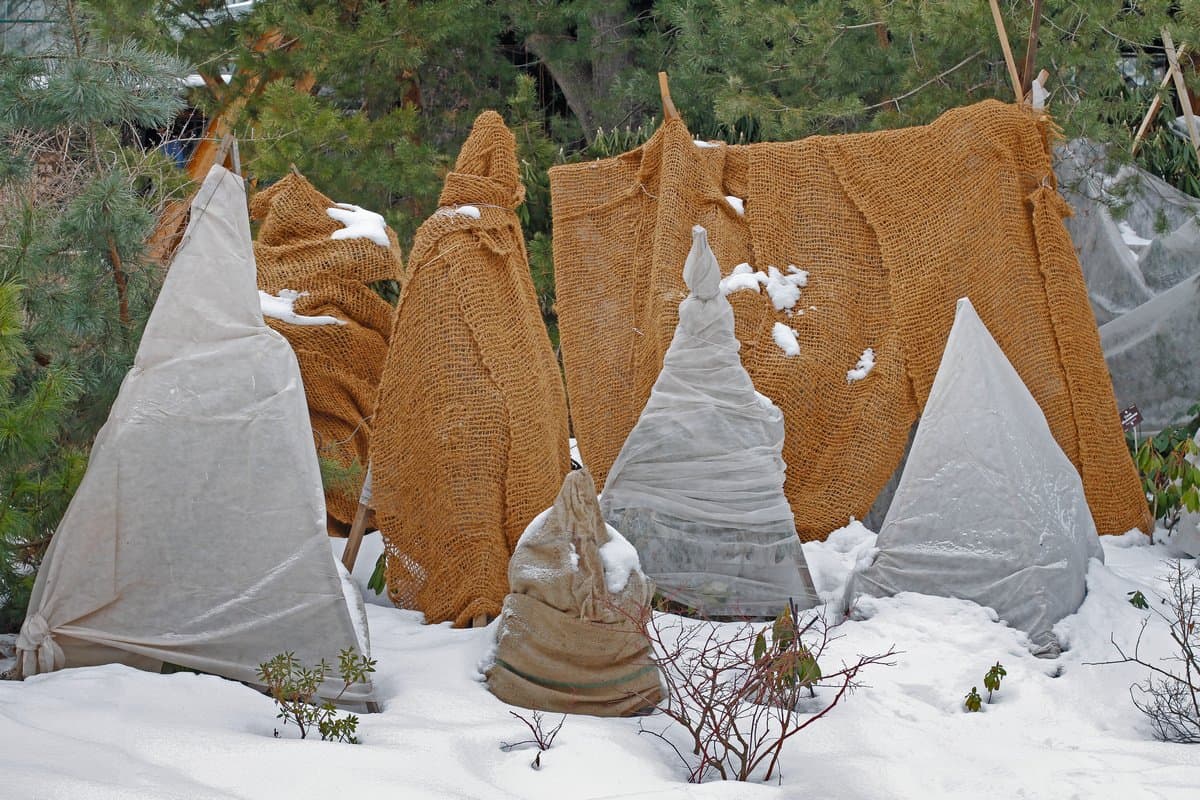 Insulation materials should be breathable and create a barrier to rodents. When using natural materials, remember that they may attract small pests. Therefore, it is recommended to place poison bait around the trunk.
Roofing felt and polyethylene film can cause burns on the bark of the apple tree due to their air-impermeable properties. Therefore when the first spring thaws arrive, they must be removed.
All woven materials reusable after the end of the winter season disinfectTo prevent them from becoming a source of infection for next year's apple trees, they should be picked and dried outdoors in direct sunlight and treated with special antifungal agents. They should then be stored in a moisture-proof area. It's recommended to place bunches of insecticidal herbs or dust around them.
Preparing mature trees for winter
To ensure columnar apple trees survive the winter as smoothly as possible, they need to be properly prepared. Preparatory work should begin as early as November, before the first frosts.
Step-by-step instructions:
- Remove fallen leaves and rotted fruit from the garden, especially around the roots. Otherwise, pathogenic bacteria and insect larvae will survive the winter and contaminate the soil around the trees come spring.
- If the summer was dry, the root system needs to be provided with moisture throughout the winter. To do this, water each tree thoroughly.
- We treat the bark and trunk circles of apple trees with a solution copper sulfateThis treatment is intended to kill soil-borne pests. Ferrous sulfate is used as an alternative.
- We clean it from the bark lichens and mosses.
- We whitewash the trunks with slaked lime to prevent cracking due to temperature fluctuations. This procedure also serves as a preventative measure to disinfect apple trees and deter rodents.
- Once the preparatory work is completed, we begin to insulate the plants.
The procedure for insulating apple trees
To ensure a safe winter, the first priority is to protect the apple tree's root system, as it is the one most exposed to frost.
To insulate the roots of columnar apple trees, you need to:
- We fertilize the soil around the trunk with rotted manure. manure and mulch the top with wood sawdust.
- We insulate the area around the roots with the selected covering material.
- We wrap the trunk with paper, foamed polyethylene, roofing felt or plastic bottles.
White material will help reflect bright sunlight.
Keeping in mind that the top bud of a columnar apple tree is the most important, the tree tops should be wrapped in rags or thick paper. If there is heavy precipitation in the winter, this can also be used to protect the trees. To this end, snow is piled closer to the trunks, forming artificial snowdrifts. The approaches to the resulting mounds are firmly tamped down to prevent mice from reaching the trunks.
Covering seedlings of columnar apple trees
One-year-old columnar apple tree seedlings don't have time to harden before frost and can suffer severe winter damage. Therefore, special attention should be paid to their insulation.
A characteristic feature of young plants is their vulnerability to gusts of wind. Therefore, it would be advisable to tie up the trees. Stake them near the seedlings, and tie the young apple trees to them. You can also create additional protection by creating a barrier of dry branches.
The root system of columnar apple tree seedlings must be protected from freezing with a layer of rotted peat manure and sawdust. Similarly, with older trees, the trunks of first-year trees are wrapped in layers of paper, burlap, dried reed stems, or agrofibre. You can create a kind of shelter from spruce branches to protect the trees from rodent infestations. A lingering smell of tar or coffee grounds has a similar effect.
Building a shelter for mature trees
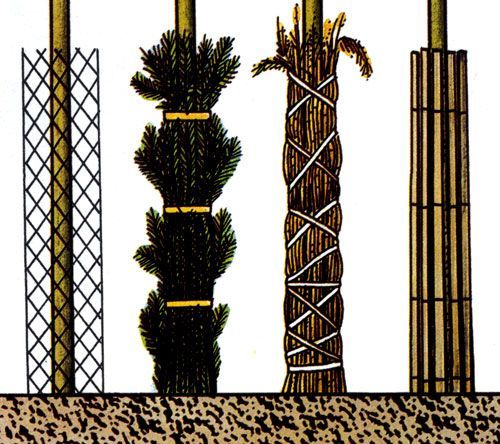 Mature apple trees also require shelter, especially if they have suffered from diseases this year or if the winter forecast is unfavorable. A little shelter is also necessary to maintain the fruitfulness of columnar apple trees. Winter frosts, accompanied by seasonal precipitation, do not easily damage mature plants, but cold and snowless conditions are quite dangerous.
After preliminary preparation (cleaning, watering, disinfection), mulching and insulation, gardeners move on to building a shelter. It looks like this:
- a kind of pyramid is built from wooden planks around each tree;
- dynamic mulch is poured inside the building (if this procedure was not carried out in advance), with a thickness of about 20 cm;
- The pyramids are wrapped in tarpaulin or polyethylene.
In northern regions, it is recommended to cover dynamic mulch with a permanent layer made of durable materials.
If the winter forecast is unfavorable, similar shelter is also required for columnar apple tree seedlings.
Features of wintering in other regions
Due to the fact that there are varieties of columnar apple trees bred specifically for cultivation in the northern regions of the country, preparing apple trees for winter Siberia It's practically the same. Plants adapted to more severe frosts are insulated as follows:
- at the end of October the bottom of the trunk mulch peat, wrapped in plastic film and protected with a chain-link mesh;
- Then they are completely covered with burlap, agrofibre or other covering material, and after precipitation, a protective snowdrift is formed around them.
An essential distinguishing feature of wintering this variety of fruit trees in cold regions is ensuring that water is drained away from the roots to prevent them from rotting.
Preparing a columnar apple tree for winter requires a certain amount of experience and skill. However, with some theoretical knowledge, even a novice can handle it.