Caring for an Apple Tree in Autumn: 10 Essential Steps
Autumn care of apple trees in the orchard involves a series of steps aimed at ensuring a successful wintering, which are recommended to be completed before the onset of frost. These steps are performed in a specific sequence, with each step complementing and continuing the previous steps, helping not only to preserve the orchard during the winter but also to improve the yield and quality of the fruit next year.
Content
Leaf cleaning
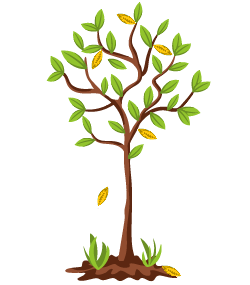 Fallen leaves and rotted fruit are an ideal breeding ground for spores of various fungi and pathogens that affect fruit trees. This is why it's so important to begin cleaning immediately after the leaves have fallen.
Fallen leaves are placed on a compost heap, where they rot for several years. During this time, all pathogenic microflora is destroyed by high temperatures, and the compost becomes suitable for use as fertilizer.
For best results, the compost heap is additionally sprayed with a fungicide or sprinkled with a small amount of lime.
Digging up tree trunk circles
The soil, cleared of leaves, is dug over to destroy any pest larvae hidden deep within the soil, as well as to prevent the spread of weeds whose seeds may have fallen to the surface. The recommended digging depth is no more than 15 cm. Deep soil loosening can damage the tree's roots.
It is better to dig the soil when it is wet.
Top dressing
Digging around tree trunks is often combined with the autumn application of organic fertilizers. One to two buckets of rotted manure or compost are added under each tree, along with superphosphate (50 g) and potassium chloride (30 g). Applying nitrogen-containing fertilizers in the autumn is not recommended.
For better absorption of nutrients by the tree's root system, it is recommended to carry out top dressing into moist soil.
Autumn watering
 A tree that is well-hydrated survives the winter better. Its branches are less likely to break under the weight of snow, and its bark is less susceptible to frost cracks. To recharge the tree with moisture for the entire winter, autumn moisture-recharging waterings are practiced. In rainy autumns, these may not be necessary. If the autumn is dry and the soil is not saturated at a depth of 15–20 cm, such a watering is recommended. watering Watering is mandatory. For mature trees, the recommended rate is 6 buckets per apple tree, and for young saplings, 3 buckets. The soil is moistened both directly at the trunk and along the edges of the crown.
The older the tree, the more irrigation water it will need.
Mulching
To retain moisture under trees for longer, they resort to mulching the tree trunks with organic materials - sawdust, mown grass, peat, straw or humusIn addition to its protective function, a 10–15 cm layer of mulch is good top dressing long-acting.
In highly acidic soils, it's best to use sawdust or shredded wood. Peat, humus, and pine needles will be effective in alkaline soils.
Stripping the bark
Mosses and lichensOnce settled on a tree, lichens clog the pores in the bark, preventing air from entering. As a result, the plant begins to dry out and may even die. Furthermore, lichens often gradually spread to other trees. Therefore, before winter approaches, it is recommended to remove these parasites from the trunks using one of the following methods:
- spraying with a solution copper sulfate (300–500 g per bucket of water) or lime solution (1 kg of lime per 10 l of water) of the trunk, branches and tree trunk circles;
- scraping with a wooden scraper or burlap, a hard brush using laundry soap;
- lubrication with a composition prepared from equal parts of slaked lime and clay and diluted with water to the consistency of thick sour cream.
Moss and lichen removal is carried out after the leaves have fallen. To prevent the spores from falling to the ground, the area around the tree trunk is covered with cloth.
When brushing, take care not to damage the living tissue of the tree. To avoid the risk of damage, stripping is carried out immediately after rain or after spraying the trunk with one of the solutions, as wet bark peels off more easily.
The resulting wounds are immediately treated with hydrogen peroxide and covered with garden pitch to prevent infection and contamination of the tree.
Trimming
In the fall, only sanitary pruning of the apple tree is carried out, removing damaged and dried branches. To ensure uniform healing saw cut The cuts slightly penetrate the healthy wood. The cut areas are carefully cleaned and treated with garden pitch.
Pruning is carried out at least two weeks before the onset of frost, so that the tree has time to recover.
Whitewashing tree trunks
This is done after pruning and stripping the bark. It prevents frost cracks and sunburn, as well as damage from rodents and hares. It also prevents pests from overwintering and subsequently breeding under the bark. It should be done in dry weather, at temperatures above 3°C (37°F). The best time to do this is the first two weeks of November.
Mixture for whitewashing You can buy it ready-made or make it yourself using 2.5 kg of lime, 600 g of copper sulfate, and 250 g of wood glue. Dissolve all ingredients in 10 liters of warm water and let it sit for a while before applying the whitewash.
On mature apple trees, the trunk and main branches are whitewashed to arm's height. The trunks of young trees are whitewashed up to the first branches.
Pest and disease control
Pesticides are used in cases of massive insect infestations or fungal spore infestations after the leaves have completely fallen. To detect pests, it is recommended to peel back the tree bark slightly and look underneath. If insects are visible, they will need to be removed. Otherwise, no chemical treatment is necessary. For preventative purposes, apple trees are treated with insecticides such as Karbofos or Aktara, which prevent pests from reproducing.
Insulation, protection from rodents
The trunks of young apple trees require additional protection from frost during winters with little snow and fluctuating night and day temperatures. They are wrapped in burlap, several layers of thick paper or cardboard, and insulated with corn or sunflower stalks and pine branches. This covering not only protects the tree from adverse weather conditions but also deters hares and rodents eager to feast on the tender young bark. To secure the covering, tie it to the trunk with twine or tape. The insulating layer is removed in the spring after the snow has completely melted. It is recommended to finish insulating at a height of 100–120 cm above the ground.
Properly performed autumn preparation of apple trees in the orchard guarantees a successful winter and a good future harvest. A series of measures, performed in a specific sequence, helps keep the orchard healthy until spring and increase the quantity and quality of the harvest.