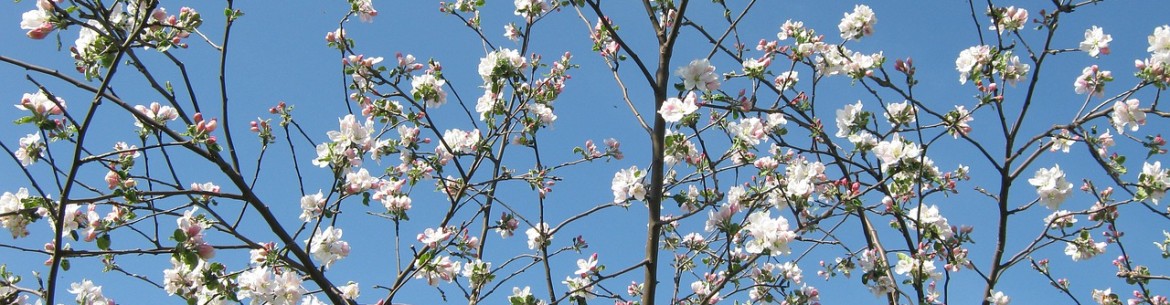
Ensure a good harvest: how to care for an apple tree in spring after winter
The apple tree is the most common fruit crop in Russia, ahead of pears and cherries. With the arrival of spring, these trees especially require care, as they must endure attacks from hungry rodents and severe frosts throughout the winter. The volume and quality of the future harvest depend on how promptly and correctly all this work is carried out. Here, we've outlined all the important steps. Caring for an apple tree in spring after winter.
Content
Features of care in spring
 Work should begin as soon as temperatures rise above freezing, without waiting for the snow to completely melt. Spring maintenance includes pruning, loosening, whitewashing, fertilizing, and pest control.
Release from winter shelter
The appropriate time for removing insulation in each region depends on its climate. The optimal temperature for this activity ranges from 12 to 16°C during the day.
To prepare the trees for the sun, work should be done on a cloudy, dry day. Young apple trees require shade on the south side to protect their still-tender bark from sunburn and deformation. Sunburn, which is initially invisible, can lead to disease later.
It is recommended to uncover apple trees in stages, over the course of several days; this will give the trees time to gradually get used to the new environmental conditions.
Experts remove the covering material from young apple trees, starting from the crown, allowing the delicate specimens to gradually acclimate to light, as well as daytime and nighttime temperatures.
If frost is expected when the trees have already formed leaves and buds, a smoke screen should be created. To do this, drive a stake into the ground and surround it with straw, dry leaves, or peat, then sprinkle moistened soil on top. Before sunset, remove the stake and set the mound on fire.
According to experienced gardeners, a pile of 150 cm in diameter and 50 cm in height protects 100 square meters of apple orchard from frost.
Getting rid of lichen and moss
 Appeared on the apple tree lichen and moss cause significant damage to both young and old crops. Therefore, they must be removed.
Causes and consequences of occurrence
Contrary to popular belief, lichen and moss are not only found on old trees. These organisms thrive in high moisture conditions, and bark is the ideal environment for this process.
There are several main reasons for their occurrence:
- overly dense crown branches;
- frozen or sunburned wood;
- weakened root system.
Ignoring the problem will lead to a number of consequences:
- slowing down the growth of apple trees;
- decrease in crop yield;
- the occurrence of various infections;
- drying and dying of branches.
Lichen and moss growing on the tree bark block the breathing pores and promote the proliferation of harmful insects.
Types and colors
As a rule, a wide variety of organisms colonize weak fruit trees with virtually impermeable crowns. The most common of these are:
- lamellar;
- scale;
- scaly;
- bushy.
Lichens may have the following coloration, depending on the type of specific algae with which they interact in the symbiotic system:
- silvery-gray;
- golden;
- blue;
- yellow-green.
Methods of elimination
To treat an apple tree, you need to perform several steps:
- inspect the tree for old, diseased or broken branches and remove them if found;
- remove fragments severely damaged by lichen and moss;
- ensure air permeability to the crown by trimming branches in dense areas.
If the apple tree is slightly affected, moss can be removed manually. To do this:
- spread a film under the tree;
- Carefully, so as not to damage the wood, remove the moss with a brush or wooden spatula, and then burn it.
An excessively dense crown causes air stagnation, which leads to increased humidity levels, which facilitates the rapid spread of fungal spores.
In case of damage to the bark, it is necessary to treat the exposed areas with diluted manure clay or garden pitch.
 A small infestation can also be treated by applying a solution to the damaged areas, prepared from the following components diluted in a bucket (10 l):
- 1 kg of salt;
- 2 bars of crushed laundry soap;
- 2 kg of wood ash (sifted).
After cleaning, whitewashing is performed. For this purpose, 1.5 kg of slaked lime is dissolved in a 10-liter bucket. The resulting mixture is applied to the tree trunks in calm, dry weather.
Sanitary pruning
Timely spring pruning of apple trees is essential for healthy trees and a high-quality harvest. Removing excess shoots is essential for rejuvenating the fruit tree. For young trees, this procedure allows them to form a proper crown. Pruning is performed in early spring, before the buds swell.
It is unacceptable to prune trees in mid-spring – during the period of green cone formation.
During pruning, upward-growing branches that don't produce fruit but draw nutrients are removed. Shoots growing toward the center of the crown are also pruned, as over time they contribute to denser growth and reduced yields. The following rule applies: branches that form the tree's skeleton should be spaced at least 40 cm apart. Formative pruning balances developing branches and aligns them with the central leader.
For trees 2–3 years old, the competing shoot of the central leader is pruned to a ring, and the remaining skeletal branches are shortened to match the weakest one. Shoots growing within the crown are also pruned. Apple trees 5 meters or taller are also pruned. Hand pruning shears or a hacksaw are used for this procedure.
Pruning should be done so that the buds of the remaining parts of the shoots are directed outward from the crown or upward, which will prevent thickening in the future.
Principles of whitewashing
Typically, lime or special acrylic-based garden white paints are used to whitewash apple trees in the spring. Spring whitewashing protects the skeletal branches and trunk from sudden temperature changes during the day and night. Failure to do so leads to cracks in the bark and tree diseases.
Furthermore, whitewashing protects against attacks by harmful insects and rodents, and, when combined with lime, against fungal diseases. The white color reflects ultraviolet rays, preventing bark burns.
Since spring whitewash is washed off by rain, its application is repeated 2–3 times.
Gardeners always begin this process from the bottom, gradually moving toward the first skeletal branches to treat them as well. Using lime is not recommended for whitewashing young apple trees, as it can burn the bark. In this case, garden paint or regular chalk diluted with water to a consistency similar to sour cream is the best option.
Specifics of irrigation
In particular watering This is important for apple trees growing in southern regions, where rapid snowmelt evaporates a significant portion of the moisture. In spring, the trees awaken and begin actively absorbing dissolved nutrients and microelements from the soil. This period is characterized by an upward flow of nutrients, leaf formation, flowering, and the activation of photosynthesis.
If there is not enough moisture in the soil, then one bucket of water should be poured under each young apple tree (up to 5 years old) once every 7 days; older specimens require twice as much.
On rainy days, apple trees do not need additional watering.
Loosening the soil around the trunk
The soil around the trunk of a fruit tree needs to breathe. Therefore, to ensure adequate air exchange, it's necessary to loosen the soil 1-2 times a week. Otherwise, a crust will form. This is usually done with a hoe, working it no deeper than 4 centimeters to avoid damaging the tree's root system.
Weed removal
Weeds appear and multiply near apple trees quite quickly. Trees over five years old are not harmed by weeds, so they can simply be mowed occasionally. This must be done very carefully to avoid damaging the trunk with sharp tools. Young trees, on the other hand, suffer greatly from nearby weeds, as they must share moisture and nutrients with them.
Furthermore, weeds often harbor fungal diseases and pests. It is recommended to remove weeds near young apple trees by hand, trying to pull them out by the roots. Before this procedure, the soil should be thoroughly moistened.
Mulching the tree trunk area
Mulching – one of the stages of spring apple tree care. Humus is typically used for this purpose.
In the spring mulch It is not recommended to amend the soil with acidic peat or sawdust.
This event was carried out after glaze, allows:
- retain moisture;
- increase tree nutrition.
Mulching the soil after removing weeds inhibits their subsequent growth. A 5-6 cm layer of mulch can protect the root system of young trees from potential frost.
Fertilizing rules
The ideal spring fertilizer for apple trees is a complex fertilizer, such as nitroammophoska. If there's sufficient meltwater in the soil, the fertilizer can be applied dry. The procedure is as follows:
- loosen the soil in the area near the trunk;
- moisten with a bucket of water at room temperature, it is best to use a watering can for this;
- distribute the fertilizer evenly.
Old trees (over 5 years old) are fed with fertilizer in the amount of one tablespoon; for young specimens, ½ of this portion will be enough.
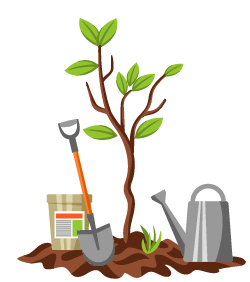 After applying fertilizer, it is recommended to level and mulch the soil; the optimal mulch layer is 2–3 cm. You can also feed apple trees foliarly. To do this, you need:
- dissolve 10 g of nitroammophoska in a bucket of water;
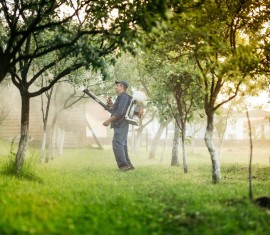
- pour the mixture into a knapsack sprayer;
- carry out tree treatment.
In this case, young apple trees will need only 5 g of fertilizer.
Carrying out treatment in early spring
With the arrival of spring, fruit crops require treatment to protect them from pests and various diseases. This treatment is carried out at least four times for several reasons:
- uneven emergence of harmful insects from hibernation;
- manifestation of fungal diseases at different periods of time.
In this regard, apple trees are treated:
- on bare branches;
- along the green cone;
- on a pink bud;
- according to the ovaries formed after the flowering period.
Conditions for holding the event:
- complete absence of snow;
- buds that have not yet had time to swell;
- air temperature not less than +5 °C.
First procedure
The goal of the first treatment is to eliminate wind-borne fungal spores. For this, use one of the following compounds:
- Bordeaux mixture (3%), prepared strictly according to the instructions, otherwise the result will be zero;
- iron sulfate;
- Nitrafen;
- Horus;
- "Hom."
No less effective is a solution prepared in this way:
- 350 g of urea (carbamide) and 25 g of copper sulfate (copper sulfate) dilute in 5 liters of warm water;
- The resulting mixture is filtered and poured into a sprayer.
Treating orchards with copper, which is part of the composition, helps eliminate fungal diseases. Urea not only protects but also acts as a fertilizer. Treatment with urea inhibits the development of apple trees: flowering begins 7-10 days later. This effectively prevents flowering crops from being exposed to recurring frosts, which can deprive gardeners of their harvest.
Second procedure
The second treatment is carried out when the temperature reaches 15°C (approximately two weeks after the first spraying). At this time, a green cone forms, which can be damaged by pests emerging from hibernation. This treatment uses compounds prepared by mixing insecticides with fungicides. The following products are well suited for killing the apple blossom beetle:
- Fufanon;
- "Spark";
- "Tanrek";
- "Decis";
- Intavir;
- Bordeaux mixture (1%).
The third procedure
The rosebud treatment is carried out when it has already formed but has not yet opened. This prevents attacks by codling moths, which lay eggs on the receptacle or near the bud. If this insect is not eliminated, a worm-ridden harvest may occur in the fall. The third treatment is carried out with solutions of insecticides and fungicides, which are carefully applied to the branches and also sprayed on the soil around the trees.
The fourth procedure
The final spring spraying of apple trees is carried out after the flowering period has ended. At this time, fruit ovaries can already be seen forming. For the fourth treatment, a mixture of "Aktara" and "Skor" is used: the products are diluted in 10 liters of water at a ratio of 2 g:2 g. The procedure is performed around the trunk, branches, and foliage.
During the period of pollination of flowers by bees (during the flowering period), the use of chemicals is prohibited.
Not recommended time for spraying
Spraying apple trees should not be done in rainy weather, as the procedure will be ineffective. It's also not advisable to choose days with strong winds and bright sun. The best time to spray is in the afternoon.
Protecting flowers from spring frosts
There are several ways to save apple trees from recurrent frosts in the spring:
- lighting a smoky fire around the perimeter of a garden plot;
- spraying fruit crops with water;
- installation of equipment under the trees: a fan or heater, providing the supply of warm air.
Following all care recommendations will help keep your orchard in good condition. This means healthy and well-maintained apple trees will delight you with a bountiful, high-quality harvest every year.