Spring treatment of apple trees for diseases and pests: we figure out when and what to spray trees with
Apple trees are common fruit crops, growing in almost every garden. However, to ensure a good harvest, they require regular care. This includes treating apple trees in spring against diseases and pests, when harmful insects wake up after hibernation.
Content
Need for processing
In spring, apple trees enter their growing season, which includes flowering and fruit set. It's during this time that trees require maximum protection. Without treatment, they can be susceptible to various diseases, divided into two categories:
- Non-infectious diseases occur due to a lack of nutrients in the soil, sunlight, and moisture. They do not spread to crops growing near the diseased tree.
- Infectious - caused by bacteria, fungi, or viruses. Infection usually occurs black crayfish, powdery mildew, cytosporosis, brown spot, rust, or scab. These diseases affect nearby crops.
In addition to diseases, apple trees suffer from attacks by pests such as:
- pliers;
- aphid;
- codling moth;
- honeyweed (psyllid);
- leaf roller;
- Apple blossom weevil.
To prevent the garden from dying, it is necessary to process it in a timely manner.
Stages and rules of procedure
Spring apple tree treatment is an important measure, protecting not only the trees but also the future harvest. Experts recommend performing the treatment at least four times during this period. This is due to the following reasons:
- uneven emergence of various types of pests from hibernation;
- the emergence of fungal diseases at different times.
In this regard, trees need to be sprayed in 4 stages:
- along bare branches;
- along the green cone;
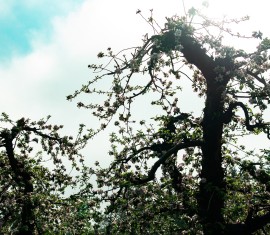
- on a pink bud;
- according to the beginning of formation of ovaries (after the flowering period).
Since different regions have different climatic conditions, the procedure should be carried out taking into account the weather conditions:
- complete absence of snow;
- unswollen buds;
- air temperature not below +5 °C.
The first stage
 Spraying bare branches is done to kill wind-borne fungal spores that cause related diseases. Early treatment can eliminate some of these spores and slow their negative impact. The following products are used for this procedure:
- Bordeaux mixture (3%);
- Nitrafen;
- Horus;
- iron sulfate;
- "Hom";
- mixture of copper sulfate and urea.
Copper, which is part of copper sulfate, destroys fungal diseases.
Urea serves not only as protection, but also as a fertilizer.
The second stage
The second treatment is carried out when the air temperature reaches +10 to +15°C (approximately two weeks after the first). At this time, bud swelling occurs, forming a green cone, and, simultaneously, harmful insects emerge from hibernation. Two types of sprays are combined for this treatment:
- insecticides – prevention of fungal diseases;
- Fungicides – pest control.
During this time, fruit crops are attacked by the apple blossom beetle. The insect penetrates the center of the blossom, where it lays eggs. The hatched larva sucks the sap from the bud and glues its edges together, preventing it from opening. The following are effective against the apple blossom beetle:
- Fufanon;
- "Tanrek";
- "Spark";
- "Decis";
- Intavir;
- Bordeaux mixture (1%).
The third stage
The rosebud treatment is performed when the bud has formed but not yet opened. At this time, the apple trees are attacked by codling moths, which lay their eggs on the receptacle or near the bud. As a result, instead of a good harvest, the gardener receives fallen fruit or a large number of wormy fruits. Bordeaux mixture is no longer suitable for the third spraying; it is replaced by insecticides and fungicides.
The prepared solution is sprayed liberally over all trees, as well as the area around the trunk (up to 1 m). All fruit bushes are sprayed simultaneously, preventing insects from migrating from them to the apple trees.
Treatment of rosebuds is carried out using biological preparations.
The fourth stage
After flowering, the orchard requires another spraying. At this time, small, pea-sized buds appear on the apple trees. For this procedure, prepare a mixture of insecticides and fungicides, for example, 2 g of "Aktara" and 2 g of "Skor," diluted in 10 liters of water.
The use of pesticides during pollination of flowers by bees is strictly prohibited.
Processing rules
There are several rules that must be followed when spraying apple trees against pests:
- choose a suitable day for the event: not rainy, with a temperature of +5 °C;
- use only serviceable sprayers that can evenly apply the compositions over the entire tree;
- do not use chemicals after flowering;
- Do not use fungicides during the fruit ripening process.
To obtain a good harvest, it is necessary to adhere to the timing of garden processing and the rules for carrying out the procedures.
Types of drugs
There are several types of products designed for treating garden crops. They all differ in their intended purpose, dosage, and application time.
| Group of drugs | Explanations |
| Insecto-fungicides |
These drugs, which have potent universal properties, include:
Fitosporin, a fungicide with antifungal properties, is quite common among gardeners. It is diluted with water at a ratio of 5 g to 10 l. |
| Insecticides |
These products are designed to treat apple trees against harmful insects. The following are most commonly used:
|
| Protective equipment |
To treat cuts and protect the bark from pests, the following substances are used:
|
| Antibiotics |
To destroy harmful microorganisms, gardeners use:
|
| Phytohormones |
Popular remedies for fighting viral diseases include:
|
| Folk remedies |
In addition to special formulations, folk remedies are used to combat insect pests, for example:
|
Principles of treating apple trees from diseases
There are several types of diseases and pests that affect orchards. Specific solutions have been developed to address each problem and for subsequent prevention.
Fighting moniliosis
Moniliosis (fruit rot) is a fungal disease that is widespread in regions with high humidity in the spring.
The disease is caused by spores of the ascomycete Monilia, which are spread during pollination by bees.
The foliage and branches of fruit trees appear scorched. In this case, the affected parts are cut off and burned outside the orchard. The affected apple tree and nearby trees and shrubs are treated with potent fungal killers, such as:
- "Khurus";
- Abiga Peak;
- Topsin.
To eliminate the problem and reduce the risk of recurrence, it is recommended to carry out preventive treatment, which includes 3 stages: before flowering, after flowering, and 2 weeks after the second procedure.
Treatment of fungus
Typically, mold penetrates broken branches and untreated cuts. As a result, spots form in the affected areas. hollowThe fight against fungus is carried out according to the following scheme:
- cleaning damaged areas until a healthy layer of wood appears;
- treatment with copper sulfate (2%);
- coating garden pitch.
Getting rid of fruit rot
If apple trees are not treated for moniliosis in early spring, it will later infect the fruit. In this case, the rotted and blackened apples should be collected and burned, and the tree treated with a strong fungicide. This procedure should be completed no later than 30 days before the planned harvest. If time is limited, use Fitosporin, applying it twice, two weeks apart.
When fighting gray mold, it is important to be able to distinguish it from rot caused by pests, in which the rotted area is located only on one side of the fruit and has a brown color.
Destruction of lichen and moss
Usually moss and lichen They are removed from fruit trees during pruning. However, if the infestation is severe, control of these organisms is necessary immediately upon detection. The solution depends on the age of the fruit tree: on older trees, the affected parts are cut off, the bark is stripped until the healthy layer appears, and then the trees are disinfected with any copper-containing product.
The debris left after such a procedure must be burned, as it provides an attractive haven for pests.
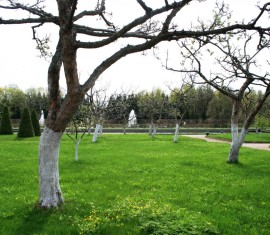
After the procedure is completed, the apple tree trunk is treated with lime.
Viral and bacterial diseases
Bacterial burn Caused by the microorganism Erwinia amylovora, it attacks tree tissue. The microbes typically enter through various wounds or accompany moniliosis. This disease is transmitted by insects, and broad-spectrum antibiotics are used to control them.
In addition, sucking insects carry various viral diseases, namely:
- witch's broom;
- star cracking;
- mosaic.
Once in the tree's tissue channels, viruses stimulate the emergence and development of malignant growths. Currently, no effective method for eliminating this problem has been found, so gardeners destroy affected fragments and fruits.
For preventative purposes, phytohormones are used to strengthen the tree’s immune system.
Treating apple trees against pests
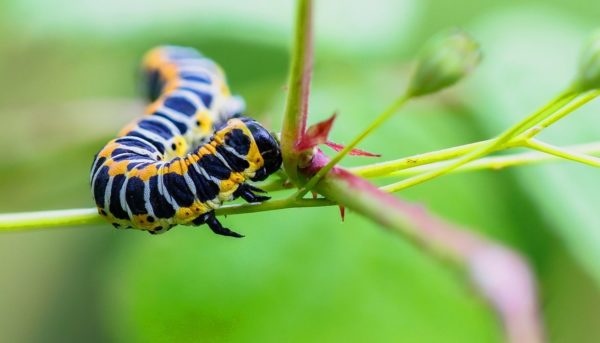 There are 3 groups of pests:
- rodents;
- insects;
- pliers.
Fruit crops are treated based on the species and pest population. With the onset of spring, such treatments are essential.
Insects
Insecticides are used to control harmful insects, and urea is used for prevention. Apple orchards are typically attacked by the following types of pests:
- codling moth;
- apple blossom weevil;
- aphid;
- leaf roller;
- bark beetle.
Ticks
Spider mites often infest fruit crops. Colonies of these parasites infest the undersides of leaves, sucking out the sap. This causes the leaves to curl and become intertwined with webbing. Webbing found directly on the foliage indicates the presence of spider mites. To control them, use Actellic and Fufanon, applying before bud swelling, when the mites gradually climb up the trunk. Spraying should be done at least twice, 7 days apart, allowing the garden to be treated before and after flowering.
Rodents
Common mice pose a serious threat to orchards. A few rodents can chew through a circular strip of bark, cutting off the tree's sap flow and ultimately killing the crop. Protecting the trunk from rodents can be done by wrapping it with thick material or plastic bottles. The containers, cut lengthwise, are placed on the trunk and secured with tape. The height of the barrier should be at least 70 cm. The smooth plastic prevents mice from climbing the tree.
Before using the bottles, you must remove the labels from them, which make it easier for rodents to climb up.
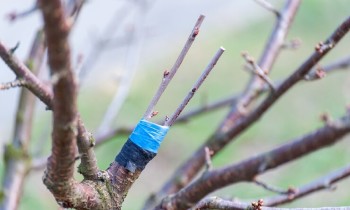
If mice do manage to gnaw at the bark, these areas are treated with a special compound, after which a medicinal bandage is applied to them.
Frequency of processing
Tree spraying is performed in four stages. This allows for the control of various pests and diseases. A specific product is used for each purpose.
Calendar dates for different regions
Methods for curative and preventative treatment of orchards, as well as the products used, are independent of climate zone. In each region, gardeners focus on the following:
- timing of the first and repeat treatments;
- concentration of drugs.
Since the growing season begins earlier in southern regions, apple tree spraying is carried out based on the following factors:
- kidney formation;
- beginning of the flowering period;
- appearance of leaves;
- ovary formation;
- growth and ripening of fruits.
If the instructions for use of a particular drug indicate specific calendar dates, then it is necessary to check for which climate zone they are applicable.
| Month | Peculiarities |
| March | In March, the first treatment is carried out (on bare branches). For the procedure, a composition of copper or iron sulfate is used, or Bordeaux mixture. |
| April |
In April, apple trees are sprayed a second time; at this time, bud swelling can be observed on the trees. To control insects, use one of the following products:
|
| May |
In May, the flowering period ends, and gardeners carry out a third spraying to eliminate blossom beetles, apple moths, and aphids. To protect the garden, insecticides such as:
|
Fruit trees require constant care. To get a high-quality harvest, you need to not only follow a fertilizing regimen and glaze, but also regularly combat various diseases and pests.


Comments
Last year, mice gnawed at a lot of apple trees. Following your advice, I'll try wrapping the trunks with plastic bottles. I hope it helps. Thanks for the article.