Apple tree fungus: what to do and how to treat trees against the disease
A fungus appearing on an apple tree trunk is quite dangerous, as its presence negatively impacts the tree's immunity, as well as the condition of its flowers and fruit. Failure to address the problem will result in the loss of the entire crop, but it's important to first identify the species of the fungus.
Content
Types of fungal diseases and factors contributing to their development
Peeling bark and the appearance of various damages make it easier for fungi and infections to penetrate the wood. When exposed to warm and humid conditions, harmful microorganisms immediately become active. Constant condensation on the bark is largely due to insufficient pruning.
Dense branches impede ventilation, and fungi multiply rapidly in stagnant air.
In most cases, epiphytotics are caused by gardeners themselves, who neglect proper agricultural practices. As a result, they are forced to fight a widespread disease, which makes it much more difficult to achieve a positive outcome.
To prevent the occurrence and spread of fungal infection, the following should not be ignored:
- all procedures related to pruning in different phases of the growing season;
- preventive treatments for various diseases (before and after bud swelling);
- measures aimed at pest control (setting traps, spraying with insecticides);
- compliance with the watering and fertilizing regime;
- periodic inspection of the garden to identify lesions that indicate the development of a disease;
- cleaning up fallen fruits and leaves, dry branches and other plant debris;
- whitewashing tree trunks (in autumn and early spring).
There are several types of fungal diseases, differing in their causes, course of events, and treatment methods.
Sooty mold
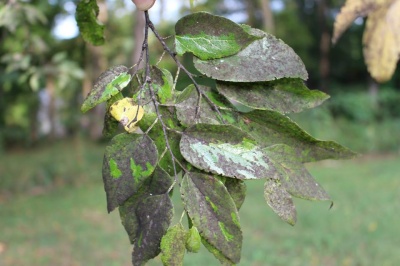
 These microorganisms can be found on the bark of the central conductor, leaves, branches, and fruits. The presence of sooty mold is indicated by a black, ash-like coating covering parts of the tree. Parasitic on the apple tree, mushroom draws out the juices flowing from the microscopic wounds of the wood.
Important! The development of the disease is facilitated by excessive accumulation of harmful insect excrement and sweet nectar.
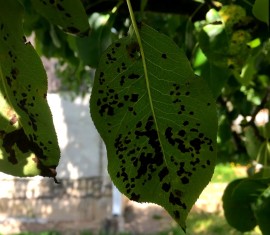
Apple tree damage is accompanied by the formation of small spots on the fruits and leaf blades, premature leaf fall, and a reduction in the yield and shelf life of the crop.
White plaque
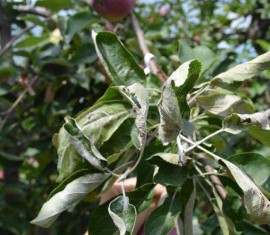
At the initial stage powdery mildew It manifests as a dirty-white, powdery coating on the foliage, which eventually turns brown. At the same time, branches begin to dry out, flowering becomes sparse, and fruit buds stop forming.
The causes of the disease are:
- weakened immunity of the apple tree;
- favorable climatic conditions: air temperature from +17 to 25 °C, humidity 60–80%;
- excess nitrogen in the soil;
- dense plantings blocking air circulation;
- overwatering.
Scab
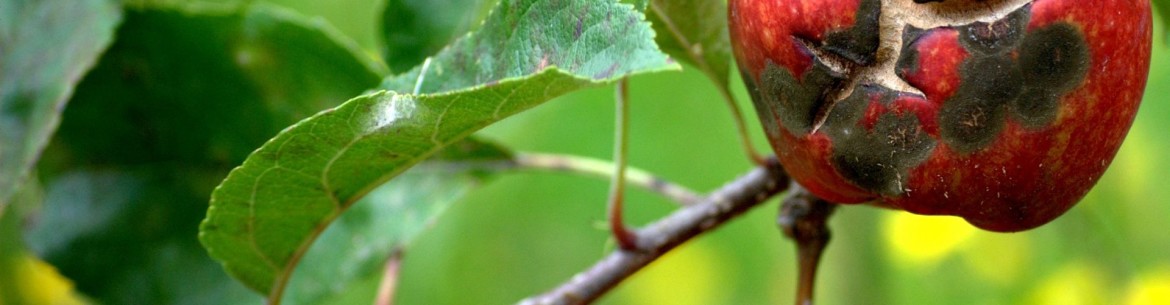
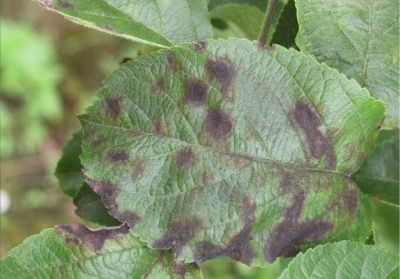 Stagnant air and excess moisture in the crown area often provoke the appearance of scabies, which manifests as a large number of raised brown spots on the surface of the fruit. In the early stages of development, the disease is impossible to detect.
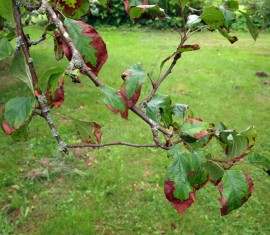
Subsequently, the fungus affects the leaves (small brown spots appear on them), and then spreads to the fruits.
Lichen fungi
Lichens They don't harm apple trees: they don't feed on tree sap or destroy the wood from the inside. However, they are a popular nesting ground for harmful insects and fungal diseases, which can cause significant damage to the garden. Therefore, it's recommended to carefully remove any emerging lichens with a blunt object.
Red mushroom
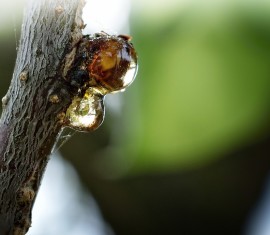
Red-brown ulcers and spots that form on the bark may be a sign of the development of a fungal disease in the apple tree – cytosporosis, the degree of impact of which is similar black crayfish. Cytosporosis It is treatable, but treatment should be done promptly due to the infection's ability to spread quickly. The disease manifests itself as small black or gray bumps on the surface of the apple tree.
Red mold spores are activated in humid conditions and are easily spread throughout the garden by rain, wind and insects.
Black fungus
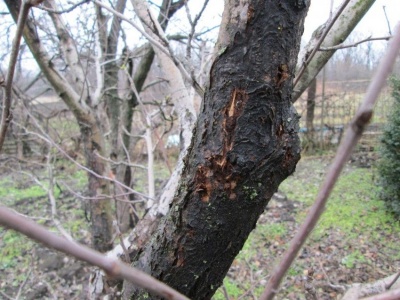 Black crayfish – the most dangerous disease: an infected tree dies within 3–4 years. Without preventative measures, the infection spreads throughout the entire garden. Upon detection, all diseased branches must be immediately trimmed back to healthy wood and burned outside the garden.
Treat the cut areas with a disinfectant - a solution of copper sulfate (3-5%), and then apply a layer garden var.
Methods of control
If fungus is detected on apple trees, it's important to determine the cause of the infection and identify any mistakes made. Older apple trees are particularly susceptible, but if left untreated, the fungus can also destroy young trees in just one season. Copper-containing preparations are used to treat fungal diseases, for example:
- "Topaz";
- Bordeaux mixture;
- "Skor";
- "Hom."
A solution of baking soda (150 g/10 l) can help save older trees with fruit buds. After this treatment, apple trees shed their fruit, as they would not survive the winter if they had produced a full harvest.
Basic principles of treatment and prevention of sooty mold
The following factors contribute to the development of sooty mold on apple trees:
- lack of wound treatment garden pitch;
- pest infestation: leafhoppers, aphids;
- dense crown due to insufficient pruning.
Prevention of this disease involves routine gardening procedures, adhering to all basic agricultural practices. One of the most important measures is regular fall and spring pruning. Apple trees should also be periodically treated with pesticides against fungi, infections, and harmful insects. In addition to chemicals, various traps are used to control pests, as well as attracting predatory insects and birds.
The best protection against fungal diseases is to treat the plant with Bordeaux mixture (3%) in early spring.
Therapeutic procedures
Once fungus is detected, the first step is to remove and destroy the affected tree fragments. Curative pruning is necessary regardless of the season. Affected areas are cleaned and treated with copper or iron sulfate (5%) or a caustic soda solution (100 g/10 l).
Two weeks before harvesting, apple trees are sprayed with a mixture of copper sulfate (1%) and shavings of laundry soap. A solution of baking soda (150 g per 100 l of water) can be used as an alternative. After harvesting, all procedures are repeated, as the fungus that parasitizes fruit crops will prevent them from fully preparing for winter.
Preventive measures
Proper care of apple trees is the key to their health. Strong trees with good immunity are highly resistant to diseases and pests. This includes a number of procedures:
- carrying out autumn and spring pruning;
- treatment with fungicides and insecticides;
- application of fertilizers;
- setting up insect traps;
- proper and regular watering;
- whitewashing the trunk and main branches in late autumn and early spring;
- removal of mummified fruits from branches;
- digging up tree trunk circles, destroying weeds.
When gardening, it is important to follow several basic recommendations:
- treat not only fruit crops, but also the soil in the tree trunk circles against fungus;
- disinfect garden tools after each use;
- Harvest the crop carefully, trying not to damage the tree, as even minor damage can become a source of rot.
Features of treatment of different parts of the apple tree
Despite the use of the same preparations, treatment methods for different parts of the tree may differ.
Leaves and branches
Branches affected by fungus are cut off, and the cut sites are treated with a composition appropriate to the specific phase of the growing season:
- before bud swelling - a solution of iron or copper sulfate (3%);
- after buds open and flowering ends – a solution of copper sulfate (1%);
- when pouring fruits - a solution of caustic soda (1%) or baking soda diluted in water;
- after harvesting – chemicals, for example “Skor”.
Trunk
The fungus-damaged trunk is first cleaned and washed with an antiseptic, such as caustic soda (100 g per 10 l of water). If the initial treatment is unsuccessful and the fungus continues to develop, copper or iron sulfate (5%) is used.
Root system
Root treatment is carried out using the same method as wood treatment on the trunk. First, severely damaged fungal fragments are removed. Lightly affected areas are cleaned and then washed with disinfectants. A solution of copper sulfate or caustic soda is usually used for this purpose.
Removing the root system of an old apple tree from the soil can lead to the death of the entire tree.
Old specimens affected by fungus are dug up and destroyed, and their growing areas are generously watered with copper or iron sulfate.
Fruit
During the fruiting period, it's best to combat fungal infections with biological compounds, as they are non-toxic and don't negatively affect the apples' flavor. The following compounds are well suited for this treatment:
- Fitosporin;
- "Gamair";
- Planriz
As already mentioned, during the ripening period, adult apple trees are treated with a solution of baking soda diluted with water in a ratio of 100 g per 10 liters.
Processing techniques depending on the season
Preventive measures carried out in spring and autumn have their own characteristics, determined by the stage of tree development.
In the spring
The spring processing algorithm looks like this:
- In the first half of March, before the buds swell, use “Gart” (35 g/12 l), “Zakhvat Oil” (170 ml/12 l), as well as Bordeaux mixture prepared from quicklime (210 g) and copper sulfate (120 g), diluted in 12 l of water.
- In late March and early April, apple trees are treated with Bordeaux mixture or an ash solution. Fundazim (12 g/5 l) and Strazh (3 ml/5 l) can also be used.
- After the flowering period, fungus is controlled with an ash infusion. Ready-made preparations include "Samshit," "Antigusin," "Antikleshch Pro," and "Zakhvat Oil."
Since the fungus can become active at any time, apple tree treatment should not be a one-time procedure.
In the fall
After harvesting, it is important to carry out the following steps:
- collection and disposal of fallen fruit, leaves, damaged bark and branches;
- treating the apple tree with copper sulfate (500 g) or the preparation “Zakhvat Oil” (40 ml), diluted in 10 liters of water;
- whitewashing the trunk and bases of large branches with a solution prepared from clay, lime and water, taken in a ratio of 1:2:7;
- digging the soil;
- mulching.
Fertilization
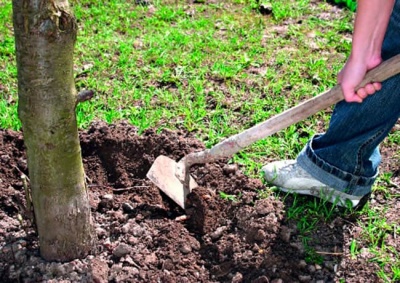 Boosting the immunity of fruit crops through timely fertilization with mineral and organic fertilizers reduces the risk of fungal diseases. It's important to fertilize apple trees several times during the season:
- in early spring - with rotted manure or compost (dosage - 1 bucket/1 m2);
- beginning of flowering – a mixture of potassium sulfate (80 g) and superphosphate (100 g) under each trunk, the procedure is repeated after 14 days.
Prevention recommendations
To reduce the likelihood of apple tree damage by fungus, experienced gardeners recommend:
- in spring and mid-summer, treat crops with the preparations “Calypso” and “Fitosporin”, which have an antifungal effect;
- in the fall, water the soil with a disinfecting solution of copper sulfate;
- Avoid over-watering.
Despite apple trees' undemanding nature, growing them is a painstaking task. To maintain the orchard in good condition, it's important to inspect it regularly and promptly address any problems.