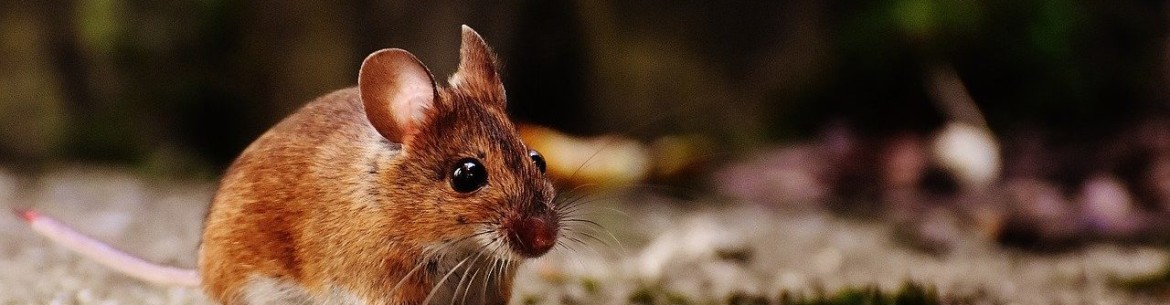
How to protect an apple tree from rodents for the winter: the best ways to cover the trunk and branches
During the winter season, apple orchards suffer not only from changing climate conditions but also from frequent rodent attacks. The furry creatures, searching for food, damage the bark of the trees, causing irreparable harm.
Content
Rodents are a threat to apple trees in winter.
Late autumn and early winter represent one of the most stressful periods in gardening. This is when trees begin to prepare for the comfortable transition into the realm of low temperatures and heavy rainfall. But, paradoxically, the main stress factor isn't frost and snow, but the regular raids of hungry rodents.
By gnawing the bark of apple trees, they effectively expose the trunk to attack by snow. Furthermore, these animals deprive the tree of nutrients and moisture. Peak rodent activity occurs in February.MarchAnd apple trees are their favorite delicacy because their bark, unlike stone fruit varieties, is not bitter.
Animals that pose a danger
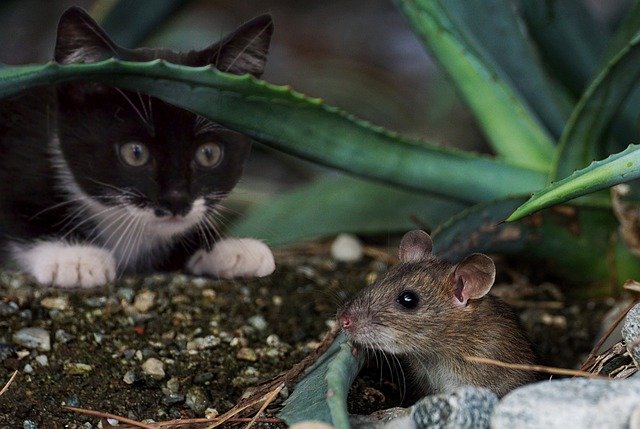
The most active pests of fruit trees are the following rodents:
- field mouse – damages the lower part of the tree, making its way to it under the snow;
- water vole - nibbles root collar apple trees;
- hare and the wild rabbit - they destroy bark more vigorously than other pests.
Methods of protecting apple trees from rodents
There are many different ways to protect apple trees. Since prevention always yields better results than remedial measures, it's important to choose the right method based on your needs and affordability.
Fencing and wrapping
If you've noticed uninvited guests appearing on your garden plots, this is a good time to begin providing maximum protection for your apple trees during the winter.

- One of the simplest and most accessible methods is to fence off tree trunks. mesh of metal wireA fabric with small holes up to 120 cm high is best suited.
It is secured around the apple trees, having first been dug into the ground.
- For a similar purpose, you can also use soft plastic meshIts properties ensure that light and air circulation are not affected at all. This fabric is tightly wrapped around tree trunks, secured with rope or wire.
- Before the frost sets in, apple trees can be protected by wrapping them roofing felt or polyethyleneHowever, at the first sign of a thaw, it is recommended to remove this material to prevent the bark from overheating. It should also be unrolled in rainy or cloudy weather, as direct sunlight on overheated wood can cause branches to burn and dry out.
This method is only suitable if the garden is located in close proximity to your home and it is always possible to carry out the necessary manipulations.
- If there is no confidence in the timely removal of the wrapping material, roofing felt is replaced by natural burlap, which is used for storing sugar. It also allows excellent air permeability and does not cause the wood to overheat.
- The simplest, but no less reliable option for protecting an apple tree is to wrap the trunk with ordinary spruce branchesThe natural material allows air to pass through and protects the trunk from rodent attacks. The spruce branches should point vertically downward, and it's recommended to pile soil on the underside.
The ideal height of the spruce protective covering is at least 80 cm.
- A good covering material recommended for protecting apple tree trunks from attacks by gnawing visitors is regular nylon tightsThey don't block airflow to the bark and don't need to be removed when temperatures rise. However, this method is only suitable if you don't have many fruit trees on your property. Otherwise, the method becomes prohibitively expensive. Therefore, it's recommended to only wrap young trees and saplings with tights. More mature apple trees should be protected using other readily available methods.
- It will also work great instead of tights special non-woven material, which is significantly less expensive. The tree trunk is wrapped in several layers of it in a spiral. This material will protect apple trees not only from rodents but also from sudden temperature changes.
Items that repel rodents
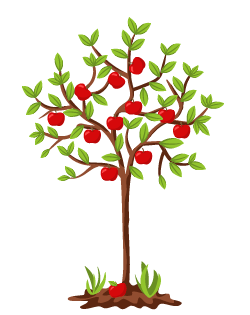 Wild animals are naturally very timid, so you can keep them away from apple bark using repellents.
- For example, hares Rabbits are especially wary of large black plastic bags. When hung on lower branches and near trees, they make a rustling sound with every gust of wind. Dark-colored cardboard circles can also be attached to branches. They stand out against the snowdrifts, frightening the rodents with their movement.
- Soda containers can also help repel unwanted guests. Tin cans or plastic bottles are cut into ribbons, twisted or untwisted into spirals. The resulting devices are hung on lower branches so that they collide and make noise in gusts of wind.
Alternatively, you can place woven bright ribbons.
- In addition to noise, you can also use the scent to make animals dislike certain odors. To do this, attach plastic containers with holes in them, filled with mothballs, to the branches and around the tree. The pungent odor will certainly deter those wanting to eat the apple bark.
Coating and spraying as a way to maintain the integrity of the bark
 One of the oldest and most reliable methods of protection is considered to be coating apple tree trunks with various mixtures. The most effective include:
- a creamy mixture of clay (or slaked lime), fresh cow dung in a 1:1 ratio and 1 tbsp. of carbolic acid; the desired consistency can be achieved by adding water;
- whitewashing material – water-dispersion paint applied to the trunk with a brush or spray;
- a mixture of fish oil and naphthalene in proportions of 8:1 – repeat the treatment after each precipitation.
Spraying trees will also repel rodents from the garden. Apple trees sprayed with a solution in the fall copper sulfate, will not only be protected from fungal infections all winter long, but will also prevent mice and hares from attacking. The procedure should be carried out in calm weather after the leaves have fallen.
Dilute 100 g of copper sulfate per 10 liters of liquid. Since the product is aggressive, do not apply it in the presence of animals or bystanders on the property, or near water sources.
When the ground begins to freeze, it's time to spray the apple trees with Bordeaux mixture. To prepare 10 liters of solution, you will need: 100 g of copper sulfate, 10 liters of water, and 150 g of quicklime.
Copper sulfate is diluted in a small amount of warm liquid, then 5 liters of cold liquid is added. In a separate container, lime is slaked in the remaining 5 liters of water and the resulting "milk" is strained. Slowly add the first mixture to the second mixture, stirring constantly. Properly prepared Bordeaux mixture has a bright blue color and is free of flakes.
Treat the trees with the solution in November, in calm weather, from the roots to the branches. This will help protect the apple tree not only from rodents but also from insect pests that overwinter under the bark.
After spraying, be sure to wash all exposed parts of the body with cleansers and rinse your mouth.
Installing baits
This type of apple tree protection should be used with extreme caution, as the bait typically contains dangerous poisons, making it unsafe for pets.
You can make your own bait. To do this, you'll need:
- sugar;
- flour;
- sunflower oil;
- alabaster or cement.
The ingredients are mixed in equal proportions, seasoned with a few drops of oil. The arrangements need to be updated from time to time.
Ultrasonic repellers
Ultrasonic waves are very effective at repelling rodents. However, this method has several significant drawbacks:
- the operation of such a device requires a constant supply of electricity or frequent replacement of batteries;
- the propagation characteristics of ultrasound do not allow waves to overcome obstacles;
- The device's scope of action is limited.
A similar method can be used in gardens located in close proximity to residential buildings.
Folk methods of rodent control
Based on rodents' aversion to the scents of certain herbs, apple trees can be protected by tying bunches of mint to the trunks or by smearing them with essential oils from the same plant. Elderberry and wild rosemary have a similar effect on the presence of hares and mice.
To prevent small rodents from gnawing the bark, thoroughly pack down the snow at the base of the apple tree trunk. This will prevent them from moving in the compacted area. The resulting ice crust will prevent mice from even getting close to the tree, protecting its roots.
Method of protecting seedlings
The trunks of young trees can be easily protected from rodent attacks using a simple plastic bottle. To do this, cut off the bottom and neck of a soda bottle, split the main part lengthwise, and wrap it around the trunk. Secure this improvised protection with twine, and press the base into the ground.
The bottle on the young apple tree should not sit too tightly, otherwise during a thaw, melt water will accumulate under it, causing rotting.
Ensuring the safety of creeping apple trees
While standard apple varieties typically suffer damage to the lower part of the trunk, creeping apples can lose their bark to their branches after a rodent attack. The structure of creeping apples requires specific overwintering conditions. The tree is bent as low as possible to the ground, securing the branches with iron pipes or boards. Containers containing poisonous bait are buried under the trunk, and the rest of the tree is wrapped in wild rosemary or mint. Finally, the tree is covered with special netting.
Treatment of damaged trees
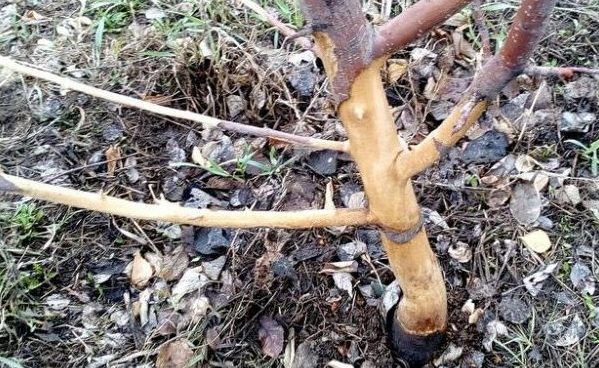 If, despite the safety measures taken, for reasons beyond the control of the procedures, the apple tree bark still suffered some damage, it is necessary to know, How to help a damaged tree.
Engraftment of the "donor" bark
Grafting healthy bark onto a damaged section of the trunk is a complex method that isn't always successful. However, to restore the tree's health and proper functioning, it's worth a try. To create a "patch," take a branch from the same apple tree and, using a sharp knife, remove a solid layer of bark, adjusting it to the size of the damaged area.
The grafting site is cleaned of any uneven areas, and the donor covering is applied, taking into account the growth direction of the covering on the base. The new area is tightly secured with electrical tape, covering the healthy portion of the rootstock by at least 10 cm on each side.
After the procedure, the apple tree needs to be provided with additional top dressing and regular watering. The rooting itself should be done before the sap begins to flow.
Bridge grafting
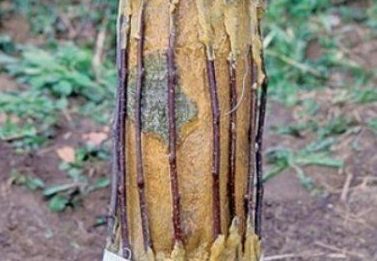 If a young seedling has been damaged, it can be treated with a bridge graft. This procedure is also performed before the spring sap flow begins. It's done as follows:
- The damaged area is cleaned down to healthy tissue.
- Last year's shoots are cut from the tree, from which binders are then prepared cuttings.
- The length of the cuttings should be 7 cm longer than the affected area.
- On each shoot, make 2 cm oblique cuts on both sides.
- The cuttings are pushed under the bark below and above the affected area, covering it.
- The resulting “bridge” is covered with cling film, tied with twine and sealed with a paste for treating bark wounds.
After a few years, the rooted cuttings will become thicker and grow together, ensuring the supply of nutrients from the roots to the top.
Cutting an apple tree trunk for reverse growth
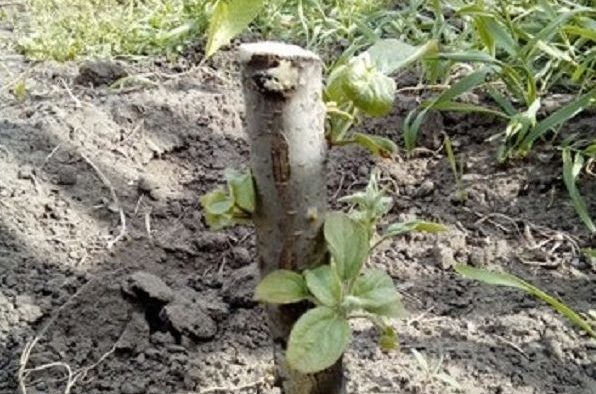 This method is too radical, so it is used only if the tree has already reached 5 years of age. Method cut The rootstock removal involves cutting off the trunk damaged by rodents above the lowest healthy bud, 2 cm higher than its location.
To prevent the stump from sprouting in the spring at the point of separation, it must first be sealed with garden pitch, which will also protect it from the negative influence of the environment and various microbes.
A developed root system will help young shoots to emerge.
Methods for restoring minor cortical injuries
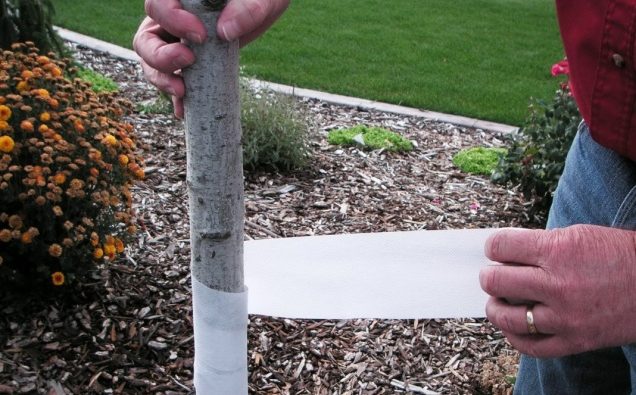 Minor damage to the bark can be healed in this way:
- Chop 200 g of linden bark into 10 cm pieces.
- Pour in 1 liter of water and bring to a boil.
- Boil for 40 minutes.
- Cool and strain.
- Apply the resulting mixture to the wounds, wrap in thick paper and tie with twine.
- The bandage should be kept intact for up to 5 months.
The restoration procedure should be carried out in early spring, before the sap begins to flow.
Clay can also be used to make a healing slurry for apple trees. To prepare it, add half a bucket of clay to a depth of 2 cm, adding water. After a few hours, the swollen mixture is stirred and thoroughly applied to the damaged areas. A cotton bandage is placed over the slurry. The wounds will continue to heal until August.
Given the difficulty of treating damaged areas of the bark and the lack of guarantee of complete recovery, it can be concluded that it would be wiser and easier to prepare for cold weather in a timely manner. Moreover, there are now a vast number of materials and methods for protecting apple trees from rodent attacks.