Apple tree 'Konfetnoye': characteristics of the variety and care
| Color | Reds |
|---|---|
| Ripening season | Summer |
| Size of apples | Average |
| Taste | Sweet |
| Shelf life | Low shelf life |
| Application | For recycling , Fresh |
| Winter hardiness | Average winter hardiness |
| Fruiting age | From 5 years old |


 History of origin and regions of growth
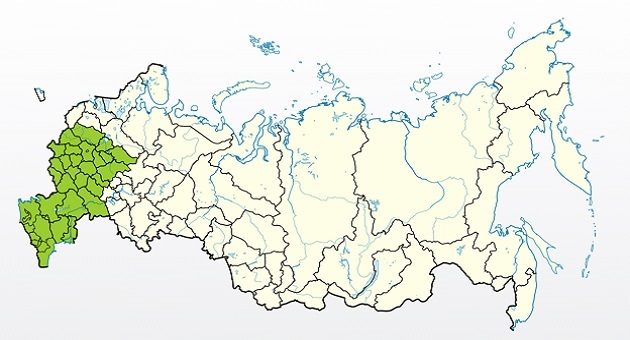
Growing regions
- Middle zone.
- North Caucasus.
- Crimea.
- Some northern regions.
Origin
This variety was created by renowned Russian plant breeder and biologist Sergei Ivanovich Isaev. He worked on many varieties for the Non-Black Earth Region, resulting in the development of Sinap Severny and Pamyat Michurin, as well as many other unusual varieties.
There are many affectionate names for this variety: Konfetka, Konfetnitsa, Konfetochka.
Around the 1940s, Konfetnoye was created by crossing Papirovka and Korobovka, two popular, old, and well-known varieties. The variety was not included in the State Register, nor was it officially zoned. However, experienced gardeners say it can be grown throughout the central part of Russia and even in some more northern regions, provided adequate winter protection is taken.
Content
Description of the apple tree variety 'Konfetnoe'
 This fast-growing variety is a favorite among many gardeners. It produces abundant annual harvests of delicious, exceptionally sweet, and beautiful fruit. It's relatively easy to grow, has good frost resistance, and ripens well before later-ripening apples can be expected. However, it's not grown commercially due to its difficulty in transporting long distances and its susceptibility to insect pests (wasps). It's recommended exclusively for small garden plots.
Apples: What they look like
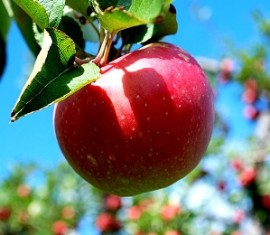
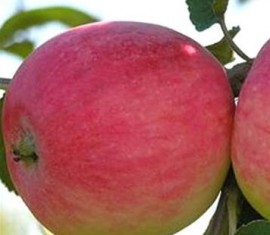
 The Konfetny variety produces medium-sized fruits, which distinguishes them from the smaller Korobovka variety, which is most similar in flavor. They can grow to approximately 80-130 grams in weight. The apples are round, uniform, and generally symmetrical, but can be slightly lopsided, with moderate to pronounced ribbing.
The fruit's skin is thin, very delicate, and easily damaged. It is smooth, glossy, and green, becoming increasingly lemon-colored or greenish-yellow as it ripens. In years with little sun, the apples have only a slightly reddish or pink, diffuse blush on 20-55% of the surface, but with predominantly sunny days, they can become almost completely covered with saffron-red or yellow-orange stripes and spots. Subcutaneous spots are numerous, light, large, and clearly visible. The chemical composition is indicated by the following values per 100 grams:
- P-active substances (catechins) – 312 milligrams.
- Ascorbic acid (vitamin C) – 11.2 milligrams.
- Total sugars (fructose) – 13.4%.
- Pectins (fiber) – 7.8%.
- Titratable acids – 0.53%.
The flesh is medium-dense, very tender, and slightly crunchy. It has a distinctive, rather sweet flavor, considered dessert-like, with a subtle apple-like tartness in the aftertaste. It's hard to call it balanced or harmonious, although professional tasters have rated the apples a maximum of 4.2 points for flavor on a 5-point scale.
Apple tree Konfetnoe: characteristics
Crown and root system
 These apple trees are distinguished not only by their rapid growth in the first 5-8 years, but also have quite impressive dimensions, which is why they are considered tall. Without pruning they can easily reach 5-6 meters in height., which will make harvesting much more difficult.
When young, their crown is oval or pyramidal, but with age, it becomes increasingly oval, spreading, and even weeping. It takes up quite a bit of space, reaching 4-4.5 meters in diameter, which is important to consider when planting. The branches are mostly thick, straight or curved, and covered with reddish-brown or brown bark. The crown can easily be shaped into a slate or bush-like form, as needed.
The leaves are green or dark green, richly shaded, leathery, dense, glossy, and pubescent on the back. They are rounded, short-pointed, with a finely serrated, wavy surface, and can fold into a boat shape. The root system depends entirely on the rootstock: it can be deeply or shallowly branched, with or without a central taproot.
Productivity and pollination
Candy is a tree with an average yield, so you shouldn't expect outstanding results from it.
Under favorable conditions, one adult tree can easily produce approximately 40-60 kilograms of very sweet, aromatic fruits per season..
This variety is considered conditionally self-fertile, meaning you'll get apples regardless of whether there are other varieties nearby with similar flowering times or not. However, this yield will only yield 15-25% of the maximum possible yield. To increase yield, it's recommended to interplant the trees with other varieties, spray them with sugar syrup during flowering, and use mobile apiaries for cross-pollination.
Winter hardiness and disease resistance
The data on this matter is quite contradictory, but the official classification is that the variety is moderately tolerant of low temperatures. It grows without problems in southern regions and thrives, but in harsher conditions it can be susceptible to frost damage. Therefore, every effort should be made to protect the trees from frost, even covering them with burlap up to the very top. A positive aspect is its high recovery rate; even after severe frost damage, it recovers in just 1-2 years.
Rodents and insects readily damage not only leaves and fruit, but also bark and wood, so trees need to be treated regularly and promptly with insecticides, and fungicides are also helpful. Apple trees are susceptible to infestation. scab, powdery mildew and all the other "charms" that are difficult to get rid of. Therefore, prevention should be an essential part of your garden's life.
Rootstocks and subspecies
Konfetnoye can be grown on a wide variety of rootstocks, yielding slightly different results while preserving the variety's key characteristics. The most popular is the dwarf variety. Trees on this variety grow no more than 1.6-2 meters tall, begin bearing fruit as early as 2-3 years, and produce quite large fruits, weighing at least 200-220 grams. However, this subspecies' winter hardiness is significantly reduced and it can only be grown in extremely mild climates.
Features of growing Candy
 Landing
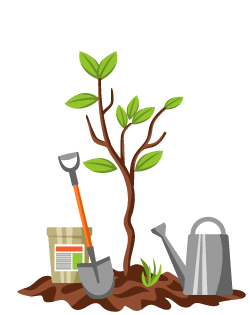 Landing
Basic conditions
- Like all apple trees, this variety requires open, sunny sites. The crown should be exposed to sunlight for most of the day, otherwise the fruit will grow small and not as sweet as desired.
- The tree absolutely cannot tolerate drafts; it immediately begins to rot, its branches become thin and unreliable, and its yields are meager. Ultimately, it may even die without ever bearing fruit.
- Konfetnoye shouldn't be planted where groundwater flows near the surface, as this will lead to root rot. Therefore, it shouldn't be planted near streams, rivers, ponds, or even shallow wells.
- Planting holes don't need to be prepared in advance; they can be prepared 1-2 weeks in advance. Dig holes 6-70 centimeters in diameter and the same depth, add fertilizer and drainage to the bottom, and then fill with water. The prepared holes don't need to be covered; they should be left outdoors.
- There should be at least 3-4 meters of space left between trees so that they do not interfere with each other's growth in the future.
- The rhizome is inspected for broken or dry shoots, which are ruthlessly cut off. The roots are soaked in water for 6-8 hours before planting. You can create a slurry of soil and water (a swamp) in which to soak the seedlings.
- When planting, the root collar should be left above the surface; approximately 5-8 centimeters should be sufficient. This will prevent the tree from rooting above the graft, otherwise it will lose its rootstock properties.
- Holding the trunk by hand and gently shaking it, sprinkle the seedlings with soil, not pressing it too hard but ensuring there are no air pockets. Water the seedlings with 30-45 liters of water and mulch with sawdust, compost, or any other moisture-retaining material.
Landing dates
The timing of planting for candy cane is not particularly critical, meaning it can be done in either spring or fall. However, it's important to remember that September-October is the best time to plant, once the leaves have completely fallen. If the tree begins to grow, it will likely freeze in the winter, despite any protection.
Protection from frost and rodents
A 15-25 centimeter layer of ordinary soil is piled onto the root area, depending on the region's climate: the colder the climate, the thicker the layer. All this will need to be removed in the spring, so don't forget about it. The trunks are wrapped with roofing felt, burlap, agrofibre, or other suitable materials. Young seedlings can be covered with a tent-like covering, which is the most reliable.
So that mice, hamsters and hares To prevent insects from nibbling young shoots and bark from the trunk, coat it with lard or grease. A simple whitewash of lime, applied to a height of 1 meter or more, is effective against insects.
Tree care
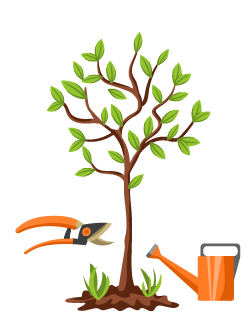 Tree care
Loosening the soil, watering: proper agricultural technology
Candy trees thrive in loose, oxygen-rich soil, so the area around the trunk should be dug twice a year, and hoeing can be done several times a month. At the same time, remove weeds and other plants that rob the tree of nutrients and minerals.
If possible, it's best to apply moisture to the soil using drip irrigation, but if that's not possible, you can simply water it about 6-8 times per season. Immediately after planting, it's a good idea to water at least once a week, and then you can switch to a normal regimen. Various fertilizers and supplements are added along with the water, as they are absorbed much better this way.
Pruning: simple crown shaping
The tree itself has a moderately dense crown, so it will still need to be pruned and shaped fairly frequently, starting in its first year. The Candy Tree is so resilient that it easily forgives even the most serious pruning mistakes, so there's no need to worry too much. The main thing is to avoid removing more than one-third of the entire canopy at a time and to cover any wounds. garden pitch or drying oil.
Sanitary pruning is performed in the fall, when the sap flow in the trunks has ceased. At this point, all dry, diseased, or damaged shoots that interfere with the proper development of the crown must be removed. Rejuvenation is performed starting around the 16th to 18th year, removing 2-4 mature branches at a time to allow the new ones to develop fully.
Pollinator varieties
- Folder.
- Mantet.
- Melba.
- Anise.
- Glory to the victors.
- Yandykovskoye.
- Stark John Grimes
- Korobovka.
- Cinnamon striped.
Reproduction
- Rooting cuttings.
- Grafting by buds and cuttings.
- Clones (offshoots).
Diseases and pests
- Powdery mildew.
- Scab.
- Black crayfish.
- Pit bitterness.
- Cytosporosis.
- Green aphid.
- Codling moth.
Ripening and fruiting of Candy
The beginning of fruiting
 The beginning of fruiting
The main variety isn't considered early-bearing, as the first harvest won't be seen until 5-6 years after planting outdoors. You shouldn't expect more than a few kilograms of fruit during these years, but they're just as sweet, with a unique candy-like aroma and a hint of pineapple.
Flowering time
The Candy Tree blooms quite early; in warm climates, with good weather, it can begin as early as early May. The tree's blooms are lush and beautiful, with large, fragrant flowers densely covering the branches, making the tree look attractive. However, the blooming process is quite short, lasting about a week, so it's important to ensure bees have access to the trees, or better yet, attract them by spraying the trees with sugar or honey diluted with water.
Fruiting and growth
The tree grows very rapidly and can reach its peak as early as its sixth or seventh year. However, it can stretch very quickly before bearing fruit, then slow down slightly, but still quickly reach its peak. This also increases yields rapidly. A full harvest can be harvested as early as the ninth or tenth year.
Konfetnoye is considered a summer variety, so it usually ripens earlier than all other varieties. Around mid-August, the apples are ready for harvest. However, they will have to be eaten fairly quickly or processed into juice or jam (very tasty, due to the fruit's high sugar content). They can be stored in the cellar for approximately 25-40 days, and in refrigerator A little longer, up to 50 days, but that's their absolute maximum. After that, the apples wilt, become soft and fluffy, and lose their sweetness.
Top dressing
- Mineral complexes.
- Wood ash.
- Humus.
- Compost.
- Ammonium nitrate.
- Manure.
What to do if it doesn't bloom or bear fruit
- Provide moisture.
- Check for pests and diseases.
- Transplant.
- Limit watering.
Why do apples fall?
- Natural factors.
- Pests.
- Diseases.
Leave your feedback on the summer sweet variety Konfetnoe to share your experience with other gardeners.