
Kovalenkovskoye apple tree: characteristics of the variety and care
| Color | Reds |
|---|---|
| Ripening season | Summer |
| Size of apples | Average |
| Taste | Sweet |
| Crown type | Average tree height |
| Shelf life | Low shelf life |
| Application | Universal variety |
| Winter hardiness | Average winter hardiness |
| Fruiting age | Up to 5 years |
 History of origin and regions of growth
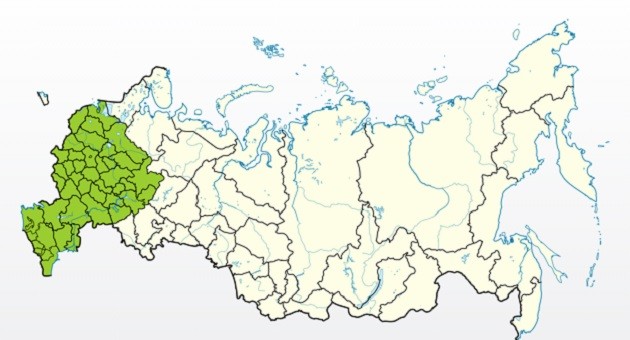
Growing regions
- European part of Russia.
- North Caucasus.
- Belarus.
Origin
Breeding work sometimes yields real surprises. For example, Belarusian pomologists G.K. Kovalenko and M.I. Sukhotsky, while conducting pollination experiments on an old variety called Lafram at the Belarusian Research Institute of Fruit Growing, succeeded in producing something completely new—a summer variety named Kovalenkovskiy. Another name for this apple tree is Krasnoe Sladkoe, as it is better known in Russia.
As early as the mid-1990s, it was sent to various farms for experimental testing. In 1999, it was added to the Belarusian register, but it was only added to the Russian State Register in 2006. It is zoned exclusively for the Central Russian region, but also grows in Crimea and the North Caucasus.
Content
Description of the Kovalenkovskoye apple tree variety
 This late-season apple tree is just beginning to gain the attention and love of gardeners in our country, as it is a new variety. It produces fairly large, sweet, and aromatic apples and begins bearing fruit quickly, making it a favorite among many.
The tree is resistant to fungal infections, exhibits enviable winter hardiness, and its fruit does not fall off even when overripe. However, they ripen gradually rather than uniformly, are difficult to transport, and store even worse, making them better suited for growing in small garden plots than in commercial intensive orchards.
Apples: What they look like
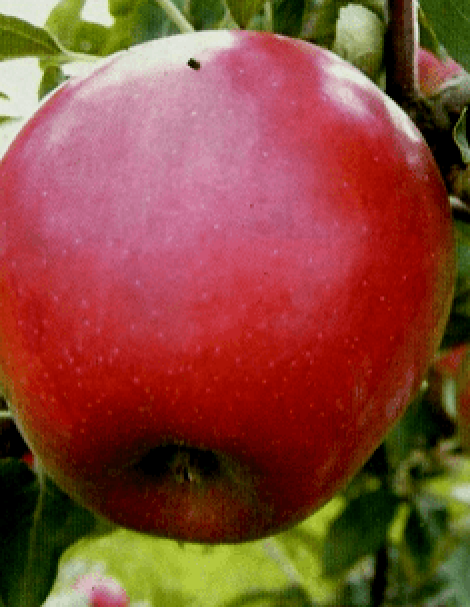
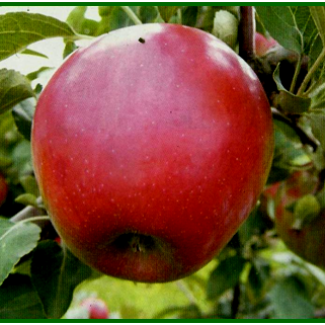
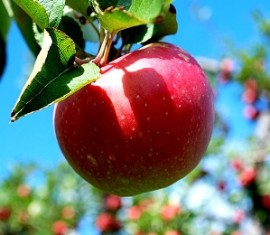
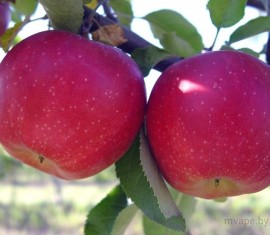
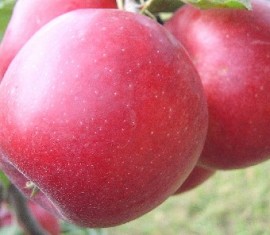
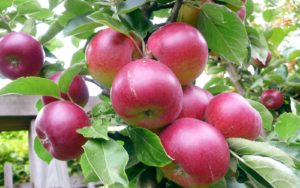 The fruits of this variety are quite large, for those considered summer varieties. They can weigh up to 160-200 grams. They are round, mostly regular in shape, but can be slightly flattened or, conversely, elongated towards the tip.
The skin is dense, smooth, and glossy, lacking an oily texture but may have a slightly bluish waxy coating. It is green or greenish-yellow in color. At maturity, 75-90% of the skin is covered with a beautiful, bright red or raspberry-colored blush. Subcutaneous punctures are few but very large, making them easily visible. The chemical composition is similar to most early varieties (per 100 grams):
- P-active substances – 107 milligrams.
- Ascorbic acid (vitamin C) – 12.2 milligrams.
- Total sugars (fructose) – 13%.
- Titratable acids – 0.19%.
The fruit's flesh is white, crisp, juicy, fine-grained, and prone to chipping when bitten. It has a very pleasant sweet flavor without the characteristic sourness, but these apples are not considered bland. According to expert tastings, Kovalenkovskoye apples score approximately 4.5-4.7 points out of a possible 5 for appearance and taste.
Kovalenkovskoye apple tree: characteristics
Crown and root system
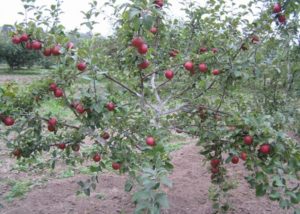 It is a medium-sized tree, growing to a height of 4-5 meters if left to its own devices. Crown At an early age, the bark is rounded and even spherical, remaining so until old age. It is moderately dense and densely covered with foliage. The shoots are curved, thick, and often geniculate. The bark is predominantly glossy, shiny, and smooth, brown to gray-brown in color, but may crack and crumble severely over the years.
The leaves are small, oval, slightly elongated, and pointed, without a distinct sharp tip. They are dark green or just green, leathery, and not glossy, but not matte either. The undersides are often slightly pubescent. The leaf margins are serrated, slightly serrated, and may be slightly raised. The tree's root system is superficial, highly branched, and adapted to the search for water.
Productivity and pollination
The variety produces consistently high yields, with trees bearing fruit every year without a break. A single mature tree can yield at least 95-110 kilograms of sweet fruit.
This variety is highly valued for the fact that it begins to bear fruit relatively early, already in the 2nd-4th year, and a full harvest can be expected by the 6th-8th.
The variety is completely self-fertile, meaning its pollen is sufficient to ensure fruit set and ripening. However, experienced gardeners and apple lovers note that when planted in rotation with other varieties, the harvest is larger. It's a good idea to place apiaries near the plantings to make it easier for insects to find the less fragrant apple trees during bloom.
Winter hardiness and disease resistance
This variety's tolerance to low temperatures is quite good, although frosts below -20-22°C will require additional cover. This means that if winters are milder, or severe cold spells are short-lived, no more than 2-3 weeks, the apple trees don't even need much cover. Moreover, some enthusiastic gardeners report successfully growing Kovalenkovskoye even in the southern part of the country. Siberia, although the fruits are harvested only in mid or even late September.
Apple trees have absolutely no immunity to fungal infections; they are susceptible to a wide variety of diseases and pests. Therefore, they require exceptional care. It's a good idea to prevent waterlogging, promptly clear the area around the trunk of fallen leaves or rotting fruit, and treat it with commercial fungicides and insecticides.
Rootstocks and subspecies
There are currently no subspecies of Kovalenkovsky, but it can be grown on various rootstocks to impart some of their properties. For example, on dwarf and semi-dwarf rootstocks, the tree will be shorter, while fruiting will remain within the same range, but winter hardiness will be reduced. Columnar rootstocks are not used for this variety, or there is currently no official information on this.
Features of growing Kovalenkovskoye
To get good annual fruiting from this variety, you will need to provide it with simple but regular care and observe certain points.
 Landing
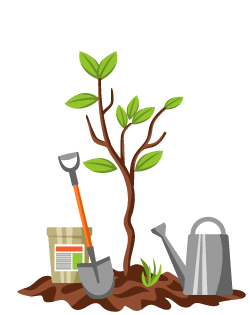 Landing
Basic conditions
- The apple tree needs to be located in a sunny spot. In the shade, apples gradually become smaller and may eventually die out. Don't forget about protection from wind, which this variety absolutely cannot tolerate; it can become susceptible to disease and even die. For protection, it's best to plant it under the shelter of walls, fences, hedges, or larger trees.
- Any soil can be used for planting, but slightly acidic loam is best. However, the tree will also grow well in sand or black soil if properly cultivated, fertilized, or limed.
- The apple tree prefers airy, well-drained areas, but stagnant water should be avoided. Near open water bodies and high groundwater levels (above 2 meters) are not the best locations for the Kovalenkovskiy.
- Holes should be prepared in advance, at least 3-4 weeks before planting, but it's best to do this in the fall. Remove some of the topsoil, mix it with fertilizer, return it to the hole, and water it with 40 liters of water. Leave the entire mixture in the open air. The optimal size is 70-80 centimeters deep and about 1 meter in diameter. These apple trees are typically planted in a 3 by 5 meter pattern.
- Stake trees should be dug into the holes immediately to support the seedlings. They should not be removed for 3-4 years.
- First, lay a 10-15 centimeter thick drainage layer. Vermiculite, broken brick, gravel, and even nutshells can be used. Some use polystyrene foam, but it can release toxic formaldehyde, which is absorbed by the fruit.
- Tree roots should be inspected, and any damaged, dry, or diseased ones should be trimmed if necessary. If they have dried out during transport, it's best to soak them in a bucket of water 2-6 hours beforehand.
- The trees are placed vertically in the hole, covered with soil, shaking it slightly to prevent air bubbles from forming, lightly compacted, watered with 40-50 liters of water, and mulched with humus.
Landing dates
Like most other apple trees, this variety can be planted outdoors in both early spring (April) and late autumn (September-October), after the leaves have fallen. In the first case, the tree begins to bear fruit earlier, while in the second case, it is more resistant to frost, disease, and cold winds. Seedlings with closed root system can be planted throughout the growing season.
Protection from frost and rodents
In warm regions with mild winters, trees can thrive without any cover at all. However, if temperatures drop significantly, it's best to take extra care of your apple trees. Straw bales or hay are placed around the root zone, and the trunks are wrapped with roofing felt, roofing felt, special agrofibre, burlap, and even nylon tights. Young or low-growing trees can be covered using the tent method, using the same burlap or tarpaulin, although the latter is somewhat heavy and can damage the branches.
To protect the delicate bark and shoots from hungry rodents during the winter, you can use rendered lard or grease. Simply coat the trunks one-third of the way with it; this is sufficient. To repel insects, whitewash the trunks with regular lime in the fall.
Tree care
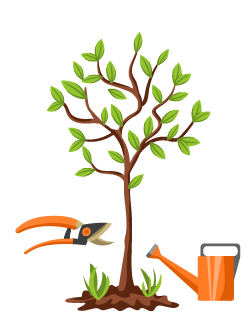 Tree care
Loosening the soil, watering: proper agricultural technology
The tree prefers airy soil, so it's a good idea to regularly dig around the tree's trunk. However, this should be done carefully, as the roots are located quite close to the surface. At the same time, you'll remove any weeds and shoots from other trees and shrubs that could rob the apple trees of nutrients.
Kovalenkovskoe prefers frequent and generous watering. At least 50-70 liters should be used at a time, divided into two waterings per mature tree, but overdoing it is also not recommended. If water stagnation occurs, powdery mildew or scab4-6 waterings during the growing season are sufficient, preferably timed to coincide with flowering, fruit set, and ripening. Watering should be completely stopped 2-4 weeks before the onset of frost.
Pruning: simple crown shaping
The first formative pruning is usually performed the year after planting. At that time, the central stem is shortened by approximately one-third, and all other branches are tiered lower. Thickening shoots and suckers (long branches that stick up vertically) should be regularly removed.
Sanitary pruning will also need to be done frequently. Any unhealthy shoots should be cut off: dry, diseased, damaged, or wilted. These branches can be cut year-round. It's best to immediately coat all cut areas with garden pitch or paint them with water-based paint.
Pollinator varieties
- Rennet.
- Chinese golden.
- Champagne.
- White filling.
- Pepinka.
Reproduction
- Clones (layering).
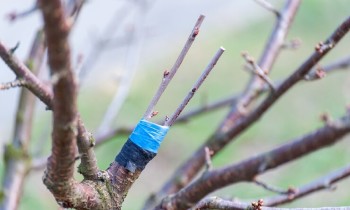
- Grafting by cuttings or buds.
- Growing from seeds.
Diseases and pests
- Scab.
- Powdery mildew.
- Cytosporosis.
- Black crayfish.
- * Moniliosis.
- Scale insect.
- Leaf roller.
- Green aphid.
Ripening and fruiting of the Kovalenkovskoye apple tree
The beginning of fruiting
 The beginning of fruiting
In the second year, or even the first year after planting outdoors, the tree may produce flowers and small apples. However, experts advise removing the ovaries immediately. The first harvest can be expected around the third to fifth year. While you shouldn't expect a large harvest, you'll definitely harvest 5-15 kilograms of sweet apples.
Flowering time
This variety blooms quite early, in early May, in the Caucasus, Crimea, and even Belarus. However, in more northern and eastern regions, the flowering period can shift significantly to the middle or even the end of the month. Consequently, the apple tree also begins to bear fruit later. Its flowers are white, moderately fragrant, and clustered in inflorescences of 4-6.
Fruiting and growth
The tree only produces a full harvest after 8-10 years of age, which is important to consider when choosing a variety for your garden. Moreover, the fruits don't ripen all at once, but rather one after another, making harvesting significantly more difficult. Furthermore, it's not yet possible to discern any patterns in this process.
In their typical mild climate, apples are typically harvested in August (the second or third ten-day period). However, in most regions of Russia, they haven't even reached technical, let alone consumer, ripeness by then. They can be stored in the refrigerator for 6-8 weeks, but in the cellar for only 3-4 weeks, which is considered very short. By this time, it's best to process any remaining fruit.
Top dressing
- Bird droppings.
- Manure.
- Compost.
- Humus.
- Peat.
- Ammonium nitrate.
- Urea.
- Ammonium sulfate.
- Superphosphate.
- Mineral complexes.
What to do if it doesn't bloom or bear fruit
- Apply fertilizer.
- Transplant to a sunnier location.
- Check for pests or diseases.
- Perform thinning pruning.
Why do apples fall?
- Overripe.
- Lack of moisture.
- Natural phenomena (wind, rain, hail).
- Diseases.
- Pests.
Please leave your feedback on the Kovalenkovskoye apple tree in the comments so that any gardener can learn from your experience.


Comments
Good afternoon, why are the data on winter hardiness and disease resistance so different from the VNIISPK website?