Apple tree Pervenets Rtishcheva: characteristics of the variety and care
| Color | Reds |
|---|---|
| Ripening season | Winter |
| Size of apples | Large |
| Taste | Sweet and sour |
| Crown type | Average tree height |
| Shelf life | High shelf life |
| Application | Universal variety |
| Winter hardiness | High winter hardiness |
| Fruiting age | Up to 5 years |
 History of origin and regions of growth
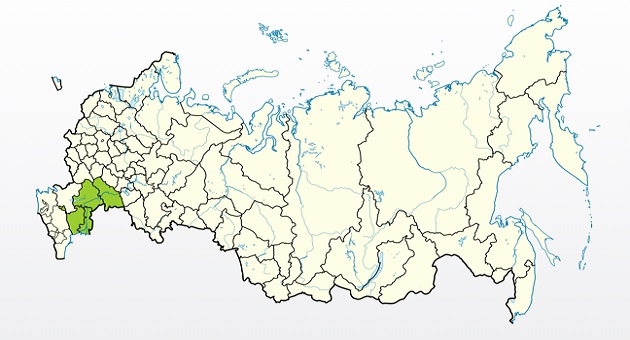
Growing regions
- Saratov region.
- Astrakhan region.
- Kalmykia.
- Volgograd region.
Origin
Work on this variety began in the late 1970s or early 1980s at the Saratov Experimental Gardening Station under the auspices of the N.I. Vavilov Saratov State Agricultural Academy. The variety's creator is Galina Viktorovna Kondratieva, a breeder, eminent biologist, and pomologist. It was she who first decided to cross the Volga Ranet and the Chinese Kandil, resulting in the new variety, named Pervenets Rtishcheva (the toponym of the administrative center of the Saratov region, Russia).
In 1990, the apple tree was first submitted for official variety testing. It was classified as an elite variety and sent to nearby farms, where it performed well. Just five years later, in 1995, Pervenets Rtishcheva was added to the State Register of Breeding Achievements and received zoning for the Lower Volga region.
Content
Description of the Pervenets Rtishcheva variety
 For over three decades, the apple tree has demonstrated numerous advantages, making it increasingly popular each year. It boasts exceptional environmental resilience, can grow even in large cities with severe air pollution, is tolerant of soil conditions, requires little maintenance, and produces fruit remarkably early.
The fruits of the Pervenets Rtishchev variety have a beautiful marketable appearance and a pleasant taste. They are regularly produced in large quantities, are easy to transport, and store until almost spring. This variety is recommended for individual cultivation and for use in commercial plantings in orchards in the Volga region.
Apples: What do they look like?
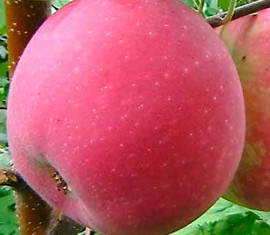
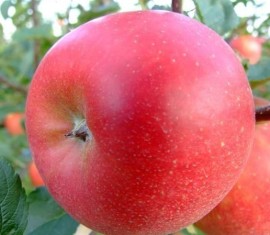
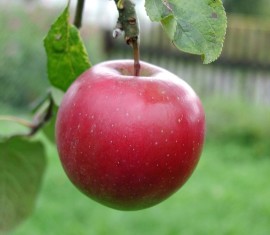
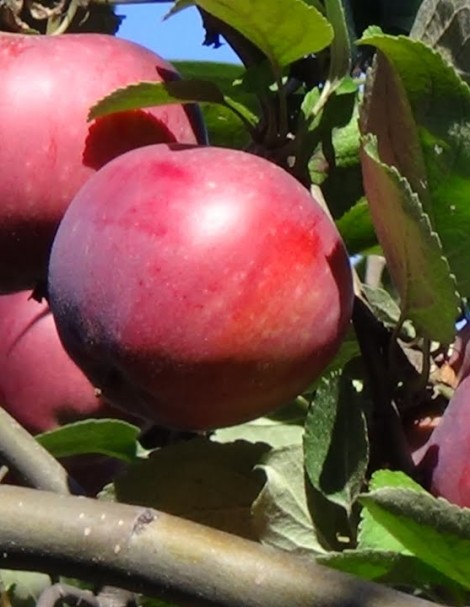
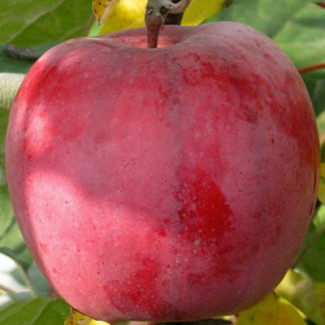
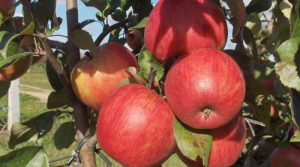 The fruits of this variety are larger than average, large to very large. They easily grow to 160-200 grams in weight and even more. On dwarf rootstocks, they can reach 350, 400, and even 500 grams with proper care in favorable years. They are round, but most often round-cylindrical, cup-shaped, and can be slightly turnip-shaped or cylindrical, and are generally symmetrical and uniform. The surface is slightly bumpy, widely ribbed, and the lateral seam may be visible in unripe apples.
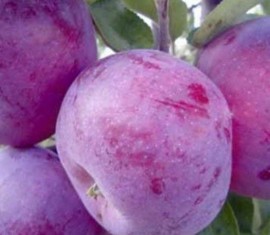
The skin is dense, firm, hard, and thick, covered with sparse grayish subcutaneous dots. The base color is green or greenish-yellow when fully ripe. The blush is very bright, red or slightly cherry-red, blurred and mottled, and covers almost the entire surface of the fruit. The chemical composition is assessed based on the following unique parameters:
- P-active substances (catechins) – 324 milligrams.
- Ascorbic acid (vitamin C) – 11.8 milligrams.
- Fructose (total sugars) – 12.3%.
- Pectins – 14.8%.
- Titratable acids – 0.76%.
The flesh has a beautiful, slightly creamy or lemony hue. It's fine-grained, dense, juicy, and has a pleasantly crisp texture, splitting off when bitten. The flavor is slightly spicy and winey, sweet and sour, balanced, and harmonious. Professionals give the apples a tasting score of 4.8 out of 5.
Apple tree Pervenets Rtishcheva: characteristics
Crown and root system
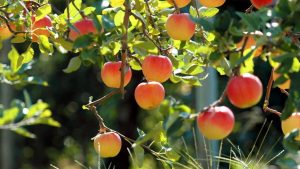 The trees have average growth strength, and the height of the trunks does not differ. The firstborn grows to a maximum of 4-4.5 meters, and even then, in the complete absence of formative pruning. The crown is rounded or broadly oval, heavily foliated, and may become slightly drooping over the years, but not weeping. The shoots are straight, long, thick, strong, round in cross-section, directed upward, and covered with gray-brown or millet-brown bark.
The leaves are medium to large, elongated, ovate or oval, leathery, dense, and short-pointed. They are glossy and highly shiny, smooth, with serrated, jagged, or serrated edges and delicate ribbing, dark green or emerald in color. The root system is well-rooted but not excessively deep. It is extensively branched, fibrous on most rootstocks, and has numerous small, fine branches.
Productivity and pollination
Gardeners love this variety because it can deliver a consistently high yield in any weather conditions and with virtually any care.
One mature tree of Pervenets Rtishcheva can produce at least 170-230 kilograms of very tasty and aromatic, long-lasting fruits during the growing season..
Apple trees are considered self-fertile, but only to a limited extent. If there are no suitable trees within 100-150 meters of the tree, a harvest will still occur, but the fruit will be much smaller. It's recommended to interplant, alternating several different varieties to ensure they become effective pollinators for each other.
Winter hardiness and disease resistance
Resistance to low temperatures is a hallmark of this apple tree. Not once, during all the variety testing, was any significant damage detected after prolonged and cold winters. Therefore, it's safe to say that temperatures of -32 to -35°C are completely unaffected, no matter how long they last. However, proper preparation and sheltering of apple trees should still be a priority.
Pervenets doesn't have a gene regulating immunity to scab or powdery mildew, but its resistance to these diseases is impressive. Even in the rainiest years, with record humidity levels, the apple tree remains free of fungal infections. However, preventative treatments for other diseases and antiparasitic sprays are recommended.
Rootstocks and subspecies
There are no subspecies of the Pervenets Rtishcheva variety, but apple trees can be grown on various rootstocks. The most popular options are dwarf and semi-dwarf varieties. These produce smaller trees, no more than 2-2.5 meters tall, but produce larger fruits. However, frost resistance is slightly reduced, but not significantly. These seedlings are suitable for a wide variety of farms, from a small plot in a country house to an intensive commercial orchard.
Peculiarities of growing the Firstborn of Rtishcheva
 Landing
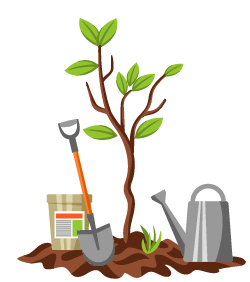 Landing
Basic conditions
- A sunny location is desirable for growing any variety of fruit trees. However, this apple tree can even grow in the shade, as long as it receives a couple of hours of ultraviolet rays per day. Therefore, where you plant the tree doesn't really matter, as long as it receives at least an hour or two of sun per day.
- It's best to keep the groundwater level at the planting site below the surface. If necessary, provide drainage, plant the trees on an artificial embankment, or create a special "water divider" by digging a sheet of slate or a layer of roofing felt at a depth of two meters. This will direct the rhizomes sideways, preventing them from reaching the water and causing rot.
- Leave 2.5-4 meters between trees, and the same distance between rows in dense commercial plantings. This will provide just enough space for the apple tree to thrive and bear fruit.
- You can prepare the holes for the Pervenets planting plant in advance, 6-9 months before planting. Dig the holes 70-90 centimeters deep and the same in circumference. Fertilize the bottom with minerals and organic matter, then cover with a thin layer of fertile soil from the top layer, and then water. In damp areas, it's best to use drainage, such as broken or crushed brick, nut shells, polystyrene foam, vermiculite, or gravel. The holes should remain uncovered, and should not be covered.
- When planting, the grafting site must be left above the soil surface to prevent the trees from taking root higher.
- You can also immediately drive supports into the holes – stakes, rods or planks.
- Place the seedling on a mound of soil or drainage material, spread the roots so they don't interfere with each other or bend, and widen the holes if necessary. Cover with soil, compacting it gradually and layer by layer by hand. Water with 30-40 liters of water, and mulch the surface to ensure maximum moisture retention.
Landing dates
Trees are so resilient and adapt so well to any conditions that it makes virtually no difference whether they are planted in early spring or late fall. This can be done before the sap begins to flow in March-April, when the soil has warmed completely and the threat of frost has passed. Alternatively, they can be planted in September-October, after the last leaf has fallen.
Tree care
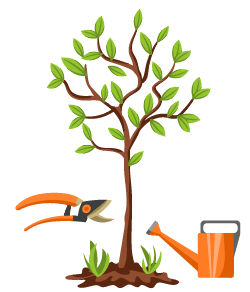 Tree care
Protection from frost and pests
In its region, standard wintering and sheltering measures are sufficient for the Pervenets. Watering should be stopped before September, for example, reducing watering from early August, and then completely stopping with the onset of autumn. The root zone can be covered with mats of straw or hay, spruce branches, or, in the harshest conditions, with raked soil. The trunks are wrapped with suitable fabric, such as spunbond or old tights. Small trees can be wrapped using a tent-like method, but this is usually not necessary.
Apple trees are whitewashed twice a year, in spring and fall, to prevent insects from developing a habit of nesting in cracks and broken bark. Coating the trunks with lard, rancid butter, grease, or fuel oil is a good way to repel rodents.
Loosening the soil, watering: proper agricultural technology
Apple trees need to be dug about once or twice a year for normal growth, which is sufficient. It's not recommended to dig too deep with a shovel, as this can damage the roots, which don't extend very far from the surface. Remove weeds, root suckers, and shoots from various shrubs and other plants. You can hoe the soil more frequently; for example, gently loosen and fluff it up the day after a heavy watering.
Watering doesn't necessarily require frequent application, but young trees require more additional moisture than mature ones. Five or seven waterings per season will be sufficient to meet the tree's needs. Fertilizers are also best applied mixed with water for better absorption.
Pruning: simple crown shaping
Pruning begins in the first year, cutting back the main stem to a height of approximately one meter. Two or three skeletal branches are also left at different heights and spaced far apart. Subsequently, simply adhere carefully to the prescribed pruning plan, allowing natural branching and preventing the tree from becoming overly dense.
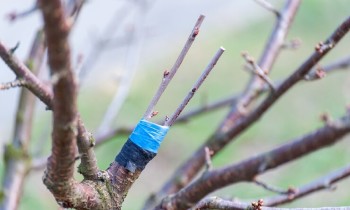
Every spring and fall, inspect the Pervenets for diseased, dry, or damaged shoots. If any are found, they should be pruned immediately. Branches growing inward and vertically protruding are removed; these will not provide any benefit and will obstruct air circulation. After 8-10 years, rejuvenation can begin, which will give the tree a longer, more active life. To do this, remove several mature skeletal shoots to allow the new shoots to develop.
Pollinator varieties
- Delicious golden.
- Indo.
- Idared.
- Gala.
- Askold.
- Antonovka.
- Borovinka.
- Korobovka.
- Marina.
Reproduction
- Grafting of cuttings or buds.
- Layers or clones.
- Growing from seeds.
Diseases and pests
- Cytosporosis.
- Pit bitterness.
- Bacterial burn.
- Fuzziness.
- Fleas.
- Flower beetle.
- Codling moth.
- Hawthorn.
Ripening and fruiting of the Firstborn of Rtishchev
The beginning of fruiting
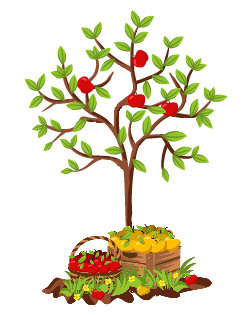 The beginning of fruiting
The variety bears fruit very early—another reason it's so popular with gardeners in the Volga region. It produces several dozen fruits in just three or four years. This can hardly be called a full harvest, but it certainly gives a good idea of what kind of variety it is.
Flowering time
A distinctive feature of this tree is its late flowering period. This helps the trees avoid freezing of buds, flowers, and fruit buds, which usually saves the harvest even in the most extreme conditions of unfavorable years. The tree's buds are a beautiful pinkish-reddish color, but when they open, they turn white or only slightly pinkish. The flowers are intensely fragrant, large, saucer-shaped, flattened, gathered in inflorescences of 5-8, and densely shed from the branches.
Fruiting and growth
You won't have to wait long for full fruiting. The trees grow quickly, adding 25-50 centimeters per year, which is why they increase their productivity very quickly. By the seventh or eighth year, you can harvest a full harvest. Dwarf varieties, which first bear fruit in the second or third year, can be harvested as early as the fifth or sixth year. At that point, you can expect to find over a hundred kilograms of fruit with good marketable qualities.
Pamyat Rtishcheva apples begin to ripen around the end of September or the beginning of October. It's not advisable to delay harvesting them too long, as the stems can't always support the weight of a ripe apple. The fruit may then fall to the ground and need to be processed immediately. Store the apples in a cellar or a special container. refrigerator until spring, and in suitable conditions they can last practically without losing their properties until the next harvest.
Top dressing
- Compost.
- Ammonium nitrate.
- Urea.
- Humus.
- Liquid manure.
- Minerals.
- Superphosphate and potassium sulfate.
What to do if it doesn't bloom or bear fruit
- Make sure there are no diseases.
- Check for pests.
- Increase watering.
- Feed.
- Transplant.
Why do apples fall?
- Natural weather conditions (wind, rain, hurricane, hail, frost).
- Pests.
- Diseases.
- Overripening.
Leave your original review of the Pervenets Rtishcheva apple tree variety so that every gardener can learn something new or simply refresh their knowledge.