Ligol apple tree: characteristics of the variety and care
| Color | Reds |
|---|---|
| Ripening season | Winter |
| Size of apples | Large |
| Taste | Sweet and sour |
| Crown type | Average tree height |
| Shelf life | High shelf life |
| Application | Universal variety |
| Winter hardiness | Average winter hardiness |
| Fruiting age | Up to 5 years |
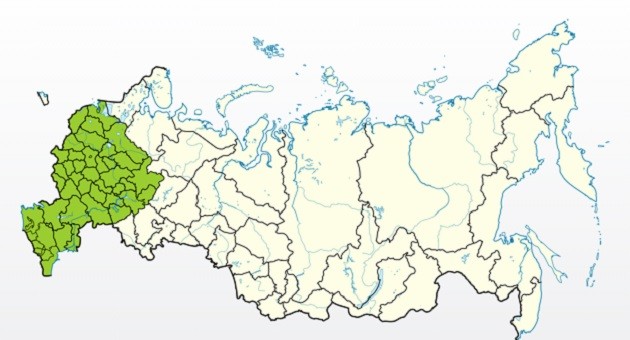 History of origin and regions of growth
Growing regions
- Middle zone.
- North Caucasus.
- Southern Federal District.
- North-West region.
Origin
The 1960s and 1970s saw an extraordinary surge in breeding efforts for apple trees, as well as other garden crops worldwide. Numerous new varieties were developed, better suited to specific climates while still producing a consistent annual harvest and requiring little maintenance.
One of these new varieties was a hybrid of Delicious Golden and Linda, hence the name Ligol. Research into its development was conducted in Skrniewice, Poland, at the Institute of Horticulture and Floriculture. It was successfully completed in 1972. From there, the apple tree was sent for testing and then imported to the Soviet Union. Afterward, the variety spread throughout Western Europe.
In 2018, Polish statisticians conducted a survey, according to which it turns out that residents of the more northern regions of Europe prefer this particular variety, while those in the south choose other apples.
Content
Description of the Ligol apple variety
 This winter variety is well known to almost all apple lovers. It is recommended for growing not only in small home gardens but also in commercial intensive orchards. Therefore, such large, juicy, and beautiful apples with a pleasant dessert flavor and a delicate yet powerful aroma are often found on the shelves of Russian stores.
Apples: What the Fruit Looks Like
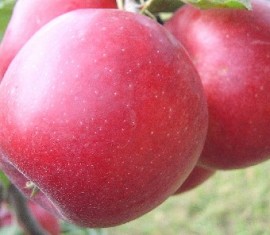
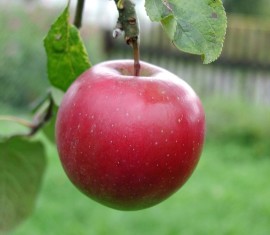
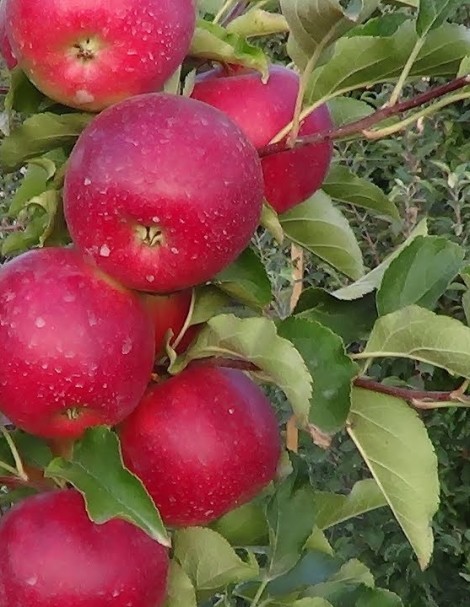
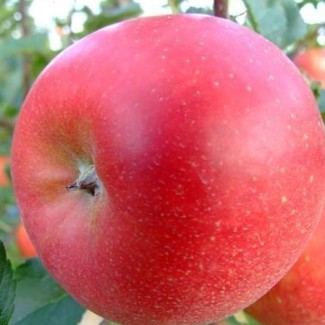
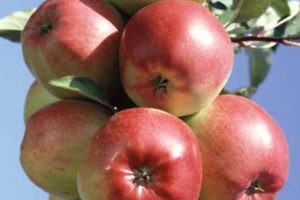 Ligol is one of the largest-fruited apples. The average fruit weight is no less than 200 grams, with 240-250 grams considered the norm. Some specimens easily reach 350 and even 400 grams. They have a round-conical shape, widening toward the stem.
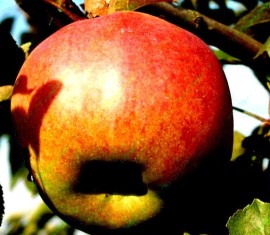
Apple skin is very dense, smooth, glossy, and shiny. Green when young, it turns yellow as it ripens, developing a beautiful orange or carmine-red blush. This blush covers approximately 65-70% of the fruit. Numerous subcutaneous spots, lighter in color than the skin, are clearly visible. The chemical composition can be characterized by the following indicators:
- P-active substances (catechins) – 179 milligrams.
- Vitamin C (ascorbic acid) – 10.1 milligrams.
- Pectins – 12%.
- Total sugars (fructose) – 12.8%.
- Titratable acids – 0.69%.
The flesh is white, with a slight cream or yellowish-cream tint. It's firm and crisp, slightly prone to chipping, making these apples easy to break in half. The apples' flavor is very balanced, sweet, with a slight, characteristic tartness, and is considered a harmonious dessert. The tasting score for the appearance matches the taste, with a score of 4.8.
Apple tree Ligol: characteristics
Crown and root system
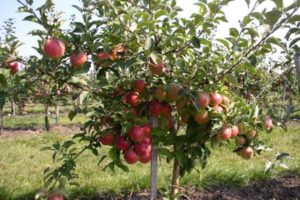 The tree is of medium height, since without additional crown adjustment it can grow no more than 4-4.5 meters.Most gardeners limit Ligol's growth to 3-3.5 meters. The tree grows vigorously for the first ten years, after which it begins to expand laterally. When young, it typically has a pyramidal, moderately dense crown, but becomes more spreading with age. Crown An adult tree can easily cover an area up to 4-5 meters in diameter.
The branches are positioned at an acute angle to the trunk, which often leads to their breaking off during fruiting. The leaves are small, light green, matte, yet dense and leathery. They lack a distinct, pointed tip, are slightly serrated at the edges, and are rounded and only slightly elongated. The tree's root system depends directly on the rootstock used, but is usually deep and branched, allowing the tree to easily find moisture at virtually any depth.
Productivity and pollination
Beginning with the first fruiting, which occurs approximately in the second or third year of life, the apple tree begins to actively increase its yield. It reaches a maximum of 150-170 kilograms per tree, which is very high for winter apples, by the fifth to seventh year.
However, there is a drawback: the variety's fruiting cycle is irregular, with no discernible cycle. This means it's virtually impossible to predict the next dormant year.
To reduce the number of such inactive periods, the crown should be thinned more frequently to remove branches growing inward, and flowering should be regulated. To do this, remove 40-75% of all buds during spring flowering, facilitating fruit formation.
The variety is self-sterile, although some apples can still be produced from an unpollinated tree. However, to ensure that more than 2-3% of the fruit develops, it's a good idea to alternate Ligol with other apple trees that bloom at the same time. Experienced gardeners also recommend setting up an apiary in the garden to help pollinating insects find the blooming trees more easily.
Winter hardiness and disease resistance
Although this variety was bred for a continental temperate climate, it has remarkable tolerance to low temperatures. A tree on a vigorous vegetative rootstock can easily withstand temperatures as low as -28-30°C. Dwarf and semi-dwarf varieties are more susceptible to cold, so it's best to cover them for the winter, especially if temperatures in your area drop below 17-20°C. To preserve the rhizomes, rake soil over them to a depth of 10-15 centimeters in the fall.
Ligol rarely gets infected scab or powdery mildew, as well as other fungal infections. This is because it tolerates excessive moisture. However, there is a risk of bacterial burn, after which all affected shoots must be removed immediately; they will definitely not be revived. The fruits themselves are also susceptible to disease if stored for a long time in improper conditions (lack of ventilation, temperatures above 10-15°C). A pitted bitterness and sunburned skin may appear on the surface of the fruit.
Subspecies and rootstocks
| Rootstocks | Peculiarities |
| Dwarf | In Russia, Belarus, and Ukraine, this hybrid is most often grown on M9 rootstock, while in Western Europe, the P-60 seedling is more common. Either method reduces the time to harvest, and the variety becomes early-bearing. However, frost resistance is significantly reduced. However, the trees grow no taller than 2.5 meters, making them easy to cover with tents. |
| Semi-dwarf | For this option, the vegetative rootstock 62-396 is used. The trees grow to a height of 3 meters, tolerate cold periods slightly better, and retain all the qualities and properties of the parent variety. |
| Columnar | In fact, a truly columnar Ligol doesn't exist, and if someone offers you such seedlings, it's most likely a scam. The most you can do is shape the crown into a spindle or a tall, narrow pyramid, but the variety will still lack the properties of a columnar variety. |
Features of growing Ligol
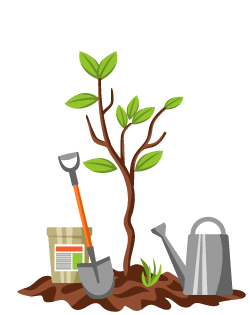
 Landing
 Landing
Key Features
- For Ligol, it's best to choose a location that receives full sun at all times. This factor directly influences the quantity, size, and quality of the fruit, their taste, aroma, as well as the color of the skin and blush.
- Never plant this variety in a drafty area, otherwise problems will constantly arise, as it does not like strong winds, although it does need ventilation.
- The best soil For planting seedlings, use sandy loam and loam soil, fertilized and drained as needed. It should be light and airy, so the black soil will need to be "diluted" with river sand brought in advance.
- Groundwater levels should be at least 2.5 meters deep, otherwise the root system will inevitably reach it and cause rot. For the same reason, apple trees should not be planted near open natural bodies of water.
- All planting holes for the variety should be prepared in advance, ideally in the fall, but if you miss the opportunity, 2-4 weeks will suffice. The optimal size is 80-90 centimeters deep and up to 1 meter in diameter. Mix some soil with fertilizer, pour it back into the hole, and leave it uncovered.
- The distance between trees or other plants should be at least 4-5 meters, so that in the future neither the roots nor the crowns conflict.
- Special stakes are immediately dug into the holes for tying. They should remain in place until the first full fruiting.
- The rhizomes are sprinkled with soil, gently shaken to remove air pockets, compacted lightly, and watered with 20-30 liters of water. The surrounding soil can be mulched with humus or compost.
Landing dates
Like most apple trees, Ligol can be planted either in mid-April in the spring, before the buds open, or in the fall, after the leaves have fallen. Experienced gardeners recommend choosing the latter option and planting in October. The survival rate is much higher this way, as the seedling has more time to adapt to the new conditions before it begins to develop foliage.
Protection from frost and rodents
Trees grown on vigorous rootstocks require no winter cover, even in the harsh temperate climates of the central part of the country. They easily tolerate significant temperature fluctuations, and even if they experience a slight frost, they recover very quickly. Although it's never a bad idea to cover the rootstock with spruce branches just to be on the safe side. However, dwarf and semi-dwarf trees require cover. In mild climates, straw bales or hay will suffice, but if winter temperatures drop significantly, it's better to create a kind of canopy over the trees.
Greasing tree trunks with lard or grease, or treating them with various industrial chemicals, can help keep hungry rodents away. To protect against insects, trunks and lower skeletal branches, up to a height of approximately one and a half meters, are whitewashed with lime starting in the fall.
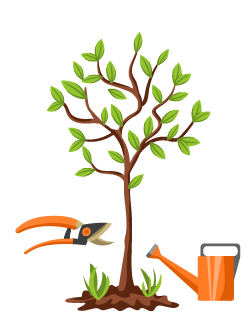
Tree care
 Tree care
Loosening the soil, watering: proper agricultural technology
The variety thrives in airy, light soil, so it's a good idea to regularly hill the soil and dig it fairly deeply twice a year. All root shoots, grass, weeds, and shoots from shrubs or other trees should be removed immediately, as they will rob the Ligol of nutrients.
Apple trees don't need watering; they can easily find water themselves. However, if the weather is extremely hot and dry, adding moisture to the soil is definitely a good idea, especially during fruit set and ripening. A good rule to follow is the 10-day rule, which states that you should water the plant when there has been no rain for exactly ten days. If rain does fall, count 10 days again and provide the roots with the necessary moisture. Various fertilizers and nutrient mixtures can be added along with the water.
Pruning: simple crown shaping
The most preferred crown shape, recommended by experts, is a spindle-shaped one. However, a wide cone-shaped form, tapering sharply toward the top, is also an option. The central trunk can be pruned for the first time in the year of planting, without removing more than a third of the branches at a time. All other skeletal branches should be 5-7 centimeters shorter than the central trunk, and the lower they are, the smaller they become.
The tree tends to become very dense, so all branches growing inward will need to be pruned frequently. At the same time, any shoots that stick up vertically (suckers) should be trimmed. Remove any damaged, diseased, or dead branches that only hinder the tree without providing any benefit.
Pollinator varieties
Reproduction
- Growing from seeds.
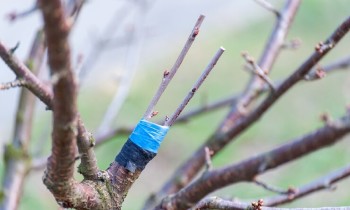
- Grafting by cuttings or buds.
- Layers (clones).
Diseases and pests
- Bacterial burn.
- Black crayfish.
- Cytosporosis.
- Fruit rot.
- Green aphid.
- Codling moth.
- Flower beetle.
Ripening and fruiting of the Ligol apple tree
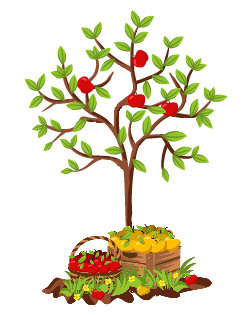
The beginning of fruiting
 The beginning of fruiting
Gardeners highly value the Ligol variety not only for its excellent flavor and long shelf life, but also for its exceptional early fruiting, especially on dwarf and semi-dwarf rootstocks. By the second year, the tree can bear several dozen apples, and by the third, it can yield at least 3-5 kilograms of large, juicy fruit.
Flowering time
Like most apple trees, the tree blooms in May. The exact timing will depend directly on the growing region, climate, and weather conditions. Typically, it blooms mid- to late May. The plant produces beautiful, large flowers that densely cover all branches. The scent of the blooming Ligol can be detected from far away, so there's no need to attract insects.
Fruiting and growth
The tree grows very rapidly. While in the third or fourth year, you can only harvest 5-10 kilograms of apples, by the eighth or tenth year, you can quite realistically get a full harvest. Unfortunately, the tree's lifespan and active fruiting period barely reaches 40-50 years, although older varieties are known to produce a good harvest. The tree itself grows 20-40 centimeters per year, but this growth is short-lived, lasting only 8-10 years, after which the apple tree expands in width.
The fruit reaches technical maturity in late September, but there's no need to rush to pick them. It's best to wait until October, when they develop their distinctive aroma. Consumer maturity coincides with technical maturity, but after 15-20 days of storage under the right conditions, the apples reveal a new side, becoming even juicier, sweeter, and more aromatic. They can be stored for up to 5-6 months in a well-ventilated cellar at a temperature of 1-5°C.
Top dressing
- Mineral complexes.
- Compost.
- Humus.
- Manure.
What to do if it doesn't bloom or bear fruit
- Trim thickening branches.
- Start or stop watering.
- Check for diseases or pests.
- Transplant.
Why do apples fall?
- Pest damage.
- Diseases.
- Natural phenomena.
- Strong thickening of the crown.
Share your experiences with Ligol in the comments below to share your experiences with other gardeners.