Apple tree Legend: characteristics of the variety and care
| Color | Reds |
|---|---|
| Ripening season | Winter |
| Size of apples | Large |
| Taste | Sweet |
| Shelf life | High shelf life |
| Winter hardiness | High winter hardiness |
| Fruiting age | Up to 5 years |
 History of origin and regions of growth
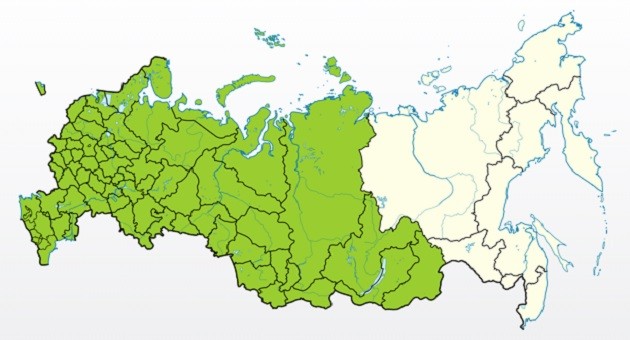
Growing regions
Thanks to its enviable frost resistance, this apple tree is recommended for cultivation throughout Russia, with the exception of some regions.
Origin
The renowned Russian breeder Viktor Valerianovich Kichina, a true pioneer in the cultivation of columnar apple trees in Russia, also created the Legenda variety. In the late 1970s, by hybridizing the Fuji and Brusnichnoe varieties, he created an entirely new variety with enviable winter hardiness and yield, while retaining the flavor and marketability of its "parents."
By 1982, the variety had already been tested on farms, classified as elite, and zoned. However, it was only in 2008 that it was added to the state register. Moreover, Legenda significantly outperforms its ancestors, as proven by numerous tests and studies.
Content
Description of the apple tree variety Legend
 This early-winter or late-season apple variety is just beginning to conquer the vast expanses of our country. Legenda boasts remarkable resistance to low temperatures, as well as drought and heat, and is early-bearing and high-yielding. Its fruits are delicious and keep well until the next harvest. It is recommended for growing in both small garden plots and commercial intensive orchards.
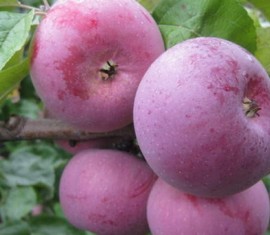
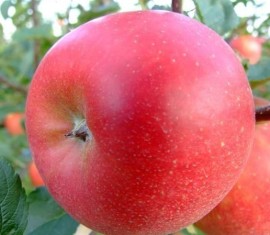
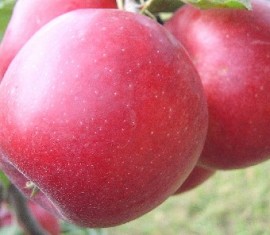
Apples: What they look like
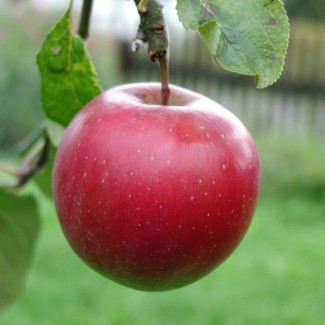
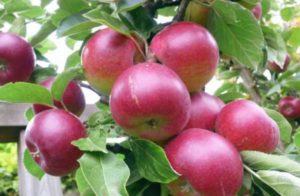 Most fruits grow on rings and are quite large, reaching 150-170 grams. However, in some cases they can be even larger, up to 200-250 grams. The apples are equal-sized, round, and may be slightly flattened, with no pronounced ribbing.
The skin is green when young, turning yellow with age. It develops a beautiful bright red blush covering 75-90%. The apples' surface is firm, smooth, and glossy, and may have a slight waxy coating that gives them a bluish tint. The chemical composition is characterized by the following indicators per 100 grams of product:
- P-active substances – 263 milligrams.
- Ascorbic acid (vitamin C) – 10.2 milligrams.
- Total sugars (fructose) – 11.4%.
- Titratable acids – 0.4%.
The apples' flesh is tender but quite dense, fine-grained, and juicy, with a slightly greenish or yellowish hue and a very powerful and vibrant aroma. It has a pleasant, harmonious, and balanced caramel-like sweet flavor with a slight tartness in the aftertaste. The tasting score for appearance is only 4.6 out of 5, but the flavor is a whopping 4.9.
Apple tree Legend: characteristics
Crown and root system
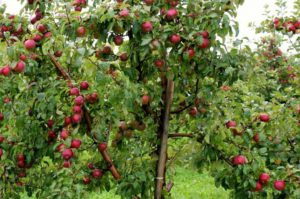 The tree is considered medium-sized, although under normal conditions without pruning it can reach 2.5-3 meters. CrownThe tree, initially spherical, remains so. It is moderately spreading, moderately dense, with short, thin, and flexible shoots. Most of the branches extend from the tree at almost a right angle. The bark is a steel-gray color, fading to light brown at the tips of the branches. Over the years, it can become very rough, crack, and begin to crumble.
The leaves are dark emerald, oblong, medium-sized, with pointed tips and a serrated edge. They are most often smooth, glossy, and leathery, with no pubescence on the outer surface and only a slight pubescence on the inner surface. The root system usually depends on the rootstock used. It is branched, may have a central taproot, or not, and may be deeply embedded or shallow.
Productivity and pollination
Legend is considered a very high-yielding variety, as the tree is quite compact but can easily produce up to 100-120 kilograms of fruit per year. However, such yields are only possible if all the recommended growing practices for this variety are followed.
The variety is conditionally self-fertile, meaning it doesn't need other apple varieties to bear fruit. However, at best, this method yields no more than 25-50% of the ovaries developing into apples. If Legend is planted in rotation with other varieties, the yield will reach the coveted 100%.
It's good to have an apiary near the garden, as this will make it easier for pollinating insects to find the apple trees and do their work.
Winter hardiness and disease resistance
This variety exhibits truly revolutionary resistance to low temperatures. Even two-year-old seedlings can withstand harsh weather conditions, temperatures down to -20°C, and strong winds for extended periods. However, in northern temperate climates, it's best to protect them from frost, as stress can still lead to reduced fruiting and stunted growth.
Legenda lacks genetic immunity to scab and other fungal infections, such as powdery mildew. However, it exhibits significant resistance to them. With consistent and proper tree care, the risk of infection can be completely avoided.
Rootstocks and subspecies
| Rootstocks | Peculiarities |
| Dwarf | The M9 rootstock is most often used to grow this type of tree. While the tree begins to bear fruit as early as the third year after planting, its frost resistance and lifespan are reduced. However, it becomes compact and simplifies harvesting and maintenance. |
| Columnar | This is the most common cultivation method for Legenda, as the apple tree grows very small, up to 2 meters tall, and lacks lateral scaffold branches. This is why this subspecies is recommended for intensive commercial orchards. |
Features of growing Legend
 Landing
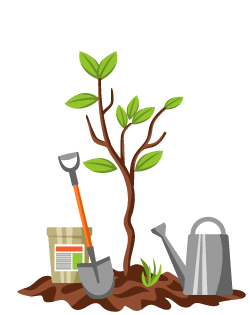 Landing
Basic conditions
- Sunny, well-ventilated areas are best for planting this variety. If space is only available on a slope, choose an east- or south-facing site.
- Ideally, choose loam, sandy loam, floodplain, or leached chernozem. It should be airy and not too crowded, otherwise the tree will feel uncomfortable.
- It's best to prepare the holes in the fall, but if that's not possible, then at least 3-4 weeks before planting. To do this, dig holes 80 centimeters deep and 1 meter in diameter. Mix the top layer of fertile soil with fertilizer and add it to the bottom. Add 20 liters of water and leave it outdoors.
- The distance between trees depends on the rootstock. For columnar and dwarf apple trees, 1-1.5 meters is sufficient, while for vigorous vegetative apple trees, 2.5-3 meters is better.
- A stake should be immediately inserted into the hole to tie up the seedlings; it is not recommended to remove it for the first three years.
- The root collar should protrude at least 6-8 centimeters above the surface to prevent the trees from rooting above the rootstock. If this happens, all its properties will be completely lost.
- Before planting, seedlings are soaked in water for several hours to allow the roots to absorb moisture. Damaged, dry, or rotten roots are trimmed with pruning shears.
- The tree is placed vertically in the hole, covered with soil, and watered, adding more soil as needed. Another 20-40 liters of water are poured on top, and the tree is mulched with humus, chopped grass, or manure.
Pay attention to the groundwater level, as this is a very important indicator. It should be no closer than 2-2.5 meters, otherwise the tree will inevitably reach it with its roots and begin to rot. If there is no other option, you can create a barrier for the seedling. To do this, dig a hole 1.5-2 meters deep and lay a sheet of slate or a layer of roofing felt. After this, fill the hole to the desired depth, and proceed as usual.
Landing dates
All standard planting timing recommendations apply to Legenda. This can be done in the spring, in April, or early May, before the sap begins to flow in the trunks. However, the second method, the autumn one, is more advantageous. In this case, it's best to plant apple trees in the second half of September or early October, after the leaves have completely fallen.
Protection from frost and rodents
Preserving apple trees during severe frosts doesn't require any special tricks, as they easily tolerate temperatures below -27-30°C. Even first- to third-year seedlings can withstand such cold without losing their fruit. However, covering the root zone with spruce branches, straw bales, or hay wouldn't hurt. If the frost reaches -40°C, you can even make a burlap shelter to be on the safe side.
To discourage insects from wintering in the root zone, trunks and lower skeletal branches are whitewashed with lime. But this doesn't protect against hungry rodents, which migrate closer to human habitation during the winter. Solid oil, rendered lard, or a special product applied to the lower part of the trunk can be used to repel them. It is said that even deer are reluctant to feast on shoots smeared with lard.
Tree care
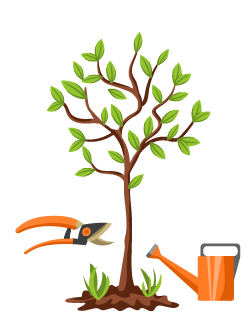 Tree care
Loosening the soil, watering: proper agricultural technology
To improve aeration in the tree's trunk area, the soil there should be loosened regularly and thoroughly dug twice a year. Weeds, grass, shrub and other tree shoots, and root suckers should also be removed from under the tree. All of these will rob the tree of some of its nutrients.
Watering Legende isn't absolutely necessary, as its deep root system can find water at any depth. However, it can be watered four times a season with 40-60 liters during the periods when inflorescences are forming and fruits are ripening, but no more often than once every two weeks, and only if there has been no natural precipitation during this period.
Pruning: simple crown shaping
Interestingly, pruning for this variety—both formative and sanitary and rejuvenating—is recommended not in the fall, but in the spring, starting two years after planting outdoors. Choose a time before the buds begin to open; if you're late, it's best to skip the season altogether. Shorten the main stem by a third, as well as all branches, so they're arranged in tiers below it.
Pollinator varieties
- Brotherchud.
- Alesya.
- Imrus.
- Christmas.
- Spartan.
- Garland.
- Enchantress.
- Rennet.
Reproduction
- Clones (layering).
- Rooting by cuttings.
- Grafting by cuttings or buds.
- Growing from seeds.
Diseases and pests
- Scab.
- Powdery mildew.
- Cytosporosis.
- Leaf roller.
- Flower beetle.
- Green aphid.
- Hawthorn.
- Codling moth.
Ripening and fruiting of the Legend apple tree
The beginning of fruiting
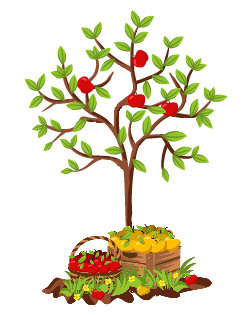 The beginning of fruiting
This variety is called early-bearing for good reason, because under favorable conditions, it will bloom in the first year after planting, and even produce a few red-sided apples on the tree. However, experienced gardeners advise removing all blossoms in the first and second years. This will give the apple tree time to develop branches and roots, strengthen, and adapt to the new conditions. Therefore, the official start of fruiting is considered to be the fourth or fifth year after planting.
Flowering time
Like most apple trees, Legenda doesn't begin to bloom until mid-May. However, if spring isn't too early, and frosts persist throughout March, flowering can be delayed until early June. The flowers themselves are large, beautiful, white with a slightly greenish tint, and very fragrant. The process isn't long, but if there's constant rain, it can last 7-12 days.
Fruiting and growth
The tree bears fruit regularly without resting periods until old age, and its lifespan has not yet been fully determined. Full harvests can be collected in the 9th or 10th year, when the trunk has fully formed and gained height and foliage. At this point, yields will begin to approach the coveted 100 kilograms or more.
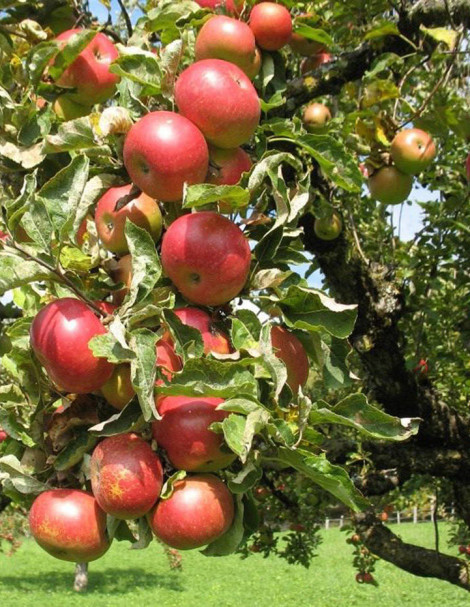
Apples ripen in September or even early October. They hold tightly to the branches, so there's no need to worry about them falling off when they're overripe, so there's no need to rush the harvest. However, it's better to harvest early and store them in the cellar rather than let them freeze. In that case, all the apples will have to be processed immediately. Legend apples have a shelf life of 90-100 days in a well-ventilated cellar at a temperature no higher than 6-10°C.
Top dressing
- Peat.
- Compost.
- Manure.
- Humus.
- Ammonium nitrate.
- Urea.
- Potash fertilizers.
- Ammonium sulfate.
- Mineral complexes.
- Superphosphate.
What to do if it doesn't bloom or bear fruit
- Transplant.
- Feed.
- Check for diseases or pests.
- Perform pruning.
Why do apples fall?
- Pests.
- Diseases.
- Natural weather phenomena.
- Lack of fertilizers.
- Excessive humidity.
Leave your review of the Legend apple tree in the comments so that any gardener can learn from your experience.