The Ulyanishchev Memory apple tree: characteristics of the variety and care
| Color | Reds |
|---|---|
| Ripening season | Winter |
| Size of apples | Large |
| Taste | Sweet and sour |
| Crown type | Average tree height |
| Shelf life | High shelf life |
| Application | Universal variety |
| Winter hardiness | High winter hardiness |
| Fruiting age | Up to 5 years |
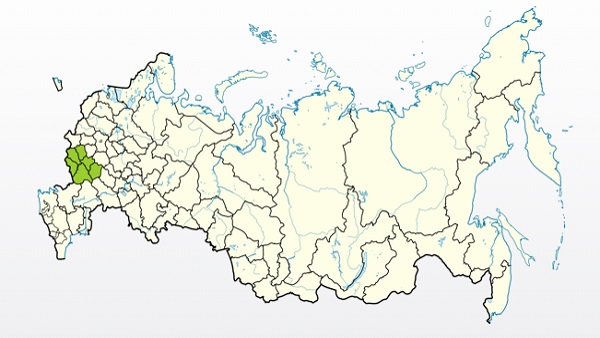 History of origin and regions of growth
Growing regions
- Kursk region.
- Oryol and Tambov regions.
- Belgorod region.
- Voronezh region.
- Lipetsk region.
Origin
This new apple variety was bred with a number of requirements in mind: early fruiting, high yields, winter hardiness, long shelf life, and good consumer and commercial qualities. Work on it was conducted at the Rossoshanskaya Fruit and Berry Station of the I.V. Michurin All-Union Institute of Horticulture. The project was led by the renowned scientist Mikhail Mikhailovich Ulyanishchev. It was in his honor that the variety was named. He led a team of breeders consisting of his wife, A.M. Ulyanishcheva, N.A. Polyakova, and A.I. Kolodiy.
The work was carried out through a multi-stage crossing of two main varieties: Michurin's Kandil-Kitaika and Welsey, from which the new seedling was expected to inherit frost resistance. This resulted in two hybrids (2n-21-62 and 2n-24-62), the crossing of which produced a new variety named "Pamyat Ulyanishcheva." This complex and lengthy project had to be completed without the project's principal director, who died in 1972. As a result, the application for elite classification and inclusion in the State Register was only submitted at the dawn of the new century. In 2004, the variety was included in the State Register and zoned for the aforementioned regions.
Content
Description of the apple tree variety 'Memory of Ulyanishchev'
 The variety's early fruiting and high yield, coupled with a very moderate growth rate, are its best attributes. Furthermore, it boasts resistance to low temperatures, excellent fruit flavor, low-maintenance trees, easy harvesting, and long-term storage. This is precisely why Pamyat Ulyanishcheva is in demand on the market, even though its properties have not yet been fully researched. It is recommended for cultivation in commercial intensive gardens and small plots near the home.
Apples: What they look like
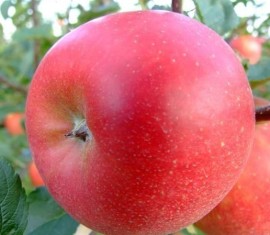
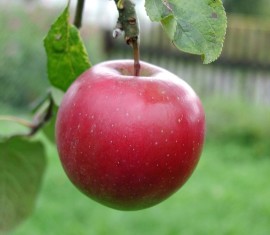
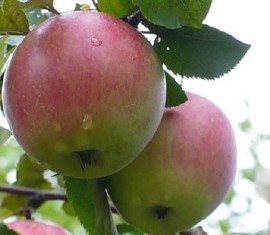
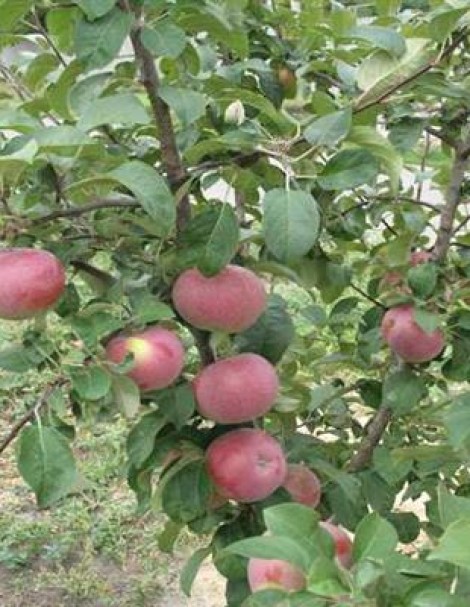
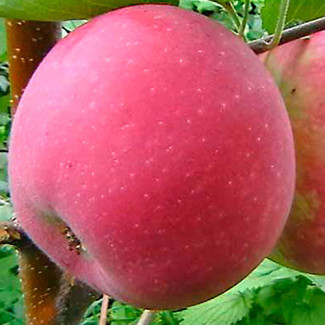
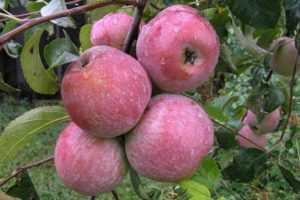 The variety's fruits are large to very large, with apples predominantly weighing approximately 180-220 grams, but some weighing 250-300 grams. They are round, mostly uniform, and can have a slightly conical, truncated, or elongated shape, reminiscent of a barrel. The ribbing is soft and almost unnoticeable.
The skin is glossy and dense, but can crack from excessive moisture or mechanical damage. It is green, turning white as it ripens. The blush covers more than 70-85% of the surface; it is blurred and streaky, bright pink or crimson. The surface has a dense, waxy, bluish-gray coating. Subcutaneous dots are numerous, light green, light green, or grayish-green, large, and clearly visible. The chemical composition can be characterized by the following indicators per 100 grams:
- P-active substances (catechins) – 314 milligrams.
- Ascorbic acid (vitamin C) – 9 milligrams.
- Total sugars (fructose) – 16%.
- Pectins (fiber) – 5%.
- Titratable acids – 68%.
The fruit's flesh is medium-firm, fine-grained, crisp, prickly, yet very tender, and snow-white. The skin can have a light cream or lemon tint. It's very juicy, sweet and sour, and has a powerful, distinctive aroma. The flavor is considered balanced and harmonious, reminiscent of a dessert. Experts have given it a 4.7 rating, with a possible 5 for appearance and flavor.
Apple tree 'Memory of Ulyanishchev': characteristics
Crown and root system
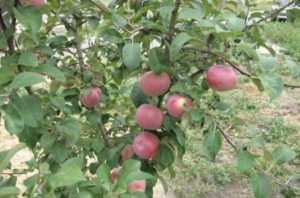 Trees of this variety are considered medium-sized or natural semi-dwarfs. They stretch no more than 3.5-4 meters, and with proper training and pruning, they can reach heights of 2.5-3 meters. This makes maintenance and harvesting much easier. The crown is quite compact, usually oval or rounded, and does not tend to become overly dense. The branches do not intertwine and are covered with brown or greenish-brown, smooth, glossy bark, which may be moderately pubescent in some areas. Fruiting is mixed, meaning fruits ripen on the spears, rings, and fruiting twigs.
The leaves are oval, rounded, slightly elongated, large, leathery, dense, green or bright green. The edges are serrated, crenate, and may be slightly wavy, with a short, pointed tip. The root system is branched and medium-deep. Depending on the rootstock used, it may have a central taproot.
Productivity and pollination
Despite the tree's small size, it produces impressive yields regularly, without resting. Moreover, the yield increases very quickly, within just a few years of fruiting.
One mature Ulyanishcheva tree can produce approximately 95-120 kilograms of large, tasty, and aromatic fruits per season..
One of the variety's main advantages is its complete self-fertility. To obtain a good harvest, it's not necessary to have other apple varieties nearby that bloom at the same time. However, in this case, you can expect no more than 55-70% of the maximum possible yield. Interplanting with other varieties within 35-50 meters will ensure a 100% yield.
Winter hardiness and disease resistance
This apple tree is considered cold-hardy, as was intended during its breeding. It tolerates sudden temperature fluctuations, from thaws to severe frosts. Withstanding temperatures of -29-35°C (-22-95°F) is no problem for a mature tree. The tree doesn't suffer much from frost, even when cold spells persist for more than 3-4 weeks, and even minor damage is quickly recovered.
This variety is not immune to scab, as is the case with most other fungal infections. Therefore, if it is affected by the disease, it occurs rapidly and in large quantities. Typically, it affects not only the foliage but also the fruit, which should be disposed of immediately and never buried within the garden or plot. Therefore, all preventative measures and regular treatments should be taken promptly to prevent disaster.
Rootstocks and subspecies
This variety is fairly new, so no subspecies are known yet, although breeding efforts are ongoing. It is typically grown on clonal standard rootstock, but dwarf and semi-dwarf varieties can also be used. In all cases, the plant's performance remains within the normal range of the parent plant.
Peculiarities of Growing Memory of Ulyanishchev
 Landing
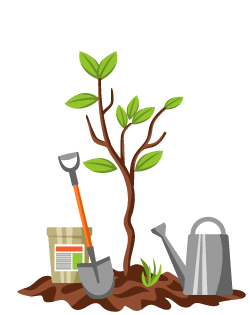 Landing
Basic conditions
- Apple trees should always be planted in open, sunny areas, otherwise they will become diseased, grow weak, and bear fruit poorly, producing small, sour fruits.
- It is important that there are no drafts in the planting area, which can also destroy young trees.
- Pamyat tolerates almost any soil. It thrives in black soil, loam, or sandy loam, quickly gaining green mass. However, you'll need to monitor salinity and acidity; they should be within normal limits.
- It is important to pay attention to the groundwater level; it should not be higher than 2.5-2 meters, otherwise the rhizome may begin to rot.
- Prepare the holes 3-7 days before planting, but doing it earlier, as is common with other varieties, won't hurt either. Dig holes 75-90 centimeters deep and the same in diameter, then fill the bottom with fertile topsoil, additionally mixed with organic fertilizer. Top the entire hole with a 10-centimeter layer of drainage material, and add plenty of water.
- The root collar of the tree should be left above the soil surface no more than 2-5 centimeters, otherwise it will not take root higher.
- A distance of 3.5-4 meters is typically left between trees in rows, and 2.5-3 meters between rows is sufficient. This will prevent future adult tree trunks from clashing with each other, either through their crowns or root systems.
- Stakes, either metal or wooden, are immediately driven into the holes and the seedlings are tied to them. They can be removed after the second or third year of fruiting.
- Place the tree vertically on a mound of drainage material, supporting it with your hand. Cover it with soil, compacting it lightly. Water the tree with 25-35 liters of water, preventing the soil around the trunk from eroding. The surface is mulched with suitable materials.
Landing dates
Apple trees should only be planted during their dormant period, that is, before the sap flow in the trunks has either begun or already ended. In spring, this period is around March or early April, when the risk of recurrent frosts has passed, but the buds have not yet opened. In autumn, it's best to plant after the leaves have fallen, around late September or October, with about 3-4 weeks remaining before the first frost.
Protection from frost and rodents
This variety is considered winter-hardy, but it still requires some care, especially if a severe, frosty winter is expected. The trunks are usually wrapped in roofing felt, agrofibre, roofing felt, or burlap, and thick mats of straw or dry grass are placed around the roots. A layer of soil approximately 10-15 centimeters deep can be piled up, but this will need to be removed in the spring.
To protect against rodents, tree trunks are coated with aromatic lard or grease, which repels them. To get rid of insects that begin to damage leaves, bark, and even wood in the spring, tree trunks are whitewashed with ordinary lime to a height of 1.2-1.5 meters. Regularly treating tree trunks with insecticides and fungicides is also a good idea; this will protect not only from pests but also from fungi.
Tree care
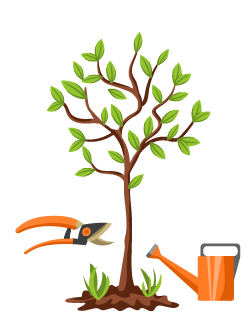 Tree care
Loosening the soil, watering: proper agricultural technology
Once a year, the soil around the apple tree trunks should be dug up. This should be done carefully to avoid damaging the roots located close to the surface. At the same time, you can remove weeds, basal shoots, and shoots from shrubs and other trees. Throughout the summer, you can hoe the soil to allow oxygen to reach the root system. For ease of maintenance, you can sow insect-repellent herbs (codling moth, hawthorn, etc.) between the trees. scale insect). Dill, mustard, marigolds, and even tomatoes will do the job well.
It's best to water this type of apple tree regularly, about 5-7 times per season. It's important not to overdo it, as excess moisture can cause fungal infections. You can also feed the trees and fertilize the soil at the same time.
Pruning: simple crown shaping
Starting from the first year of planting in open ground, it's essential to do so. The central stem is shortened to 85-90 centimeters, but no more than one-third. Skeletal branches are spaced widely apart in tiers and shortened accordingly by 5-7 centimeters. Subsequently, simply maintain the desired proportions.
Regular sanitary and thinning pruning will be necessary. During this time, all damaged, dry, or diseased shoots are removed. Branches growing inward or sticking out vertically (suckers) should be pruned. After 10-15 years, rejuvenation pruning can be performed, removing 2-3 mature branches to allow new growth to develop.
Pollinator varieties
- Ural Bulk.
- Bellefleur the Chinese.
- Xenia.
- Ligol.
- Uralsk resident.
- Lingonberry.
- Welsey.
Reproduction
- Rooting cuttings.
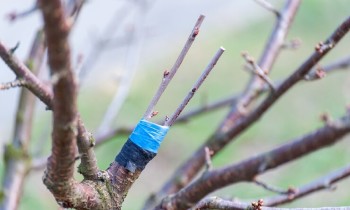
- Grafting by buds and cuttings.
- Growing from seeds.
Diseases and pests
- Scab.
- Moniliosis.
- Powdery mildew.
- Tinder fungus.
- Scale insect.
- Hawthorn.
- Green aphid.
- Codling moth.
Ripening and fruiting in memory of Ulyanishchev
The beginning of fruiting
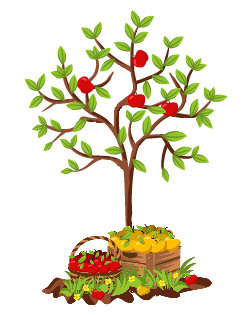 The beginning of fruiting
Semi-dwarf and dwarf varieties begin to bloom very early, and this variety is no exception. Flower buds can be seen as early as the second year, but it's best to pluck them immediately. Fruiting is best allowed to begin around the third to fifth year after planting outdoors. A harvest of approximately 10-15 kilograms of fruit can then be harvested.
Flowering time
The buds of the Ulyanishcheva Pamyat apple trees begin to bloom as early as mid-May. However, this can vary depending on the weather and general climate conditions in the growing region. Sometimes apple trees begin blooming early in the month, and sometimes at the very end of the month. The process lasts approximately 10-14 days, allowing for cross-pollination to occur. The trees produce large, saucer-shaped flowers, white or slightly pinkish, fragrant, gathered in clusters.
Fruiting and growth
Apple trees of this variety increase their yield very quickly. As early as 6-8 years after the start of fruiting, maximum fruit sizes of up to 100-120 kilograms can be achieved. Moreover, the trees grow slowly, gaining 15-25 centimeters in a single season.
Apples are typically harvested in early to mid-September, when they reach technical maturity in warmer regions, and in early to mid-October in cooler climates. They ripen uniformly, almost all at once, so a separate day can be set aside for picking. Consumer maturity will require another 1-3 weeks, or even better, a month, to allow the sugars in the fruit to carmelize. They can be stored until approximately the end of February or early March. Sometimes, in specialized locations with the appropriate humidity and temperature, they can be stored without worrying about shelf life until the next harvest.
Top dressing
- Superphosphate.
- Compost.
- Mineral complexes.
- Humus.
- Ammonium nitrate
- Manure.
What to do if it doesn't bloom or bear fruit
- Check for pests and diseases.
- Transplant.
- Limit or increase watering.
Why do apples fall?
- Overripe.
- Natural factors.
- Pests.
- Diseases.
Leave your feedback on the winter-hardy Pamyat Ulyanishcheva variety to share your experience with others.