Rust on apple tree leaves: how to combat rust spots and how to treat the tree
Spots on apple tree leaves are quite common. However, their appearance should be a warning sign for gardeners, as it indicates some type of infection. One of the most common and dangerous diseases is rust, which causes significant damage to garden crops.
Content
Characteristics of the disease
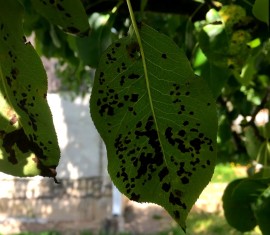
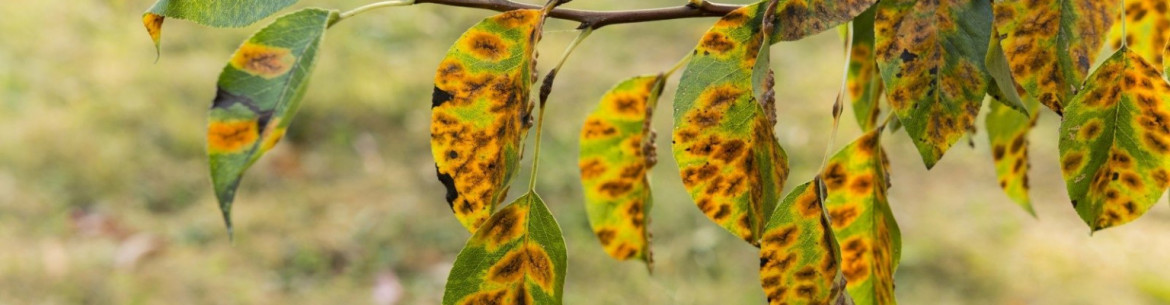
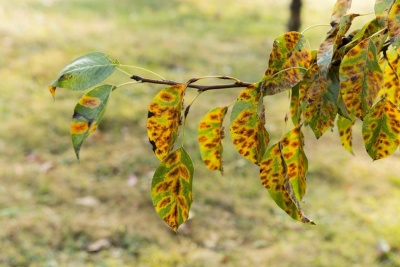
Another name for rust is rusty fungusThe disease manifests itself as follows: pad-like growths of varying sizes and shapes, called pustules, appear on affected leaf blades. When these pustules crack, fungal spores, resembling a rusty powder, spill out and infect everything around them.
Symptoms that appear
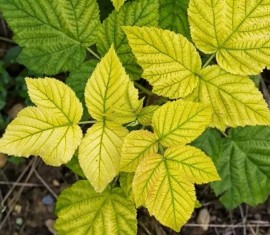
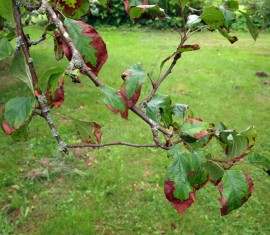
Signs of rust appear in late spring or early summer, when trees are actively leafing out. Initially, small yellow-green spots of irregular size form. Later, they turn bright red and spread across the entire surface. Fungal spores draw moisture from all vegetative parts of the tree, causing them to dry out and die. In advanced stages, lesions spread to the trunk bark and young shoots.
If rust appears, treatment must be started immediately, otherwise the tree will stop growing, cease bearing fruit, and eventually die.
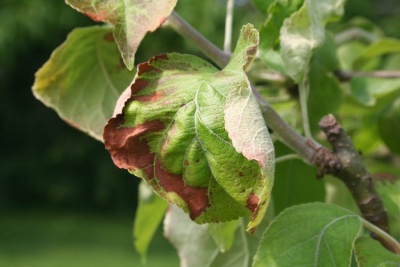
The danger of rust lies in its ability to quickly spread to other plants. This reduces their yield, winter hardiness, and the initial quality of the fruit.
Causes of rust on apple trees
The formation of red spots on leaves is caused by several factors:
- Incorrect planting location. This is especially true for coniferous trees; for example, junipers are considered a carrier of this infection. Wind and rain easily carry spores to nearby apple trees.
- Insufficient saturation of the soil with nutrients: nitrogen, copper, boron, phosphorus, iron, potassium, manganese, magnesium.
- Reduced immunity of trees due to improper care.
Fruit orchards grown in dry regions with higher temperatures are most susceptible to rust disease, as this environment provides an ideal environment for the development of this infection.
Apple tree processing algorithm
Treatment of a garden affected by rust is carried out in stages; trees are subjected to three treatments during the year.
Provided that the apple tree suffered from rust last season, the first spraying is carried out before the beginning of the growing season.
Otherwise, treatment measures are carried out according to the following scheme:
- before bud break;
- during the period of bud formation or after flowering;
- 14 days after the second treatment.
Awareness of apple trees of conditions that prevent the occurrence and development of fungal diseases, in combination with spraying with antimicrobial agents, will allow for maximum results.
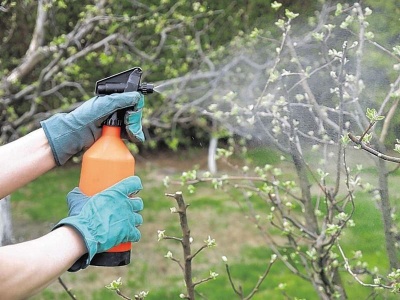
According to experienced gardeners, when carrying out treatment measures, it is worth adhering to a special algorithm:
- At the beginning of the growing season, use for spraying the crown Bordeaux mixture (2%). During bud formation, repeat the procedure, reducing the concentration to 1%. The final crown spraying should be performed when the fruits are in the ripening stage.
- Treat the garden a second time in the same phases, but use other preparations in the following sequence: copper sulfate (1%), copper oxychloride, "Oxychom".
- The third treatment should be carried out with “Kuprosil” or Bordeaux mixture (1%).
Treatment methods and preventive procedures
Completely eliminating the disease is only possible by eliminating its sources. This requires working on several fronts simultaneously. Let's look at what to do and how to combat rust on apple tree leaves.
Activities aimed at improving health
 Fungal infections primarily affect trees with weak immunity. The following guidelines will help increase tree resistance to disease:
- maintaining the required interval when planting seedlings;
- avoiding the proximity of apple trees to coniferous trees, which are sources of infections;
- pruning the crown to prevent its thickening and the formation of pathogenic microflora;
- timely application of fertilizers in recommended dosages;
- regular sanitary treatment, collection and destruction of fallen branches, leaves and spoiled fruit;
- digging up the soil in the garden area, followed by treating it with copper sulfate (5%), urea (5–7%), and ammonium nitrate (alternating preparations);
- annual whitewashing of the trunk and large branches with a mixture of clay, slaked lime and glue;
- selection of only healthy planting material.
Excessive planting density prevents natural ventilation, which contributes to the rapid development and spread of infection.
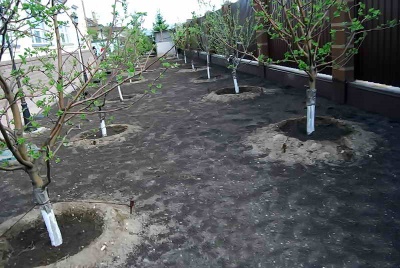
Due to the fungus's increased activity in high humidity, it's important to avoid overwatering, and periods of prolonged rain significantly increase the risk of infestation. When applying fertilizer, consider the tree's nutrient needs at a particular stage of development. For example, if rusty spots appear on the leaves, reduce the amount of nitrogen and increase the dosage of potassium and phosphorus.
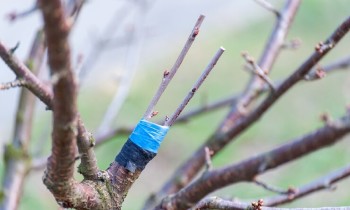
Rust-damaged tree fragments are cut out, and the resulting cuts are treated with a solution of iron or copper sulfate (4–5%), after which garden putty is applied.
Elimination of fungal colonies
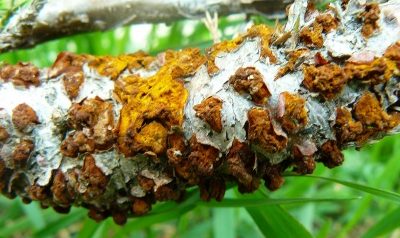
Many gardeners plant evergreen shrubs in their gardens, which are sources of infectious diseases. Rust fungi also infest coniferous trees, making their proximity to apple trees quite dangerous. For example, fungal spores don't colonize the apple trees themselves, but they form in large numbers in the scaffold branches of junipers. The mature microorganisms are then carried by wind and insects throughout the orchard and beyond, up to 50 km away.
If you discover rust infection on the leaves of an apple tree, you should carefully examine nearby coniferous plants.
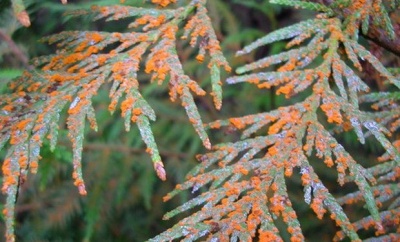
Affected shrubs are treated with a fungicide, after cutting and destroying damaged branches. If the disease progresses too far, the junipers are dug up, and the soil is doused with boiling water and antibacterial agents.
Regular care and prevention of coniferous trees and shrubs will help prevent apple tree infestation.
Getting rid of spores
To prevent the recurrence of rust infection on apple trees, it is necessary to completely destroy the fungal spores. This is achieved by treating the area with antifungal agents and clearing the area of weeds, as many weeds, such as milkweed, anemone, and sedge, act as intermediate hosts for harmful microorganisms. At the same time, wormwood growing near the source of infection suppresses the infection's progression.
The rust pathogen can survive on plant debris not removed from the garden for up to 8 years.
The means used for processing
Preparations containing copper and sulfur, as well as fungicides, can help get rid of rust on leaves.
Copper-containing compounds
Bordeaux mixture (1%) is a popular copper-containing product. Applications with this substance should only be carried out after stable weather conditions with temperatures above 0°C have been established. This product should not be used on extremely hot days, as it can cause severe sunburn to apple trees.
Several modern preparations are also effective in the fight against rust:
- Blue BordeauxUsed as an alternative to Bordeaux mixture, this granular solution dissolves readily in water and effectively kills fungal spores on affected tree fragments. It retains its effectiveness even in rainy weather.
- Abiga PeakThis copper-based contact fungicide adheres well to treated surfaces without penetrating deeply into tissue. To obtain a working solution, dissolve 50 g of the substance in 10 liters of water. Use only on windless, dry days.
- CuprostatThe product contains two main components: copper acetate and nitrogen. The fungicide is considered universal: it can be used both to combat infection and as a tree fertilizer. Treatment is carried out with a solution with a concentration of 0.25%.
- "Champion"This product is primarily used prophylactically due to its ability to create a protective film on treated surfaces, preventing infection. The product only slows the spread of rust, but has no curative properties. For spraying, dissolve 60 g of the product in a bucket (10 liters) of water. The procedure is carried out on a cloudy day with an air temperature of up to 25°C.
Sulfur based
Rusty spots on apple tree leaves can be removed by treating the garden crops with a colloidal sulfur solution prepared from 40 g of powder and 10 liters of water. This solution can be used at any stage of the growing season, except during flowering. A colloidal sulfur analogue, "Kumulus," has a similar effect. To obtain a working solution, dissolve the solution in water, following the included instructions.
The following products, diluted in 10 liters of water, are also effective in combating rust:
- "Vectra" (3 g);
- "Strobi" (3 g);
- "Polyram" (2.5 mg);
- Topaz (2 ml);
- "Tsineba" (40 g).
The use of these drugs is relevant for getting rid of concomitant diseases - powdery mildew And scabies.
To prevent garden crops from becoming accustomed to one fungicide, it is recommended to alternate these products.
Biological drugs
Many gardeners prefer organic harvests, so they choose only biological agents to combat infections. These substances are derived from specialized microorganisms and are completely non-toxic. After treatment, the protective effect lasts for 20 days.
Spraying apple trees with biological preparations is possible at all stages of the growing season and even during harvest.
The maximum result is observed after treating the garden on days with air temperatures fluctuating between +12 and +18 °C.
Among experienced gardeners, several methods are the most popular:
- Fitosporin-M;
- Trichodermin;
- Planriz;
- Gaupsin;
- "Phytodoctor"
- "Gamair".
The use of these preparations allows you to destroy not only the rust infection, but also many harmful insects that attack apple trees.
The appearance of rust on apple trees can be caused by a number of factors. Killing the fungal spores is easy with proper treatment and timely preventative measures. Adherence to proper agricultural practices will help minimize the incidence of the disease.