Black spots on apple tree leaves: causes and treatment methods
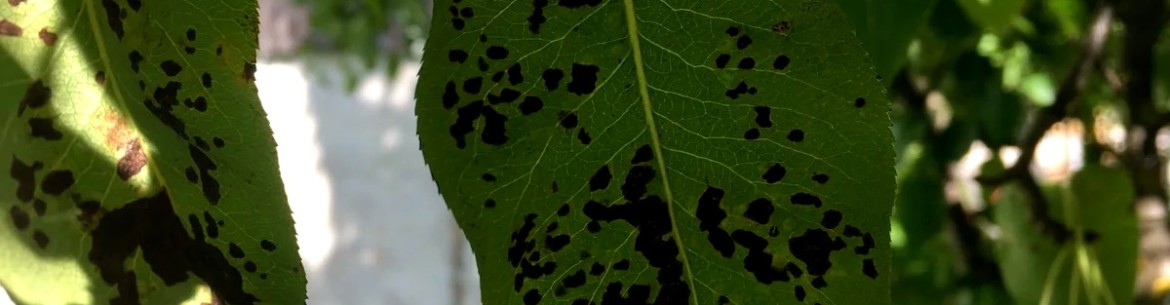
Gardeners often notice black spots on apple tree leaves. Many ignore them, making a serious mistake, as this symptom often signals the development of a disease. Ignoring such a problem can lead to the loss of not only the harvest but also the tree itself.
Content
Characteristics of the disease
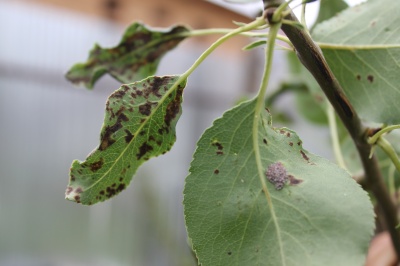 Black spots on apple tree leaves are a dangerous symptom that can be caused by a viral, bacterial, or fungal disease. In this case, immediate identification of the cause and subsequent comprehensive treatment are required.
The first signs of infection
In addition to blackheads, the course of the disease is accompanied by a number of symptoms:
- darkening, wilting and curling of leaves;
- cracks, bulges and deformations in the bark;
- ovary shedding;
- drying out of some branches during the growing season;
- premature leaf fall;
- rotting of unripe fruits.
An analysis of the totality of symptoms will allow you to correctly diagnose the disease and select the appropriate treatment method.
Causes of occurrence
Sometimes the presence of black spots is caused by improper care and unfavorable climatic conditions. However, more often than not, this phenomenon is directly related to a disease.
Fire blight
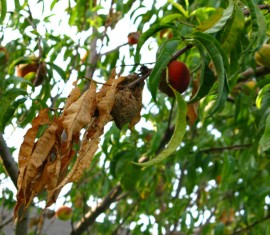
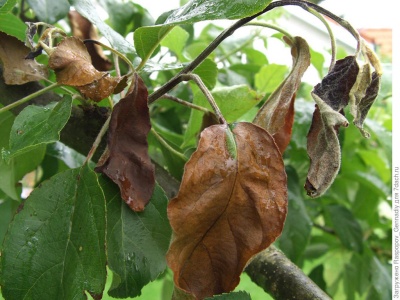 This disease most often enters the garden when new seedlings are purchased and is detected during flowering: black spots form on young leaves. The leaf blades then curl and dry out, remaining on the tree.
From bacterial burn The inflorescences also suffer: they turn black and fall off. Only a small number of ovaries form on the diseased apple tree, which over time also become affected by enlarged black spots. Eventually, the fruits mummify, but if not harvested, they can remain on the tree all winter. Bark damage is characterized by the appearance of white spots resembling mold and a gradual change in texture—softening.
Failure to treat fire blight in a timely manner will result in the death of the entire garden within 2 years.
To save the harvest and trees, rapid, drastic measures are needed. These measures include:
- cutting off damaged parts with the capture of small fragments of healthy tissue;
- treatment of cut sites with disinfectants followed by sealing garden pitch, which has an antifungal effect;
- cleaning and sealing cracks in the bark with the preparation "Fitolain".
Black crayfish
This disease is of fungal origin. The most favorable conditions for spore activation are high temperature and humidity. Signs black crayfish appear on all parts of the tree: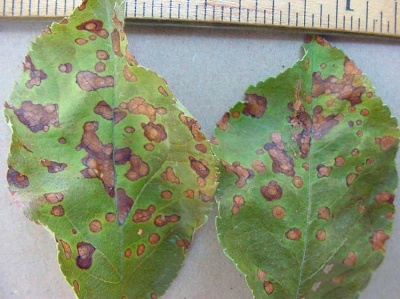
- bark - formation of dark brown cracks;
- leaves - appearance of black spots, wilting and dying;
- fruits - blackening, wrinkling, drying out.
In most cases black crayfish Affects older trees and those with weakened immune systems. Young seedlings can become infected due to improper care or other unfavorable factors.
This dangerous disease requires immediate and comprehensive treatment, including the following procedures:
- pruning of damaged leaves, bark, shoots;
- treating the affected areas with disinfectants and covering them with garden pitch;
- spraying with solutions of systemic fungicides.
When carrying out treatments, medications are alternated depending on the active ingredients.
Apple tree mosaic
This viral disease manifests itself as light, ring-shaped spots on leaf blades that subsequently darken. They can be detected as early as the first phase of the growing season. The virus is spread by apple seeds and pollen, and its presence negatively impacts fruit formation and ripening.
Mosaic cannot be cured, however, at air temperatures from +35 to 40 °C the virus dies.
Ring spot
Ring spot is a viral disease characterized by the following symptoms:
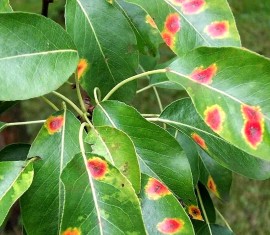
- covering the leaves with yellow ring-shaped spots followed by blackening of these areas;
- formation of black rings on fruits;
- cessation of growth and development of a tree.
The disease affects all above-ground parts of the apple tree and is virtually untreatable. To prevent this problem, regular preventative measures are necessary, including pruning and destroying damaged parts and spraying with fungicides.
Scab
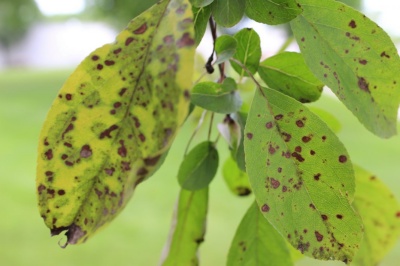 Scab Scab is a fungal disease that affects not only apple trees, but also pear trees and other fruit crops. Each plant is affected by a different pathogen. If treatment is not taken promptly, the disease can completely destroy the crop. The first signs of scab appear when the leaves emerge: they are covered with dark, round spots that gradually increase in size.
Over time fungus The fungus spreads to flowers, blocking ovary formation, and then to the fruit, causing dark spots resembling warts. These later enlarge, developing into large necrotic areas. Infected apples develop cracks and stunt growth, remaining small; eating such fruit is undesirable. The fungal spores overwinter in the tree bark.
Scab is especially active due to low air temperatures and prolonged rains.
The best way to prevent scab infection is by taking preventative measures, including:
- spring treatment with a solution copper sulfate or Bordeaux mixture after flowering;
- regular inspection of trees;
- timely removal of affected areas, burning them outside the garden.
In case of large-scale infestation of the garden, it is recommended to use fungicides such as Horus, Abiga-peak, Raek, Skor, and Strobi.
Sooty deposits
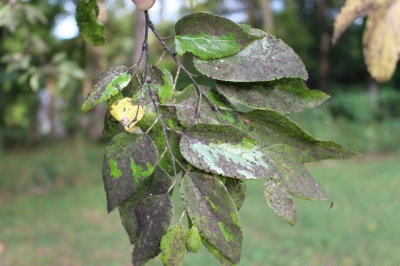 Spores of this fungus can reside in the bark without causing any harm to the apple tree, and they are also constantly present in the soil. The disease develops rapidly when there is a large accumulation of nectar and excretion of harmful insects, especially aphids. Initially, small red specks appear on the leaf blades, followed by curling of the edges, indicating the presence of a pest colony. Subsequently, all the apple tree leaves become covered with a black, ash-like coating, which impedes photosynthesis and leads to premature leaf drop.
When removing sooty deposits, the first step is to eliminate the pests that are the source of the disease. Insecticides such as Actellic, Inta-Vir, and Aktara are used for this purpose. Folk remedies are only effective for mild infestations.
Insufficient manganese and magnesium content
A deficiency of these elements in the soil also causes black spot on leaf blades. A lack of magnesium causes interveinal yellowing of the leaves, followed by blackening; with a manganese deficiency, yellowing and blackening occur from the leaf margins. Affected leaves dry up and fall off. In addition to these factors, the problem manifests itself in stunted fruit growth and ripening, as well as a loss of flavor.
Apple trees growing in sandy loam soil usually suffer from a lack of manganese and magnesium.
This problem is quite easy to solve. Simply feed the apple trees with root and foliar fertilizers containing the missing elements.
Processing principles
 When choosing methods to eliminate the problem, a number of nuances are taken into account:
- characteristics of a specific disease and its pathogen;
- growing season;
- the extent of spread of infection;
- age of the tree.
Treatment of bacterial diseases
In this case, antibiotics are used to obtain working solutions, namely:
- streptomycin;
- gentamicin;
- tetracycline;
- kanamycin.
Treatment with bactericidal agents also allows you to achieve the desired result:
- "Pentafag";
- "Gamair";
- Gaupsin;
- Fitosporin.
Elimination of fungal infections
For the treatment of such diseases, the use of copper-containing drugs is effective:
- "Hom";
- "Skor";
- "Topaz".
It is best to spray the crown with Bordeaux mixture.
Fight against viral infections
Since there are no cures for viral diseases yet, it is recommended to take timely measures to prevent infection from entering the garden. The following are the agricultural guidelines:
- Mandatory pruning in February;
- removal of all removed parts of trees outside the garden plot;
- reducing the amount of nitrogen and phosphorus applied immediately after a problem is detected;
- regular control of harmful insects.
It is recommended to treat the crown with the preparations "Zircon" and "Epin".
Selection of processing tools
When choosing a treatment for a disease, the source of the infection, the severity of the infection, and the duration of the treatment are taken into account. Typically, chemicals, homemade formulations based on traditional recipes, and biologically active agents are used for treatment.
Preventing garden re-infestation
To prevent secondary damage to apple trees, it is important to adhere to all rules and recommendations related to the care of fruit crops, for example: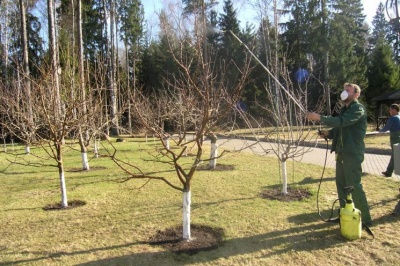
- timely and competent application of fertilizers;
- proper watering;
- regular pruning of damaged parts of trees, removal of mummified fruits;
- weed removal;
- loosening the soil in the tree trunk circle area;
- spring and autumn whitewashing.
Preventive procedures
Apple orchard care varies depending on the season. Preventive measures can significantly reduce the likelihood of infection occurring and spreading.
In the spring
Spring spraying is carried out before bud break. A solution based on "Zircon" is used for this purpose. Damaged parts are removed from the trees, and cracks and wounds are sealed with garden pitch or drying oil. The soil is saturated with a solution of ammonium nitrate or urea. After the flowering period, apple trees are treated with the following preparations:
- Vectra;
- "Kuprozan";
- Horus;
- "Zineb";
- "Hom."
In summer
Once warm weather sets in, orchards are treated with fungicides. Experienced gardeners agree that the most effective are the following:
- Fitosporin;
- "Gamair";
- Fitolavin;
- "Raek";
- "Zircon".
In the fall
After harvesting, the orchard is thoroughly inspected, and damaged branches are pruned. All plant debris is removed from the area and burned. The trunks are whitewashed with a lime solution, and the area around the trunks is loosened.
Every autumn it is recommended to treat apple trees with a solution of copper sulfate.
Elements of proper care
The fundamentals of agricultural technology contain several key points:
- removing weeds and digging up the tree trunk area;
- strict adherence to the regime glaze;
- periodic pruning to shape the crown;
- treatment with preparations that prevent the development of various diseases and pest attacks.
Healthy trees have increased resistance to infection and fungus. Therefore, to maintain the health of apple trees, it's important to apply fertilizers regularly. There are several types of fertilizers available:
- organic matter – bird droppings, humus, manure;
- mineral compositions – ammonium nitrate, urea;
- fertilizers containing useful elements – manganese, boron.
Each fertilizer is applied at the appropriate time and dosage, as specified in the manufacturer's instructions.
Black spots on apple tree leaves indicate a problem. To save the crop and the trees, it's important to respond to this signal immediately, otherwise the situation could worsen significantly.