Spring apple tree grafting for beginners: methods, timing, step-by-step instructions
Grafting not only helps propagate apple trees, but also rejuvenates them and increases yield. However, there are many different grafting methods. Therefore, beginners are advised to use one of the most common apple grafting techniques to increase the chances of survival and subsequent abundant fruiting.
Content
- Is it permissible to graft a tree in the spring after autumn planting?
- When is the best time to do grafting?
- Is it possible to graft cuttings onto an old apple tree?
- Grafting a crop onto several varieties
- We graft apple varieties step by step
- What can apple trees be grafted onto?
- Approximate timing of vaccination
- How to care for the plant after the procedure
- Pruning a tree for the next season
- What events to hold during autumn
- Conclusion
Is it permissible to graft a tree in the spring after autumn planting?
If the seedling belongs to an annual crop (and it was grafted with a quality variety), then there are two points:
- It is essential to let it get a little stronger in the spring;
- can be carried out budding growing bud.
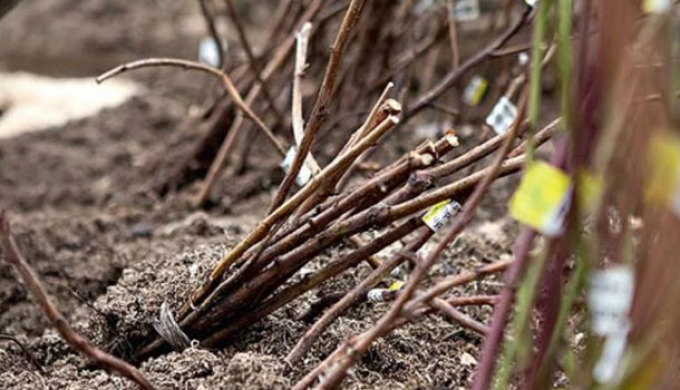
Apple trees tolerate grafting best at the age of 3-4 years, which is the optimal age for the procedure.
When is the best time to do grafting?
Grafting is carried out in winter in greenhouse conditions, and in spring, and in summer, and in autumn:
- Many experienced gardeners advise beginners not to reinvent the wheel and to opt for spring grafting (starting grafting in the spring). At this time, the plants themselves are best prepared for the procedure, the weather is favorable, and there are more opportunities for fertilizing and supporting the grafted plants.
- In summer, most people work with young shoots, which they just cut and grafted immediately. If something doesn't work out during this period, the process can always be repeated in the spring.
- In the fall, the results will be clearly visible, so you can quickly make some adjustments or prepare grafting material for the next season.
In fact, the grafting procedure extends throughout the entire season, so it is impossible to say that any time of year is more suitable for grafting.
Only you can determine exactly when it's time to begin the procedure through experience. The main signal will be temperature (especially for spring grafting). As soon as the tree awakens from hibernation and the sap begins to flow, it's time to prepare your tools and materials. Temperature changes depend on the local climate: as soon as nighttime temperatures no longer drop below freezing, it's time to act.
Is it possible to graft cuttings onto an old apple tree?
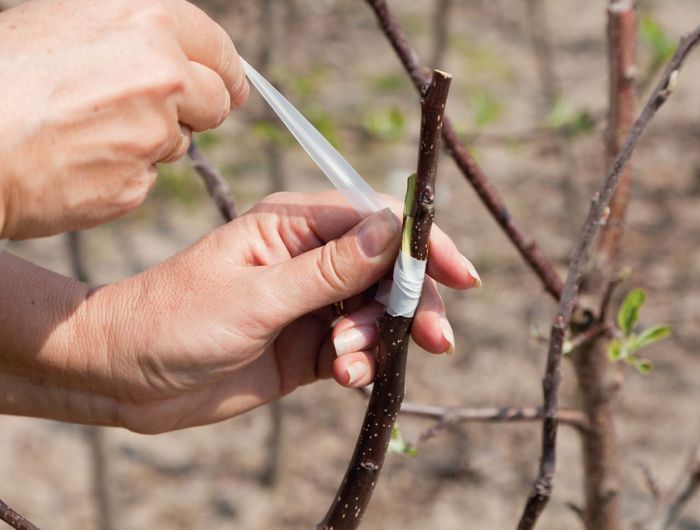
Every garden has that one tree, planted by your father/grandfather/great-grandfather/husband, that's at least 20 years old. For trees with dwarf rootstocks, 12-15 years is already an impressive age. Graft these trees with:
- To diversify their varieties.
- To rejuvenate the tree (which will not prevent the placement of several varieties on it at once).
Rejuvenation of an old apple tree is carried out only if the quality of its fruits is high enough.
The nuances of grafting old trees:
- select only the main (skeletal) shoots for the procedure;
- grafting should only take place on cuts at least 25-30 cm from the trunk;
- Trees that are over 25 years old cannot be grafted.
Grafting seedlings
Two methods of grafting are often used:
- budding at the root collar (this is approximately 15-18 cm from the ground);
- budding (of different varieties) depending on the condition of the seedling.
Preparation process:
- Prepare the young seedling in advance.
- If you are grafting at the bottom, then 10-14 days before, loosen the soil and water (if necessary).
- Carry out the hilling procedure (and before this you need to unhill the planting and cut all the side shoots to 15-20 cm).
It is best to graft from the north side so that the bud is not exposed to direct sunlight and does not get burned in the hot sun.
Grafting a crop onto several varieties
It's not as complicated as many people think:
- It is best to carry out the procedure when grafting an apple tree at the age of 5-7 years.
- You can graft 4-5 other varieties at once (but it’s better not to get carried away with quantity, but to give preference to quality).
- When grafting, adhere to the principle of compatibility of crop maturation (i.e. graft early onto early, graft late onto late).
We graft apple varieties step by step
There are many ways to graft apple trees. Each gardener chooses the method that is most convenient for them and best suited to their particular variety.
Methods
There are over 200 of them, so listing them all is pointless. Typically, gardeners graft apple trees:
- seedling (either whole or with only 2-3 buds);
- bud (also called a shield or eye).
The most common methods of vaccination are given below.
Grafting by copulation
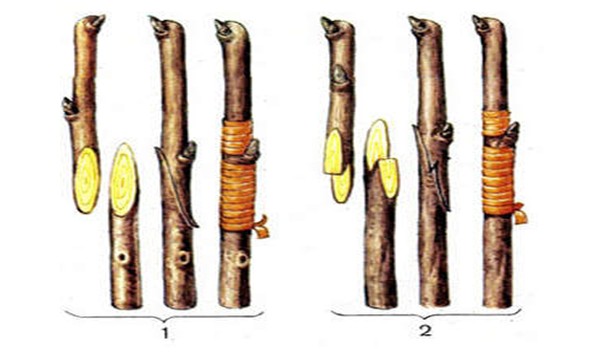
This grafting method involves fusing the rootstock and scion together (both must be of equal thickness). There is also an improved form of copulation, which differs from the standard method by the addition of an additional cut (tongue) on both the rootstock and scion:
- Make diagonal cuts of equal length on the apple tree and the cutting (2-4 cm).
- Additionally, make tongue-shaped cuts at a distance of 1/3 from the base. The longer it is cut, the stronger the fusion of cultures will be.
- Strengthen cutting in the cut and squeeze tightly with your fingers.
Cleft grafting
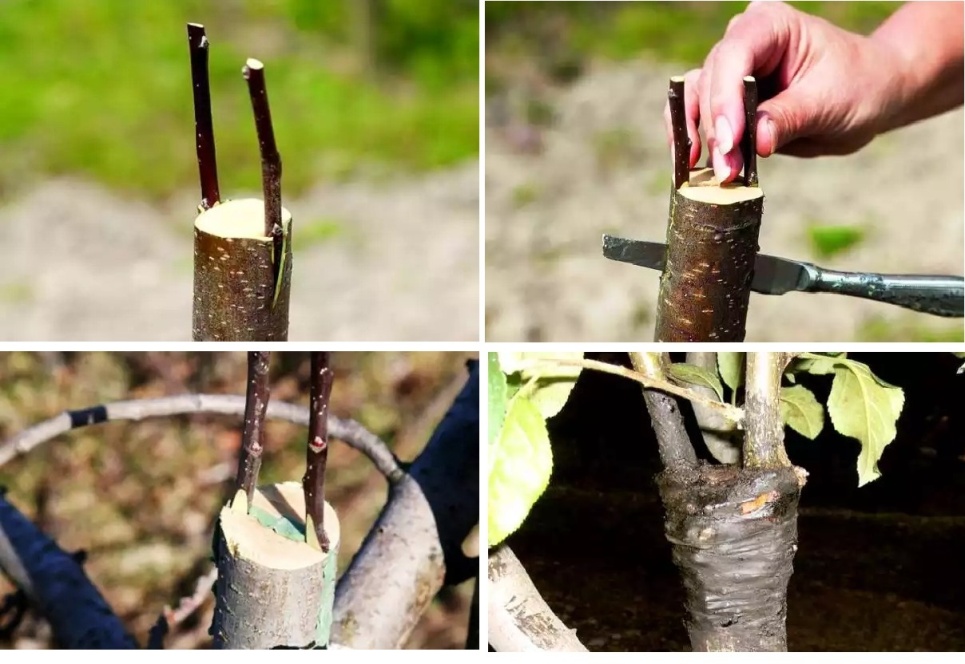
It is used when there is a large difference in the thickness of the scion and rootstock:
- Using a sharp hacksaw, cut off a branch (approximately 10-15 cm from the ground, 25-30 cm from the trunk).
- Using a knife, split the shoot in the middle (or move it slightly to the side).
- Insert the cutting so that all the tissues match.
- Apply garden pitch to the grafting sites and wrap the joints tightly with thick film.
- If the grafting was successful, then leave only one convenient cutting.
Experienced gardeners use a half-cleft graft rather than a full cleft graft. This involves splitting only a portion of the branch from the side.
Using pruning shears for grafting
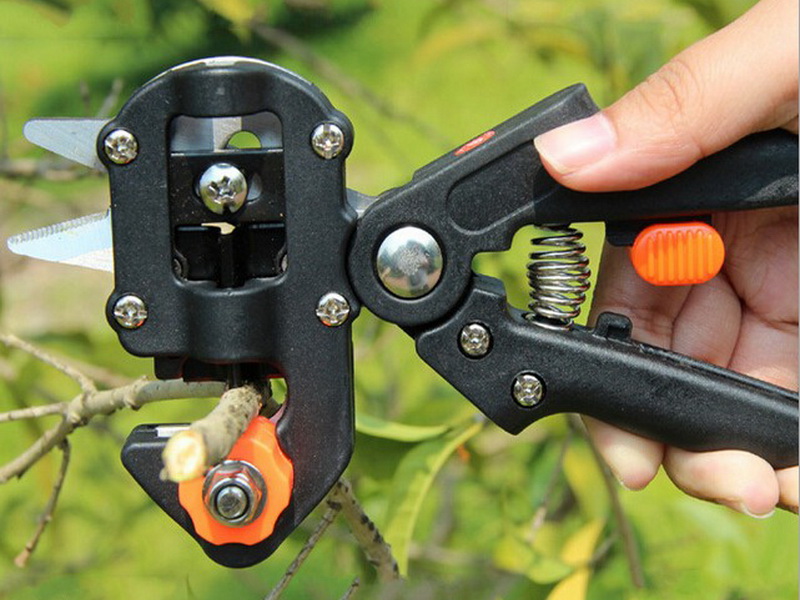
A true lifesaver for any gardener. This tool helps quickly make extremely precise cuts that adhere tightly to each other during grafting. Most gardeners choose grafting shears made in Belarus because they offer an ideal price-quality ratio.
When using pruning shears, select only unwound, smooth leaves. cuttings (keep them in the refrigerator, in a snowdrift and treat the cuts with a special gardening compound).
Bridge grafting
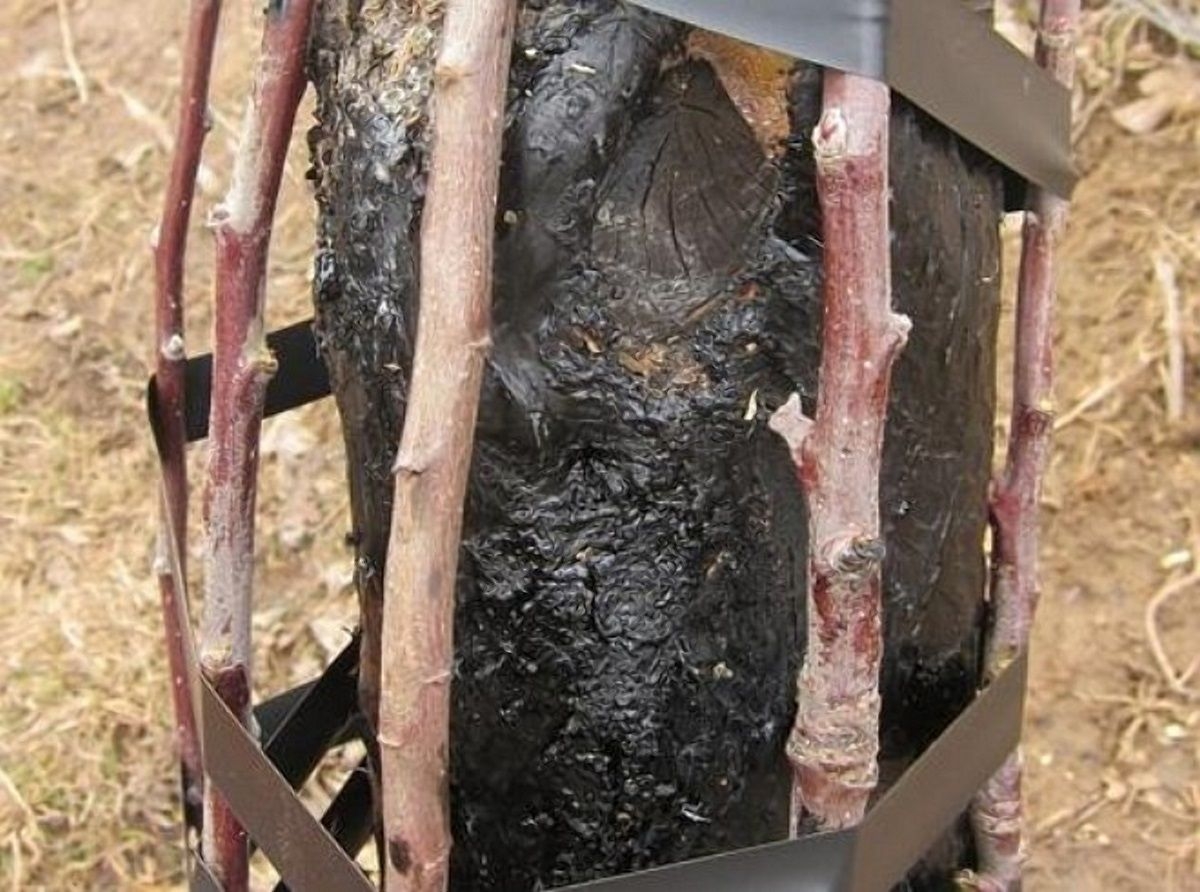
This procedure is carried out if the trunk or branch of a tree has been damaged, for example, by a rodent or pest infestation:
- First, you need to clean up the defective areas on the trunk or shoot.
- Make longitudinal cuts below and above the damage (as when grafting under the bark).
- Cut off the cuttings.
- Cut off all the buds from the cuttings.
- Make cuts on the rootstocks, all in the same plane.
- Strengthen the rootstocks in such a way that their lower part should fit into the lower part of the damage, and the upper part into the upper part.
- Use garden pitch on the joints and make tight film bandages.
- Cover the grafting sites with burlap.
On the bark (under the bark)
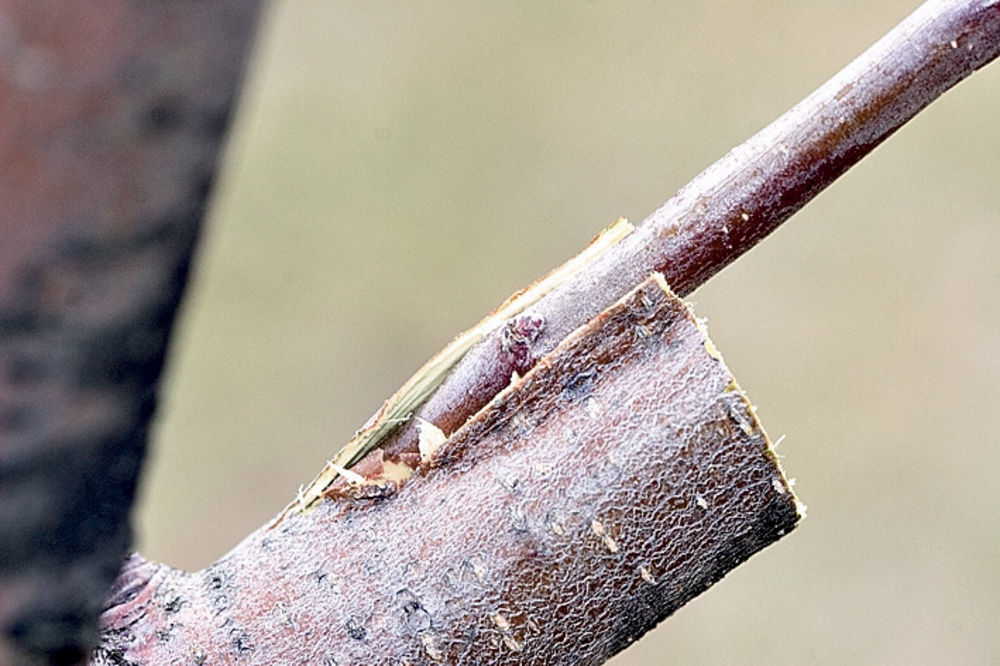
This method is necessary when large or medium-sized branches are used for grafting, or when the cuttings and rootstock differ greatly in thickness.
Vaccination procedure:
- Cut the cutting diagonally (it should be 15-20 cm from the ground and 50-70 cm from the trunk).
- Cut the bark (6 cm per cut), carefully separate it from the wood.
- Make a 40mm long oblique cut on a cutting with 2-3 buds.
- Insert the cutting under the bark with the cut side down.
- Coat the grafting sites with gardening solution and secure with tight film tape.
Grafting onto an apple tree trunk
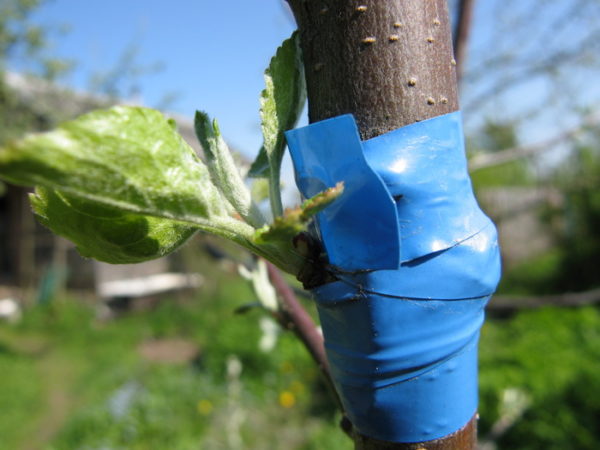
Usually, cuttings are grafted onto the trunk using the “under the bark” method:
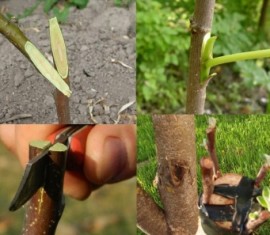
- Make a T-shaped cut in the bark of the trunk.
- Make a diagonal cut on the scion.
- Insert the cutting into the cut and wrap it with thick plastic film. Coat the graft with garden pitch.
Only thin cuttings are suitable for this type of grafting.
In the lateral cut
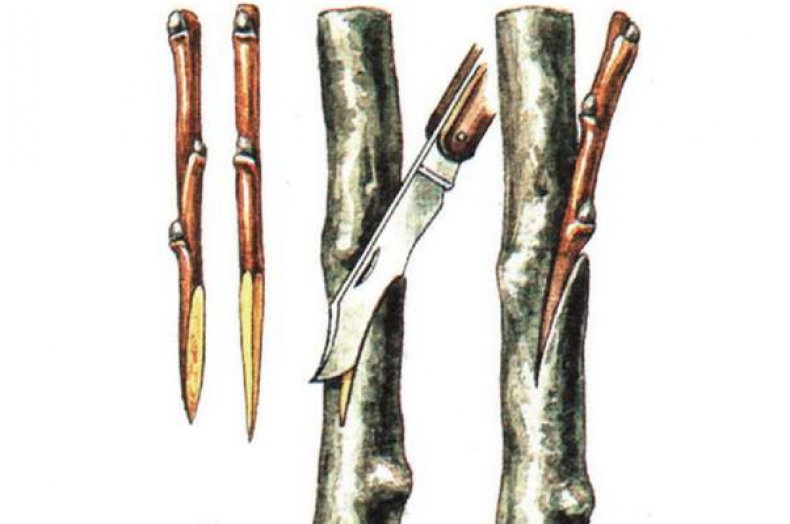
This method of grafting works well both in spring and summer:
- The grafting is carried out on the side of the seedling or shoot.
- When grafting young trees, select those branches that will become skeletal in the future.
- Make diagonal cuts, 15-20 cm from the ground. The branch should be positioned 50-65 cm from the trunk.
- Make a cut in the bark, capturing a small amount of wood tissue (the length of the cut should be 30-40 mm) and going into the tissue no more than a third of the thickness of the seedling.
- Make a small wedge on the cutting using opposite cuts, leaving 2-3 buds. One cut should be slightly shorter.
- Insert the cutting into the cut so that all layers are completely aligned.
- Treat the joints with garden pitch and wrap them tightly.
Grafting by budding
Budding is the process of grafting a seedling with a bud. If the cuttings were prepared in the fall, the graft will be a growing bud; if they were taken only this season, the graft will be a dormant bud. In this case, the shoot will emerge during the current season. Budding is best done in the spring (April to early May) if you live in the southern region.
There are two methods budding:
- into the cut (by the kidney);
- in the butt.
Through a T-shaped cut
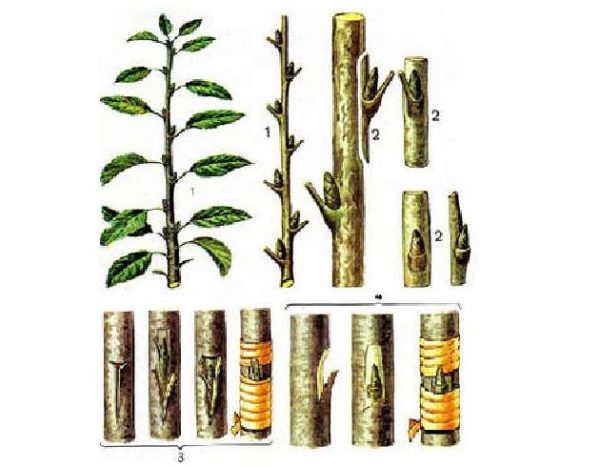
Technique of bud grafting (incision):
- Cut a flap with a thin layer of wood. The flap should be 5-8 mm wide and 2.5-3 cm long.
- Make a cut of the same diameter along the branch (it should be in the shape of the letter T) and insert the shield into it.
- Wrap the structure with film.
In the butt
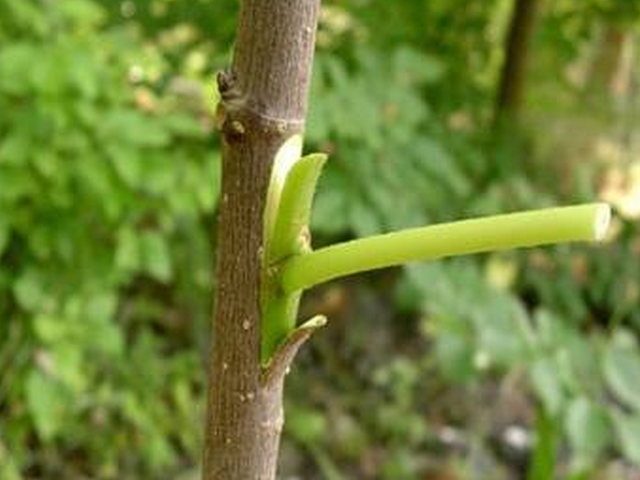
Another method of budding:
- Make a pocket cut on the rootstock.
- Also cut a shield of approximately the same size from a cutting of the desired variety.
- Now place the shield into the resulting pocket so that all the fabrics fit tightly together.
- Wrap the structure with film (but do not wrap the bud).
- After the shoot has taken root, cut it off just above the bud.
- Be sure to make tags with names so as not to get confused in the grafted cuttings.
On the stump
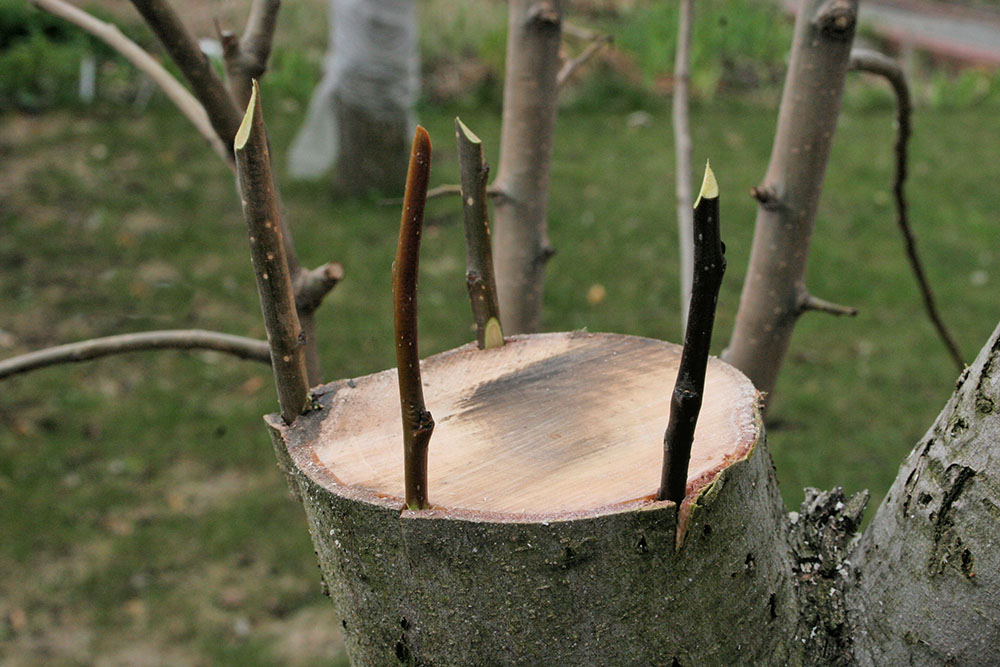
Technique for grafting onto a stump:
- Prepare the stump in advance by cutting down the desired tree or refreshing an already cut shoot.
- Carefully clean the stump with a knife.
- Decide on the grafting method: under the bark or into the cleft.
- Place the cutting in the cut as per the instructions (depending on the chosen grafting method).
- Wrap the structure tightly with film and treat the grafting site with garden pitch.
What can apple trees be grafted onto?
Many years of practice and the experience of most gardeners have determined that grafting closely related varieties is best. The options are limited.
On the wild
 This method is perhaps one of the most common. It's the best option, as it offers a host of benefits to the apple tree: increased yield, longer life, and improved resistance to frost and disease.
For grafting onto wild stock, it's best to choose immature seedlings that are no more than 4 years old. The procedure is performed when the plant tissues are still sap-flowing.
On the pear
These two fruit trees look good next to each other. However, it's difficult to talk about yield and fruit quality, as this type of grafting is not systematic. You can experiment on your own.
On the plum
Plum trees have been subjected to all sorts of manipulations. However, it's rarely discussed as an apple graft. They typically use a specially bred plum-leaved apple cultivar, rather than the plum itself. This cultivar thrives on varietal fruit trees. But whether the plum itself will survive is an open question.
On the rowan
The best choice for an apple tree is red rowan. It has enviable frost resistance and a good survival rate. However, the apples on this tree tend to be smaller. The result of the grafting will be original and unique, but whether it's worth it is up to you to decide.
Approximate timing of vaccination
Here, everything is very ambiguous, because the timing depends on a large number of external factors:
- from the climate in the region;
- apple tree varieties;
- varieties and qualities of scion;
- time of year;
- level of training;
- grafting method, etc.
So, only you can determine the exact timing of the procedure yourself, carefully observing the tree and the weather outside. Once you see the buds swell and are about to open into leaves, you can begin grafting.
Lunar vaccination calendar
There's no need to get too caught up in astrology and wait for the stars to align in a certain way. All you need to consider is:
- prune the plant during the waning moon;
- graft on the waxing moon.
If you still cannot live without constellations and signs, then take into account that many gardeners consider the best time for grafting an apple tree to be when the Moon is in water signs (Pisces, Scorpio, Cancer). Accurate lunar calendar 2020.
How to care for the plant after the procedure
The most important thing at the early stage is to protect the apple tree from pests. Grafted seedlings are young and juicy, aphid And caterpillars They love this. So, water the plant regularly, apply appropriate fertilizer, and protect it from rodents and birds.
Periodically pinch, bend, and tilt the shoots to regulate growth. Remove the wrapping and tie them up promptly.
The wrapping should be loosened or renewed after approximately 10-14 days by carefully cutting the film lengthwise with a razor blade. It is completely removed after 60-90 days.
Pruning a tree for the next season
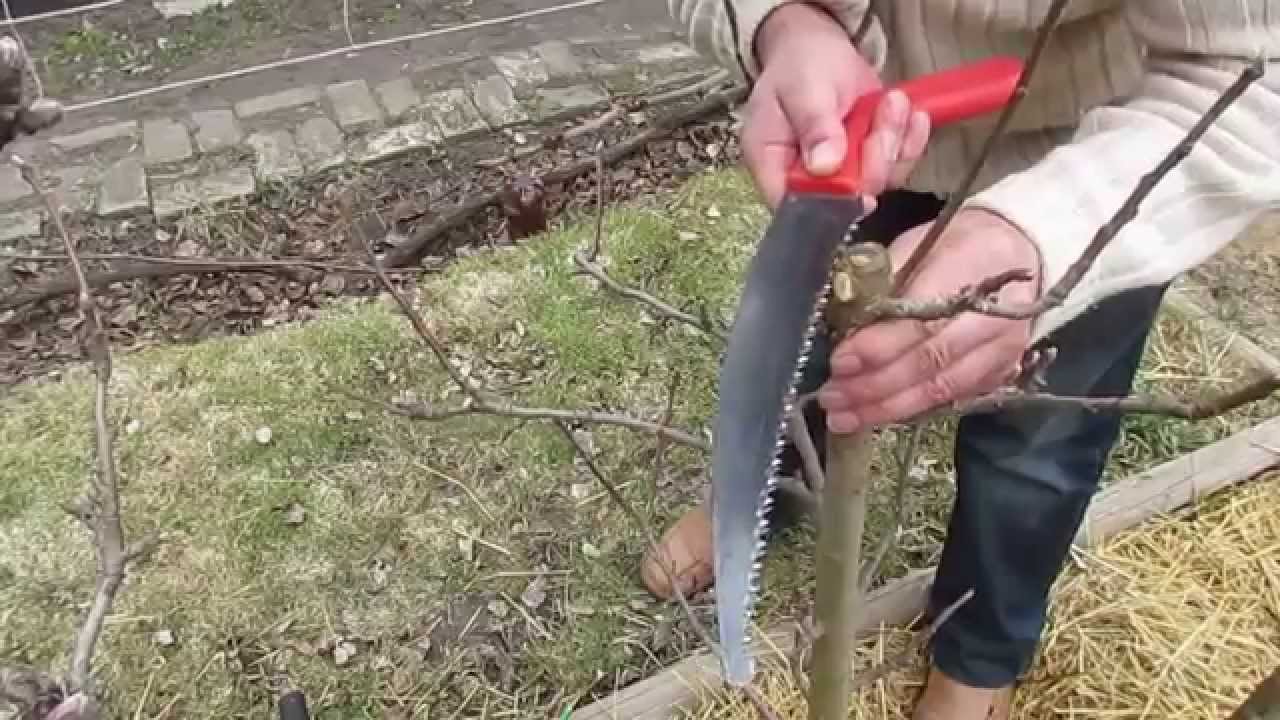
When pruning young seedlings, leave one of the strongest shoots on each graft. The rest can be safely removed. Prune out all shoots below the graft. If the plant is growing well, shorten the shoots by 1/3 of their length.
What events to hold during autumn
Procedure:
- It is necessary to tie up the overgrown shoots, water them and feed trees.
- Whiten the trunk and hill up the plant for the winter.
- Insulate the apple tree and protect it from rodents.
How to remove suckers at the grafting site
Absolutely all shoots growing below the graft must be removed. Prune at the base, avoid breaking off any shoots (this will only stimulate new growth).
Conclusion
Of course, covering all the nuances of apple tree grafting will be difficult. It's a vast topic that requires extensive study. However, even a novice gardener can easily grasp the basic principles and nuances of the most common grafting methods.