Grafting an apple tree in the fall for beginners: timing, rules, methods
Grafting apple trees strengthens the tree's immunity and increases varietal diversity. To successfully graft apple trees in your own orchard, it's essential to thoroughly understand the process and determine the appropriate timing.
Content
- The optimal season for grafting an apple tree is spring or autumn.
- Goals and objectives of vaccination
- Preparation of tools and materials
- Step-by-step instructions for beginners on how to graft apple trees in the fall
- Caring for a tree after grafting
- Preparing cuttings for autumn grafting
- What can you graft an apple tree onto in the fall?
- Conclusion
The optimal season for grafting an apple tree is spring or autumn.
The timing of selection is crucial. Acting too early or too late can lead to the tree becoming ill or even dying. It's certainly best to do this in the spring, when the plant's vital energies are focused on growth. However, if grafting isn't successful during this period, it can be postponed until later.
In this case, adherence to deadlines and technology must be strictly maintained.
Apple tree grafting in September
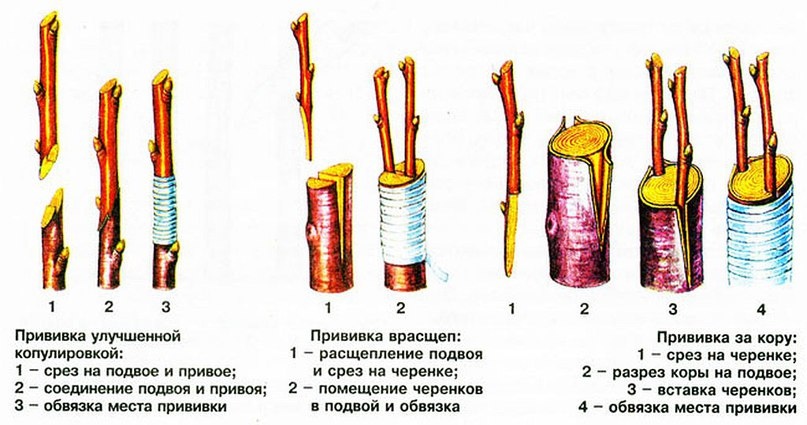
 Certain selection methods also work well in the autumn months. For example, It is recommended to carry out this in September budding, or graft "behind the bark." Also possible:
- copulation;
- split;
- half-split
The timing of the work should be chosen depending on the growing region, weather conditions, and the end of the tree growing season. Pinching is carried out in September in the northern regions, the Urals, and SiberiaThe work should be completed by the middle of the month.
In October
Fall grafting is much more complex than spring or summer grafting. It must be completed within a tight timeframe. In October it is appropriate to carry out a half-split or a split, as well as copulation. The procedure should be completed three weeks before the average daily temperature reaches 15°C. If this condition is met, a 95% survival rate of the scion can be achieved.
Until the end of October, selection activities can be carried out in the southern regions of the country.
Goals and objectives of vaccination
Apple tree propagation in the fall is directly related to gardening needs. Often, in a garden setting, one of the following situations may arise:
- there is a desire to grow more apple trees of a particular variety;
- the size of the garden plot leaves much to be desired;
- there are no seedlings of the desired variety available for sale;
- there was a need to save a beloved tree from disease;
- the incorrect crown should be corrected;
- there was a desire to grow different varieties of apple trees with different ripening times;
- it is necessary to improve the plant’s resistance to cold or to increase its overall immunity;
- the spring or summer graft did not take root.
If the situation on the site is as described in the list above, then selection activities carried out in the fall are fully justified.
Preparation of tools and materials
Under no circumstances should you begin autumn grafting of apple trees until you have prepared all the necessary tools and materials.
For the agricultural activity you will need:
- budding knife;
- copulating (grafting) pruner;
- garden knife;
- grafting hatchet;
- fixing material (electrical tape);
- garden var;
- plasticine.
All instruments must be carefully sharpened and disinfected.
Step-by-step instructions for beginners on how to graft apple trees in the fall
There are several basic methods of autumn grafting that are guaranteed to give a positive result.
Budding method
This is a grafting of a new variety onto a healthy specimen using a cutting from one bud. There are two methods. budding:
- in the cut;
- in the butt.
 This method is recommended for use if the goal is to vaccinate cutting On an old or young apple tree. The procedure can also be performed with other types of fruit trees. Three-year-old seedlings are ideal as rootstocks, as they are already adapted to the weather conditions of a particular area. For the scion, we prepare lateral shoots from an apple tree that has been bearing fruit for at least two years. The thickness of the prepared material should not exceed 1.5 cm, and the required length is 30 cm. Five vegetative buds are left on each shoot.
The sequence of actions during the vaccination process is as follows:
- Preliminary abundant watering of the rootstock.
- Cleaning the grafting site.
- A T-shaped cut is made on the branch and the bark is pushed apart.
- A kind of shield is created from the scion, which must match the size of the cut.
- The shield is inserted into the incision so that the kidney is directed upward.
- The bark is straightened and wrapped with fixing film.
- The final fixing material is removed only in the spring.
The copulation method
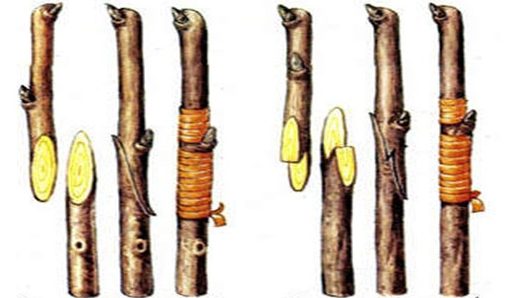
With this method, you simply need to precisely align the scion and the seedling. A 2-year-old wilding tree is suitable as a rootstock. It should be the same diameter as the scion (about 5 cm).
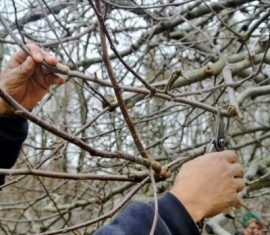
The scion and rootstock are cut with a special grafting pruner at an angle of 30° and connected so that their cambial layers completely coincide.
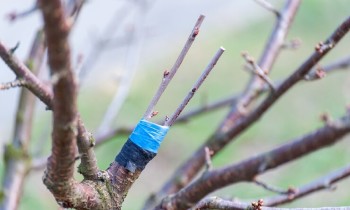
The grafting site is secured with electrical tape or twine. A misaligned graft will result in failure to fuse.
Split and half-split method
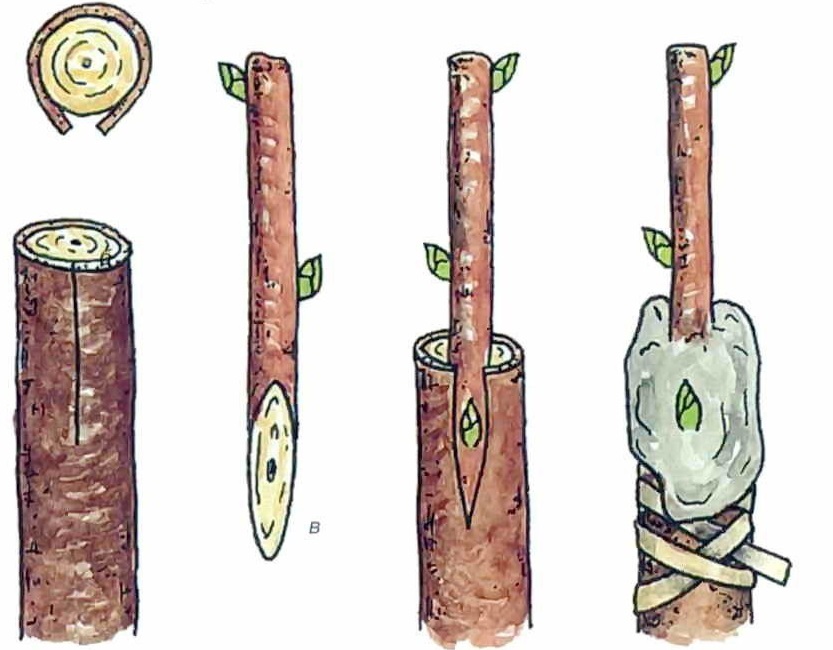
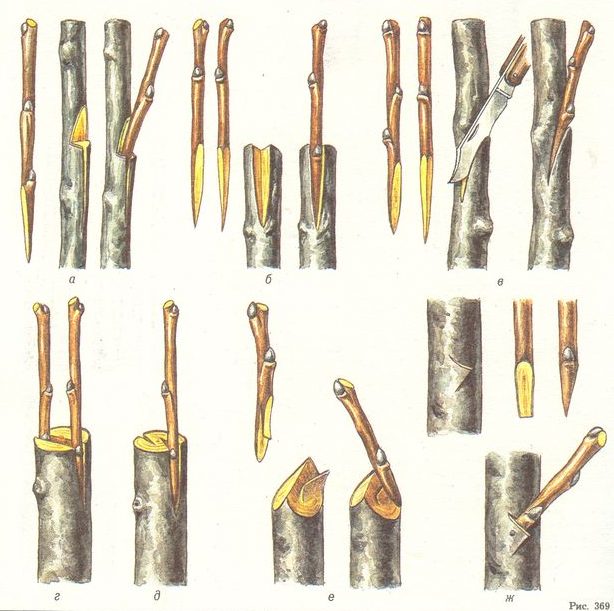
A cleft is a cut in the rootstock made to allow the scion to be implanted. If grafting is performed into the cleft, then the dissection is carried out along the entire rootstock, but if in a semi-cleft, then the rootstock is opened only on one side.
This method is justified when the rootstock and scion have different ages and diameters. This method is most often used to renew old trees by grafting young branches onto them, as well as to graft several young cuttings onto a stump.
Caring for a tree after grafting
Regardless of the treatment method, grafted fruit trees require proper aftercare. A responsible gardener should: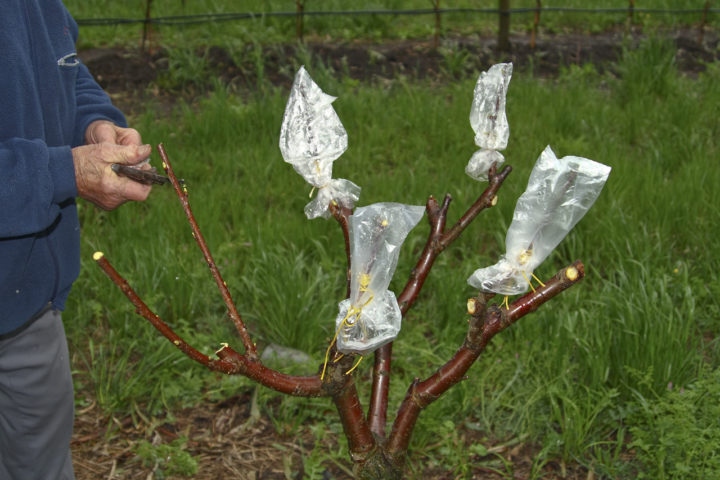
- After 3 weeks, loosen the wrapping material.
- In spring, remove the wrapping completely.
- Timely water and feed the grafted trees.
- Provide protection from pests and frost.
- Install bird fencing for young parts of plantings.
- Pinch off the tops.
Preparing cuttings for autumn grafting
cuttings The desired apple tree variety for grafting should be harvested during the ripening process. Select branches from unshaded areas of the tree canopy. A suitable cutting length should be between 25 and 30 cm. Five live buds should be left on each cutting. The best choice is the upper portion of young, not fully woody shoots with a diameter of no more than 9 cm.
Store the prepared material wrapped in a damp material until grafting begins.
The cuttings require the right growing conditions. Sort them into bunches by variety and place them in a cool basement. The air temperature should be no higher than 3°C (37°F). The lower ends of the shoots should be placed in boxes filled with damp sand.
Do not prepare cuttings for grafting from diseased parts of the tree or from spinning tops.
What can you graft an apple tree onto in the fall?
Apple trees can be grafted in the fall onto rootstock grown from seeds. Vegetative propagation is also possible. Wild or cultivated seedlings, vigorous clones, or universal seedlings make excellent rootstocks. To improve winter hardiness, it is recommended to graft a summer variety onto an autumn variety, and an autumn variety onto a winter variety. Related trees can also be maturated according to their maturation times. To increase longevity, varietal differences should be taken into account.
On an old tree
A tree no older than 25 years is suitable for grafting apple trees. It will blend well with neighboring varieties. It is recommended to spread the process over 2–3 years. Up to three cuttings can be added to the skeletal branches. Alternatively, the old tree can be cut down and the grafts placed on the stump.
On the rowan
This genus of plants belongs to the tribe Malaceae, making rowan trees ideal for breeding popular fruit trees. Dwarf varieties, such as Chinese rowan, can be grafted onto them.
On a 2-year-old wild apple tree
Don't forget to pre-root the wilding in open ground. Before use it as a rootstock, it must germinate in its new location for at least a year. This material is suitable for the following methods: budding, under the bark, into the cleft.
On the stump
A fresh stump can be used as a base for cleft grafting or bark grafting. It is ideal for creating a tree with a crown-shaped cup. Up to five different varieties can be grafted onto a single stump.
To the small wild apple
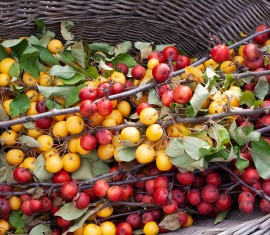
This easy-to-grow variety is frost-resistant and resilient in both rainy and drought-affected years. It's also undemanding regarding soil quality. All these qualities make the crape myrtillus an excellent rootstock.
On the pear
The pear and apple trees are equal inhabitants of the garden; they are similar in their biological characteristics. It's just important to understand the growing seasons of the varieties to combine wood growth.
Conclusion
The most appropriate method for apple tree selection in the fall is chosen based on the desired results of grafting, matching the characteristics of the rootstock and scion, their diameters, climatic conditions, and other factors. Even if you are a novice gardener, strict adherence to all agricultural requirements will help you achieve success in this challenging endeavor.