Apple tree Aelita: features of the variety and care
| Color | Reds |
|---|---|
| Ripening season | Summer |
| Size of apples | Average |
| Taste | Sweet and sour |
| Crown type | Tall tree |
| Shelf life | Average shelf life |
| Application | Fresh , For recycling , Storage |
| Winter hardiness | High winter hardiness |
| Fruiting age | From 5 years old |
 History of origin and regions of growth
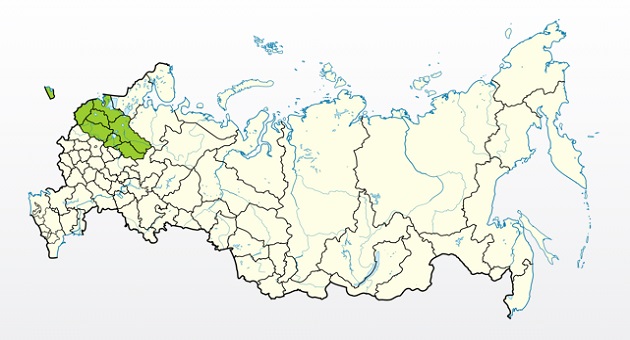
Growing regions
- Kaliningrad region.
- Vologda Oblast.
- Tver region.
- Yaroslavl region.
- Leningrad region.
- Pskov region.
- Kostroma region.
- Novgorod region.
Origin
The variety was developed on experimental plots at the I.V. Michurin Federal Scientific Center in Michurinsk, Tambov Oblast. The authors are renowned Russian breeder and pomologist Sergei Ivanovich Isaev, along with his colleagues Maria Pavlovna Maksimova and Gleb Eduardovich Limberger. The cultivar was obtained by crossing and hybridizing the Cinnamon Striped variety and the "American" variety, Welsi.
In 1979, the first application for official registration of a new apple tree was submitted, but it had to go through a long journey, lasting two decades, before in 1999 it was included in the State Register of Breeding Achievements and zoned for the Northwestern region.
Description of the Aelita variety
 The apple tree possesses a number of positive qualities and properties that make it popular among gardeners in the rather harsh northern regions of our country. It is highly resistant to harsh winters, undemanding of soil, fertilizer, and watering, tolerates sudden temperature fluctuations and high humidity, and produces fruit vigorously for many years.
The fruits are very attractive, fragrant, delicious, store well, and are easy to transport. They are suitable for fresh consumption or for processing into compotes, juices, jams, and preserves. This variety is recommended for both individual cultivation in the home garden and for industrial production.
Apples: What do they look like?
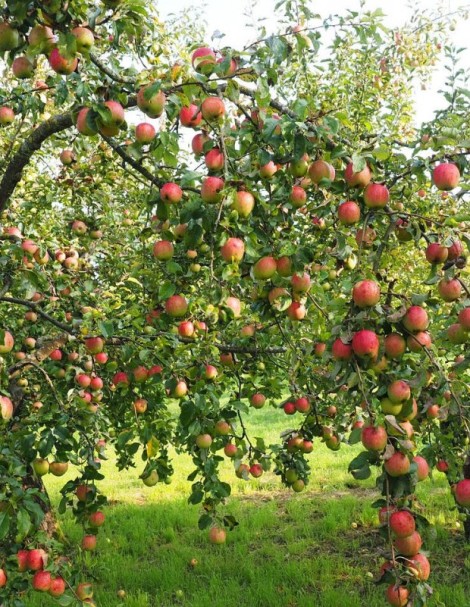
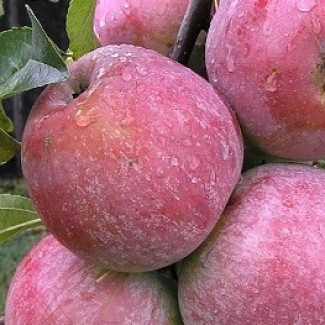
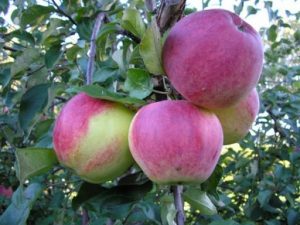 The fruits are usually medium-sized, weighing between 110 and 140 grams; they don't grow any larger, even in the best years. The apples are regularly shaped, round or round-conical, slightly turnip-shaped, and can be slightly elongated or cylindrical. They are generally symmetrical, uniform, and smooth, with ribbing and a side seam that are virtually invisible.
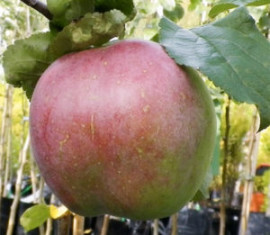
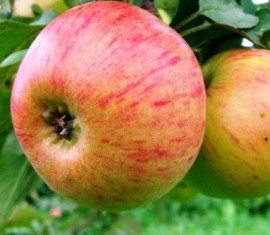
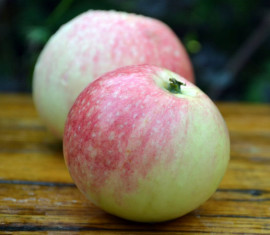
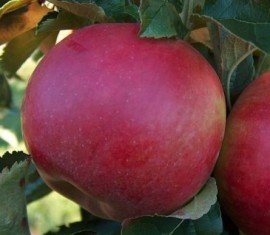
The skin is firm, fairly elastic, but not thick, tender, and cracks easily when bitten. It is smooth, green or greenish-yellow in color, and may have a slight waxy, oily, slightly silvery bloom when fully ripe. The blush is diffusely spotted, dense, striped, bright red or scarlet, and covers more than 75% of the surface. Subcutaneous dots are small, gray, barely noticeable, and few in number. Experts recommend assessing the chemical composition based on a specific set of data:
- P-active substances (catechins) – 423 milligrams.
- Ascorbic acid (vitamin C) – 12.1 milligrams.
- Fructose (total sugars) – 11.6%.
- Pectins – 4.9%.
- Titratable acids – 0.38%.
Aelita's flesh is medium-firm, juicy, crisp, and refreshing. The flavor is considered dessert-like, balanced, and harmonious, with a pleasant sweet-and-sour balance, a delicate texture, and a medium aroma. Experts give the apple a 4.5 out of 5 stars for appearance and taste.
Apple tree Aelita: characteristics
Crown and root system
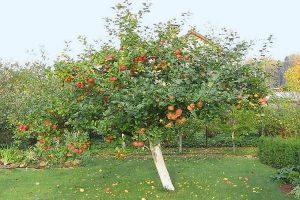 The trees are officially classified as tall. They can easily reach 7-8 meters in height., and sometimes even more. The crown is usually pyramidal or broadly pyramidal, and can be oval or broadly oval. The main drawback of the standard tree is that the shoots extend from the central core at an acute angle, which often leads to splitting during fruiting or in winter during heavy snowfalls. The shoots are medium-sized, straight, and directed upward, covered with gray or gray-brown bark prone to cracking. Fruiting is concentrated on the perennial fruiting branches.
The leaves are large to very large, oval, elongated, oblong, leathery, glossy, and long-pointed, with a slight pubescence on the underside. They are dark green or emerald in color, wrinkled, and coarsely ribbed. The root system is very powerful and penetrates unusually deep into the soil in search of moisture. It is highly branched, fibrous, and has some branches located near the surface.
Productivity and pollination
Aelita is considered not only an early-fruiting apple tree, but also quite productive for a northern variety.
One mature tree of this variety can produce 30-45 kilograms of beautiful and tasty fruits per season in favorable years.
The variety is completely self-sterile, so don't expect fruit if there are no apple trees in the area that bloom at the appropriate time. It definitely requires pollinators, but they can be placed up to 150-200 meters away from the tree. To attract bees, blooming Aelita can be sprayed with sugar or honey syrup. It's also productive to bring mobile apiaries to the planting sites.
Winter hardiness and disease resistance
With proper care, trees can be considered extremely winter-hardy. With proper care and protection before the cold weather sets in, they can easily withstand temperatures as low as -35-38°C without any significant damage. However, without protection, they can seriously freeze and even die, so it's important to keep this in mind.
The variety is completely immune to scab and powdery mildew. These diseases don't affect either the fruit or foliage. Other diseases also occur extremely rarely, making Aelita so beloved and respected by gardeners in areas with consistently high humidity. Pest threats are reduced to zero with timely and regular preventative spraying.
Rootstocks and subspecies
There are no known subspecies of Aelita, but it is grown on a wide variety of rootstocks. The tree grows particularly well on vegetative rootstocks, but semi-dwarf and dwarf rootstocks can be used. This will result in more compact trees, although winter hardiness is significantly reduced. There is no columnar subspecies, and cultivating a creeping variety is also unlikely.
Features of growing Aelita
 Landing
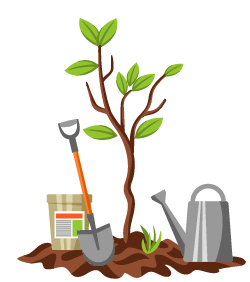 Landing
Basic conditions
- For planting young apple trees, it's best to prepare the holes in advance, in the fall. Then, dig holes 70-90 centimeters deep and slightly larger, up to about 1 meter in diameter. Add any fertilizer to the bottom, cover with soil or drainage material, and then fill the holes with water and leave them outdoors.
- Aelita should be planted in a sunny, well-ventilated location, but not drafty, with a deep water table. In the shade, in a strong wind, or near damp conditions, the tree may rot, become diseased, or even die.
- For vegetative rootstocks, a distance of 4-6 meters between trees is necessary, while 3-4 meters is sufficient for shorter trees. A 4-5 meter distance between rows is also recommended, making harvesting and garden maintenance easier.
- Stake stakes are dug or driven into the holes to support the young trees. They can be made of metal, wood, or plastic. They should not be removed until four or five years after planting.
- Almost any soil is suitable for this variety, from rich, nutritious black soil to rocky slopes, sandy loam or loam.
- Before planting, the seedling must be carefully examined, all dry roots must be cut off, and it must be soaked in warm water for 5-6 hours.
- Root collar The seedling must always remain above the surface, otherwise the properties and qualities of the rootstock will be completely lost.
- Before planting, the holes are completely filled with loose, airy soil. Indentations are made in the soil depending on the size of the rhizome, and the apple tree is placed in these. The roots are watered with 25-30 liters of water, then covered with soil and lightly compacted, leaving for 20-30 minutes. After this, the soil is further compacted with feet, and if necessary, more soil is added to achieve a level horizon.
Landing dates
The optimal planting time for the Aelita variety is in the spring months; for example, you can plant trees in late March or early April. The key conditions are that the soil is well warmed, there's no risk of frost, but the sap hasn't yet begun to flow in the trunks. In regions with a temperate climate, as well as where winters are short and not too cold, and humidity is within normal limits, you can plant apple trees in September or October. Because the trees have a closed root system, they can be transplanted into the garden at any time.
Tree care
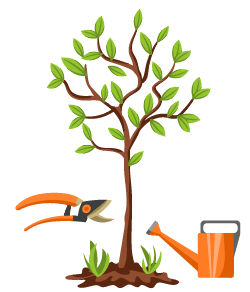 Tree care
Protection from frost and pests
Traditionally, young trees are wrapped in a tent-like covering, meaning they're wrapped in burlap or agrofibre from rootstock to crown. However, this isn't possible with tall trees. Therefore, you can simply pile straw or hay, spruce branches, or a pile of soil onto the root zone. The trunks are then wrapped in roofing felt, burlap, or other available materials.
To prevent pests from gnawing the tender bark and twigs of young trees, the trunks are coated with various substances that are repellent to rodents. Old rendered lard, drying oil, fuel oil, or grease are all suitable, and industrially produced products also work very well. In the fall, the trunks are cleaned of insects with a stiff brush, or a metal one if desired, and then whitewashed with a thick lime solution.
Loosening the soil, watering: proper agricultural technology
In the first few years, it's advisable, even mandatory, to dig up the tree's trunk area twice a season, in early spring and late fall. At this time, you can remove all weeds, debris, fallen leaves and fruit, and root suckers. Over the years, you can easily cover this area with sod, plant it with lawn or herb plants, and flowers. These plants will provide natural aeration to the soil, while preventing weeds from growing, and eliminate the need to hoe the soil the day after. glaze.
Regular fertilizing won't hurt the tree, but you should be extremely careful with it. The initial fertilizer in the hole when planting will last the tree for a good 3-5 years, so don't start fertilizing any sooner. Otherwise, the tree may become damaged. burn, then get sick for a long time and even die. Watering Only young seedlings 1-2 years old are used, then the application of moisture becomes a radial measure only in case of severe drought.
Pruning: simple crown shaping
The crown must be fully formed within the first 2-4 years of its life, giving it a sparse, tiered shape. This is complicated by the branches growing at a very sharp angle, which creates the appearance of excessive density where none exists. No more than a third of the tree's foliage should be removed at a time, otherwise the tree may become diseased, and if over-pruned, even die.
Every fall, inspect the tree's crown, trimming off broken and dry branches, those affected by disease, and any damaged ones. All cuts should be sealed. garden pitch or something else, such as a regular bolt. Branches protruding vertically and those growing inward are also cut off.
Pollinator varieties
- Lydia.
- Antonovka ordinary.
- Mac.
- Welsey.
- Cinnamon striped.
- Grandma's.
- Sugar myron.
- Grandma's.
- Vargul.
Reproduction
- Layers.
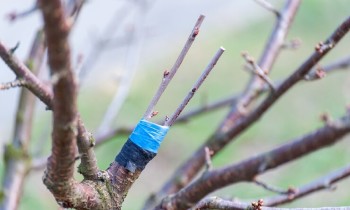
- Grafting cuttings.
- Clones.
- Growing from seeds.
Diseases and pests
- Powdery mildew.
- Scab.
- Fruit rot.
- Pit bitterness.
- Green aphid.
- Flower beetle.
- Scale insect.
- Codling moth.
- Hawthorn.
Ripening and fruiting of Aelita
The beginning of fruiting
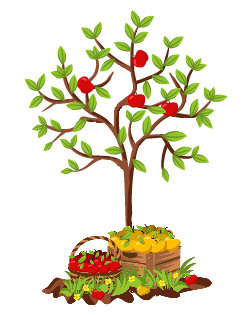 The beginning of fruiting
This variety is considered early-bearing, but this isn't entirely accurate. It doesn't begin to produce its first harvest of just a few apples until 5-6 years after planting in open ground. If you bought two- or three-year-old seedlings, then you can safely expect the first fruiting to occur in 8-9 years.
Flowering time
Aelita blooms by mid-April, but can linger until the end of the month and even begin in May. This depends on the weather and climate, as well as other external factors (ultraviolet radiation, humidity, etc.). The variety produces beautiful, large flowers, pure white or with a subtle, delicate pink hue, gathered in clusters of 5-8, with a moderate fragrance. Flowering typically lasts no longer than 14-18 days.
Fruiting and growth
The tree grows at a moderate rate, gaining only a few dozen centimeters per year. Once fruiting begins, this process slows even more, so you'll have to wait until it reaches its peak. Fruiting also increases gradually, adding several dozen fruits each year. Only by the 10th to 12th year can the tree reach its full potential.
Apples ripen in the first half of September in moderate climates, and towards the end of the month in harsher climates. Consumer maturity occurs no earlier than 14-20 days after cellaring. Apples have an average shelf life of approximately 2-4 months, depending on conditions; slightly longer in a dedicated refrigerator and slightly shorter in a regular cellar.
Top dressing
- Superphosphate.
- Ammonium nitrate.
- Manure.
- Compost.
- Humus.
- Chicken or pigeon droppings.
- Mineral complexes.
What to do if it doesn't bloom or bear fruit
- Check for the presence of pests or diseases.
- Increase watering.
- Feed.
- Transplant.
Why do apples fall?
- Natural weather conditions (wind, rain, hurricane, hail).
- Pest damage.
- Diseases.
- Overripening.
Share your own experience with the Aelita apple variety so that any gardener can learn about it before planting and achieve maximum results.