Babushkino apple tree: characteristics of the variety and care
| Color | Reds |
|---|---|
| Ripening season | Winter |
| Size of apples | Average |
| Taste | Sweet and sour |
| Crown type | Tall tree |
| Shelf life | High shelf life |
| Application | Universal variety |
| Winter hardiness | High winter hardiness |
| Fruiting age | From 5 years old |


 History of origin and regions of growth
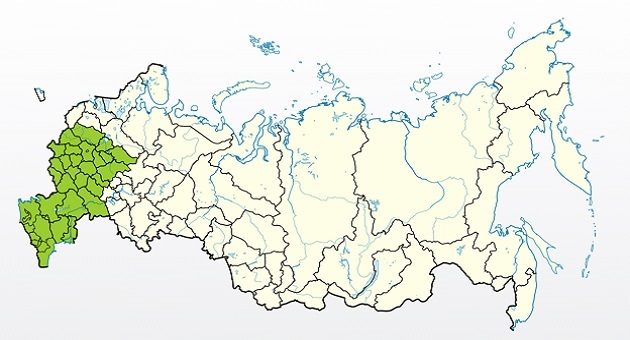
Growing regions
- Middle zone.
- Central Black Earth Region.
- Moscow region.
- Leningrad region.
- Crimea.
- North Caucasus.
Origin
This is one of the apple trees of Russian folk selection that is successfully cultivated today. The Babushkino variety played a special role in the late nineteenth and early twentieth centuries, when it truly became the backbone of the country's industrial horticulture. Until the mid-thirties, it remained the most popular for industrial cultivation and processing.
In the mid-twentieth century, the variety was removed from the State Register of Breeding Achievements, and its place was taken by newer, more worthy and advanced varieties. Its zoning for the Central Region was also cancelled. Nevertheless, Babushkino is often found in individual plantings, enjoys constant demand among consumers, and grows in vast areas from Voronezh to St. Petersburg, as well as much further north and south.
Content
Description of the Babushkino variety
 These winter apple trees, ripening in late autumn, are not considered fast-growing or early-bearing. Fruit production will take a considerable amount of time, but it is usually abundant. The trees are highly cold-hardy and undemanding of soil, watering, fertilizing, and fertilizers.
Babushkino's fruit is beautiful, large, rosy-sided, delicious, and has a long shelf life. It has a powerful aroma, is easy to transport, and is suitable for any processing: juice, cider, jam, preserves, dried fruit, and compotes. The main drawback is the intermittent fruiting and rest periods, but this is more than compensated for by its long, active life. This apple tree is recommended for individual cultivation in home gardens.
Apples: What do they look like?
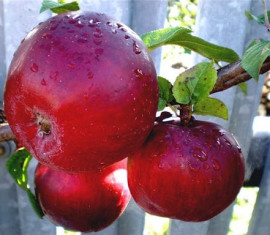
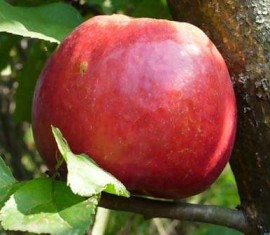
 The fruits are usually medium or even slightly smaller in size, weighing barely 130-150 grams. They are round, sometimes spherical, but more often turnip-shaped or strongly flattened, broadly ribbed, lopsided, asymmetrical, and uneven. Sometimes the ribbing visually divides the fruit into segments, with the lateral seam not visible.
The skin is quite dense, thick, strong, and elastic, providing excellent protection against mechanical damage. The base color is greener, but may have a slight whitish undertone, becoming yellow or yellow-golden after ripening. The blush is very light, translucent, red-orange, and blurred with spots; it develops exclusively on the sunny side. Subcutaneous spots are numerous; they are greenish-gray and not very visible. Experts recommend assessing the chemical composition based on the following data:
- P-active substances (catechins) – 228.9 milligrams.
- Ascorbic acid (vitamin C) – 23.6 milligrams.
- Fructose (total sugars) – 10.5%.
- Pectins – 12.3%.
- Titratable acids – 0.74%.
The flesh is generally fine-grained and snow-white, but can sometimes have a slight lemon or creamy-yellow tint. It is very juicy, aromatic, crisp, refreshing, and piercing, easily breaking off when bitten. The flavor is considered harmonious, dessert-like, and balanced; it is sweet and sour, with a hint of sweetness and a slight vinous-lemonade tartness in the aftertaste. Professional tasters give the fruit 4.5-4.7 points out of 5 for appearance and taste.
Babushkino apple tree: characteristics
Crown and root system
 The trees are considered medium-sized, and their growth vigor also leaves much to be desired. They can grow no more than 15-25 centimeters per year, and even then, not always. The maximum height of the tree is 4.3-5.2 meters without formative crown pruning.The crown is broadly rounded, drooping, spreading, and weeping in old age. The shoots are thick, long, and vigorous, straight or slightly curved, covered with gray and grayish-brown bark prone to cracking and chipping. Fruiting is concentrated on the fruiting shoots, rings, and spurs.
The leaves are medium-sized, oval or oval-elongated, but mostly broad-sided, almost rounded, with a serrated, serrate-crenate margin, and short, pointed. They are usually matte, but can also be slightly shiny. The underside of the leaf blade is tomentose, the margins are raised, and the leaf is almost flattened. The root system is deep, fibrous or taproot, well adapted for moisture seeking.
Productivity and pollination
The variety is generally considered high-yielding, although it cannot compare with varieties such as Antonovka.
In a single season, a mature Babushkino tree can yield no more than 135-160 kilograms of fragrant and beautiful apples. This is achieved with high-quality, timely care and favorable weather and climate conditions..
Unusually for old Russian folk-bred varieties, this one is completely self-sterile. This means it won't produce any apples, even with super-profuse blooms, unless there are other pollinators nearby. Therefore, apple trees should be planted interspersed, selecting them according to their blooming times.
Winter hardiness and disease resistance
Trees are considered highly resistant to low temperatures. They easily withstand temperatures as low as -27-32°C, and suffer virtually no damage. However, during early childhood and long, protracted winters, it's essential to properly prepare Babushkino for winter, wrapping and covering it.
The variety has a moderate resistance to rot diseases of various etiologies. It rarely develops scab, and parasitic threats are not particularly severe. However, if it does become infected, it is severe and severe. Therefore, preventative treatments with commercial products, available at specialty stores, should not be neglected.
Rootstocks and subspecies
There are no subspecies of this variety, but it can be grown on various rootstocks, the most popular of which is dwarf. This variety produces compact trees, only 2-3 meters tall, taking up little space in the garden. However, winter hardiness is significantly reduced, and the fruits can grow larger, weighing up to 150-180 grams. The other characteristics of the Babushkino remain unchanged.
Features of growing Babushkino
 Landing
 Landing
Basic conditions
- Not only this variety, but others also love plenty of open space and sunlight. Therefore, the planting site should be chosen accordingly. They can also grow and produce fruit in the shade, but the yield will be significantly less abundant.
- Groundwater level plays a major role in choosing a planting site. Trees shouldn't be allowed to reach the water with their roots, as this will immediately cause rot. If the terrain is unsuitable, a mound should be built and the trees planted into it. A sheet of roofing felt or slate can also be buried at a depth of 2 meters.
- Crown ventilation doesn't play a special role in Babushkino, but stagnant air is also undesirable, as it increases the risk of disease.
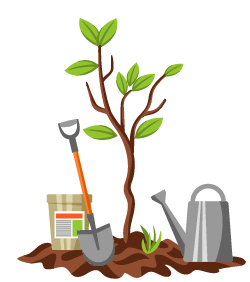
- Prepare the holes 2-4 weeks in advance, or even better, a season before planting. Dig holes 70-90 centimeters deep and the same or slightly larger in diameter. Add a nutrient mixture (topsoil + fertilizer) to the bottom, cover with a drainage layer of gravel, broken brick, or vermiculite, add 25-40 liters of water, and leave outdoors.
- Between trees in a row you need to leave approximately 2.5-3 meters, and between rows 4-5 meters.
- The grafting site (root collar) should always remain above ground level. Therefore, when planting, it's best to leave it at a height of 7-9 centimeters, allowing for future soil subsidence.
- Stake stakes are driven or dug directly into the holes. They will not only provide support for the apple trees but also provide protection from frost. It's best to remove them no earlier than 3-4 years after planting.
- Place the seedling on the drainage, sprinkle it with soil, compact it with your feet, water it with 45-60 liters of water, the surface mulch humus, compost, sawdust.
Landing dates
It's best to plant apple trees in late autumn, after the leaves have fallen, around October. However, they also tolerate March-April planting well. Apple trees with their own root ball (closed root system) can be planted at any time during the growing season.
Tree care
 Tree care
Protection from frost and pests
To prevent trees from freezing in winter, they are prepared in advance. Watering after completion August This is not recommended; it should only be done in extreme cases. Trunks can be wrapped well with roofing felt, burlap, spunbond, or agrofibre. Small trees, such as young or dwarf trees, can be wrapped using the tent method.
To deter rodents that come to gardens in winter to feast on young bark and tender twigs, trees are coated with fuel oil, grease, and lard. To protect against insects, the trunk is brushed and then whitewashed to a height of 1-1.3 meters.
Loosening the soil, watering: proper agricultural technology
Babushkino doesn't require any special soil loosening. However, experts recommend digging at least once a year until the trees reach 6-7 years of age. After this, the area around the trunk can be covered with sod and seeded with lawn or herbs. Hoeing can be done at any time, removing weeds, other plant sprouts, and root suckers, which are quite abundant with this variety.
Watering standard trees will only be necessary in the driest and hottest weather conditions, when rain has not fallen for more than 3-4 weeks. Otherwise, the tree will find moisture on its own, although young seedlings can be watered once every 2-3 weeks. Fertilizer should be added with the water, as this will make it much more easily absorbed.
Pruning: simple crown shaping
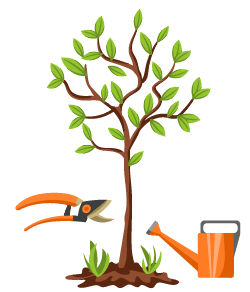
It's best to train young trees from the first year of life. Immediately remove a third of the tree's total length, as well as side shoots, leaving only 2-4 skeletal branches. Subsequently, maintain a sparse, tiered form, placing branches at different heights and spaced apart.
Regular inspection and pruning are carried out according to the sanitary plan. Diseased, dry, or broken shoots are cut off, and wounds are sealed. garden pitchFrom 10-12 years, you can rejuvenate by removing 2-3 older shoots to give the young ones a chance to develop.
Pollinator varieties
- Borovinka.
- Striped anise.
- Cinnamon.
- Korobovka.
- Antonovka.
- Logo.
- Gala.
- Idared.
Reproduction
- Layers.
- Grafting cuttings.
- Clones.
- Growing from seeds.
Ripening and fruiting of Babushkino
The beginning of fruiting
 The beginning of fruiting
This variety is characterized by its late onset of fruiting, so you'll have to wait a while for the fruit to appear. Only in the 7th or 8th year do buds open on the tree, which soon develop into ovaries and fruits. Moreover, in poor weather or a harsh climate, these dates can be further delayed. Dwarf apple trees begin bearing fruit as early as the 3rd or 4th year, which is especially pleasing to gardeners.
Flowering time
The buds open around mid-May, sometimes even as late as early June. This late opening doesn't harm the apple trees, as they have plenty of time to ripen in a temperate climate. The flowers are large, beautiful, and fragrant, gathered in clusters of 3-5, covering the branches quite profusely. Unopened buds appear pink, but open into snow-white flowers with delicate petals. The process lasts at least 12-16 days. Pollination is primarily performed by bees, with a flight radius of 1.8-2 kilometers, so pollinators are sure to be found.
Fruiting and growth
The tree grows very slowly, seemingly hesitantly. However, this is fully compensated by its resilience to various weather and climate conditions. Before the first fruiting, it still reaches its normal height of 25 centimeters, but then slows significantly. Fruiting also increases gradually, requiring considerable patience. A full harvest is not expected until the 10th to 12th year.
Babushkino ripens in late September or mid-October, depending on the region and weather conditions. The fruit holds well on the branches, so there's no need to worry too much about them falling off, but it's also not recommended to delay harvesting. Consumer maturity occurs a little later, approximately 1-2 months after storage in the cellar or refrigerator, when the sugars have fully caramelized. They transport well, keeping until the following summer, and sometimes until the next harvest.
Top dressing
- Chicken manure.
- Manure.
- Humus.
- Compost.
- Wood ash.
- Peat.
- Ammonium nitrate.
- Superphosphate.
What to do if it doesn't bloom or bear fruit
- Inspect for diseases or pests.
- Limit or increase watering.
- Feed or apply fertilizer.
- Transplant to a sunny place.
Why do apples fall?
- Natural weather conditions (wind, rain, hurricane, hail).
- Pest damage.
- Diseases.
Share your own experience with the Babushkino apple variety so that any gardener can learn about it before planting and achieve maximum results.