Medunitsa apple tree: characteristics of the variety and care
| Color | Reds |
|---|---|
| Ripening season | Summer |
| Size of apples | Average |
| Taste | Sweet and sour |
| Crown type | Tall tree |
| Shelf life | Average shelf life |
| Application | For recycling , Fresh |
| Winter hardiness | Average winter hardiness |
| Fruiting age | From 5 years old |


 History of origin and regions of growth
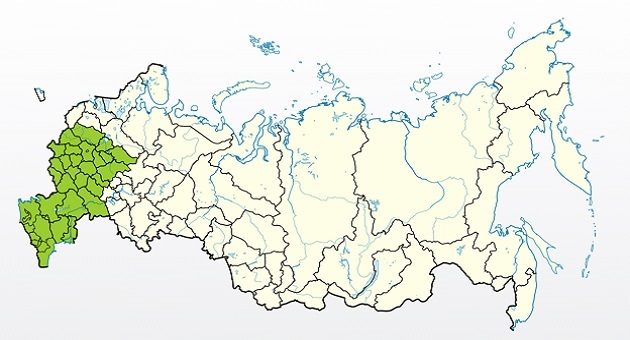
Growing regions
- Middle zone.
- North Caucasus.
- Crimea.
- Some northern regions.
Origin
The development of a new apple variety, which was eventually named Medunitsa for its unique flavor, was initiated by the renowned Russian scientist and breeder Sergei Ivanovich Isaev. The biologist had been working on the cultivar since the mid-1930s, but it wasn't until the early 1940s that he succeeded in producing the first viable hybrid. The parents were the Canadian Welsi and the Russian Cinnamon Striped variety.
The research was interrupted by the war and resumed only after its conclusion. However, in the mid-1950s, Isaev was awarded the Stalin Prize for the creation of this unusual new apple tree. To date, the variety has not been officially entered into the State Register or zoned, but in fact, it is widely grown in the aforementioned regions.
Content
Description of the Medunitsa apple variety
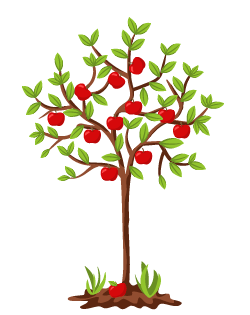 This early-ripening summer variety with its early-ripening fruit, pleasant flavor, and attractive appearance is a favorite among most Russian gardeners. It's a highly resistant variety that's virtually never susceptible to disease. scab – the main infectious fungal disease of apple trees.
It's undemanding when it comes to growing conditions, isn't picky about soil or moisture, and won't constantly draw attention to itself. Lungwort has fairly good winter hardiness, which distinguishes it from most summer varieties. It's not ideal for large commercial gardens, but it's a perfect choice for smaller farms.
Apples: What they look like
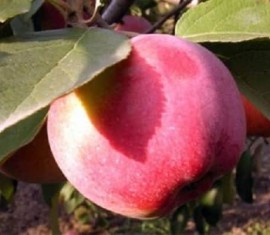
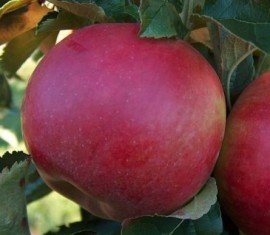
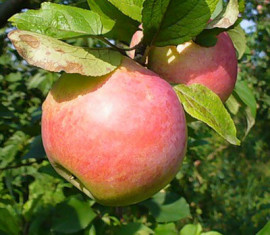
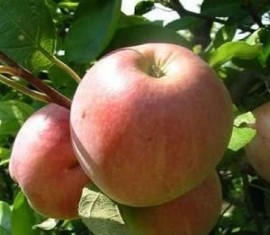
 Lungwort fruits are typically medium-sized, weighing approximately 140-160 grams at most. They don't grow any larger, but in shade or during cool years they can become smaller. They are round, slightly flattened along the central axis, but can also be somewhat conical or turnip-shaped. They are generally uniform, symmetrical, and have subtle ribbing.
The skin is dense, even thick, but fragile. It's initially bright green, becoming increasingly yellow or yellow-orange as it ripens. An oily coating may appear on the surface. The blush can cover 45% to 90% of the surface, and can be fuzzy, streaky, striped, crimson, or bright red. Subcutaneous spots are light, numerous, small, and poorly visible on the surface. The chemical composition can be assessed using the following parameters per 100 grams:
- P-active substances (catechins) – 284 milligrams.
- Ascorbic acid (vitamin C) – 10.2 milligrams.
- Total sugars (fructose) – 13.9%.
- Pectins (fiber) – 8.7%.
- Titratable acids – 0.42%.
The flesh is dense, fine-grained, juicy, and pleasantly textured, tender and not prickly, yet crisp. The flavor is more on the sweet side, with a subtle and pleasant characteristic tartness in the aftertaste. It's dessert-like, harmonious, and balanced, with a distinct honey aroma and flavor. Professional tasters have given it a 4.2 and 4.4 points for appearance and flavor, respectively, on a 5-point scale.
Apple tree Medunitsa: characteristics
Crown and root system
 The tree is considered a tall-growing variety, easily reaching 6-7 meters, or even more. However, many gardeners limit its growth to a lower height for ease of maintenance and harvesting. The crown is oval when young, but with age it becomes pyramidal, sometimes even broadly pyramidal. It is not prone to overcrowding, so pruning is usually straightforward. Branches are medium-thick, light brown or slightly greenish in color, straight and long, extending from the trunk mostly at an angle, almost straight, and bear mixed fruit.
The leaves are medium-sized, leathery, oblong-oval, slightly elongated, dense, glossy, and often pubescent on the underside. They are green or light green, but sometimes have a distinct yellowish tint, and the ribbing is rough. The margins are serrated, with a long, pointed tip. The root system is robust, branched, and deeply or moderately deep, depending on the rootstock used. It may or may not have a central taproot.
Productivity and pollination
The variety is considered to have average yields, but its early maturity still makes it in demand on the market, even after so many years.
Experienced growers harvest approximately 85-120 kilograms of fragrant and delicious apples from one mature Medunitsa tree during the growing season.
This apple tree is also called self-fertile, meaning it can produce fruit even when there isn't a single tree nearby (50-150 meters) that blooms at the right time. However, to maximize yields, it's best to have similar apple trees nearby. Many gardeners also recommend spraying the trees with sugar syrup or honey diluted with water during flowering, and using mobile apiaries.
Winter hardiness and disease resistance
This variety is hardly delicate, as it can withstand short-term frosts down to -40-42°C. However, this is only true if the frosts are short-lived. If the frosts are longer than a year, the trunks can suffer serious damage, sometimes fatal. Trees recover well from frost damage, but the main thing is that it doesn't prove fatal (45-60% of the crown). Therefore, all preparation and winter protection measures must be carried out regularly and promptly.
Lungwort is not just immune to scab and powdery mildew, as well as other fungal infections, but it's not tolerant. Diseases do occur, but very rarely. If the tree does become infected, it primarily affects the foliage, while the fruit remains edible. However, it's best to take preventative measures, spraying the trunks with fungicides and insecticides, as insects readily damage not only the foliage but also the fruit and even the wood.
Rootstocks and subspecies
There are subspecies of the Medunitsa variety, but these are simply trees grown on different rootstocks. For example, seedlings produce tall trees reaching seven meters in height, while dwarf and semi-dwarf varieties barely reach 2.5-4 meters. The fruits will fully replicate all the characteristics of the parent variety, and yields will simply fluctuate within the capabilities of the canopy.
However, there is a special subspecies of Lungwort, which is fundamentally different from its parent variety. Its harvest ripens closer to mid- to late September, its apples have a less intense blush, and they can be stored almost until April or May.
Features of growing Lungwort
 Landing
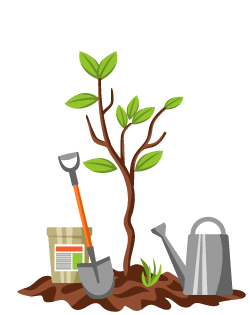 Landing
Basic conditions
- Like all apple trees, Lungwort prefers open, sunny locations. However, even in the shade, it can produce a fairly good harvest, although the fruit will be somewhat smaller.
- This variety does not like drafts, but responds very positively to good ventilation.
- High groundwater is the bane of any gardener's existence. It's best to plant apple trees where the groundwater level doesn't rise above 2.5-3 meters, otherwise their roots will inevitably reach the ground and rot.
- There are no special soil requirements, except perhaps for excessive acidity. Acidity can kill plants, so treating the soil with lime is a good solution.
- Planting holes should be prepared in advance; you can use ones from the previous season, but 2-4 weeks will suffice. To do this, dig steep holes 60-70 centimeters deep and about 80-90 centimeters in diameter. Fill the bottom with fertile soil diluted with organic matter, lay stones or broken bricks for drainage, and then fill the entire thing with 25-45 liters of water and leave it outdoors.
- It's best to leave approximately 3.5-4 meters of space between trees in rows, and the same amount between rows. This will prevent them from clashing with each other as they grow.
- The root collar of the seedling always remains above the surface, otherwise it will inevitably take root higher, losing all the original properties of the rootstock.
- Place the tree in the hole, supporting it by the trunk, and fill it with soil, compacting it by hand. Create a small mound of soil around the perimeter, add 25-35 liters of water, and mulch the surface with humus or sawdust.
Landing dates
Whether to plant trees of this variety in spring or fall is a personal choice for the gardener. However, it's important to understand that in colder regions, the tree may not have time to adapt to the new conditions before the cold weather sets in, if it's less than 3-4 weeks away. Therefore, spring planting is preferable in these regions. Trees with closed root systems can be moved to their designated location in the garden at any time during the growing season.
Protection from frost and rodents
Despite the trees' exceptional hardiness, it's important to protect them from frost. Grass mats, straw bales, or simply a pile of soil can be placed on the root zone. Trunks are usually wrapped in burlap, agrofibre, or other suitable materials. Only dwarf tree species can be covered with a tent, as it's difficult to imagine a 5-6-meter structure covered with a tarp, and the weight of the covering material itself can be excessive for the crown.
To protect trees from those hungry rodents that come closer to human habitation in winter and gnaw on young bark and shoots, coat the trunks to a height of approximately 1-1.3 meters with ordinary rendered animal fat (lard). Whitewashing the trunks with lime also helps repel insects from chipped and cracked bark.
Tree care
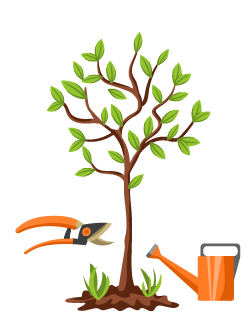 Tree care
Loosening the soil, watering: proper agricultural technology
All plants love oxygen-rich soil, and Lungwort is no exception. Therefore, dig the area around the trunk at least once, but preferably twice a year: in early spring and late fall. You can cultivate the soil more frequently with a regular hoe, approximately 3-4 times during the growing season. Be sure to remove weeds from under the tree, cut back root shoots, and promptly clear the area of fallen leaves or rotting fruit.
The tree will need to be watered frequently after planting. It's best to keep the top layer of soil dry; once it's completely dry, apply approximately 10-15 drops of water. If there's precipitation, postpone watering until the soil dries out again. Subsequently, watering can be done once every ten days, and only in years of extreme heat and drought. Under normal conditions, a mature tree will need 5-7 waterings per season, along with additional fertilizer.
Pruning: simple crown shaping
This variety has very weak shoot production, although it does produce significant annual growth, and is considered a fast-growing variety. Formative pruning is usually performed at the nursery during the first year, and then only in the second or third year. A cup-shaped or sparsely layered pruning is optimal, as this makes care and harvesting much easier. However, the choice here is entirely up to the owner, as the tree itself is very responsive to various manipulations.
Mandatory maintenance also includes sanitary pruning. This involves removing all dead or diseased branches, as well as any damaged or broken ones. All wounds should be treated with garden pitch or any other suitable material at hand, even simple peat.
Pollinator varieties
- Cinnamon Striped.
- Welsey.
- Anise.
- Victory.
- Glory to the victors.
- Borovinka.
Reproduction
- Rooting cuttings.
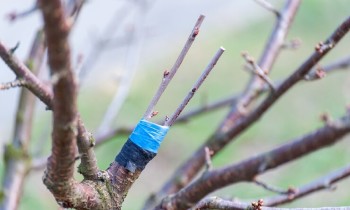
- Grafting by buds and cuttings.
- Clones (offshoots).
Diseases and pests
- Powdery mildew.
- Scab.
- Black crayfish.
- Pit bitterness.
- Cytosporosis.
- Green aphid.
- Hawthorn.
- Codling moth.
Ripening and fruiting of Lungwort
The beginning of fruiting
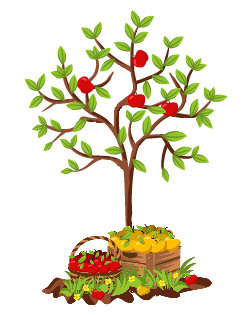 The beginning of fruiting
Apple tree fruiting depends largely on the climate of the region where it's grown. In harsher climates, it begins bearing fruit late, while in warmer climates, it begins bearing fruit as early as the 5th or 6th year. The rootstock used also influences this. Vegetative standard varieties tend to bear fruit later, while semi-dwarf and dwarf varieties begin bearing fruit as early as the 2nd or 4th year, yielding quite a good amount of fruit, approximately 10-15 kilograms.
Flowering time
The onset of flowering of the Lungwort also depends directly on climate and weather. Typically, by the end of May, it opens its fragrant buds, gathered in small inflorescences of 5-8. However, if it's cold outside, there's constant rain, and strong northerly winds blow, the flowering period can shift to early or even mid-June. The flowers are very large and beautiful, with fleshy, snow-white or slightly pinkish petals. They are fragrant, and their scent can be detected from afar.
Fruiting and growth
Lungwort is generally considered a fast-growing weed, as it can stretch at least 45-65 centimeters in a year, sometimes even more. Harvests increase gradually, reaching full production by the 8th or 9th year. However, there's one problem: only for the first 12-15 years will an apple tree produce fruit abundantly and annually without additional intervention. Subsequently, if you don't regulate flowering (by pinching off some of the buds), the apple trees will begin bearing fruit every other year, and the fruit will become smaller.
The harvest can be started as early as late August, but you can wait until mid-September. Ripening is uneven due to the dense foliage on the branches. Therefore, you can pick them in stages, picking the ripest ones first, letting them rest for a few days, and then picking those that have reached maturity. There's no need to rush, as they don't tend to fall to the ground. The fruit can be stored for quite a long time, at least 3-5 months. However, it's important to note that the unique honey-spicy flavor and aroma will last no more than 3-4 weeks after being stored.
Top dressing
- Chicken manure.
- Mineral complexes.
- Wood ash.
- Humus.
- Compost.
- Ammonium nitrate.
- Manure.
What to do if it doesn't bloom or bear fruit
- Provide moisture.
- Check for pests and diseases.
- Transplant to a sunnier location.
- Limit watering.
Why do apples fall?
- Natural factors.
- Pests.
- Diseases.
Leave your feedback on the Medunitsa variety to share your experience with other gardeners.