Apple tree Pink filling: characteristics of the variety and care
| Color | Reds |
|---|---|
| Ripening season | Summer |
| Size of apples | Average |
| Taste | Sweet and sour |
| Crown type | Average tree height |
| Shelf life | Low shelf life |
| Application | Fresh , For recycling |
| Winter hardiness | High winter hardiness |
| Fruiting age | Up to 5 years |
 History of origin and regions of growth
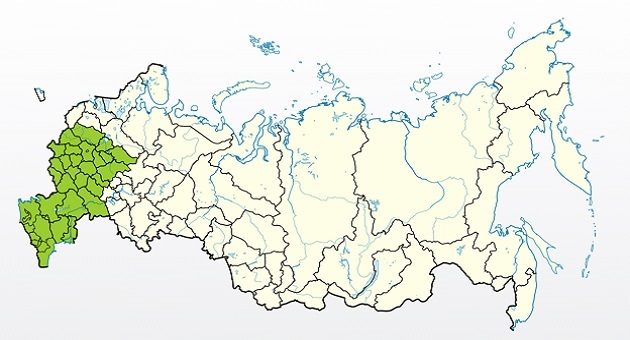
Growing regions
- Middle zone.
- North Caucasus.
- Moscow region.
- Leningrad region.
- Crimea.
- Northern regions (selective).
Origin
This variety is considered a folk selection. This means it originated from the spontaneous crossing of certain apple trees, without human intervention. This variety has been known for quite some time, and is being studied by the All-Russian Institute of Selection and Technology of Horticulture and Nursery.
Some believe that the Malinovka and Susleypskoe varieties are the same as the Roziv Naliv apples, but this is not true. These apple trees are very similar in both appearance and taste, but calling them identical would be a mistake..
It is believed that it was previously listed in the State Register in 1956, but no further information is currently available. Nevertheless, the variety was zoned for the Volga-Vyatka region, and in practice, it can be easily grown throughout the central zone, as well as in the northern and southern regions.
Content
Description of the Pink filling variety
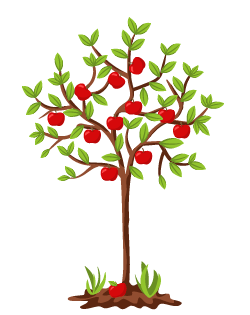 This apple tree is as popular among the people as the outstanding and well-known White Naliv. It is hardy, thrives in almost any soil, is tolerant of weather conditions, and requires little care, fertilizing, watering, or special attention.
The fruits are quite large, have high marketable qualities, are attractive and delicious. They are recommended for growing in small households, as they have poor transportability and shelf life, although they are very suitable for making juices, jams, preserves, and compotes.
Apples: What do they look like?
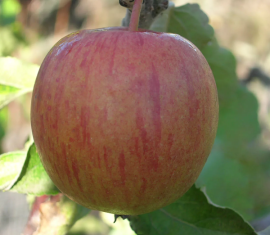
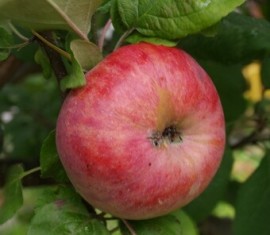
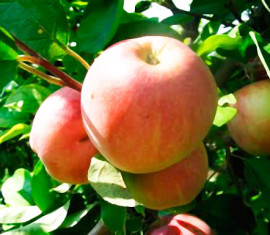
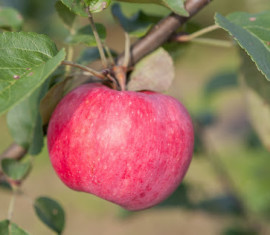
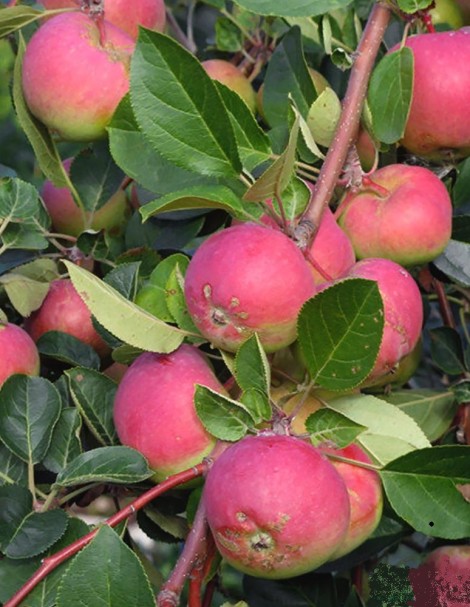
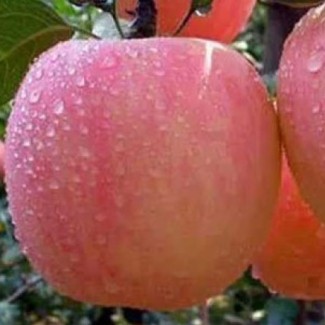
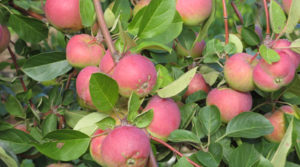 The fruits are typically round or round-conical in shape, medium in size, and sometimes slightly larger than average. Apples typically grow to approximately 130-150 grams, but with proper care and in favorable years, they can reach 150-180 grams. The fruits are generally uniform in size, broadly ribbed, and may appear slightly flattened.
The skin is dense, yet thin and delicate, making it easily damaged. It is smooth, shiny, and glossy, with a beautiful golden-yellow hue when ripe, although initially green or even dark green. The blush is mostly mottled and slightly diffuse, bright red, raspberry, cherry, or beetroot, and covers 55-65% of the surface. At maturity, the entire surface becomes covered with a dense, bluish-gray waxy coating. Subcutaneous spots are numerous, light, and moderately visible due to the variegation of the fruit. The chemical composition can be assessed by the following parameters:
- P-active substances – 234 milligrams.
- Ascorbic acid (vitamin C) – 9.5 grams.
- Sugar (fructose) – 13.1%.
- Titratable acids – 0.45%.
- Pectins (fiber) – 10.4%.
The flesh is dense, fine-grained, and pleasantly chewy. It's exceptionally juicy, snow-white or slightly greenish in color, and has a distinctive, easily recognizable, powerful aroma. The flavor is considered harmonious and balanced, lemonade-like, dessert-like, sweet with a tart finish. There's no official tasting score for these apples, but unofficial estimates place them at 4.5-4.7 out of 5.
Apple tree Pink filling: characteristics
Crown and root system
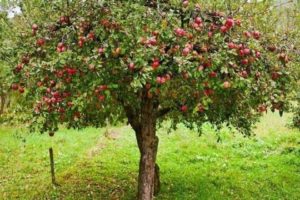 The tree is low growing, but is considered medium sized. Basically, all representatives of the variety barely reach 2.5-3 metersThis allows them to be considered natural semi-dwarfs. The crown of young trees is oval, pyramidal, or slightly elongated, but over the years it becomes broadly oval, spreading, and sometimes even weeping, depending on pruning. The branches are angled almost straight, are long, of medium thickness, covered with gray or gray-green bark, and bear mixed fruit.
The leaves are medium-sized, rounded-elongated, and long-pointed, with tips that can curl like propellers. They are light green or deep green, dense, and leathery, with rough nervation and wavy, serrated, and serrated margins that can fold into a boat shape. The undersides are lightly pubescent. The root system is medium-deep, with the presence of a main taproot determined by the rootstock. It is branched and well-adapted to the search for nutrients and moisture, allowing the trees to thrive even in rocky and sandy soils.
Productivity and pollination
Due to the small height of the tree, the yield is considered high, but in reality it is more logical to classify it as average.
A single mature tree, 10-12 years old, can yield 75-90 kilograms of very unique, juicy, and delicious apples in a single season. Even with good care, regular feeding, fertilization, and watering, and in favorable years, these figures will increase by a maximum of 10-15 kilograms..
The variety is considered self-fertile, and completely so. This means it will produce a harvest even if there's no other apple tree within 50-100 meters with a suitable flowering time. However, experienced gardeners note that yields increase when other suitable trees are available, so they recommend interplanting this variety with other suitable trees.
Winter hardiness and disease resistance
This variety is so resistant to low temperatures that many even plant it in the Far East, the Urals, and Siberia. Moreover, with the right approach, it grows quite well in such harsh conditions. Temperatures of -40-45°C, with proper winterization and proper shelter, are completely unaffected by the trees. However, humidity should be monitored and sudden changes from frost to thaw can cause serious damage to the trunks. The apple tree's resilience is also impressive. It easily tolerates intense, prolonged heat up to +38°C to +40°C without even suffering any burns.
The variety has natural resistance to most apple tree diseases, but no genetic immunity. In years of severe epiphytotics, scabies Leaves suffer the most, and fruit is often affected by fruit rot. Insects also pose a threat. Therefore, it's best to take preventative measures early to avoid regrets later.
Rootstocks and subspecies
There are no subspecies of Pink Filling, but it is grown on a wide variety of rootstocks, giving it unique properties and qualities. For example, on vegetative rootstocks, it is most frost-resistant, but it begins bearing fruit later and produces smaller apples. On dwarf and semi-dwarf rootstocks, trees are less tolerant of low temperatures, but they produce fruit earlier and are much larger.
Peculiarities of Growing Pink Filling
 Landing
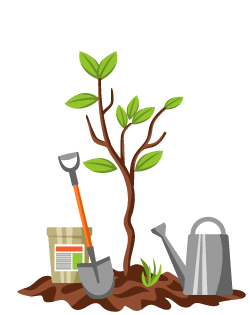 Landing
Basic conditions
- Apple trees are quite undemanding when it comes to soil, although they thrive in nutritious and light soils, such as sandy loam, soddy soil, sod-podzolic soil, loamy soil, and similar soils. The main criterion to consider is acidity; it should be low, no higher than 6-6.5 pH.
- A sunny location should be chosen for planting any apple trees; they grow poorly in the shade and may even refuse to bloom and bear fruit.
- It's best to have good ventilation in the area, but avoid drafts. If this isn't ensured, the trees can suffer serious damage from both strong winds and stagnant air.
- It's best to keep the groundwater level no higher than 2.3-2.5 meters, otherwise the tree's roots will reach it and cause rot. If there's no other choice, you can bury a sheet of slate or several layers of roofing felt or tar paper at a depth of two meters. This barrier will act as a barrier, directing the rhizome away from the watercourse.
- You can prepare the holes 6-8 months before planting, but this is not necessary. You can also dig them just a few weeks in advance, but allow them to mature outdoors. To do this, dig a hole 60-70 centimeters deep and 90-100 centimeters deep. Fill the bottom with fertile topsoil mixed with fertilizer. Then add drainage and fill with 45-60 liters of water.
- A distance of 1.8-2.2 meters between trees is sufficient, but 2.5-3 meters between rows is preferable. This will prevent mature apple trees from clashing with their roots and crowns.
- If the properties of the rootstock are important, then they can be preserved by leaving root collar when planting a tree, it should be 6-12 centimeters above the surface.
- Stake stakes or planks are driven into the holes immediately for support. These stakes should not be removed during the first few years; it's best to wait about 6-7 years.
- Place the seedling vertically, straighten the rhizome, support the trunk, and fill it with soil, gently compacting it with your hands, ensuring that no air pockets form. Water the trees with 50-60 liters of water, and the surface mulch chopped grass, compost, sawdust.
Landing dates
Under normal conditions, trees can be planted in spring or fall; they show roughly equal survival rates. However, in more southern regions, this is unimportant, while in northern or northeastern regions, it can be a key factor. Therefore, spring is a better option in these regions, allowing the trees time to adapt to the conditions before frost sets in. The optimal times are April and October, before the sap begins to flow in the trunks or after the leaves have fallen.
Tree care
 Tree care
Protection from frost and pests
Only in extremely cold regions do trees require serious shelter, such as a tent-like covering. In all other regions, simply wrapping the trunks with burlap, roofing felt, or tar paper, or covering the root zone with spruce branches or straw, is sufficient. This will keep the trees completely safe; the main thing is to prevent rotting, so all covering materials must be completely dry.
To repel hungry rodents that chew on bark and branches, smear the trunks with melted lard. Fuel oil, grease, old drying oil, and even sunflower oil—anything that has a pungent and unpleasant smell to herbivores—work well. This gets rid of the insects. whitewashing trunks with lime in spring and autumn.
Loosening the soil, watering: proper agricultural technology
It's crucial that the soil around the trunk isn't packed to the point of being like asphalt, otherwise the tree simply won't have enough air to breathe. The rhizome prefers loose, moist soil, so digging around the trunk should be done in the spring and fall, with hoeing 6-9 times in between. At the same time, you can remove weeds, shoots from other plants, and root suckers.
Watering It wouldn't hurt to water the trees, but it's not absolutely necessary, as they can easily tolerate intense heat sustained for quite a long time. However, apple trees respond well to watering, and the results are immediately visible. In the spring, apple trees are fed with minerals and organic matter, applied with water. In winter, it's a good idea to pack down the snow around the trunk; this will help retain moisture in the future and also prevent frostbite in the root zone.
Pruning: simple crown shaping
The tree has a remarkable growth rate, so it tends to become denser. Annual pruning is sufficient. All branches that protrude upward or inward should be removed, as they will interfere with ventilation and sunlight. In the early years, a sparse, tiered form is typically developed, with the central conductor rising above all the branches, and the branches spaced widely apart at varying heights.
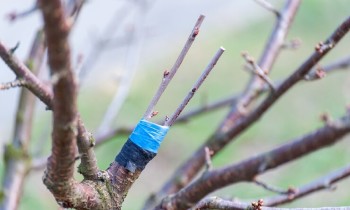
Sanitary pruning is performed in both spring and fall. All dry, broken, and diseased shoots are removed. Wounds should be immediately sealed with garden pitch to reduce stress on the tree. Around 13-15 years old, rejuvenation pruning can begin, removing 2-3 mature branches at a time, allowing new, younger ones to develop.
Pollinator varieties
- Moscow pear.
- Mantet.
- Melba.
- White filling.
- Idared.
- Currency.
- Champion.
- Arkad.
- Pendula.
- Borovinka.
Reproduction
- Rooting.
- Kidney grafting.
- Cuttings.
- Growing from seeds.
Diseases and pests
- Scab.
- Bacterial burn.
- Powdery mildew.
- Cytosporosis.
- Green aphid.
- Codling moth.
- Leaf roller.
- Hawthorn.
Ripening and fruiting of Pink filling
The beginning of fruiting
 The beginning of fruiting
This old apple tree, a folk selection, is considered to be very early fruiting. It begins bearing fruit as early as 4-5 years after planting in open ground. However, the first flowers can sometimes be seen on seedlings as early as 2-3 years. It's not recommended to allow them to develop further at this stage, and they will likely be barren. Initially, the tree produces only 4-8 kilograms of fragrant fruit, which is enough for a sample.
Flowering time
This is an early variety, so it blooms very early. Buds begin to form in late April, and by early May, beautiful, medium-sized, snow-white or slightly pinkish flowers have blossomed. They are cup- or saucer-shaped, with fleshy, delicate petals, mostly five-petalled, and possess a powerful, pleasant fragrance that can be detected from afar and is quite recognizable.
Fruiting and growth
The tree grows 35-50 centimeters per year, but can stretch as high as 70-80 centimeters before bearing fruit. It quickly adds leaves and branches, requiring gardeners to work with pruning. Its yield also increases rapidly. By the 8th-10th year, the harvest is already quite full, and by the 10th-12th year, it reaches its peak. The tree's active life span is over 50 years, allowing for a large harvest of apples from a single tree.
The fruits begin to ripen around the second half of July. However, this process is gradual, not all at once, allowing you to enjoy fresh fruit for a long time, plucked straight from the branches. They are firmly attached and do not fall off even when very overripe, but it's best not to let them overripe, otherwise their short shelf life will be reduced to just a few days. Their shelf life is average, only 2-3 months, but it's best to eat or process the apples completely before early October, as after that they can become soft, crumbly, limp, and slightly bitter.
Top dressing
- Peat.
- Compost.
- Ammonium nitrate.
- Humus.
- Chicken manure.
- Superphosphate.
- Manure.
- Mineral complexes.
What to do if it doesn't bloom or bear fruit
- Check for pests or diseases.
- Transplant into the sun.
- Water.
- Fertilize.
Why do apples fall?
- Wind, hail, hurricane, rain.
- Pest damage.
- Diseases.
Please leave your feedback on the Pink Filling variety, as many gardeners would like to grow similar ones in their gardens.