Apple tree Stella: characteristics of the variety and care
| Color | Reds |
|---|---|
| Ripening season | Autumn |
| Size of apples | Large , Average |
| Taste | Sweet and sour |
| Crown type | Columnar tree |
| Shelf life | Average shelf life |
| Application | For recycling , Fresh |
| Winter hardiness | Average winter hardiness |
| Fruiting age | Up to 5 years |
 History of origin and regions of growth
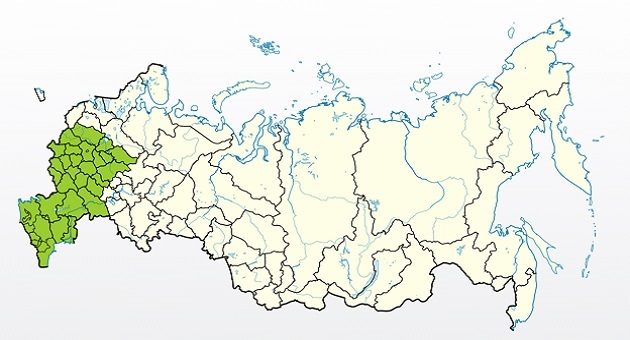
Growing regions
- North Caucasus.
- Middle zone.
- Moscow and Moscow region.
- Some northern regions.
- Leningrad region.
- Crimea.
Origin
The variety was developed by the I.V. Michurin All-Russian State Research Institute of Genetics and Breeding of Fruit Plants in the late twentieth century. By the mid-1990s, the first hybrid seedlings were obtained, developed by Nikolai Ivanovich Savelyev and his daughters, Irina Nikolaevna and Natalya Nikolaevna.
In 2009, the plant's first application for field variety testing was submitted, which it passed with flying colors. By 2011, Stela was accepted into the State Register of Breeding Achievements and zoned for the Central Black Earth Region. In reality, it is grown in much larger areas, south, west, east, and north of these regions.
Description of the Stella variety
 This columnar tree has a number of key properties and qualities that attract gardeners from all over the country. Its compact, small-diameter crown allows for significantly higher planting density. It tolerates both winter cold and sudden temperature fluctuations, as well as summer heat and drought, is resistant to soil salinity, and requires no special care.
The apples grow large, beautiful, and attractive, delicious, juicy, and spread their pleasant aroma far and wide. The fruit can be eaten fresh, but they are also suitable for processing into compotes, jams, and preserves. They are quite suitable for long-distance transport and keep well. This variety is recommended for cultivation in large industrial orchards and small home gardens.
Apples: What do they look like?
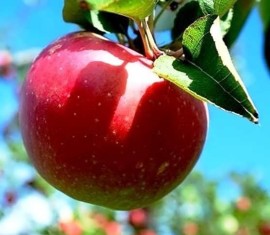
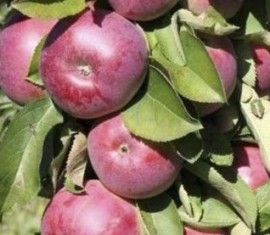
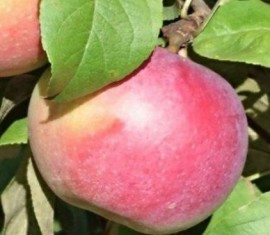
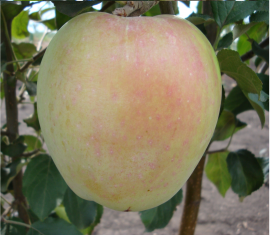
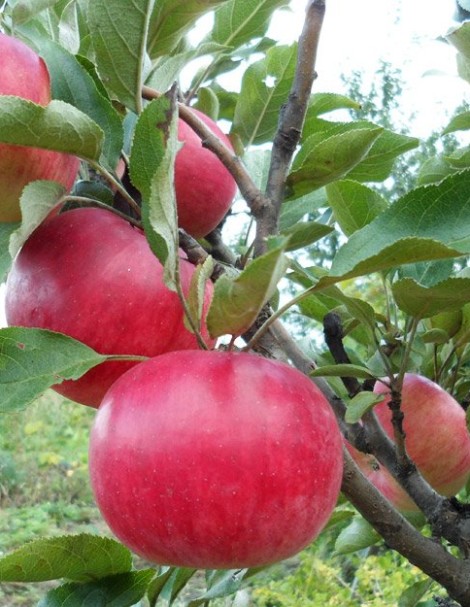
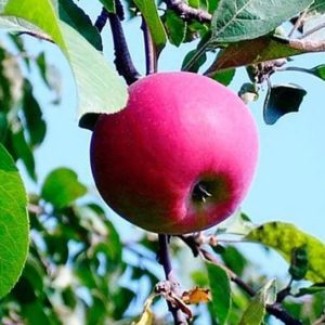
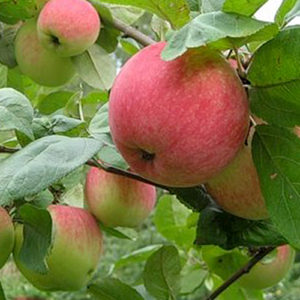 The fruits are predominantly medium, medium-large, and large in size, mostly uniform in size, but a few per tree may be slightly smaller or larger. The fruit grows to 160-190 grams, and with proper care, 200-250 grams can be achieved in favorable years. The shape is smooth, rounded, flattened along the central axis, symmetrical; slanted apples are rare. Ribbing is barely visible; it is very smooth, even at the calyx, and there is no lateral seam.
The skin is thin, but dense and elastic enough to protect the delicate flesh from mechanical damage. It is green or greenish-yellow when ripe for consumption. The blush is bright red, red, or red-orange, dense, blurred, mottled, and streaked, covering at least 65-80% of the fruit, if not more. Subcutaneous spots are few and small, grayish-green, and almost invisible on a variegated apple. Experts can more easily assess the quality of the chemical composition using the following data:
- Sugar (fructose) – 11.6%.
- Pectins (fiber) – 12.4%.
- P-active substances – 298 milligrams.
- Titratable acids – 0.54%.
- Ascorbic acid (vitamin C) – 11.8 grams.
The flesh is dense, finely grained, very juicy, and has a pleasantly tender texture, spiky, crisp, and crunchy. It is whitish-yellow, lemon-yellow, or creamy-yellow in color, with a pleasant, strong aroma easily recognizable among other varieties. The flavor is considered dessert-like, with a harmonious sweet-and-sour balance. On a professional tasting scale, the Stella variety scores 4.5 out of 5.
Apple tree Stella: characteristics
Crown and root system
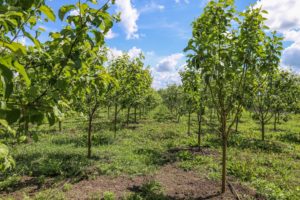 The tree is considered a medium-sized or natural semi-dwarf, with a columnar crown. However, cultivating the trees so that they grow as a single trunk is not easy. The Stella's crown typically consists of two or three shoots growing at a very acute angle to the main trunk. They are long, straight, and covered in brownish-gray or brown bark. It bears fruit in a mixed manner, on rings, fruiting twigs, and spears.
The leaves are medium-sized, oval-elongated, usually flattened, but may have a slight wavy serrate margin. They are rich green or just green, dense, leathery, and glossy, with a coarse nervation. The tips are long and pointed, the edges are serrated, and the underside may be pubescent. The root system may be fibrous or have a central branch, depending on the rootstock used. It is moderately deep in the soil, but fairly branched, and well adapted to the search for water, minerals, and nutrients.
Productivity and pollination
Stela is considered an average apple tree in almost all respects. It grows at a moderate rate and bears fruit at an average rate.
Experienced gardeners harvest 210-216 centners of aromatic fruit per hectare annually in favorable years. This equates to approximately 20-35 kilograms of fruit from one mature tree trunk with proper, timely care..
The tree is considered conditionally self-fertile, meaning it requires external pollinators to produce a large, bountiful harvest. For this purpose, it's best to use apple trees that bloom at the same time, planting them interspersed in the orchard no more than 60-100 meters from the main variety. The most advanced practitioners also spray the blooming apple trees with sugar or honey syrup, and bring mobile apiaries closer to the orchard.
Winter hardiness and disease resistance
The variety is considered quite winter-hardy, withstanding temperatures down to -27-32°C without any problems, especially if they are short-lived. The tree is also resistant to sudden changes in temperature, from thaws and drizzles to severe frosts, snowstorms, and blizzards. Lower temperatures can be dangerous for the trunks, but even with mild frost damage, they quickly recover and return to normal fruiting.
Apple trees aren't particularly susceptible to disease, although they lack genetic immunity to either fungal or bacterial infections. However, they are rarely affected, and if preventative measures are taken regularly and promptly, they only occur in the most extreme cases, during years of severe epidemics. When scab infects the leaves, the fruit remains fit for consumption.
Rootstocks and subspecies
Stela is grown on a wide variety of rootstocks. This can impart certain tree characteristics, such as winter hardiness, crown size, yield, and fruit size. Trailing varieties and perfect dwarfs are not possible with this variety, so it's best to inquire with the seller for more precise information about a specific variety. Therefore, it's crucial to choose reputable sellers, or, even better, purchase seedlings from reputable and proven nurseries.
Features of growing Stella
 Landing
 Landing
Basic conditions
- All columnar apple trees, and other varieties as well, prefer well-ventilated, open, sunny areas. In the shade, trees can grow tall, thinning out, become weak, refuse to bloom or bear fruit, and may even die.
- The groundwater table should be no closer than 2-2.4 meters to prevent the tree from reaching it with its roots. This often leads to root rot, which is detrimental to the tree. Therefore, it is not recommended to plant seedlings directly near rivers and lakes, ponds and streams, or near shallow wells. Avoid planting them in marshy areas or lowlands that are flooded by spring floods. As a last resort, mounds should be built under apple trees, and drainage should be used if site selection is tight and the variety is desired.
- It is often recommended to dig holes for columns 5-8 months in advance, and this makes sense, since the soil needs to sit with fertilizers, as if “accepting” them, then they will not “burn” the rhizome.
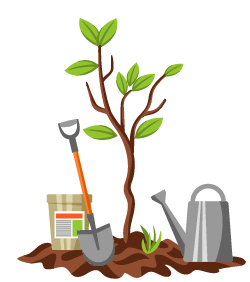
- Dig holes 60-80 centimeters deep and the same or slightly larger in diameter. Add a small amount of topsoil mixed with horse humus, urea, and manure to the bottom. humus, mineral fertilizers. A layer of drainage is placed on top if needed, or another thin layer of soil, and then watered (25-40 liters). Leave uncovered and undisturbed until planting, at least 3-5 weeks, otherwise the tree's roots may "burn."
- It's common to dig special supports directly into the holes to tie the trees to. It's best to place them on the north side, as this will provide additional protection from the cold.
- There should be at least 1.2-1.5 meters of space between trees, and the same amount can be left between rows. This will prevent trees from clashing with each other, and will make tending and harvesting the fruit quite easy.
- The seedling is placed directly on the drainage, the shoots are spread out so they lie loosely on the pile, covered with soil and compacted firmly by hand, and the tree is tied to the support. A mound of soil up to 8-10 centimeters high is piled around the perimeter of the hole, and 15-25 liters of water are poured into it. mulch to retain moisture.
Landing dates
In suitable temperate regions, this variety can be planted in both spring and fall. It thrives and grows foliage at a normal rate. However, if the weather is severe, and severe frosts in your area can last more than 10-14 days at a time, it's best to plant in spring. Wait until the soil has warmed up completely, then choose a dry, pleasantly warm day in late March or early April and begin planting.
Tree care
 Tree care
Protection from frost and pests
Trees absolutely need to be covered for the winter, and the best method for really cold winters is tent wrapping. This involves wrapping the apple trees in a suitable material, such as tarpaulin, agrofibre, or burlap, from the rootstock to the crown. With low-growing trees like Stella, this is quite feasible. Alternatively, you can simply wrap the trunk with a suitable material and pile soil on the root zone, adding straw bales, spruce branches, or dry grass.
To prevent diseases, regularly spray trees with fungicides to prevent fungal infections. There are also good modern treatments for bacteria, easily available at any gardening store. Insects will disappear if you use the "old-fashioned" method. whiten Treat trunks with lime in spring and autumn, and coat with a thick layer of lard, fuel oil, or grease to keep rodents away.
Loosening the soil, watering: proper agricultural technology
It is recommended to dig around the tree trunk no more than twice a year, in spring and fall. This should be done carefully, half a shovel depth or slightly deeper, to avoid damaging the roots located near the surface. Throughout the summer, you can carefully hoe the soil, for example, the following summer. glaze Day. The combination of water and heat usually causes the soil to compact into a dense ball, which is best loosened promptly to ensure constant oxygen supply to the rhizomes. Weeds and other plant shoots should be removed at the same time.
Watering Water the stele as needed, guided by your intuition. When rainfall is regular and the soil hasn't turned to dust or stone, you can avoid watering altogether, relying on natural moisture. However, if there's been no rain for more than 1-3 weeks, you'll need to water, applying 25-40 liters of water per stem. Young trees should be watered every 7-10 days, older trees every 14-20 days. It's a good idea to add fertilizer along with the water.
Pruning: simple crown shaping
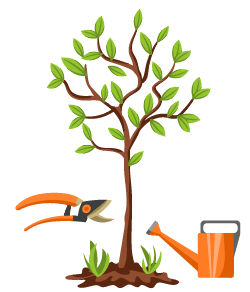
This column must be formed in the first year of life, otherwise the crown's growth will be difficult to control and may become excessively dense, while cutting too many branches at once will cause severe stress. The central leader is cut back by a third, leaving two to three skeletal branches, making them 5-7 centimeters shorter than the trunk. The year after fruiting begins, select the two most fruitful branches and prune the rest. Repeat this procedure annually, remembering to remove all unnecessary shoots.
Sanitary pruning is best done in the fall and early spring, when the sap in the trunks has stopped flowing. All damaged, diseased, and dead branches are then removed, and the cut areas are sealed with garden pitch. Rejuvenation of these apple trees is not recommended due to their short lifespan and the need for it.
Pollinator varieties
- Antonovka.
- Welsey.
- White filling.
- Melba.
- Bogatyr.
- Brotherchud.
- Mantet.
- Korobovka.
- Currency.
- Ostankino.
Reproduction
- Grafting.
- Rooting.
- Growing from seeds.
Diseases and pests
- Powdery mildew.
- Scab.
- Green aphid.
- Scale insect.
- Codling moth.
- Hawthorn.
Ripening and fruiting of Stella
The beginning of fruiting
 The beginning of fruiting
Almost all columnar trees are very early fruiters, and this variety's first flowers can be seen in its first or second year. However, it's best to pluck the buds immediately, as the tree needs to develop a rhizome and green mass before devoting its energy to fruiting. The first harvest can be reaped in the second to fourth year, yielding approximately 4-7 kilograms of large, beautiful fruit.
Flowering time
Stella blooms in May, but the exact dates can only be determined by planting it yourself in your region, as this is influenced by many factors. On average, in warmer climates and with good weather, this occurs in the first ten days of the month, while in colder climates, it occurs in the second or even third.
The process lasts approximately 12-16 days, during which the trees look very attractive and decorative. The flowers are large and fragrant, mostly milky white, but may have a slight pinkish tint at the base. They are gathered in small inflorescences of 4-7, densely covering the branches and trunks.
Fruiting and growth
The tree grows at a moderate rate, but due to its small final height, it reaches its peak quite quickly. It can reach 25-40 centimeters per year, and also branch out, which is not ideal because it requires additional pruning. Fruiting increases gradually, and by the sixth or seventh year, up to 15-20 kilograms of apples can be harvested, with full harvests by the eighth or tenth year.
Apples ripen in early to mid-October, making them considered late autumn or early winter apples. Consumer maturity begins immediately after the technical stage, with the fruit becoming sweet and tasty even on the vine, without the need for "aging." The fruit doesn't store very long, but will keep quite well in a suitable cellar until late winter or early spring. refrigerator.
Top dressing
- Ammonium nitrate.
- Mineral complexes.
- Chicken manure.
- Peat.
- Superphosphate.
- Compost.
- Manure.
- Humus.
- Humus.
What to do if it doesn't bloom or bear fruit
- Inspect for diseases or pests.
- Organize timely regular watering.
- Fertilize.
- Transplant to a more suitable location.
Why do apples fall?
- Natural weather disturbances.
- Pest damage.
- Overripening.
- Various diseases.
Please share your own experience with the Stella apple variety so that everyone can learn about it and avoid potential mistakes when growing their own garden.