Ostankino apple tree: characteristics of the variety and care
| Color | Reds |
|---|---|
| Ripening season | Autumn |
| Size of apples | Large |
| Taste | Sweet |
| Crown type | Columnar tree |
| Shelf life | Low shelf life |
| Application | For recycling , Fresh |
| Winter hardiness | Average winter hardiness |
| Fruiting age | Up to 5 years |
 History of origin and regions of growth
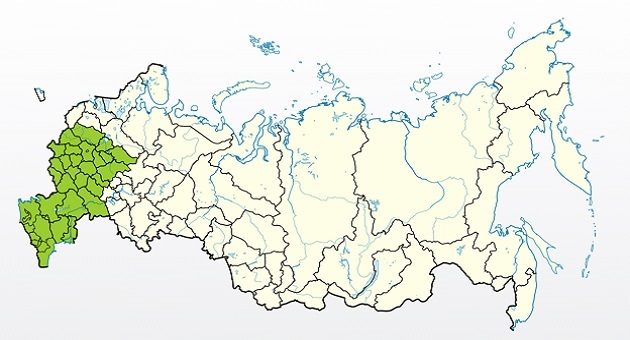
Growing regions
- North Caucasus.
- Crimea.
- European part of Russia.
- Moscow region.
- Leningrad region.
Origin
This is one of the first apple tree subspecies that grows as a single trunk, without producing lateral skeletal branches (columnar). It was developed at the Institute of Horticulture and Vegetable Growing, now called VSTISP. The author was the renowned Soviet-era breeder Viktor Valeryanovich Kichina. In 1974, a new seedling was obtained by crossing the American variety Vazhak and the domestic variety Obilnoye.
The hybrid performed so well that an application for inclusion in the official register was submitted in 1997. The variety, named Ostankino, was immediately sent to various farms for field trials. In 2002, it was decided to add it to the State Register and zone it for the Central Region. The apple tree was most widely distributed in Moscow region, Leningrad, Samara, Vladimir and Perm regions, where it was adopted by large fruit growing farms.
Content
Description of the Ostankino apple tree variety
 The variety appeared in our country just ten years after the infamous American "Wazak," attracting widespread attention. The apple tree truly turned out well: it grows quickly and begins bearing fruit quickly, takes up very little space, is undemanding of growing conditions, and easily copes with even the harsh winters of the Moscow region. The Ostankino is a high-yielding apple tree and is very resistant to disease.
The fruits are numerous, large, and of outstanding commercial and consumer quality, tasty, and attractive. Even though the standard trees are short-lived, this variety is recommended for both small gardens and commercial intensive orchards.
Apples: What they look like
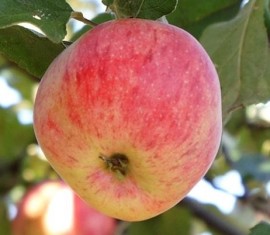
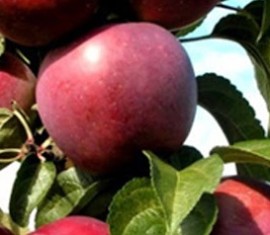
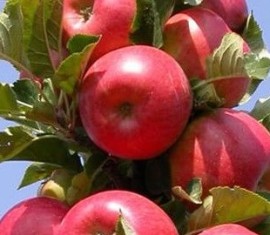
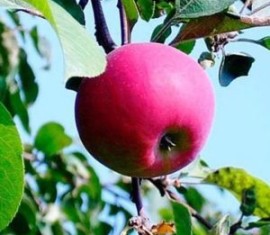
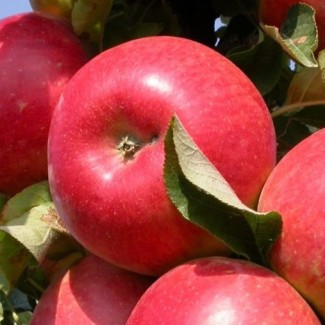
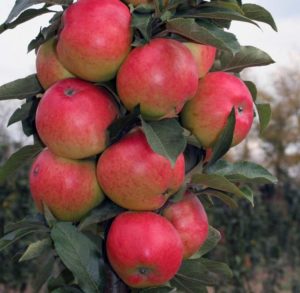 The fruits are generally medium to large in size, depending directly on growing conditions, climate, and weather. Most grow to 140-180 grams in weight, but some can reach 180-220 grams. They are round, slightly flattened along the central axis, equal-sided, uniform, smooth, and symmetrical.
The apple skin is dense, glossy, and shiny, a beautiful green color that gradually becomes yellow or golden as it ripens. The blush is deep, red or beetroot red, with a violet tint, diffuse, and may have translucent stripes and speckles, covering 65-96% of the surface. At maturity, the fruit becomes covered with a very dense, bluish-gray waxy coating. Subcutaneous punctures are numerous but small, making them difficult to see. The chemical composition can be easily assessed using the following indicators:
- Titratable acids – 0.47%.
- Sugars (fructose) – 12.1%.
- Pectins (fiber) – 9.8%.
- Ascorbic acid (vitamin C) – 13.6 milligrams.
- P-active substances (catechins) – 298 milligrams.
The flesh is dense, though hardly firm, fine-grained, crisp, tender and pleasantly textured, very juicy, and aromatic. It is snow-white or slightly lemon-colored, possessing a balanced dessert flavor, harmonious and sweet, with a characteristic apple tartness in the aftertaste. According to experts, Ostankino receives 4.6-4.7 points out of 5 for taste and appearance, respectively.
Ostankino apple tree: characteristics
Crown and root system
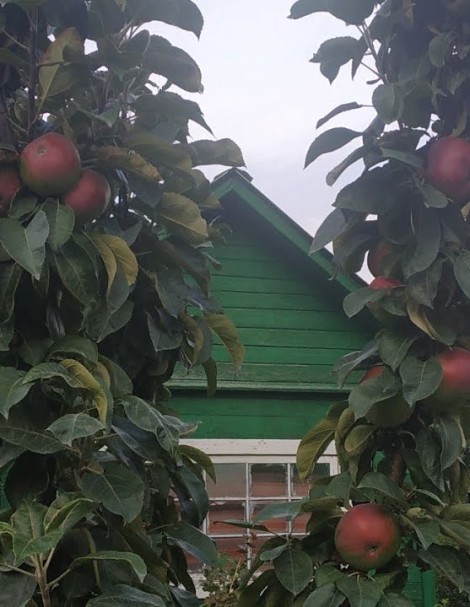
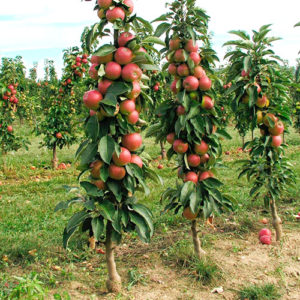 The trees are considered natural semi-dwarfs; they are columnar, which means a complete absence of lateral skeletal branches. The maximum height of the tree is 2-2.3 meters without formative pruning.This significantly simplifies harvesting and caring for the trunks. The bark is gray-brown and may be slightly pubescent. Fruiting occurs on the spears and rings that grow densely around the central conductor starting at a height of approximately 25-35 centimeters. The tree's active growth period is no more than 17-19 years, after which it must be uprooted and replaced with a new tree.
The leaves are large, dark green or emerald, leathery, dense, oval or slightly elongated. They are smooth and shiny, flattened, with a serrated edge, short-pointed, and delicately veined. The root system is superficial, branched, and fibrous, not penetrating deeply into the soil, allowing trees to be planted even in areas with excessive groundwater.
Productivity and pollination
Some question the fruitfulness of the columns, but professionals classify the Ostankino variety as high-yielding, taking into account the number of fruits harvested per hectare.
One mature tree yields approximately 8-11 kilograms of sweet, aromatic fruit per season. In good years, with favorable growing conditions, this figure can increase to 15-18 kilograms. On average, at least 80 tons of apples are harvested from one hectare, assuming a standard of 20,000 trees..
The variety is self-fertile, so it doesn't require other apple trees nearby to produce fruit. However, experienced gardeners note that having other trees within 45-60 meters significantly increases yield, up to 25-45%. In some cases, spraying the plantings with honey or sugar syrup is recommended to attract more bees.
Winter hardiness and disease resistance
Its tolerance to low temperatures is considered average. It tolerates the variable weather of the Moscow region well, and even the harsh conditions and excessive humidity of the Leningrad region, but it may not survive prolonged frosts below 27-29°C. Therefore, it is important to remember all the preparations before the cold weather sets in and follow the recommendations promptly.
Gardeners say Ostankino is not susceptible to damage at all. scab or other apple fungal infectious diseases, so treatment is supposedly unnecessary. However, experienced experts say that during years of severe epiphytotics, trees can still become infected, as they lack genetic immunity. Therefore, preventative measures are essential, regular, and timely.
Rootstocks and subspecies
This is a new variety, so it's too early to talk about subspecies. However, it can be grown on different rootstocks, which may have a minor impact on the height of the trunks and the size of the fruit. For example, dwarf and semi-dwarf varieties produce very short trees, producing the largest fruit, but with reduced winter hardiness.
Features of growing Ostankino
 Landing
 Landing
Basic conditions
- Lots of sun and space are the planting requirements for any fruit tree. This variety's unique feature is that a distance of 1.4-2 meters between trees is more than sufficient for comfortable growth and fruit production. In intensive orchards, the distance is reduced to 60-80 centimeters between trees, which is sufficient for full fruit production.
- Almost any soil is suitable for Ostankino, from rocky soils, sandy loam, or loamy clay, to fertile black soil. The main thing to watch out for is acidity. This level should be constantly monitored, and if it rises, it should be neutralized with lime.
- The proximity of groundwater won't play a major role as long as it doesn't rise above 2-2.2 meters from the surface. The root system is shallow, so it's not particularly at risk of rotting.
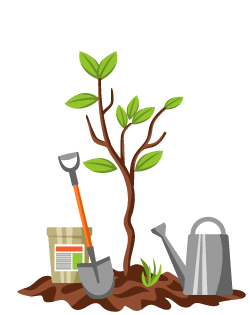
- Holes are usually prepared approximately 11-15 days before planting, but if you have some prepared from last season, they can be used as well. Dig holes 60x80 centimeters in size, fill the bottom with soil and fertilizer, line the holes with drainage material (broken brick, gravel, nut shells), fill with water, and leave them outdoors.
- It is common to immediately drive planks, trellises, or stakes into the holes for tying; in large gardens, this may be a special fence to which the seedlings are tied.
- The root collars of trees should be left above the surface horizon (5-9 centimeters), otherwise they will root higher and then the properties of the rootstock will be lost.
- A raised area is made in the center of the hole, a seedling is placed on it on drainage, the roots are spread out, covered with soil, compacted by hand, watered with water (25-30 liters), and the surface is mulched.
It's best not to buy seedlings for planting from untrusted sellers, at fairs, or especially at spontaneous markets. The seller must have documentation for the plants, otherwise there's a high risk of being deceived, as columnar apple trees are quite expensive. The best option would be one-year-old seedlings, or even better, ones with closed root systemThis increases their survival rate several-fold. If there aren't any, then monitor the tree's condition; the root system should be fresh, without damaged or dry shoots.
Landing dates
Ostankino can be planted in either spring or fall, after the leaves have completely fallen. The key is to ensure frost doesn't damage the immature tree. A warm, sunny day in late March or early April, or in September or October, is ideal. Trees with closed rhizomes can be planted at any time during the growing season.
Features of care and agricultural technology
Protection from frost and rodents
 Protection from frost and rodents
This variety can't be called winter-hardy; it tolerates short-term temperature drops fairly well, but it can't withstand extreme cold for long. Therefore, it needs to be carefully prepared for winter, covered with a tent, wrapped in burlap, roofing felt, or roofing felt, and covered with straw or hay mats around the roots. Watering should be stopped by the end of September to ensure that the sap flow in the trunks has completely stopped by the first frost.
In autumn and spring, tree trunks are whitewashed with lime to prevent insects from settling in the bark chips. To repel mice, hamsters, or hares, as well as other lovers of feasting on juicy young bark and shoots, lubricate the trees with solid oil or melted animal fat.
Pruning: simple crown shaping
Formative pruning of apple trees is carried out in early spring, before the sap begins to flow in the trunks. The main goal of this procedure is to maintain the tree's columnar shape, as it tends to produce lateral shoots. Ideally, one or two shoots are left each year, which will serve as the main fruit-bearing trunk. The following year, one, the stronger one, is left, and the other is pruned back to two buds. The following year, you simply need to repeat this process to maintain the shape.
Sanitary pruning will consist solely of trimming dead or broken branches. Since there should be no more than two of these, there won't be much work involved. No rejuvenation of the Ostankino is required, as the tree's active lifespan is very short and the shoots simply won't have time to mature.
Pollinator varieties
- Dove.
- Pink pearl.
- Vazhak.
- Florina.
- Idol.
- Mantet.
- Yesenia.
- Amber necklace.
- Idared.
- Melba.
Reproduction
- Growing from seeds.
- Rooting.
- Kidney grafting.
- Cuttings.
Diseases and pests
- Powdery mildew.
- Black crayfish.
- Scab.
- Green aphid.
- Codling moth.
- Scale insect.
- Hawthorn.
Ripening and fruiting of Ostankino
The beginning of fruiting
 The beginning of fruiting
After planting a one-year-old seedling in open soil, you can enjoy your first taste of juicy, delicious apples by autumn. However, experienced gardeners advise against this practice; they recommend plucking the blossoms in the second year as well, and allowing the fruit to develop only in the third year, allowing the tree to develop roots and foliage.
Flowering time
This autumn-ripening variety blooms within the standard timeframe. Buds begin to open in mid-May, and by the end of the month, they have completely fallen off. This process takes approximately 10-16 days, depending on climate and weather. The flowers themselves are large, saucer-shaped, and fragrant, with thick, fleshy petals. When closed, the buds have a bright pink hue, but the flowers are only slightly pinkish and white.
Fruiting and growth
The trees are considered fast-growing because they can grow at least 12-20 centimeters per year. While they can't compare to some taller trees, this is a very good figure for low-growing columnar trees. Trees reach their full potential by the 7th to 9th year. Fruit production increases gradually, with harvests of approximately 3-4 kilograms possible in the first 2-3 years, and the maximum fruit production will take 5-6 years.
The fruits begin to ripen in the second half of September. The timing may vary slightly depending on the growing region and weather conditions. They ripen uniformly, all at once, so you can pick the harvest on a single day around September 20th-25th. The fruits don't have a long shelf life; under ideal conditions, they last 2-3 months, but many people won't be able to achieve this. Ideally, the apples should be eaten or processed within 30-45 days.
Top dressing
- Mineral complexes.
- Peat.
- Compost.
- Manure.
- Ammonium nitrate.
- Humus.
- Superphosphate.
What to do if it doesn't bloom or bear fruit
- Provide feeding and fertilizers.
- Check for pests and diseases.
- Transplant.
Why do apples fall?
- Wind, hail, hurricane, rain.
- Pest damage.
- They are very overripe.
- Diseases.
Please share your feedback on the Ostankino variety so that other gardeners can gain insights on how to improve apple tree cultivation and maximize yields.