Apple tree Slava Pobeditelyam: characteristics of the variety and care
| Color | Reds |
|---|---|
| Ripening season | Autumn |
| Size of apples | Large |
| Taste | Sweet and sour |
| Crown type | Tall tree |
| Shelf life | Average shelf life |
| Application | Fresh , For recycling |
| Winter hardiness | Average winter hardiness |
| Fruiting age | Up to 5 years |
 History of origin and regions of growth
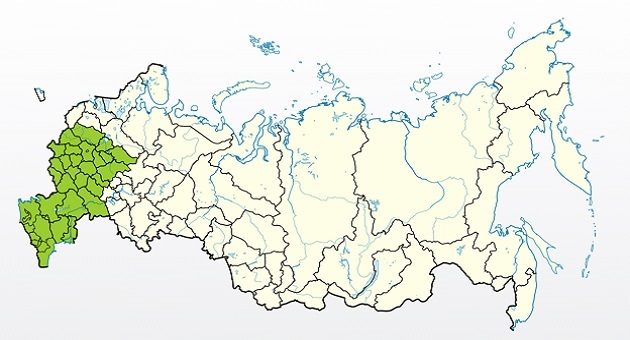
Growing regions
- Middle zone.
- North Caucasus.
- Crimea.
- Some northern regions.
Origin
At the beginning of the twentieth century, numerous experiments were conducted at the L.P. Simirenko Mlieva Horticultural Experimental Station (now the Institute of Pomology of the National Academy of Sciences of Ukraine) in what is now Ukraine. These experiments resulted in new, progressive varieties of summer, late summer, and autumn apple trees. In 1928, scientists P.E. Tsekhmistrenko and L.M. Ro, by hybridizing the Makintosh and Papirovka varieties, obtained a seedling of a variety they decided to name "Slava Pobeditelyam."
In Russian, other names for the Slava Pobeditelyam variety are also used, as a tracing from Ukrainian and Belarusian: Slava Peremozhtsyam or Slava Peremozhtsam. This is the name used in the State Register of Breeding Achievements.
Testing of the variety began only two decades later and lasted a very long time. It was only by 1956 that it was classified as an elite variety and zoned for the North Caucasus, Central Black Earth, and Lower Volga regions. The apple tree was only added to the State Register in 1975. Experience shows that it can be grown throughout virtually the entire central part of the country, including the Moscow region and the Leningrad region.
Content
Description of the apple tree variety Slava Pobeditelyam
 This variety stands out from others due to its consistently high, regular fruiting, truly good frost resistance, unpretentiousness, and hardiness. It is also quite resistant to various apple fungal infections and is rarely affected. scab or powdery mildew, and produces beautiful, tasty fruit that is transportable and has good marketability. Despite its tendency to develop excessively dense crowns and low tolerance to drought and heat, it is recommended for both large, intensive commercial orchards and small home gardens.
Apples: What they look like
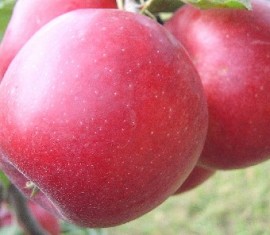
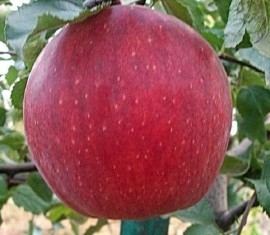
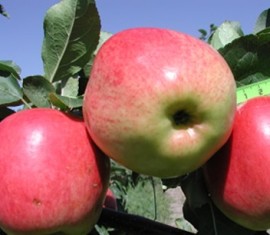
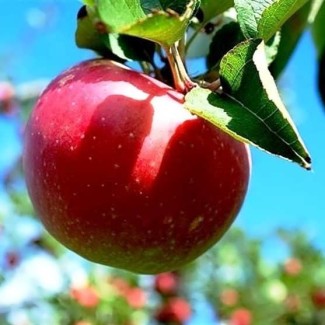
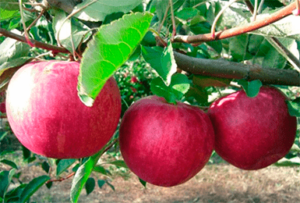 Fruits can vary greatly from each other not only in size but also in shape, depending on many external factors. soil, climate, weather, care, feeding, watering, and fertilizer. In most cases, the fruits are round, slightly conical, or turnip-shaped, but can also be flattened. They are symmetrical, mostly uniform, and grow to 120-190 grams in weight, making them considered large or medium. Ribbing is usually visible along one side seam.
The skin is smooth, glossy, green or light green, becoming increasingly white-yellow as it ripens. The blush is red or carmine-red, blurred, streaky, and mottled, covering approximately 85-95% of the surface. There is a slight waxy, bluish-gray coating. Subcutaneous punctures are numerous, light, and clearly visible, often with a rusty center. The composition is characterized by the following chemical parameters per 100 grams:
- P-active substances (catechins) – 112 milligrams.
- Ascorbic acid (vitamin C) – 8.7 milligrams.
- Total sugars (fructose) – 10.7%.
- Pectins (fiber) – 12.4%.
- Titratable acids – 0.82%.
The fruit's fine-grained flesh is medium-dense and very delicate in texture. It's white, slightly yellowish, or slightly creamy, juicy, sweet and sour, and intensely aromatic. The flavor is considered balanced and harmonious, reminiscent of a dessert. A professional tasting score for the fruit's appearance and flavor is 4.4 and 4.6 points out of 5, respectively.
Apple tree Slava Pobeditelei: characteristics
Crown and root system
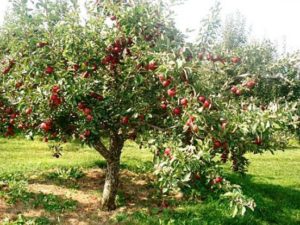 The trees are considered tall because without formative pruning they can easily grow to 6-7 meters or even more.The root is a regular pyramidal shape when young, becoming highly rounded or highly oval with age. The lower skeletal branches grow at an acute angle to the central conductor, but the upper ones are already positioned almost at a right angle. The shoots are strong, thick, geniculate, covered with smooth brown, brown, or reddish-brown bark with barely noticeable pubescence.
The leaves are densely arranged on the branches, medium-sized, round-oval, slightly elongated, short-pointed, finely serrated, with a wavy, serrated edge, and a beautiful light green hue with a subtle yellow tint. The root system is very robust, extensive, and deeply rooted, making uprooting such trees a difficult and labor-intensive task.
Productivity and pollination
Slava's yield is considered high, on par with Antonovka's. The trees bear fruit fairly early, and there's no apparent periodicity in fruiting. However, the tree may occasionally give itself a rest period, but this happens very rarely, under extremely unfavorable weather conditions, such as after frost damage.
A single tree can yield approximately 75-110 kilograms of aromatic fruit per season, but that's far from the limit. In 1997, a yield of 306 kilograms was recorded in the Tambov region. New dwarf and semi-dwarf varieties yield approximately 290-300 centners of apples per hectare..
Slava is considered a self-sterile (sterile to itself) variety. Therefore, unless it's interplanted with other apple trees that bloom at the right time, no harvest will be possible. Suitable varieties should be available within 50-100 meters; an apiary nearby is ideal. The trees themselves can be sprayed with honey or sugar diluted with water. The bees and the wind will do the rest.
Winter hardiness and disease resistance
The apple tree is considered quite cold-hardy, which distinguishes it from many of its high-yielding relatives. It can withstand temperatures as low as -25-30°C with virtually no harm, even if they last for at least 3-4 weeks straight. It's also relatively tolerant of sudden temperature fluctuations and sudden thaws alternating with further frosts. However, it's important to protect the tree for the winter, otherwise it may refuse to bear fruit if it freezes. It's also a good idea to protect it from drafts.
You'll need to carefully monitor the tree's health, although its resistance to scab and other fungal infections is average. When trees are infected during years of severe epiphytotics, both leaves and fruit are damaged, and you'll likely lose the entire harvest. Therefore, it's essential to promptly remove fallen leaves and fruit from the trunk area, prevent excessive moisture from developing, and regularly treat the trees with fungicides and insecticides.
Rootstocks and subspecies
There are no subspecies of this variety, but it can be grown on a wide variety of rootstocks, which slightly affects the overall performance. Trees grown on seedling rootstocks grow very tall, produce good fruit, are frost- and scab-resistant, and produce medium-sized fruits. On dwarf and semi-dwarf rootstocks (M-9 and M-106), the trunks are more compact, not growing taller than 2.5-3 meters. Their fruits are somewhat larger, but their winter hardiness and resistance to infections are significantly reduced.
Features of growing Glory to the Victors
 Landing
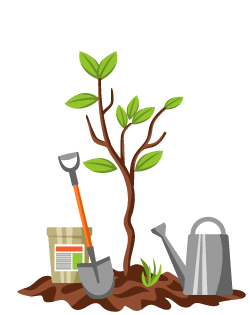 Landing
Basic conditions
- The location chosen must be sunny and well-ventilated, but free of drafts. These are essential for obtaining a good harvest in the future. In the shade or in strong winds, apple trees sometimes refuse to bear fruit altogether, growing thin, weak, and unviable.
- It's best to have groundwater at least 2.5-3 meters deep, otherwise Slava's rhizomes may rot. If such a location isn't possible in your area, bury a sheet of roofing felt or slate at a depth of approximately 2.5 meters to prevent the roots from growing deeper and direct them laterally. For the same reasons, avoid planting this variety near shallow wells, springs, rivers, ponds, and lakes, in marshy areas, or in lowlands.
- The holes are prepared in advance (70 centimeters deep and 1 meter in diameter), approximately 4-5 weeks in advance, with fertilizer placed at the bottom and drainage material (broken bricks, stones, or gravel). The entire area is filled with water (40-50 liters) and left outdoors.
- Leave 4-4.5 meters between trees, but more is possible so that they do not interfere with each other’s growth later.
- The root collar should be at least 9-12 centimeters above the soil surface. Otherwise, the apple tree will root higher and all the properties of the rootstock will be lost.
- Stakes are driven into the holes immediately, and the trees are then tied to them. They can be metal, wood, or even plastic. It's best to place them on the north side of the apple tree.
- Place the seedling in the hole, spread out the roots, cover with soil, compact it with your hands, pour 30-45 liters of water over the surface, and mulch with suitable materials.
Landing dates
Depending on the climate of the region where the variety will be grown, spring or fall planting is preferable. In mild southern climates, it's best to plant trees in September or early October, when the leaves have already fallen, but frost is still at least 3-5 weeks away. In harsher climates, it's best to plant in the spring, around March or April, before bud break but after the soil has warmed completely. Make sure the threat of frost has completely passed by this time.
Protection from frost and rodents
The further north the growing area is, the more attention should be paid to preparing the trees for winter. Dwarf and semi-dwarf trees can be easily covered with a tent, but this approach is not feasible with tall trees. However, their frost resistance is somewhat higher. Therefore, simply wrap the trunks with burlap, old women's tights, roofing felt, roofing felt, or agrofibre, and cover the root zone with mats of grass or straw bales.
To prevent insects from overwintering in bark crevices, the trunks should be whitewashed with lime for at least 1-1.2 meters. This will also disinfect the trunks from fungus, which doesn't replace the need for fungicide and insecticide treatments at the appropriate time. Hungry rodents can be repelled by smearing the trunks with melted animal fat or grease. Commercially available products, available at gardening stores, can also be used.
Tree care
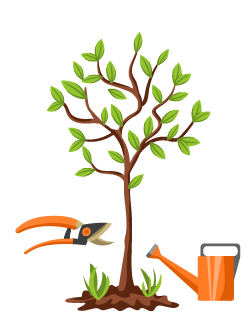 Tree care
Loosening the soil, watering: proper agricultural technology
In most apple orchards, the area around the tree trunks needs to be dug up regularly, twice a year, and Slava Pobeditelyu is no exception. It prefers airy, well-oxygenated soil. You can hoe the soil several times a season, approximately immediately after watering and fertilizing, while also removing other plants and weeds.
Remembering to water apple trees is a must for every gardener, especially apple trees like this one. It's not very drought-tolerant, so mature trees will require 8-12 watering sessions per season (20-45 liters in two doses, morning and evening). When young, immediately after planting, trees should be watered once a week if there's no natural rainfall.
Pruning: simple crown shaping
Slava's crown is very prone to becoming dense, so pruning will be necessary in both spring and fall. This should begin in the first year, when the central conductor is cut back by a third, and two or three skeletal branches are formed, spaced widely apart at different heights. Subsequently, it's important to strictly adhere to this approach, remembering to remove any shoots that protrude into the crown or shoot vertically upward (suckers).
Sanitary pruning is usually carried out in late autumn, removing all dead and damaged branches and cutting off diseased and excess ones. Wounds on the tree are usually sealed with drying oil, garden pitch, or at least a bolt. Rejuvenation begins no earlier than 18-20 years after planting, removing 2-3 mature shoots to allow new ones to develop.
Pollinator varieties
Reproduction
- Rooting cuttings.
- Grafting by buds and cuttings.
- Clones (offshoots).
Diseases and pests
- Powdery mildew.
- Scab.
- Black crayfish.
- Pit bitterness.
- Cytosporosis.
- Green aphid.
- Codling moth.
Ripening and fruiting of the Glory of the victors
The beginning of fruiting
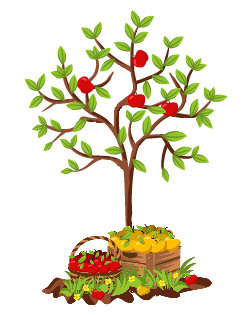 The beginning of fruiting
In more southern regions, the variety is early-bearing, producing its first harvest as early as 4-5 years after planting. However, the harsher the climate in the growing region, the further delayed fruiting may be. However, the apple tree will definitely begin producing delicious fruit by 7-8 years, even in the northernmost regions where it can grow. It will only yield 5-8 kilograms, but that's enough for a sample.
Flowering time
The large, beautiful buds of the Slava Pobeditelyam bloom around mid-May. However, in more northern regions, they may linger until the end of the month. Flowering lasts approximately 10-14 days, giving the wind and bees time to do their work. The flowers themselves are large, a delicate shade of pink, saucer-shaped, and fragrant, densely covering the branches, making the tree very beautiful and elegant.
Fruiting and growth
Apple trees grow quite quickly; even in poor weather, they gain about 35-50 centimeters per year, which is quite a bit. The yield is similarly high; by the 10th to 12th year, they reach full fruiting. By then, you'll be able to harvest over a hundred kilograms of delicious, juicy fruit.
Apple harvesting typically begins in mid-August in southern regions and continues through mid-September in northern regions. However, vigilance is essential, otherwise the apples will simply fall to the ground and need to be processed urgently. In any case, apples have a moderate shelf life: they are unlikely to last longer than two to three months, even in a cellar with ideal humidity and temperature conditions. Therefore, the entire harvest should be eaten or processed in December or January.
Top dressing
- Chicken manure.
- Mineral complexes.
- Wood ash.
- Humus.
- Compost.
- Ammonium nitrate.
- Manure.
What to do if it doesn't bloom or bear fruit
- Provide moisture.
- Check for pests and diseases.
- Transplant to a sunnier location.
- Limit watering.
Why do apples fall?
- Natural factors.
- Pests.
- Overripe.
- Diseases.
Leave your feedback on the Slava Pobeditelyam variety to share your experience with other gardeners.