Apple tree "Memory of the Yesaul": characteristics of the variety and care
| Color | Greens , Striped , Reds |
|---|---|
| Ripening season | Autumn |
| Size of apples | Average , Large |
| Taste | Sweet and sour |
| Crown type | Average tree height |
| Shelf life | Average shelf life |
| Application | Fresh , For recycling |
| Winter hardiness | Average winter hardiness |
| Fruiting age | Up to 5 years |
 History of origin and regions of growth
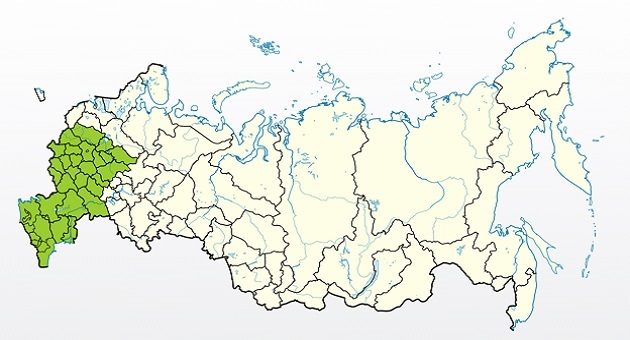
Growing regions
- Central Black Earth Region.
- Middle zone.
- Moscow region.
- North Caucasus.
- Crimea.
- Volga region.
Origin
The variety was developed using mutation breeding from the 27-7-14 hybrid, a cross between Prima and Rozmarin, and the elite Kandil Krasnodarsky variety. The first seedling sprouted in the spring of 1978. The authors are Tatyana Nikolaevna Doroshenko, Svetlana Nikolaevna Artyukh, and Tatyana Grigoryevna Prichko, who worked at the North Caucasus Zonal Research Institute of Horticulture and Viticulture in Krasnodar.
In 1998, they applied to have the apple tree listed as an elite variety. The variety only underwent official testing at the dawn of the new century. In 2002, "Memory of the Yesaul" was included in the State Register of Breeding Achievements. It was zoned for the North Caucasus region. In fact, it grows well in the central region, in the central part of the country, in the Volga region, and in the Moscow region.
Content
Description of the variety "Memory of the Yesaul"
 This early winter or late autumn variety boasts many advantages and benefits, making it an instant favorite among gardeners in temperate and warm climates. It is quite resilient to harsh weather and low temperatures, undemanding of growing conditions, requiring little special handling or care, and is tolerant of dry periods. It bears fruit early, is productive, and has genetic immunity to the most common apple disease—scab.
The apples of this variety are beautiful, large, delicious, and easy to transport. Even though they tend to drop when overripe, the trees are well suited for intensive cultivation in orchards. However, they are also a good choice for a small garden plot.
Apples: What do they look like?
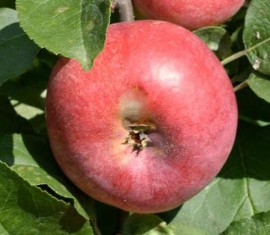
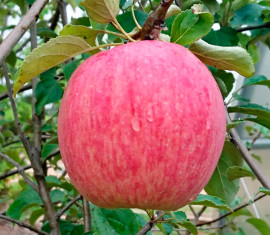
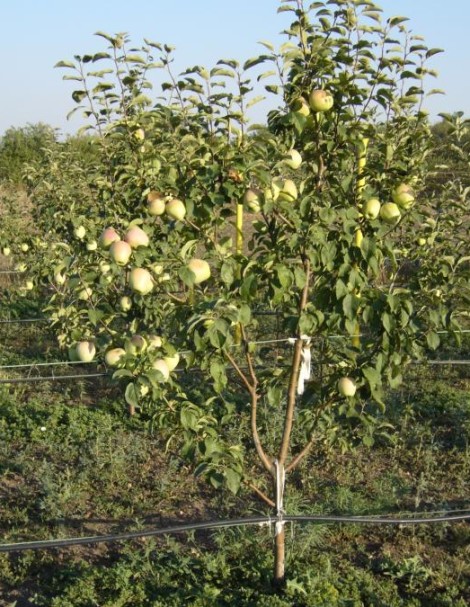
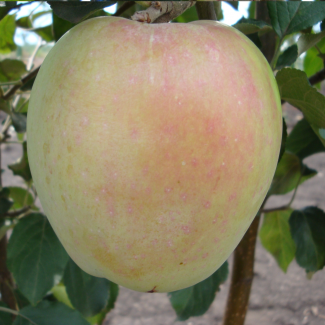
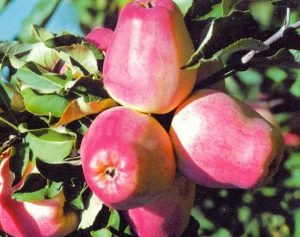 The fruits are usually medium to larger than average in size, sometimes large in favorable years with good care. They weigh 180-250 grams, are round, oval-truncated, strongly elongated, and can be slightly conical, slightly widening toward the stalk. The fruits are heavily or moderately ribbed, smooth, generally uniform, and symmetrical.
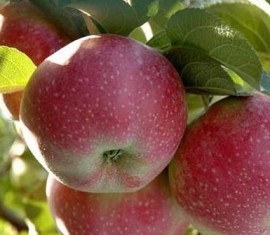
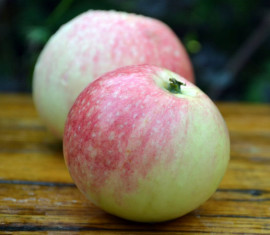
The skin is dense, sometimes even somewhat hard, oily, and covered with a bloom when ripe, giving it a glaucous appearance. The base color is light green, greenish-yellow, or light green-yellow. The blush covers 35-65% of the surface on the sunny side. It is vaguely mottled, sometimes slightly striped, pinkish-crimson, slightly purple, or reddish. Subcutaneous spots are large, numerous, light gray or white, and barely noticeable. Experts recommend checking the following data when assessing the fruit's chemical composition:
- P-active substances (catechins) – 117 milligrams.
- Ascorbic acid (vitamin C) – 12.6 milligrams.
- Fructose (total sugars) – 11.8%.
- Pectins – 15.4%.
- Titratable acids – 0.98%.
The flesh is white or slightly light green, sometimes with a greenish tint. It is firm and juicy, with a fine-grained, pleasant texture. Green veins may extend from the skin, giving it a distinct green hue. The flavor is sweet and sour, distinctive, slightly spicy, with a distinct tartness. Experts rate it 4.7-4.9 out of 5.
Apple tree "Memory of the Esaul": characteristics
Crown and root system
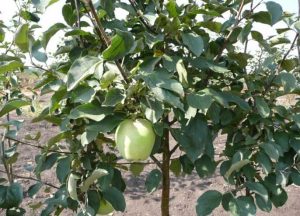 Trees of this variety are medium-vigorous, reaching a maximum height of approximately 3-4 meters without shaping pruning. Their crowns are fairly compact, pyramidal or oval in shape, but can become spreading and even drooping over the years. Branches extend at right angles. They are thick, straight, and point upward, covered with gray-brown or gray-brown bark.
The leaves are elongated, oblong-oval, dense, leathery, with a serrated, crenate, and serrated edge, and are long-pointed. They are dull, mostly matte, but can have a slightly glossy, pale green hue. They can be slightly rough and wrinkled, and often have a felt-like pubescence on the underside. The root system is fibrous and branched, but mostly superficial, although well adapted to seeking water.
Productivity and pollination
The variety is considered high-yielding, although it falls short of benchmarks. However, this is more than compensated for by the enviable regularity of fruiting.
A single mature tree can yield up to 190-200 kilograms of aromatic and delicious fruit per year, provided it receives proper care and enjoys favorable climate and weather conditions. Considering the trees' small height, this figure is considered high..
Pamyat Esaulu is considered a self-sterile variety. This means that if there isn't a single nearby apple tree of another variety with a suitable flowering time, there's no way to get fruit. Therefore, it's common to plant different varieties within a maximum distance of 150-200 meters, bring mobile apiaries into orchards, and spray flowering trees with honey or sugar diluted in water.
Winter hardiness and disease resistance
Low temperature tolerance is considered average. Apple trees can survive winters with temperatures reaching -14-16°C. However, sudden temperature fluctuations and high humidity can cause serious damage to the trees. Therefore, cultivation in a moderate climate is only possible with proper and timely winter protection.
From scabies Genetic immunity protects the variety, but it cannot block other threats. Therefore, regular preventative spraying and treatments against various diseases and pests are recommended.
Rootstocks and subspecies
Memory apple is commonly grown on a wide variety of rootstocks, but it has no subspecies. It performs well on dwarf and semi-dwarf varieties, growing to a maximum height of only 2.5-3 meters. This allows for significant space savings. Fruit quality remains unchanged by rootstock. There are no columnar varieties of apple trees. It cannot be trained into a creeping tree.
Features of growing Pamyati Esaul
 Landing
 Landing
Basic conditions
- It's best to choose a site that's completely protected from strong winds. Drafts won't be tolerated by apple trees, especially when they're young; they'll likely die.
- The site must be exposed to sunlight for most of the day, otherwise the seedlings will become stunted, thin, and weak. Trees cannot grow in the shade; they will not bloom or bear fruit there.
- Digging holes in advance, 3-6 months before planting, is a good idea. However, if you don't have time or something goes wrong, you can do it 3-4 weeks in advance. Dig a hole 60-70 centimeters deep and 80-90 centimeters in diameter, add fertilizer (minerals and organic matter) to the bottom, then cover with drainage material and leave uncovered.
- A distance of 1.5-2 meters between trees in rows is sufficient, and 4-5 meters between rows is recommended. This will prevent the trees from interfering with each other with branches or rhizomes, and will make harvesting easier.
- The grafting site must be left above the soil surface. If the apple tree roots higher, the rootstock's qualities will be compromised.
- Stakes, planks, or any other supports are driven or dug into the holes immediately, and the seedling is then tied to them. They can be removed no earlier than the second or third year after fruiting begins.
- Place the tree on a mound of drainage material in the center of the hole, spread its roots, and cover with soil, ensuring there are no air pockets. Firm the surface well with your hands, water with 35-40 liters of water, and mulch with compost for additional moisture retention. manure or sawdust.
Landing dates
In the conditions where this apple variety grows, planting is possible in both spring and fall. The key is to time it right. Spring is when the soil has warmed up well, the threat of frost has passed, but the buds have not yet begun to open, around the end of March or April. In fall, it's best to plant after the leaves have fallen, around the end of September or October, when there's still at least a month left before frost. Trees in pots or bags (with their root systems covered) can be transplanted into the garden at any time of year, as long as the growing season is underway.
Tree care
 Tree care
Protection from frost and pests
Trees need to be stopped from being watered in a timely manner when preparing for winter. By the end August Moisture application should be reduced to zero and not resumed until the following spring. The trunks are wrapped in old tights, burlap, or agrofibre. In extreme cases, a tarpaulin or other material, such as plastic film, can be used to create a tent-like structure to protect the trees from the piercing winter wind and frost.
To prevent rodents from gnawing the bark and young branches, tree trunks are coated with fuel oil, lard, grease, or other pungent and unpleasant-smelling substances. To combat insects, the garden should be regularly sprayed with special chemicals and the tree trunks should be whitewashed to a depth of approximately 1-1.3 meters.
Loosening the soil, watering: proper agricultural technology
An apple tree won't tolerate rock-hard soil; it will wither and eventually die. Therefore, digging is recommended at least twice a year—in the fall and spring. Between diggings, hoe the soil, removing weeds, debris, rotting fruit, plant shoots, and root suckers. Eventually, you can sow lawn or herb plants under the tree.
Water the Pamyat plant as needed, but especially thoroughly and frequently during the first year. Young seedlings, while they're developing a well-branched root system, may suffer from lack of moisture. Starting in the second or third year, watering can be reduced to 4-6 times per season, and only during the driest periods. After watering the soil, it's recommended to loosen it the following day to prevent it from compacting to a granite-like consistency.
Pruning: simple crown shaping
A sparse, tiered form is quite suitable for any apple tree. The Memory apple also thrives with this type of crown, but it easily tolerates any shaping, and can be trained in any way you choose. It can be trained into a panicle, a bowl, a cordon, or even a hedge, if desired.
It has a medium growth rate, so trimming won't be a big deal. It's important to prune suckers and branches that extend into the crown promptly. Sanitary pruning involves removing all dead, damaged, or diseased shoots. The cut areas should be sealed to reduce stress on the tree.
Reproduction
- Growing from seeds.
- Budding.
- Kidney grafting.
- Clones.
- Grafting by cuttings.
Pollinator varieties
- Antonovka.
- Lydia.
- Elstar.
- Kuban spur.
- Sinap.
- Kandil.
- Peach.
- Nedzvetsky.
- Delicious.
- Gold Crimea.
Diseases and pests
- Powdery mildew.
- Bacterial burn.
- Moniliosis.
- Cyosporosis.
- Black crayfish.
- Hawthorn.
- Aphid.
- Scale insect.
- Leaf roller.
Ripening and fruiting In memory of the captain
The beginning of fruiting
 The beginning of fruiting
The early fruiting of an apple tree is largely determined by the region where it's grown. In warmer regions of the Caucasus or Crimea, it begins bearing fruit as early as the second or third year. In colder regions, such as the temperate zone, the first apples can be expected somewhat later, around the fourth or fifth year after planting. A large harvest isn't expected in the first few years; the maximum yield is around 4-8 kilograms, and even then, only in the most favorable years. By the eighth or ninth year, fruiting begins to fully mature.
Flowering time
Flowering occurs mid-season, typically in early to mid-May. Therefore, finding suitable pollinators is usually quite easy. The flowers are large, beautiful, and fragrant, predominantly white or creamy white, but may have pink or red veins. They cover the tree densely, making it very attractive. The process lasts a long time, up to 12-18 days, allowing wind and insects time to do their work.
Fruiting and growth
The esaulu (memory tree) is called a fast-growing tree because it can grow at least 35-45 centimeters per year. Before the fruit ripens, the trees can grow almost twice as fast, but then slow down. Fruitfulness increases quickly. By the 10th or 12th year, you can harvest over 150 kilograms of apples, and the maximum yield is achieved by the 12th or 15th year.
The fruits ripen from early to mid-September, at a moderately uniform rate. This means that while some are ready to fall from the branches, others are not yet fully ripe. However, they can still be picked and processed or stored. The main drawback of this apple is the tendency for the fruit to fall off. It's important not to miss the harvesting period, otherwise you might find the fruit lying under the tree one morning, not on the branches. They can be stored in the refrigerator or cellar for approximately 4-6 months, provided the humidity and temperature are appropriate.
What to do if it doesn't bloom or bear fruit
- Transplant into the sun.
- Protect from drafts.
- Limit or activate watering.
- Eliminate pests.
- To stop diseases.
Why do apples fall?
- Weather phenomena.
- Early frosts.
- Pests or diseases.
Top dressing
- Manure.
- Compost.
- Humus.
- Superphosphate.
- Chicken manure.
- Mineral and nitrogenous complexes.
- Ammonium nitrate.
Leave a review based on your own experience with the Pamyat Yesaulu apple tree variety, so that even novice gardeners have no questions about cultivating these trees.