Yagodnaya apple tree: characteristics of the variety and care
| Color | Reds |
|---|---|
| Ripening season | Summer , Autumn |
| Size of apples | Small ones |
| Taste | Sweet and sour , Astringent |
| Crown type | Tall tree |
| Shelf life | Low shelf life |
| Application | For recycling |
| Winter hardiness | High winter hardiness |
| Fruiting age | Up to 5 years |
 History of origin and regions of growth
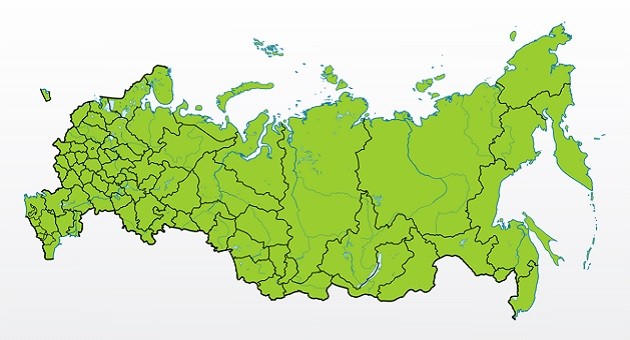
Growing regions
- Siberia.
- Far East.
- Ural.
- Primorsky Krai.
- Middle zone.
- Northwestern regions.
- South of the country.
Origin
No one knows the exact origins of the Yagodnaya apple tree, also known as the Siberian Yagodnaya or Plodovo-Yagodnaya. It's a spontaneously bred variety, commonly considered wild. It's believed to have originated in China or Korea, from where it gradually spread to more northern regions. It has many varieties and subspecies.
Content
Description of the variety Yagodnaya
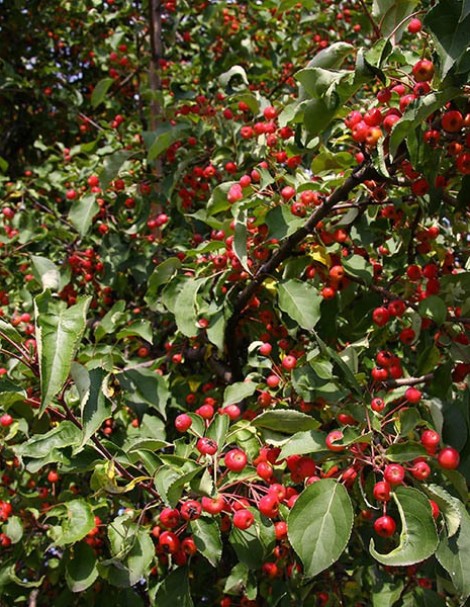
 If you're looking for apple trees that are most resilient to the harsh Siberian winters, the Yagodnaya variety may be a true benchmark. This winter-hardy tree, virtually impervious to any weather conditions, has a decorative and unusual appearance. The apple tree is beautiful not only in bloom but also during the ripening season, when bright, crimson garlands of tiny apples hang from its branches.
The tree produces small fruits, and the tree isn't known for producing large yields. This variety isn't suitable for commercial cultivation; it's recommended for small home gardens as a landscaping feature. However, preserves, jellies, compotes, and other fruit-based dishes are delicious and unusual.
Apples: What do they look like?
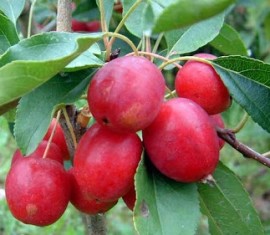
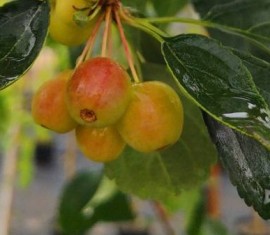
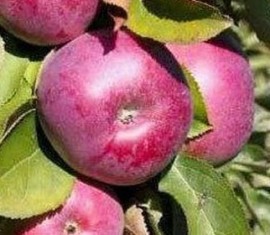
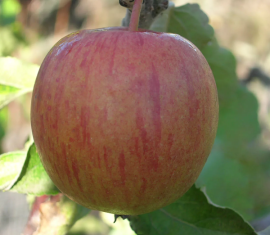
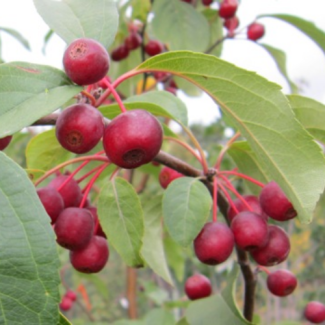
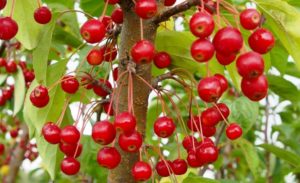 The fruits of the Yagodnaya variety are very small. They grow to a maximum of 1-2 centimeters in diameter, weighing barely 5-15 grams. They are smooth, mostly symmetrical, and glossy. The base color is green, but as they ripen, it becomes yellowish, bright yellow, or golden. The blush on the fruit is dense, blurred, and mottled, and can be solid, ranging in shades of red, reddish-pink, raspberry, purple, or carmine. Subcutaneous spots are very small, grayish, and barely visible on the surface.
The flesh is very dense and slightly juicy, fine-grained, and firm, difficult to bite into and chew. It can have a yellowish-cream or pinkish hue and a strong, tart aroma. The flavor is considered woody, astringent, and more sour, but with a slight sweet undertone in the aftertaste. These apples are considered unsuitable for fresh consumption and are not rated.
Apple tree Yagodnaya: characteristics
Crown and root system
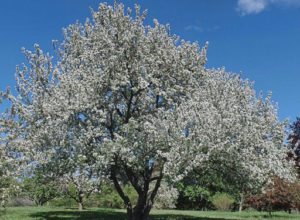 According to reference books, the tree is considered tall (third size), which means that It can easily reach a height of 8-10 metersHowever, in reality, apple trees rarely grow so large, and in most cases barely reach 2-3, sometimes 4-6 in favorable conditions. The crown is spreading, rounded or rounded-oval, becoming broadly oval over the years, drooping, and weeping. The tree has an exotic appearance, reminiscent of a Japanese bonsai with its curved, bent, and twisting branches, covered in brown-gray, gray-green, or brown-green bark.
The leaves are large, lanceolate, oval-elongated, and long-pointed. They are leathery, very dense, and glossy, with a serrated-crenate, serrated edge. The leaf blade's hue can range from normal green to rich green, emerald, or reddish. The root system can be taproot or fibrous; it extends deeply, anchors the tree well in the soil, and is well adapted to the search for water and nutrients.
Productivity and pollination
This variety cannot be assigned to any yield group because it is not grown for harvesting. This tree is used purely for ornamental purposes, although the fruit can be used in cooking, adding a piquant flavor to dishes.
A single mature tree of the medium-sized Yagodnaya variety typically yields no more than 8-15 kilograms of small but beautiful fruits per season. These can be used to make preserves, compotes, jams, and juices.
The berry tree is completely self-fertile, meaning it requires no pollinators. Regardless of their presence, the tree will bloom and produce a consistently high yield of tiny, cherry-like apples.
Winter hardiness and disease resistance
These plants exhibit extreme resistance to low temperatures, sudden fluctuations, and temperature changes. This variety can grow in extremely harsh conditions, for example, in Buryatia and Primorsky Krai, surviving temperatures down to -52-56°C. With proper and timely care, these apple trees are not harmed by strong northern winds, excessive humidity, short summers, and long winters. They are also resistant to Central Asian droughts, making them suitable for planting throughout our country.
Yagodnaya is virtually immune to most infections, including bacterial, fungal, and parasitic diseases. It is extremely rarely affected by scab, powdery mildew, cytosporosis, or fruit rot. Pests also rarely damage the trees, further enhancing its appeal to any gardener. However, regular preventative treatments are still recommended to ensure the tree's safety.
Rootstocks and subspecies
It's not common to grow trees on dwarf or semi-dwarf trees; standard vegetative rootstocks are most often used. However, there are a large number of diverse subspecies, some of which are worth mentioning at least briefly.
| Subspecies | Peculiarities |
| Shrub red-leaved | The hybrid boasts robust resistance to scab and powdery mildew, a bushy crown, and reddish-purple foliage. This subspecies is very tolerant of low temperatures and can be trained as a creeping tree or shrub. |
| Aureomarginata | The subspecies is distinguished by the unusual coloring of its foliage: each leaf has a golden border. |
| Roseo-plena | This Yagodnaya hybrid has ruffled, multi-layered flowers. They are bright pink or a delicate pinkish-white, not pure white as in other varieties. |
| Pallas | A medium-sized tree, reaching 4.5-5 meters in height. It bears large white flowers with a prominent claw. |
| Manjurica | This is the tallest tree of all existing subspecies of the Yagodnaya apple tree. It can easily reach a height of 20-25 meters or even more. The flowers, leaves, and fruits (25-40 grams) of this variety are larger than those of other varieties. |
| Weeping | As its name suggests, the tree has a drooping crown and long, thin branches that often reach the ground. It reaches 10-12 meters in height, has thick bark, and bears small, bright yellow apples. |
Features of growing Berry
 Landing
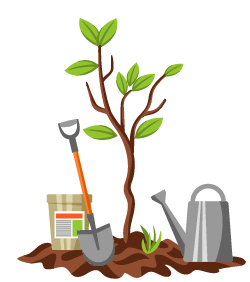 Landing
Basic conditions
- If possible, choose locations that receive full sun for most of the day, but the variety tolerates moderate shade well. The main thing is that the tree receives full sun, so it doesn't just grow upwards, but develops properly.
- The only "contraindication" to planting may be excessive soil moisture. This often leads to disease and death of the Yagodnaya. Therefore, it should not be planted where the groundwater level rises above 2.5-3 meters, in lowlands and marshy areas, directly near natural or artificial reservoirs, or even near shallow wells.
- Any soil is suitable for this variety: black soil, loam, sandy loam, and many other options.
- Planting holes should be prepared in advance, preferably 5-7 months before planting. Dig holes up to 1 meter deep and the same in diameter, line the bottom with topsoil mixed with fertilizer, then cover with a thin layer of soil or drainage material, water, and leave uncovered.
- If you need to preserve the properties of the rootstock, then root collar It wouldn't hurt to leave 4-8 centimeters above the surface. However, it's important to allow for soil subsidence. After all, the apple tree will need to be replenished at least once over time.
- Stakes are immediately driven or buried into the holes to secure the tree, otherwise it could be uprooted by the wind. It can be removed no earlier than three years after planting.
- Adequate distance should be left between trees to prevent future conflict. This will depend on the specific subspecies; for example, 3-4 meters is sufficient for small trees, while 6-7 meters may be too small for the largest ones.
- The tree is soaked for a day before planting in a mixture of water and soil, then placed on a pile of soil or drainage, covered with soil, tamped by hand, watered with 20-30 liters of water, the surface mulch.
Landing dates
You can plant Yagodnaya apple trees with a closed root system at any time, whether in spring or fall. Open-root trees, however, prefer the spring version, especially in harsher regions. In temperate climates, apple trees can be planted after leaf fall, when sap flow in the trunks has ceased.
Tree care
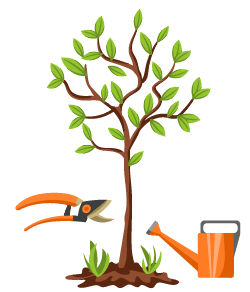 Tree care
Protection from frost and pests
Young saplings will require some work: they need to be wrapped for the winter, covered with tents, their trunks wrapped in burlap and other materials, and the root area covered with spruce branches or straw. However, taller trees are out of the question; they can only be partially covered, but they need to be properly finished. watering in the fall (before the beginning of September) it is absolutely necessary in any case.
Whitewashing tree trunks is effective against pests. This is done in spring and fall, using a thick solution of lime and water. Rodents that chew the bark and young branches can be repelled by smearing the trunks with lard, fuel oil, or grease.
Loosening the soil, watering: proper agricultural technology
During the first few years, it's a good idea to dig up the root zone twice a year, in early spring and fall, once all the leaves have fallen. At the same time, you should clear this area of any debris, weeds, root suckers, and plant shoots. You can also hoe the soil during the growing season to loosen it and provide more oxygen to the roots. However, over time, many gardeners prefer to simply lay down sod and forget about it.
Watering Trees should be watered only when they're very young (their first year), and only in extreme cases, such as during periods of severe drought or extreme heat. In all other cases, the apple tree is self-sufficient in moisture. Fertilizing trees can be done according to the standard schedule, but this is not necessary, although it is recommended.
Pruning: simple crown shaping
The Yagodnaya apple tree is so pliable that it can literally be "twisted into ropes." The tree can be shaped into any form, from a hedge to the most intricate figures and even statues. It's advisable not to remove more than one-third of the green mass at a time, as this can cause severe stress on the tree. Otherwise, you can only let your imagination guide you.
Regular sanitary pruning and crown trimming are performed. This involves removing all diseased, broken, or dead branches. An apple tree's primary function is decorative, and it would be unsightly if a crooked, dry shoot were to protrude from the crown.
Pollinator varieties
- Manchurian.
- Gorno-Altaisk.
- Korobovka.
- Altai ruddy.
- Sakhalin pendula.
- Ranetka.
- Lungwort.
- In Memory of Lavrik.
Reproduction
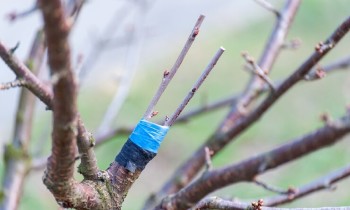
- Grafting by cuttings.
- Growing from seeds.
- Rooting cuttings.
Diseases and pests
- Cytosporosis.
- Green aphid.
- Bacterial burn.
- Scale insect.
- Leaf roller.
- Scale insect.
Ripening and fruiting of the Berry
The beginning of fruiting
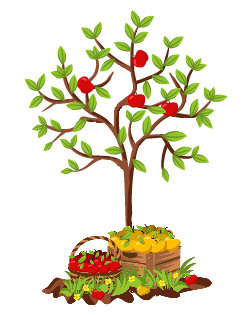 The beginning of fruiting
The apple tree's first fruiting typically occurs around 4-5 years after planting, making it a precocious tree. It blooms profusely, immediately producing almost half of its potential harvest. Since the tree is not primarily grown for fruit harvesting, flowering is not regulated.
Flowering time
The berry apple tree begins to bloom profusely and collectively in May. The exact timing is unknown, as it can vary greatly depending on the climate and prevailing weather conditions in the growing region. Its flowers are beautiful, large, and densely cover the branches. They can be snow-white, soft, or even deep pink. The blooming process lasts approximately 15-18 days, sometimes a little less, and sometimes longer in rainy, cold weather.
Fruiting and growth
The tree grows very quickly before it begins to bear fruit, reaching 50-60 centimeters in a single season. Then the growth rate slows slightly, but not too much, to 45-50 centimeters. The variety is able to increase its fruiting rate much more quickly. Every year, from the very first year of bearing, it produces a huge number of small, brightly colored apples.
The fruit ripens by mid-September, but there's no need to rush to pick them. The small fruits can easily hang on the branches until the first frost, and they look simply indescribably beautiful. Why not let your eyes enjoy such beauty and pick the apples only in October or even November? If you don't plan on using them, you can leave them on the branches; they'll look even more stunning against the white snow. A winter photo shoot near Yagodnaya is quite possible.
Top dressing
- Peat.
- Compost.
- Manure.
- Chicken manure.
- Humus.
- Humus.
What to do if it doesn't bloom or bear fruit
- Inspect for diseases or pests.
- Limit watering.
- Fertilize.
- Transplant to another location.
Why do apples fall?
- Natural weather conditions (wind, rain, hurricane, hail).
- Pest damage.
- Various diseases.
- Frozen.
Share your own experience with the Yagodnaya apple variety so everyone can experience it and get a wonderful garden decoration and a piquant addition to juices or jams.