Sakhalin Pendula apple tree: characteristics of the variety and care
| Color | Reds , Yellow |
|---|---|
| Ripening season | Autumn |
| Size of apples | Small ones |
| Taste | Sweet and sour |
| Crown type | Average tree height |
| Shelf life | Low shelf life |
| Application | Fresh , For recycling |
| Winter hardiness | High winter hardiness |
| Fruiting age | Up to 5 years |
 History of origin and regions of growth
Growing regions
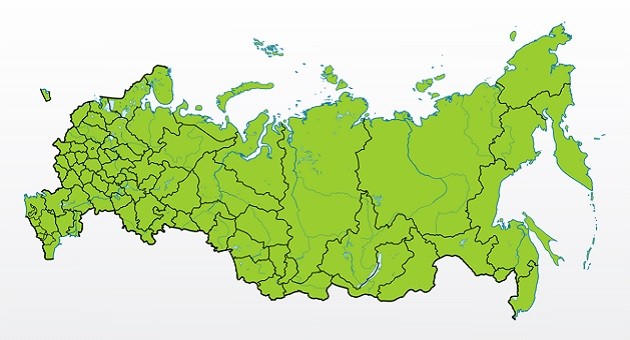
- Leningrad region.
- Siberia.
- Far East.
- Middle zone.
- Moscow region.
- Northern regions.
- Ural.
Origin
There are no reliable facts yet about the origin of this weeping apple variety. It is believed that the Sakhalin Pendula descends from hardy trees native to the vast expanses of Northern Asia, with its harsh weather and climate conditions. The subspecies was first described by botanist S.V. Yuzepchuk in the Siberian Journal back in 1939.
The Sakhalin Pendula variety is not listed in the State Register of Breeding Achievements, nor has it undergone official zoning. However, in practice, it is successfully grown throughout virtually the entire country.
Content
Description of the Sakhalin Pendula variety
 This apple tree is intended more for ornamental purposes than for fruit production. However, it is so undemanding of growing conditions, winter-hardy, and resilient that it will bear fruit even in the harshest climates of the Far East and Siberia.
It's undemanding of soil or moisture, easily tolerating both summer heat and winter cold. It's not commonly grown commercially, but it's perfect for a small garden plot, park, square, recreation area, or courtyard decoration.
Apples: What do they look like?
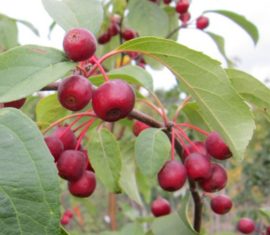
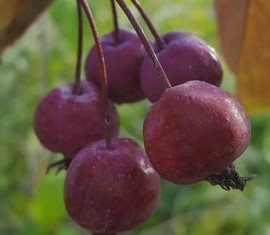
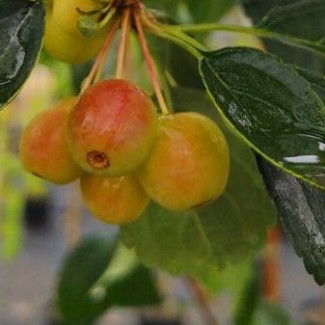
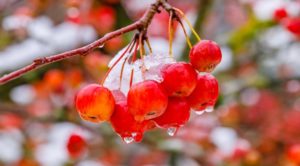 The fruits of this apple tree are small to very small, spherical, and sometimes slightly elongated. With great difficulty, in the best years and with intensive care, they can reach 1-1.5 centimeters in diameter. The ribbing of the apples is slightly noticeable at the very tip, smoothed out, and they are smooth, rounded, and even spherical.
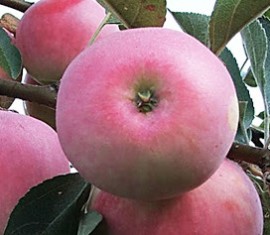
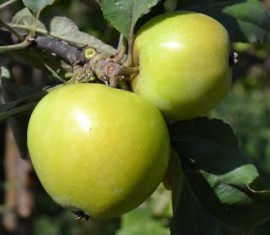
The skin is dense, even hard, thick, glossy, and highly shiny. Initially whitish-green, it turns yellow as it ripens, then golden, rich, and translucent. The blush is mottled and slightly diffuse, orange or crimson, and covers approximately 45-60% of the surface. Subcutaneous dots are light, extremely small, barely visible upon close inspection. The chemical composition can be assessed using the following data:
- P-active substances – 108 milligrams.
- Ascorbic acid (vitamin C) – 7.9 grams.
- Sugar (fructose) – 6.7%.
- Titratable acids – 0.73%.
- Pectins (fiber) – 14.6%.
The flesh is dense, firm, crisp, fine-grained, and slightly juicy. It has a slightly tart, astringent flavor, so it's not to everyone's taste, but it's perfectly suitable for making unusual jams or compotes. It doesn't have a strong aroma, and it hasn't been professionally tasted.
Sakhalin apple tree Pendula: characteristics
Crown and root system
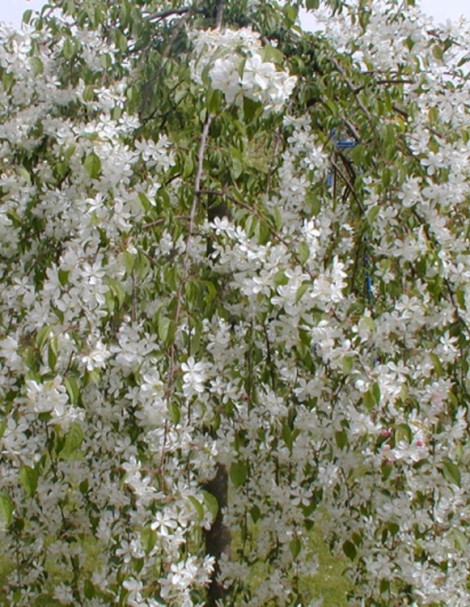
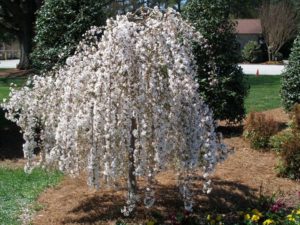 This is a standard tree with a weeping habit. Its crown is oval or rounded, and its branches droop to the ground, creating a very decorative and attractive appearance, especially during flowering and harvest season. The maximum height of the tree that it can reach without pruning is 3.6-4 meters, but more often than not it does not grow more than 2.2-2.5The branches are long, straight, thin, flexible, covered with bark with a slight pubescence, gray-steel or gray-brown in color.
The leaves are small, leathery, fairly dense, glossy, light green or just green. They are elliptical-rounded, slightly elongated, with a long-pointed tip, serrate-crenate, serrated edges, and coarse nervation. The root system is branched, most often taproot, adapted to seeking moisture and nutrients in the soil.
Productivity and pollination
Pendula is not grown for harvesting, so there are no official yield figures. However, gardeners do offer some figures worth sharing.
In a good year, one can harvest 4-12 kilograms of small fruits per season from a single tree trunk. This variability is due to the strong influence of weather, regional climate conditions, and other external factors.
The apple tree is completely self-pollinating and does not require any external pollinators to produce fruit. Pendula is grown solely for ornamental purposes, although its small apples are packed with vitamins, nutrients, microelements, and fiber.
Winter hardiness and disease resistance
This variety is so resistant to low temperatures that it is recommended for cultivation even in the harshest regions of our country, with rare exceptions. It tolerates frosts down to -40-43°C quite easily, requiring no special care, although experienced growers still recommend properly preparing trees for winter and carrying out all covering procedures promptly.
Apple trees are fairly resistant to common infections. Sakhalin Pendula is very rarely affected by powdery mildew. black crayfish and all five races scabiesIf it does become diseased, only the foliage suffers. To be on the safe side, experienced gardeners regularly spray the trees with insecticides and fungicides to prevent the loss of trunks.
Rootstocks and subspecies
There is no information about subspecies of this variety. Most likely, they don't exist, and related varieties are considered separate representatives of the apple species. They are most often grown on standard rootstocks. This makes it easier to form a weeping tree with cascading, thin branches. However, more compact forms grown on dwarf and semi-dwarf trees, and even trained creeping varieties, are also found.
Features of growing Sakhalin Pendula
 Landing
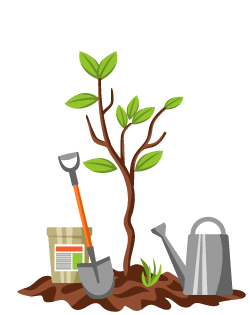 Landing
Basic conditions
- The main requirement for planting this variety is a sunny, open space. Trees grow very poorly in the shade, becoming weak and potentially dying. They often refuse to bloom, which is the main decorative purpose of their planting.
- Pendula isn't particularly picky about soil, but it prefers airy, oxygenated, and moderately moist soil. It will grow in loam, black soil, and sandy loam, but will struggle in rocky areas.
- The groundwater level at the planting site should be at least 2-2.2 meters, and preferably deeper. This will prevent the tree from reaching the water with its roots and causing rot, which is always a risk.
- Planting holes are usually prepared 2-3 weeks before transplanting, but those dug last season are also suitable. Fertilizer is added to the bottom, followed by drainage or another layer of soil, and then filled with 25-40 liters of water.
- You need to leave about 1.8-2 meters or more between the trees so that in the future the trunk has room to spread out its weeping rounded crown.
- Special planks or stakes are driven into the holes immediately, and the trees are then tied to them. These stakes will also provide additional frost protection if they are located on the north side.
- Root collar It's common practice to leave apple trees 5-10 centimeters above the soil surface. This prevents the tree from sending out roots higher and preserves the rootstock's properties.
- Place the seedling upright, support it with your hand, and cover it with soil, compacting it lightly to eliminate any air pockets. Water the surface with 30-40 liters of water. mulch chopped grass, straw, sawdust.
Landing dates
The tree can be planted in either spring or fall; it makes virtually no difference. However, in more southern regions, it's best to plant in September-October, after the leaves have fallen, and in northern and harsher climates, in March-April, before bud break but after the soil has warmed completely. This gives Pendula the highest survival rate.
Tree care
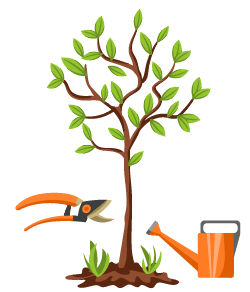 Tree care
Protection from frost and pests
Despite the variety's frost resistance, it still needs to be prepared for the cold. In mid-August, reduce wateringIn cold northern regions, this can begin as early as the beginning of the month. By September, watering can be completely eliminated to allow the sap flow to slow down at the right time. Trunks are usually wrapped in any fabric: burlap, roofing felt, tarpaulin, agrofibre, or old tights. The area around the rhizome is covered with spruce branches, straw, hay mats, and dried leaves.
To protect against insects, which often overwinter in cracks and broken bark, trees are whitewashed with lime diluted with water to a height of 1-1.2 meters. To repel rodents that chew the bark during the harsh winter, as well as young shoots, smearing the trunk with lard, fuel oil, or grease will help.
Loosening the soil, watering: proper agricultural technology
All fruit trees prefer loose, well-aerated soil. To achieve this, dig around the trunk at least twice a year, hoeing the soil in between. This can be done 5-8 times per season, while also removing weeds, other plants, and root suckers. To ensure natural aeration of the soil, herbs such as dill, marjoram, parsley, mint, and others can be sown near the rootstock.
Trees need watering, but only during the hottest and driest periods. If natural precipitation falls regularly, at least once every 10-14 days, there's no need to water. If there hasn't been any rain for a long time, you can apply 30-40 liters of water under each tree twice (morning and evening). Fertilizers and other fertilizers are added with the water; they are absorbed much better this way.
Pruning: simple crown shaping
Any gardener can shape a Pendula's crown into a beautiful, well-formed shape, but some skills are required. These procedures are carried out in the spring and fall, when the sap in the trunk has died down. Use only sharp and very sharp tools for these manipulations; otherwise, the cuts will fray, which will negatively impact the overall health of the tree.
After pruning the old branch cut Treat young shoots with garden pitch immediately, and young ones the next day. It's best to begin pruning 2-3 years after planting in open ground, and all shoots can be shortened by no more than a third.
Pollinator varieties
- Amur red.
- Reliable.
- Avant-garde.
- Ranets.
- Amur filling.
Reproduction
- Rooting.
- Kidney grafting.
- Growing from seeds.
- Cuttings.
Diseases and pests
- Black crayfish.
- Scab.
- Bacterial burn.
- Powdery mildew.
- Green aphid.
- Codling moth.
- Leaf roller.
- Hawthorn.
Ripening and fruiting of the Sakhalin Pendula
The beginning of fruiting
 The beginning of fruiting
Apple trees are early bearers; flowers begin to bloom on their branches as early as 2-4 years. To promote rooting, it's customary to pluck them, preventing the tree from bearing fruit. However, in the 4-5th year, you can harvest a small crop of tart apples that can be used in compotes, jams, as an addition to various exotic dishes, or dried or cured.
Flowering time
The tree blooms in May, but the exact timing can only be determined experimentally. In warmer southern regions, it opens its buds early in the month, with the arrival of the first warm weather, as soon as the soil has warmed sufficiently. In more severe northern regions, it may delay until mid- or even late-month.
The process lasts approximately 12-16 days, and sometimes longer in cold and rainy weather. The tree produces large, beautiful flowers with large, fleshy, yet very delicate petals. The flowers are snow-white, with pink-purple petal tips, and are intensely fragrant.
Fruiting and growth
Pendula apple trees grow quickly, gaining at least 25-50 centimeters per year. They actively develop branches that hang down to the ground by autumn, covered with myriads of beautiful, albeit small, fruits. The apple tree increases its fruitfulness quite quickly, just as it grows. A full harvest can be reaped as early as the 6th or 7th year.
The fruits ripen in September or early October. You can tell they're ripe by the presence of a thick, waxy coating on the surface. The fruits cling well to the branches and almost never fall to the ground, so there's no need to rush harvesting; you can enjoy the beautiful sight of weeping apple trees laden with fruit. They last about 1-2 months, no more, so it's customary to process them immediately.
Top dressing
- Peat.
- Compost.
- Ammonium nitrate.
- Humus.
- Chicken manure.
- Superphosphate.
- Manure.
- Mineral complexes.
What to do if it doesn't bloom or bear fruit
- Check for pests or diseases.
- Transplant into the sun.
- Water.
- Fertilize.
Why do apples fall?
- Wind, hail, hurricane, rain.
- Pest damage.
- Diseases.
Please leave your feedback on the Sakhalin Pendula variety, as many gardeners would like to grow similar ones in their gardens.